How to Prevent Rust and Corrosion on Your RV
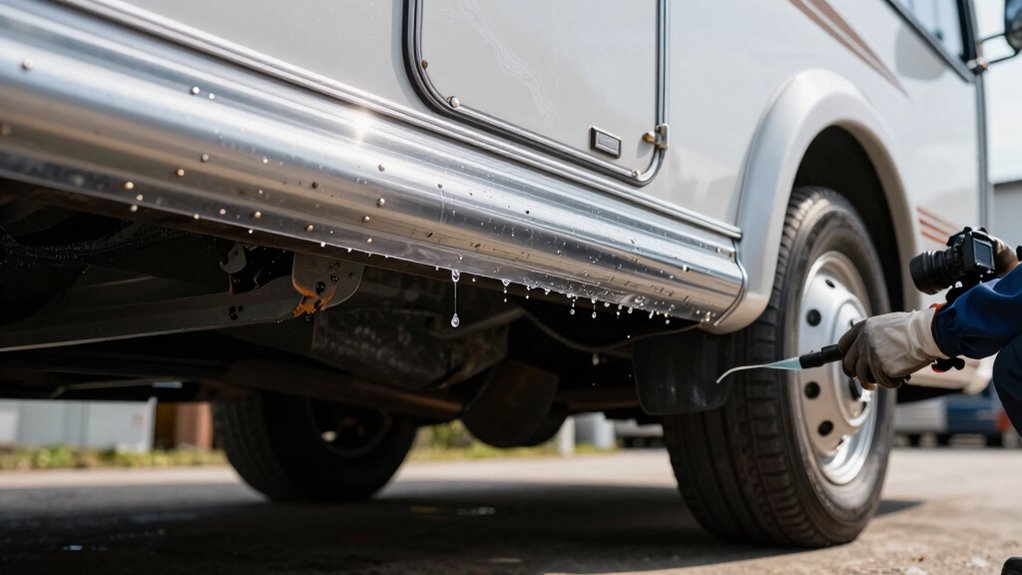
To prevent rust and corrosion on your RV, keep it clean by washing it regularly, especially after driving on dusty trails or seaside roads. Use pH-safe soap, dry it thoroughly, and apply a good wax twice a year to protect against UV rays and grime.
Don’t forget the undercarriage—rinse it frequently and inspect for early signs of rust. Address any spots immediately to prevent further damage and maintain structural integrity.
Seal all gaps and openings to block moisture and debris from entering. Store your RV in a dry place and park in the shade whenever possible to minimize exposure to the elements.
Wash Your RV Regularly to Remove Contaminants
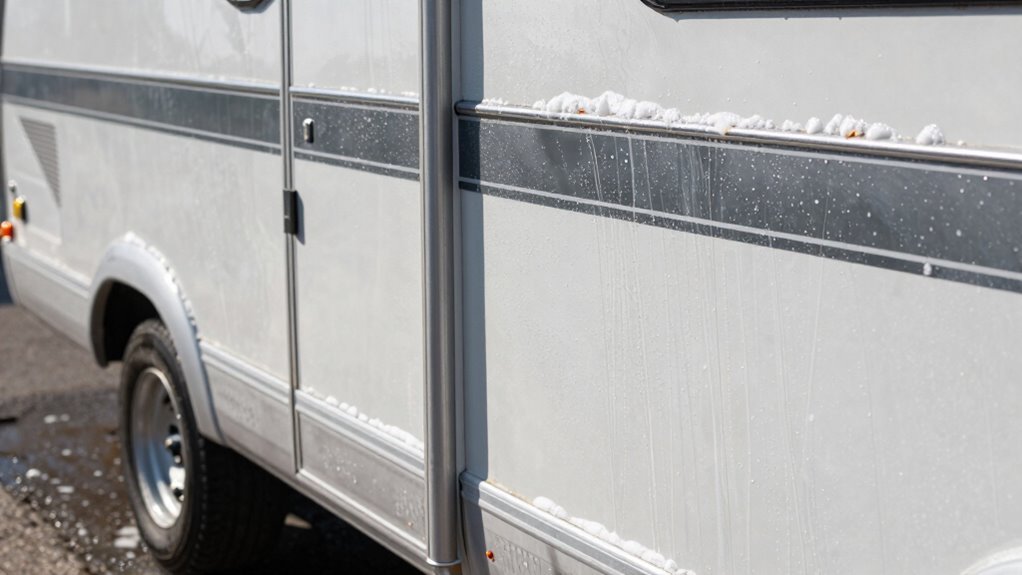
You’ll definitely want to keep your RV looking sharp and rust-free by giving it a good wash now and then—think spring and fall as your go-to times, but maybe a little more often if you’re chasing dusty trails or parked near the salty seaside. You’re not just sprucing it up for fun; you’re fighting invisible villains like salt, dirt, and bird bombs before they dig in. A quick rinse first knocks off loose junk so you don’t grind grit into the finish. Then, use the two-bucket trick—smart and splashy! Wash top to bottom, grab a pH-safe soap, and don’t let suds bake in the sun. Hit gritty spots like wheels, roof, and slide-outs—they collect gunk you can’t see. Dry it off fast; water spots are *so* last season. Spot-clean sap or bird splats ASAP—nature doesn’t play fair. Do this a few times a year, and your RV won’t just shine—it’ll outlast the neighbors’. Regular washing helps prevent moisture from getting trapped and starting corrosion underneath the surface.
Apply High-Quality Wax for Added Protection
Giving your RV a glossy shield of wax isn’t just about turning heads at the campground—it’s like putting on sunscreen for your rig, but way more effective.
You’re blocking UV rays that cause fading, cracking, and oxidation, especially in hot summers.
Wax seals the surface, keeping oxygen and moisture out—two big culprits behind rust.
Products like Boeshield T-9 or MaxWax go beyond shine, creating long-lasting, waterproof barriers that fight corrosion for months.
They even work in extreme temps, from scorching heat to freezing cold.
Apply Meguiar M5616 or 303 Aerospace Protectant twice a year—once before summer, once before winter—and you’ll laugh in the face of bird bombs and tree sap.
These waxes repel grime, resist acids, and protect fiberglass, metal, and vinyl alike.
Think of it as a force field with extra sparkle.
Your RV isn’t just protected—it’s *flexing*.
Some specialized coatings also offer VCI technology for enhanced rust prevention in enclosed spaces.
Inspect and Clean Undercarriage and Wheel Wells
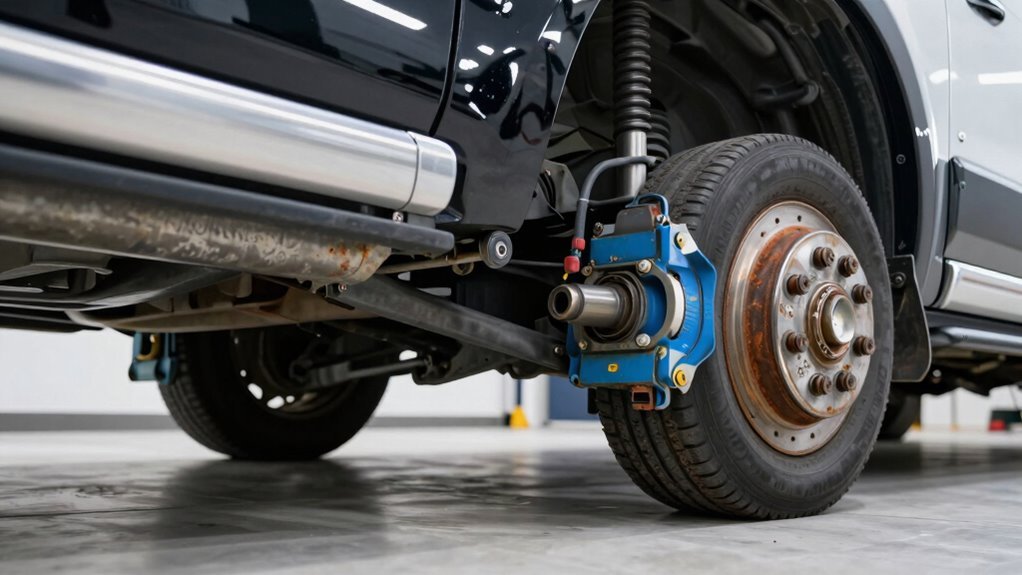
Keeping your RV’s underbelly in top shape starts with a little dirt-digging detective work—because what you *don’t* see can hurt you. You’re not just cleaning; you’re on a rust hunt, and the wheel wells and frame are your prime suspects. Road salt, mud, and moisture love to hide there, especially after beach trips or winter drives.
Give the undercarriage a good wash every few months—use a degreaser and pressure washer to blast away grime and sneaky salt.
Don’t skip the wheel wells; they trap water like tiny swamps.
Inspect during oil changes or tire rotations; look for rust spots, blisters, or flaking paint.
If you spot rust, grab a wire brush or sand it down, then wipe with denatured alcohol.
Catchings it early means you can fix it fast—before your RV starts “rust-ling” your repair budget!
Applying a rust-prevention spray can significantly slow corrosion on vulnerable metal surfaces.
Seal All Gaps and Joints With Durable Sealants
Patch those gaps before they turn into leaky nightmares—your RV’s armor is only as strong as its weakest seam.
Grab a trusty silicone sealant like NuFlex 311 or Sikaflex 715, and go on a sealing adventure!
These flexible, weather-busting buddies stick to fiberglass, EPDM, TPO, and even your sidewalls with a grip that laughs at rain and road bumps.
Peel off old gunk with a scraper, then apply a smooth bead—Dicor 551’s perfect for corners if you size it just right (¼” to ⅜”).
Tool it fast, maybe with soapy water for ProFlex RV, and boom—no shrinkage surprises.
These sealants skin over quick, some in under five minutes, and keep your rig dry within hours.
They fight UV rays, corrosion, and even moody weather.
Reapply every 3–4 years, or when sunbaking turns your sealant crusty.
A little DIY love now saves a flood of trouble later—your RV will thank you!
Keep Storage Compartments Dry and Well-Ventilated
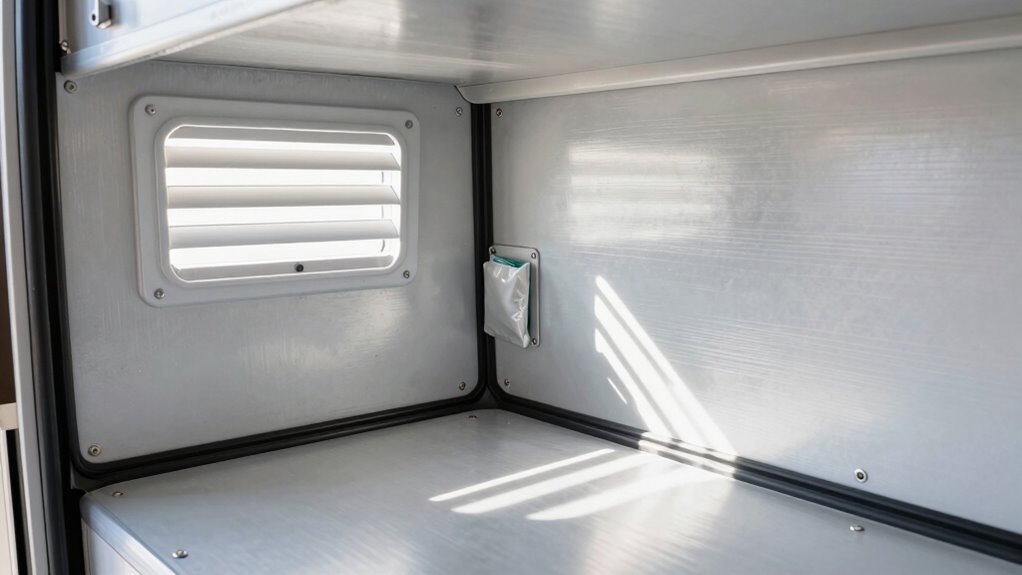
Now that you’ve locked down every seam and sealed those sneaky gaps like a pro, it’s time to turn your attention to what’s lurking inside those storage compartments. You don’t want your RV playing host to mold, mildew, or uninvited critters!
Start by emptying everything—yes, even that mystery sock—and vacuum out dust and debris. Wipe down surfaces, and make sure everything’s bone-dry; moisture’s the No. 1 party crasher when it comes to rust.
Leave cabinets and fridges propped open so air can dance through freely, and if you can, park with windows cracked or vents open.
Choose paved or gravel spots over muddy dirt—they’re less like swamps and more like sensible real estate.
Toss in moisture absorbers or VCI capsules for added protection, because nobody’s got time for surprise corrosion.
Keep it dry, keep it breezy, and your RV will thank you with fewer ick factors and way more happy adventures.
Address Scratches and Paint Damage Immediately
Spotting a scratch on your RV might feel like a tiny gut punch—like finding a spider in your coffee cup—but here’s the good news: tackling it fast keeps rust from crashing your road trip party.
Don’t wait for rain or road salt to turn that nick into a full-blown repair job.
Clean the spot with soapy water and a microfiber cloth, then let it dry completely.
Match your RV’s paint color exactly, and use touch-up paint with a steady hand.
Seal it with wax to lock in protection and shine.
Quick fixes now save big headaches later—think of it as superhero first aid for your rig.
- Wash the area right away to block grime from sneaking in
- Buff light scratches with toothpaste or a rubbing compound
- Sand and prime deeper chips to stop rust before it starts
- Use exact-matching paint and blend edges like a pro
Use Corrosion Inhibitors on Metal Components
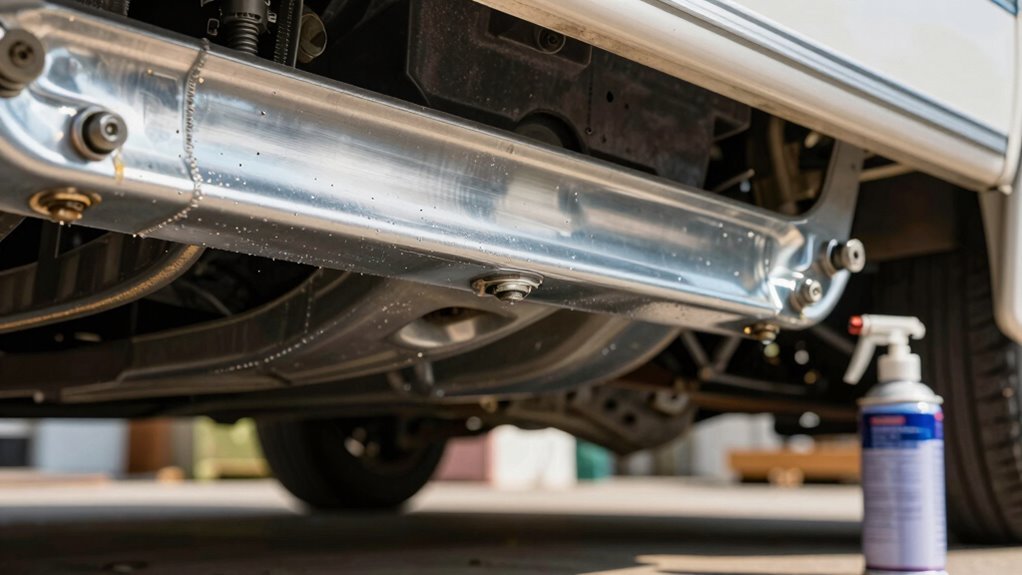
Keep rust from throwing a wrench in your adventures by giving your RV’s metal parts some high-tech backup—corrosion inhibitors.
These clever little protectors come in vapor or liquid form and really know how to stick with your metal, no matter what.
VCIs release invisible molecules that coat every nook—even spots you can’t reach—blocking moisture and corrosion like an invisible shield.
They even work on all metals, with nitrate-free options that play nice together.
Liquid inhibitors bond right to surfaces, displace water, and use Polar Bonding to make metal act like a corrosion-resistant superstar—perfect for hinges, engines, or cables.
Plus, they’re safe around electronics!
Spray a light mist on the chassis, or wrap parts in VCI paper for all-around defense.
Apply twice a year, team it with dielectric grease, and boom—your RV stays smooth, quiet, and rust-free, mile after mile.
Park in Covered or Sheltered Areas When Possible
Thinking long-term while parking your RV? You should! Sheltering it isn’t just smart—it’s a rust-busting superpower. Leaving your rig out in the open is like serving rust dinner on a silver platter. Rain, snow, UV rays, and road salt? They’re all sneaky troublemakers. But you’ve got the upper hand when you park under cover.
Here’s why:
- Cut moisture exposure – No more soggy sides or metal munching rust.
- Block deicing salts – Keep those salty splatters off your shiny surfaces.
- Defeat UV damage – Say goodbye to faded paint and cracked seals.
- Stop debris & pests – Keep the squirrels, bugs, and twigs where they belong—outside!
A simple carport or covered spot does wonders, saving cash and hassle.
Plus, your RV will thank you with a longer, happier life. Who knew parking could be this heroic?
Frequently Asked Questions
Can Rust Form on RVS Stored Indoors?
Yeah, rust can still form on RVs stored indoors—don’t let the walls fool you!
If the space isn’t climate-controlled, moisture sneaks in, especially when temperatures dip and cause condensation.
Trapped humidity, poor airflow, or a damp floor can team up to start corrosion, even if it’s not raining on you.
Think of your RV like a sandwich—stick it in a moist, unventilated spot, and rust’s the unwanted filling.
Does RV Age Affect Rust Prevention Effectiveness?
Nope, age won’t magically zap rust prevention’s power—your RV’s protection works hard whether it’s brand new or older than your favorite playlist.
You’ve got to keep up with washes, touch-ups, and coatings, ’cause even a 50-year-old RV can outshine a rusty newbie if you give it some love.
Treat it right, and it’ll laugh in the face of corrosion!
Are Certain RV Materials More Prone to Rust?
Yeah, some RV materials rust easier than others—mild steel’s the big culprit, especially on frames and supports.
Aluminum’s lightweight but goes bonkers when touching stainless steel.
Think of it like mixing cats and dogs; they just don’t play nice near water.
You’ll see trouble where dissimilar metals meet, especially with road salt or sea air around.
Keep an eye on those spots—they’ll show you who’s “rusting” for attention!
How Often Should I Check for Hidden Rust?
You should check for hidden rust at least every 90 days, but hey, why not make it a habit every month?
It’s like giving your RV a wellness check—peek under the belly, look for soft spots, and use a moisture meter if you’re feeling fancy.
After storms or salty road trips, go ahead and sneak a peek—your RV’ll thank you with fewer surprise leaks!
Do Freshwater Spills Contribute to Interior Rust?
Yeah, freshwater spills definitely contribute to interior rust—if you let them sit around like uninvited guests.
That pooled water sneaks into seams, wicks up walls, and keeps metal damp way too long.
Soon, you’ve got rust throwing a pool party in your floorboards.
Don’t panic though!
Grab a towel, vent it out, and dry everything fast.
Treat spills like emergencies, because, well, they kind of are—rust never takes a day off!
Conclusion
You’re not just cleaning an RV—you’re guarding a trusty sidekick ready for the next adventure. Think of wax as its shiny shield, sealants as its armor, and dry compartments as its happy place. Rust’s the dragon, and you’ve got the sword. Stay sharp, stay on top of those scratches, and park smart. With a little love, your rig won’t just survive—it’ll roll into the sunset, gleaming like a hero in a windshield commercial.
References
- https://www.cedarcityrv.com/blog/maintenance/
- https://poliglow.com/blogs/news/washing-your-rv
- https://www.autoworxprodetailing.com/autoworx-detailing/how-often-should-i-detail-my-rv-coach-or-camper
- https://rv-refresh.com/common-rv-issues-and-how-regular-cleaning-can-prevent-them/
- https://rvdepottx.com/blog/rv-exterior-cleaning-safe-methods-spotless/
- https://www.877rvdoctor.co/the-ultimate-guide-to-preventative-rv-repair-and-maintenance
- https://www.eltororvservice.com/blog/how-often-should-you-wash-your-rv/
- https://timsceramicppf.com/how-often-should-you-get-rv-detailing/
- https://jimbosdetailing.com/blogs/rv-care/how-often-to-wash-and-wax-your-rv
- https://www.corrosionx.com/products/maxwax-tough-long-lasting-wax-coating