Managing Water and Waste While Boondocking
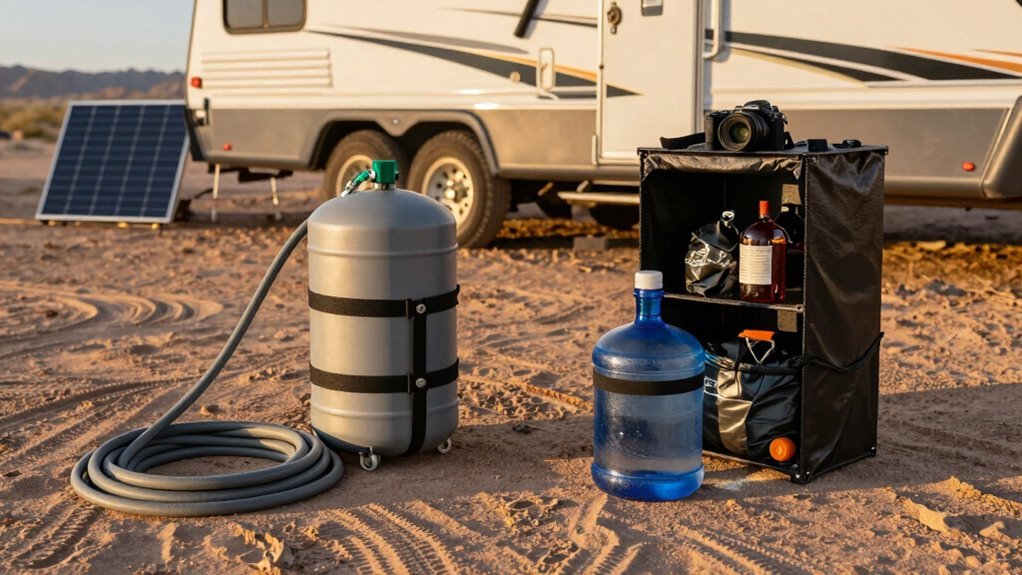
Managing water and waste while boondocking is essential for a sustainable off-grid adventure. Track your freshwater supply closely to ensure it lasts throughout your trip.
Use a low-flow showerhead and embrace “Navy showers” to minimize water usage. Every drop counts when you’re relying on a limited 40-gallon tank.
Reuse gray water for watering non-edible plants, but never on food crops. This helps reduce waste while giving back to the environment responsibly.
Keep your black tank functioning smoothly with regular enzyme treatments. These break down waste and control odors effectively.
Always pack out what you pack in, especially trash and hygiene products. Compost organic scraps and avoid disposables to reduce your environmental footprint.
Leave your campsite exactly as you found it—pristine and untouched. Practicing these water and waste strategies ensures you enjoy nature without leaving a trace.
Understanding Your RV’s Water System
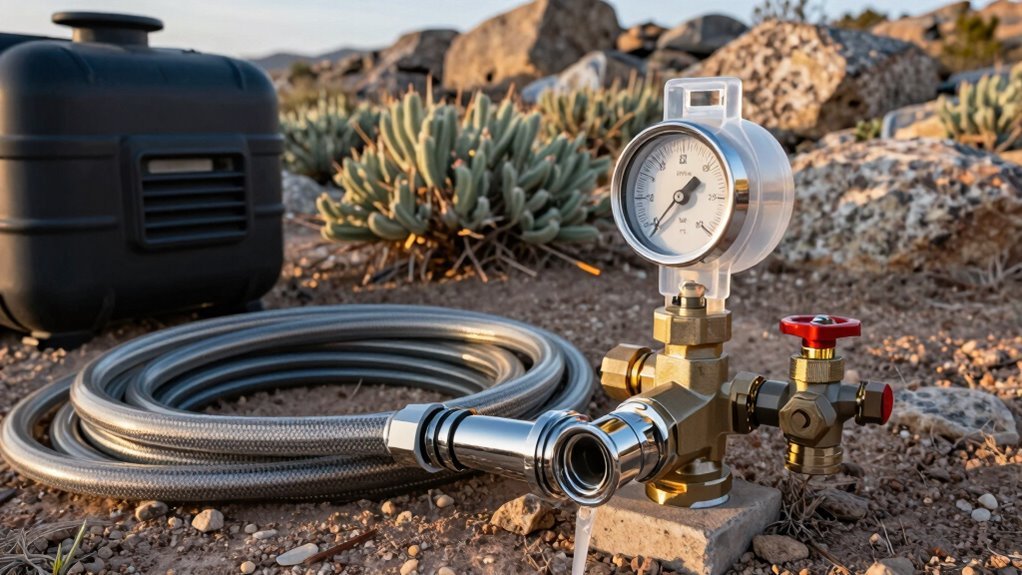
Ever wonder how your RV keeps you stocked with fresh water and running plumbing while off the grid? You’ve got a whole system working for you!
Your potable water tank stores fresh drinking water, and when you turn on the faucet, the demand-activated pump kicks in, sending water through sturdy CPVC or PEX pipes.
A pressure regulator guards against surges, while an in-line strainer catches gunk—because nobody wants gritty water in their coffee.
The accumulator tank keeps pressure steady and cuts down on annoying pump cycling—smart, right?
Fixtures like sinks and showers meet NSF and IAPMO standards, so they’re safe and reliable.
And yes, that indoor shower beats nature’s version.
Just remember: close those low-point drains before filling, and purge air by briefly opening a faucet after refilling.
Water heater activation requires the pump to circulate water through the system for heating.
With all these parts teaming up, your RV’s plumbing’s kind of a quiet superhero—no cape, but totally essential.
Calculating Daily Freshwater Needs
Now that you’ve got the hang of how your RV’s water system keeps things flowing smoothly, let’s talk numbers—specifically, how much freshwater you’ll actually need out there in the wild.
On average, you’re looking at around 42 liters (about 11 gallons) per person daily, but with smart habits, you can cut that down to just 4 gallons for basics. Add another 4 gallons per day if you’re cooking and cleaning as a group. To help you picture it:
- Drinking and cooking use about 5 gallons total per person daily
- Showers can gulp 14–20 gallons in just 8 minutes
- Flushing and dishwashing chew through another 8–10 gallons
Keep these in mind when planning your boondocking adventure—unless you enjoy rationing water like it’s a desert treasure hunt! RV sinks use ~0.5 gallons per minute, so shortening faucet use adds up quickly, especially when brushing teeth or washing hands.
Maximizing Your Freshwater Supply
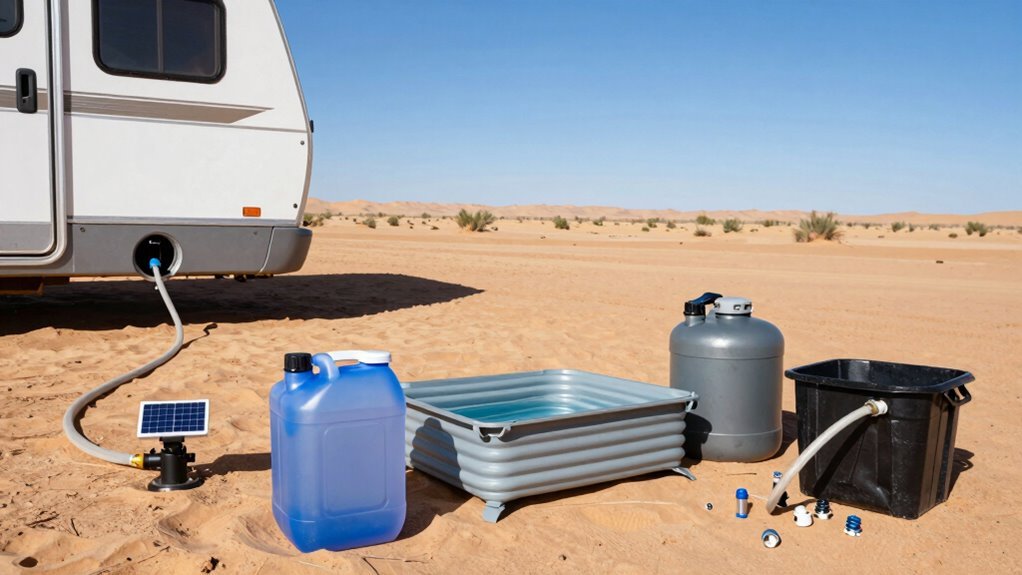
How do you stretch a single tank of water into days of off-grid freedom? You’re not magically doubling your supply—you’re outsmarting the system. Swap in a low-flow showerhead and master the Navy shower: rinse, shut off, soap up, rinse, done—just one gallon!
Collect cold water while waiting for heat and flush your toilet with it later.
Skip the daily shower; use baby wipes or a quick washcloth wipe-down instead.
Boom—zero water used, still feeling human.
If you’ve got a composting toilet, high-five yourself—no flush means no water waste.
Near a stream? Grab natural water for washing (not drinking!) in clean containers.
And when you do wash dishes, catch the soapy water and send it straight to the toilet bowl, not the grey tank.
Every drop pulled from the tank? It’s precious, not disposable.
Start your trip with empty gray and black tanks to maximize capacity and extend your boondocking time.
Implementing Water-Saving Habits
You’ve stretched your freshwater tank like a pro, squeezing every drop from clever hacks and smart swaps—now it’s time to lock in those wins with everyday habits that make conservation second nature.
Small changes add up fast when you’re off-grid, so get cozy with routines that save water without sacrificing comfort.
Try these game-changers:
- Take Navy showers: get wet, shut off water while soaping up, then rinse quick.
- Use a washcloth or baby wipes instead of showering every day—hello, safari mode!
- Wash dishes in a basin, not under running water, and always scrape food first.
Turn off the tap while brushing teeth, install low-flow aerators, and cook one-pot meals to cut cleanup.
You’ll stretch every gallon further, avoid surprise shortages, and still feel fresh—because no one wants to smell like last week’s campfire. Every drop saved is a win, so make it fun, not frantic.
Reusing Gray Water Responsibly
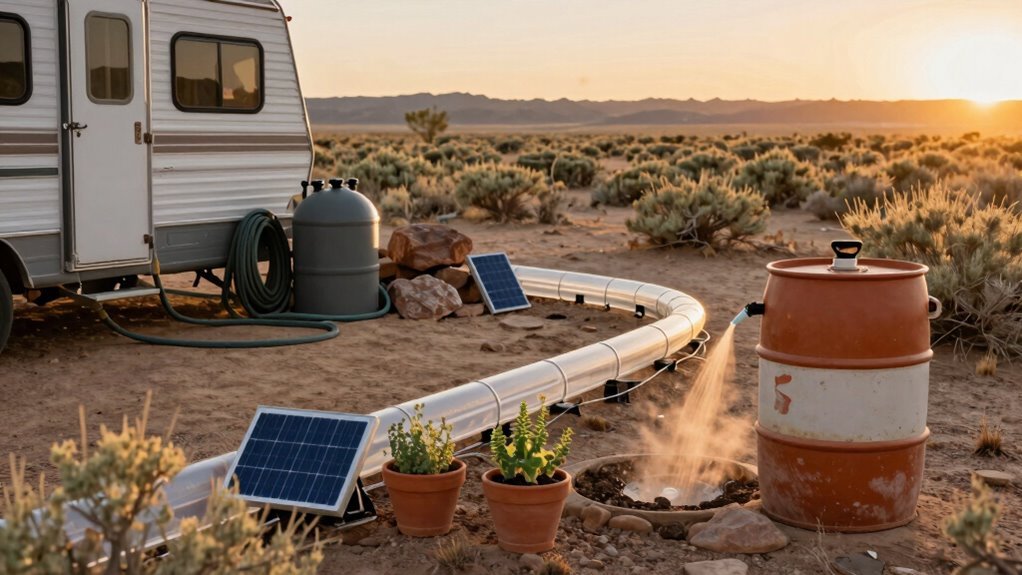
While you’re already saving water like a desert survival expert, why not give your gray water a second act instead of dumping it too soon? Install a simple filter and mesh screen to catch gunk from showers and sinks—your plants (and toilet) will thank you.
Use biodegradable soap, skip the bleach, and pipe that water to flower beds or fruit trees downhill.
No fancy gear? No problem! A basic gravity setup works wonders.
Fancy systems with 80-100 gallon tanks and 12-volt pumps can even reroute clean gray water straight to your toilet—saving freshwater and extending your boondocking trip.
Carbon filters zap odors, check valves stop backflow, and overflow protection keeps things from turning into a DIY disaster.
You’re not just recycling water—you’re creating a tiny, liquid gold economy.
Waste less, explore more, and let your gray water live its best second life!
Monitoring Black Tank Levels
- Upgrade to Teflon-coated sensors – they resist gunk like a boss and actually work when you need them
- Try wireless options like Mopeka – get real-time updates on your phone, no more guessing games
- Clean regularly with ice cubes or enzyme treatments – they scrub the sludge away while you hit the road
You’ve got better things to worry about than fake “full” alerts.
A little tech tweak or TLC keeps surprises where they belong—in birthday cards, not your black tank.
Proper Black Tank Maintenance
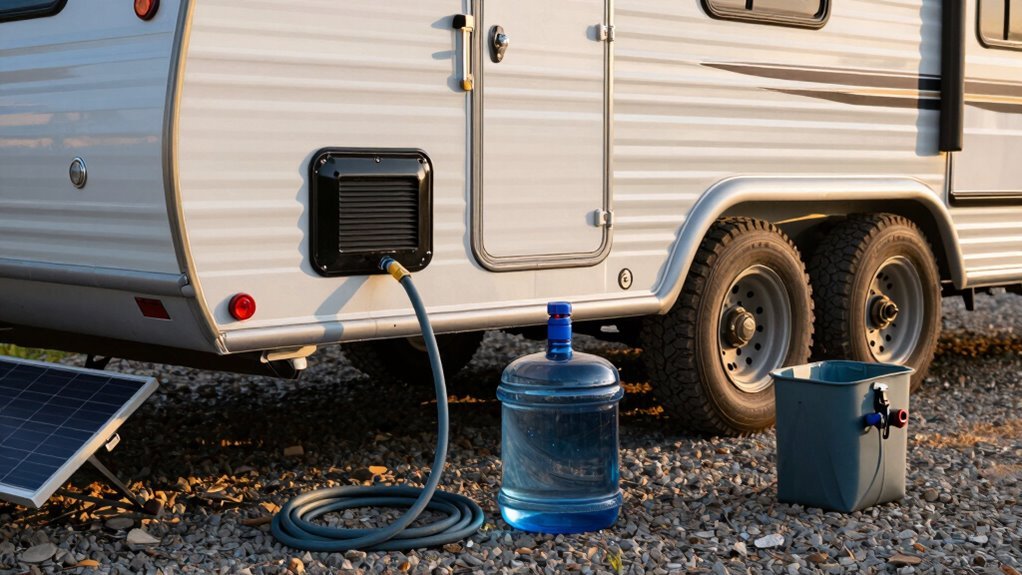
Keeping your black tank happy isn’t just about avoiding messes—it’s about smart, simple habits that save you stress down the road.
You’ve gotta treat it right: use bacteria-based Clean It between trips to break down waste, but save Extreme Cleaner for deep resets.
When it’s cleaning time, fill the tank halfway with hot water and let it soak—overnight for tough gunk or sensor glitches.
If stuff’s really packed, do a few extra dump-and-rinse cycles.
Always flush until the outflow runs clear, using a clear elbow to check progress like a pro.
Empty black first, then let gray water rinse the hose—clever, right?
Full-timers deep clean every few months; weekend warriors? Once or twice a year.
And hey, ease up on the toilet paper—nobody’s invincible.
Rinse often, inspect valves, and your tank will thank you with fewer clogs, less stink, and way more freedom.
Choosing the Right Waste Disposal Sites
You’ve kept your black tank in tip-top shape with smart cleaning habits and the right products, so now it’s time to find the perfect spot to empty it without turning it into a guessing game.
Skip the stress and use tools like RVdumpsites.net or the Campendium app—they’ll guide you right to the nearest facilities, complete with user reviews.
Remember, not all gold is at the end of the rainbow; sometimes it’s behind a truck stop or tucked beside a state park.
When picking your spot, always check:
- User ratings to avoid stinky surprises
- Potable water access for easy rinsing
- Real-time status so you’re not stranded
Rest stops, visitor centers, and even some auto shops like Autozone might just save your weekend. A quick search can reveal gems within 100 miles. Just follow the brown signs or water cup icons, and you’ll dump happy—no drama, no mess, just peace of mind.
Minimizing Waste Generation
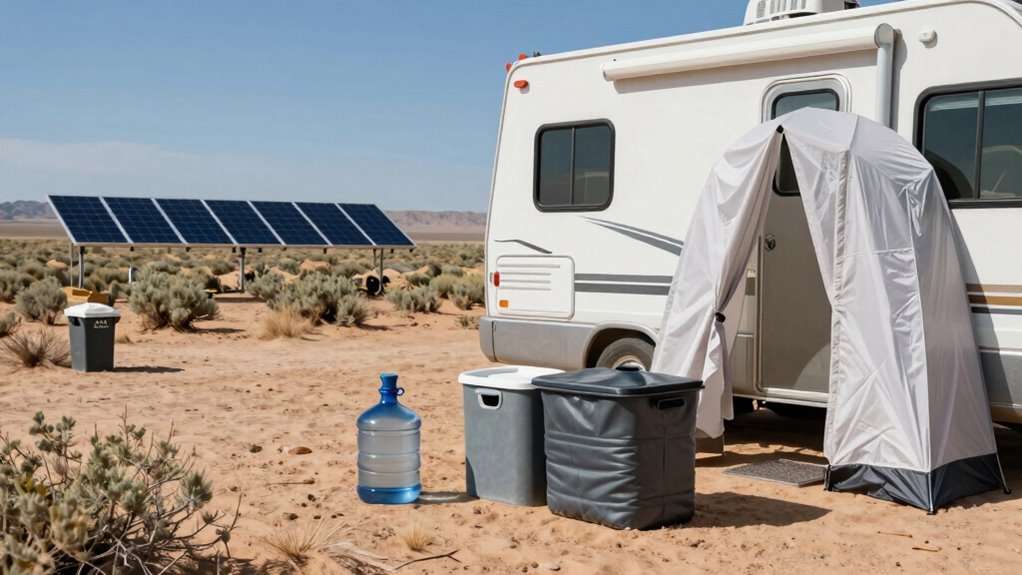
While you’re out chasing sunsets and wide-open spaces, the last thing you want is a growing pile of trash or a full gray tank cutting your adventure short—so let’s get clever about cutting down waste before it starts.
Buy snacks and staples in bulk to dodge all those pesky wrappers, and choose concentrates or big bottles to save space and reduce plastic.
Swap paper towels and disposables for reusable containers, utensils, and cloths—they’re tougher, cut waste, and look cooler anyway.
Scrape food scraps into the compost instead of the sink, and use that leftover dish water to flush the toilet (your tank will thank you).
Wash dishes in a basin outdoors, and always use biodegradable soap if water goes on the ground.
Pack a foot-pedal trash can with a grocery bag liner to keep stinks sealed.
With smart swaps and a little hustle, you’ll stretch your stay and keep Mother Nature smiling.
Practicing Leave-No-Trace Principles
When you’re out in the wild, leaving nothing behind means more than just packing up your tent—it’s about making sure nature stays as pristine as you found it, one smart move at a time. You’ve already minimized waste, now take it further by practicing true Leave-No-Trace magic. Here’s how to vanish like a forest ninja:
- Pack out everything, from snack wrappers to used toilet paper—yes, even that orange peeling isn’t as “natural” as you think-
- Bury human waste in catholes6–8 inches deep,200 feet from water and camp, then cover it so well even a squirrel won’t suspect a thing-
- Scatter dishwater (after straining!) far from streams, using eco-soap sparingly—your soap suds aren’t part of the local wildlife’s diet
Brush out footprints, replace rocks, and leave tentsites looking untouched. Nature throws epic parties—be the guest who leaves no mess, just memories.
Frequently Asked Questions
Can I Drink RV Freshwater if It’s Been Sitting for Weeks?
You probably shouldn’t drink that RV freshwater if it’s been sitting for weeks—it might look fine, but invisible bugs could be partying in there.
Warm, dark tanks are their favorite club.
Even if it smells okay, play it safe.
You wouldn’t sip mystery sludge from a forgotten soda, right?
Treat your water like you treat leftovers: when in doubt, pour it out and sanitize the tank.
How Do I Prevent Frozen Pipes While Boondocking in Winter?
You turn into a winter warrior by wrapping pipes like a mummy with heat tape and insulation—seriously, double them up!
Pop on heating pads that kick in when it drops below 40°F, and don’t forget tank warmers.
Skirt your RV to trap heat, run the furnace, and keep that water heater blazing.
Drain low points, seal gaps with spray foam, and laugh at Jack Frost—he ain’t got a chance.
Is It Safe to Use Biodegradable Soap for Gray Water?
Yeah, biodegradable soap isn’t automatically safe for gray water—don’t let the label fool you!
It might still hide nasties like boron or sodium that’ll wreck your plants and soil over time.
You’ve gotta read the ingredients like a detective.
Skip anything with bleach, powder, or mystery junk.
Stick with trusted picks like Dr. Bronner’s or Oasis, and your garden will thank you—no drama, just happy, soapy bubbles doing good work!
What Should I Do if My Gray Tank Freezes?
An ounce of prevention beats a pound of thaw, right?
If your gray tank freezes, don’t panic—you’ve got options.
Grab a kettle, boil water with your propane, and carefully pour it down the drain.
Focus on P-traps and visible lines; they freeze first.
Use heat tape or a heating pad if you’ve got one.
And hey, next time, a splash of antifreeze might save your bacon—literally, it’s that good!
Can I Compost Human Waste Instead of Using a Black Tank?
You can compost human waste, but only if you’re patient and careful—your toilet won’t do all the work!
Regular composting needs 120 days at 160°F to kill germs, which most setups don’t hit.
Bag the solids and toss them in diaper-friendly trash bins instead.
Never dump on the ground—it’s illegal and gross to the next camper. Think of it like diaper duty: out of sight, out of mind, and definitely not a trailside souvenir!
Conclusion
You’ve got this, like a duck gliding calm on a lake—effortless and in control. By using water smartly and dumping waste right, you stay free to roam. Every drop counts, every choice matters, and yeah, even your black tank can be low-drama. Toss nothing, track nothing, leave only footprints. Now go, chase those wild horizons, your RV humming happily behind you.
References
- https://blog.campingworld.com/learn-to-rv/how-do-rv-water-systems-work/
- https://www.keystonerv.com/owners/understanding-your-fresh-water-system
- https://www.thorindustries.com/stories/rv-systems-water-power
- https://rvfilluck.com/blogs/gear-guide/understanding-rv-water-systems-components-maintenance-and-troubleshooting
- https://fixyourcamper.com/beginners-guide-to-rv-campers-water-and-plumbing/
- https://www.youtube.com/watch?v=RM_2B_VbfXo
- https://helpcenter.hymer.com/hc/en-001/articles/16946039283613-How-long-does-100-liters-of-water-last-in-a-motorhome
- https://www.travelswithted.com/rv-water-tank-size-calculator/
- https://www.rvezy.com/blog/rv-holding-tanks
- https://glacierfreshfilter.com/blogs/news/water-saver-calculator-how-much-water-can-you-save-at-home