How to Manage Trash and Waste Off-Grid
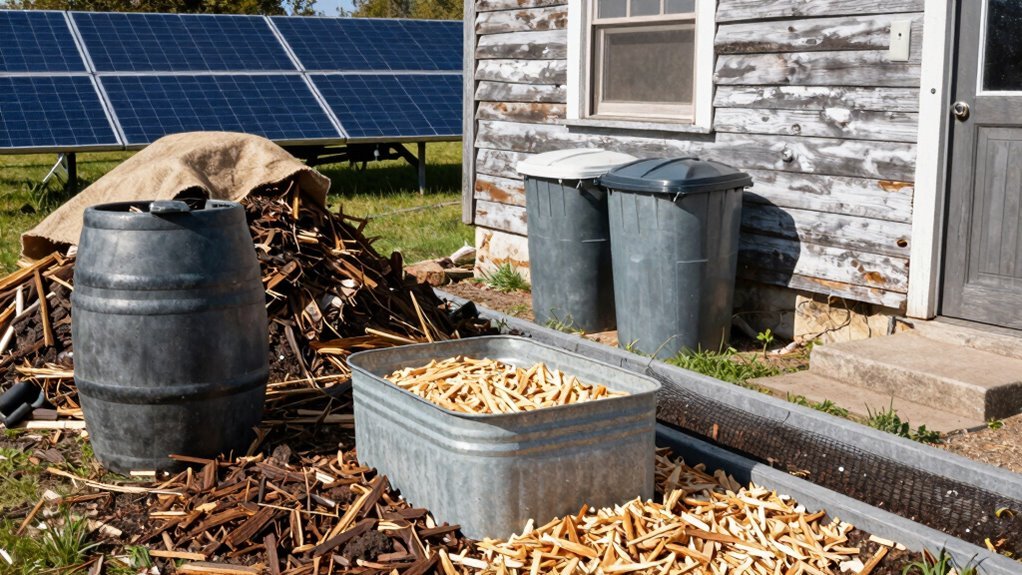
Managing trash and waste off-grid is all about reducing, reusing, and responsibly disposing of materials. Compost food scraps using hot piles or worm bins to turn organic waste into valuable soil.
Reuse jars, bottles, and containers for storage, gardening, or DIY projects to minimize waste. Avoid single-use items whenever possible to cut down on off-grid trash at the source.
Bury biodegradable waste in designated trenches to prevent odors and pests. Recycle by sorting metals, glass, and other recyclables for future drop-off at approved facilities.
Store hazardous materials like batteries and electronics safely until they can be disposed of properly. Burn only in clean-burning rocket stoves, using dry, non-toxic materials to minimize pollution.
Repurpose old clothes and textiles—turn worn socks into rags or garden tools. Reducing waste off-grid means getting creative with what you already have.
Composting Organic Waste Efficiently
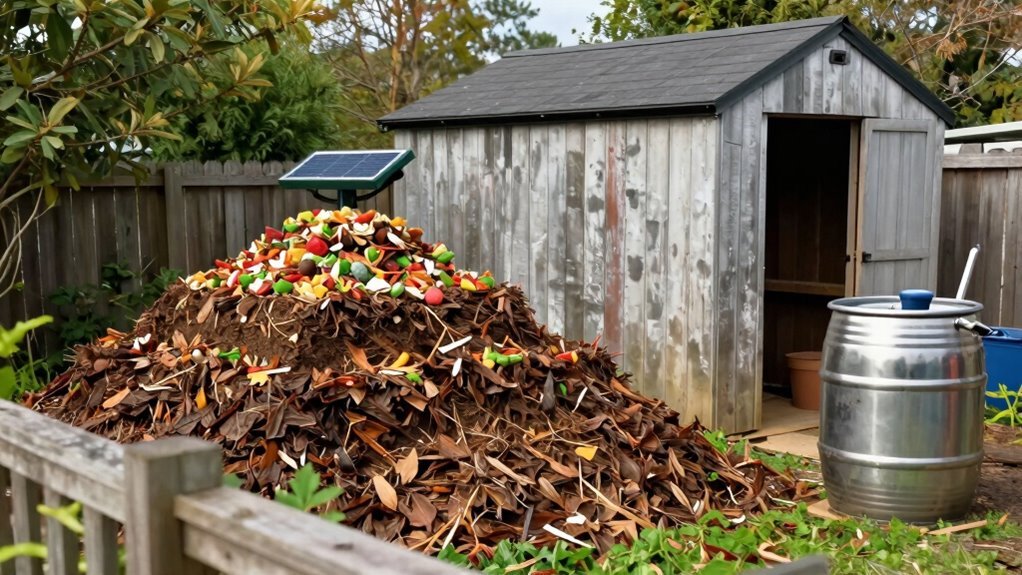
Turning scraps into garden gold has never been easier—or more fun.
You pile up kitchen waste, add nitrogen boosters like coffee grounds or horse manure, and let nature do the magic.
Try Berkeley hot composting for results in just 18 days—keep it toasty under a black plastic tarp that traps heat but breathes, so microbes thrive.
Or go simple: dig a hole, bury scraps in a trench, cover with soil, and skip the bin entirely.
It’s stealth composting—pest-proof and perfect right where plants grow.
You’ll top-dress beds with rich, dark compost later, giving veggies a nutrient boost they’ll love.
Use a tumbler to turn, aerate, and speed things up without the backache.
Or try Bokashi indoors—ferment scraps with bran, then tuck them into the soil like buried treasure.
Even worms can work for you—just set up bedding, add scraps, and let red wigglers munch away.
This process not only reduces landfill waste but also supports organic waste recycling for sustainable gardening.
Reducing Waste at the Source
Skipping the trash pile entirely starts with a little smart shopping swagger—choose items with less or no packaging and feel good about dodging waste before it even hits your door.
You’ll cut down big time by buying in bulk and skipping the plastic junk that comes with single-serve stuff.
Bring your own jars, bags, and containers to stores that allow it—bonus points if you rock up with a cool tote and say, “No bag, thanks.”
Refuse the fluff, the wrap, the unnecessary foam—just say no.
Plan meals and purchases so you don’t overbuy and toss.
Opt for durable stuff over disposables, and check what your local recycler actually takes.
When you do bring something in, make sure it’s not just useful, but *un*-wasteful.
Every smart choice you make at the store means less junk to haul out later.
Win-win.
Consider adopting a pack in, pack out mindset, especially if you’re living seasonally or recreationally off-grid, to ensure all waste is properly managed and disposed of responsibly.
Reusing and Repurposing Household Items
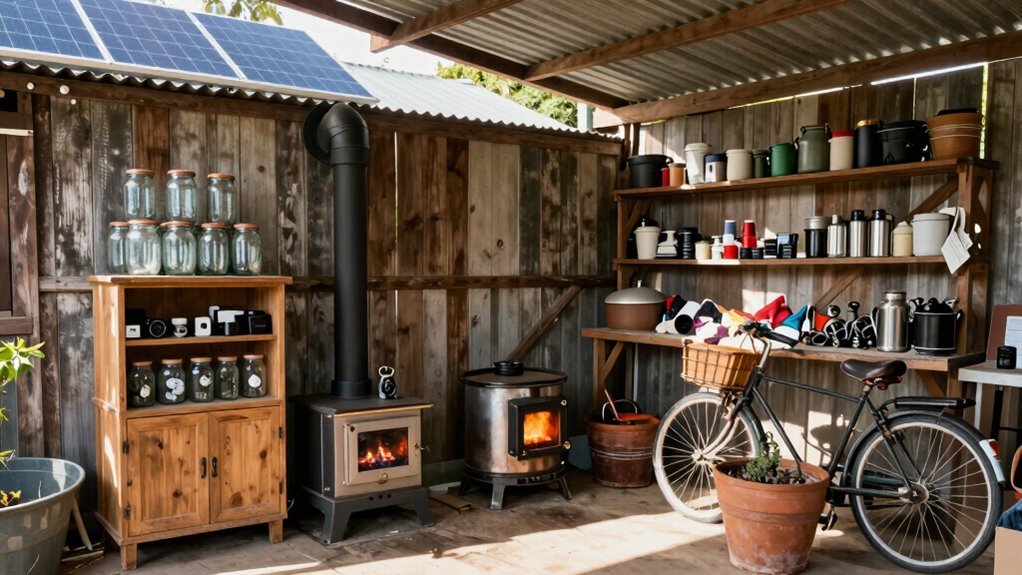
Breathe new life into things you’d normally toss, and watch your junk drawer turn into a treasure trove of clever solutions.
Turn yogurt cups into pantry organizers or use empty jars as cute leftover keepers—maybe even funky lamps!
That chipped pen holder?
Fill a Chinese takeout container instead.
Got old towels?
Chop them into rags or stitch soap pockets for scrubby mitts.
Worn-out clothes?
Wrap them around bottles to make hanging soap savers.
Plastic bottles?
Snip ‘em into bird feeders, planters, or self-watering gardens with yarn wicks.
Five-gallon jugs?
They’re gold for bulk storage.
Suitcases with busted handles?
Slap on casters and tuck ‘em under the bed.
And hey, who knew cracked chalk could hide wall holes or clothespins could silence wobbly windows?
Even soda can tabs can jingle into curtain charm.
Waste no more—your clutter’s just unmet potential waiting to shine! This mindset echoes the use-it-up-wear-it-out philosophy promoted by MOTHER as a practical path to living better for less.
Sorting and Managing Recyclables Off-Grid
Sorting your recyclables off-grid mightn’t sound like a wild adventure, but imagine this: you’re giving old solar panels a second act, turning what was bound for a landfill into bright, clean energy somewhere else.
You’ve got the power to make a real difference, one sorted component at a time.
Here’s how to crush it:
- Pull apart glass, aluminum, copper, and silicon by hand—like a DIY detective.
- Focus on panels that can be fixed instead of trashed—some just need new life.
- Use smart tools or apps like Electra to reroute working panels to where they’re needed.
- Skip energy-heavy methods; direct recycling saves more and harms less.
- Remember: less than 10% get recycled now—so your effort boosts a tiny but mighty crew.
You’re not just sorting—you’re sparking a green revolution, one panel at a time.
Dealing With Non-Compostable and Non-Recyclable Trash
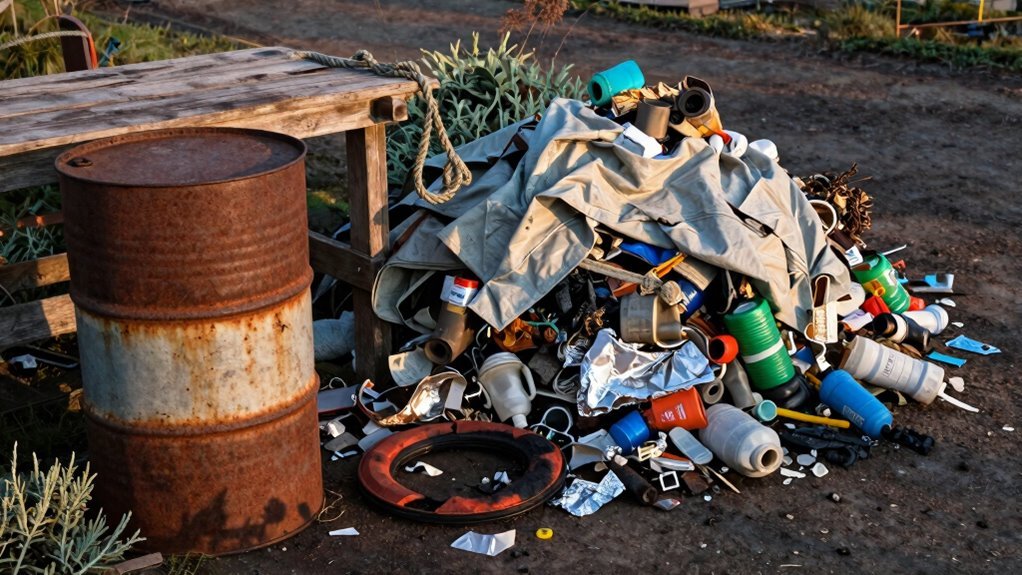
Now that you’ve got your recyclables sorted like a pro—congrats, by the way—let’s tackle the trickier stuff: the non-compostable, non-recyclable trash that just won’t break down or be reborn as something cool.
You’ll want to pack it out, storing it in sealed containers so critters don’t throw a trash party.
Use tough compostable bags to cut down on stink and volume, and save up for monthly trips to distant drop-off points.
Burn paper and wood in approved barrels—just skip the plastics, unless you enjoy toxic fumes and angry neighbors.
For serious reduction, incinerate waste in high-heat systems that turn garbage into ash or even electricity.
Skip hazardous junk like batteries and chemicals, and reuse things like sandbags for grimier bits.
Every bit you reuse, burn, or haul out keeps your off-grid paradise cleaner—and way less *Full House* basement episode.
Building and Maintaining a Worm Composting System
Turning scraps into black gold has never been this easy—or this slimy.
- Pick a Rubbermaid tote or stackable bin, drill small holes for airflow and drainage, and skip the bottom one as a catch basin.
- Prep bedding with soaked cardboard, coconut coir, and a squeeze-wet sponge vibe—no puddles, just cozy and damp.
- Toss in red wigglers (about a pound per square foot), let ‘em settle for a day—they’re shy on first dates.
- Feed weekly with buried fruit and veg scraps, but go slow—worms won’t rush to digest a feast.
- Watch them migrate up to fresh layers, then harvest rich castings from below like nature’s slow cooker.
You’re not just composting—you’re running a five-star worm resort. With air holes, grit snacks (hello, eggshells!), and a little love, your slimy roommates will turn peels into plant gold while you sip coffee and take credit.
Safe Disposal of Hazardous Materials
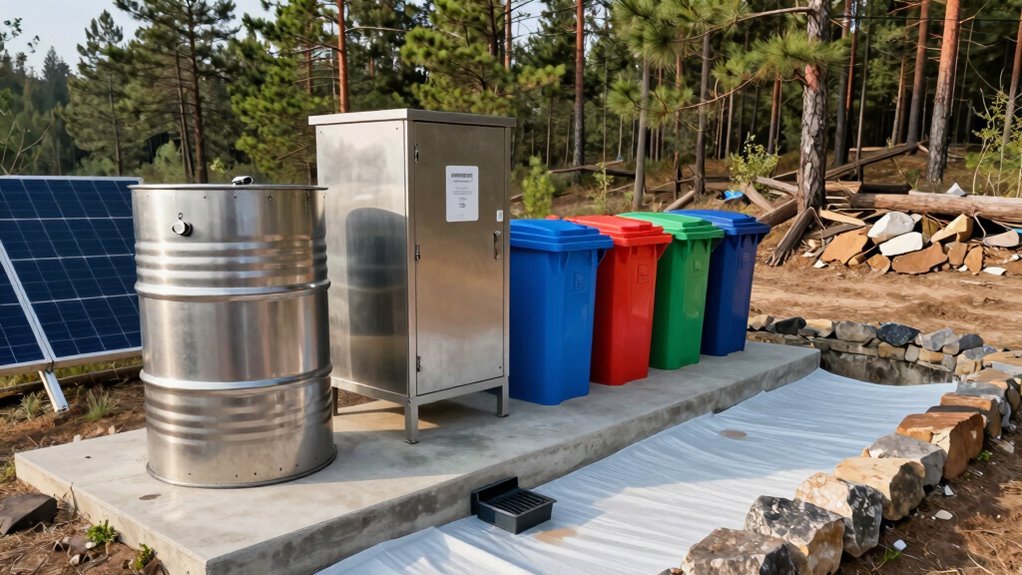
You’ve got your worms happily munching scraps and turning dinner leftovers into garden gold, but not everything breaks down with a little wiggle and time—some stuff needs a more careful exit strategy.
Don’t toss batteries, paint, or old electronics in the compost or burn them in a barrel—no, your worms won’t appreciate that toxic surprise.
Instead, pack out all hazardous materials, especially in remote spots, and haul them to approved drop-offs or transfer stations.
For things like spent wood or circuit boards, licensed landfills with safe linings do the job.
Riskier stuff, like radioactive or medical waste, goes deep underground—leave that to the pros.
Speaking of pros, rely on waste brokers or cleanup services for spills, tank cleaning, or ongoing e-waste.
And hey, never mix chemicals with greywater—your garden (and the planet) will thank you.
Play it smart, stay safe, and keep that off-grid life clean.
Constructing and Using a Rocket Stove for Waste Burning
If you’re looking to turn scraps into smoke with serious efficiency, a rocket stove might just become your new off-grid best friend. You’ll burn waste clean and hot without wasting fuel or time. These clever stoves are simple to build and pack a surprising punch—perfect when the grid’s gone or you’re living light on the land.
- Stack 25 bricks in a U-shape with a metal grate for a firebox that roars like a tiny dragon
- Slide twigs and dry trash into the chamber where oxygen floods in and fuels a near-complete burn
- Boil water or incinerate bits right over the chimney using two bricks as a makeshift stove top
- Whip up a version in minutes with cinder blocks or tin cans—no fancy tools needed
- Punch holes in the base so air zips through, making your fire happier (and less smokey)
Burn smarter, not harder—and let your trash go out with a bang.
Frequently Asked Questions
How Do I Prevent Animals From Digging up My Compost?
You keep animals from digging up your compost by layering yard waste around the bin’s edges and burying food scraps in the center under soil, leaves, or sawdust—like a trashy lasagna!
Cover scraps every time, use secure mesh on vents, and sprinkle hot pepper around.
Add cats for patrols or call a pro if critters get too bold.
Outsmart them, don’t let them snack!
Can I Compost Pet Waste in a Worm Bin?
Yes, you can compost pet waste in a worm bin—picture red wrigglers happily munching through dog poop like it’s a buffet!
Just keep a separate bin, mix waste with bedding, and skip the cat litter unless it’s paper-based.
Add kitchen scraps, stir weekly, and keep it moist but not soggy.
Your worms’ll thrive, and you’ll turn waste into garden gold—all while dodging stinky surprises and keeping critters uninterested.
Win-win!
What’s the Best Way to Store Full Trash Bags Off-Grid?
You stash full trash bags in a cargo carrier strapped to your ride—it’s sturdy, keeps odors away, and saves space inside.
Or, slide ‘em into a GearDeck with lockable storage—no more jostling on bumpy trails!
If you’re tight on room, use foldable cans that collapse like magic.
Just seal bags tight, double-check for leaks, and hey, bonus points if they don’t attract every curious raccoon within five miles!
Is Burning Plastic Ever Safe in a Rocket Stove?
No, you’re not safe burning plastic in a rocket stove—ever.
Those cozy flames can’t handle plastic’s toxic fumes, like dioxins and hydrochloric acid, even if it looks like it’s burning clean.
Your stove’s max heat still falls short, and without serious tech, you’re just poisoning the air.
Skip the chemistry experiment; save the plastic for recycling or proper disposal.
Keep your fires wood-only, safe, and smoke-friendly for you and the planet!
How Often Should I Clean My Worm Composting System?
You should clean your worm compost every four months for best results, but don’t stress—twice a year works if you’re laid-back.
Just keep it damp like a wrung-out sponge, not soggy!
When harvest time rolls around, skip feeding for a week, then use the molasses trick to party-proof your bin—worms love it, and you’ll get clean castings fast.
Win-win!
Conclusion
You’re not just cleaning up, you’re turning scraps into soil gold, like a modern-day alchemist in flip-flops. Every jar reused, every worm happy in its bin — you’re writing a quieter, greener story. So when you fire up that rocket stove under a star-strewn sky, know you’re not just burning waste, you’re lighting the way to a cleaner, cleverer life off the grid — and honestly, you’ve never looked cooler doing it.
References
- https://acornlandlabs.com/blogs/news/sustainability-off-grid
- https://gardensthatmatter.com/infographic-best-compost-method/
- https://debraleebaldwin.com/succulent-how-to/best-inexpensive-compost-method/
- https://homesteading.rusticskills.com/homestead-gardening/ultimate-guide-composting-basics/
- https://deepgreenpermaculture.com/2010/05/08/hot-compost-composting-in-18-days/
- https://learn.eartheasy.com/guides/composting/
- https://www.epa.gov/recycle/composting-home
- https://intheknowandprepared.com/off-grid-composting-a-sustainable-waste-solution/
- https://www.mwranches.com/blog/waste-solutions-for-remote-cabins-and-camps
- https://energy.briggsandstratton.com/na/en_us/resources/article-categories/resource-articles/off-grid-living-guide1.html