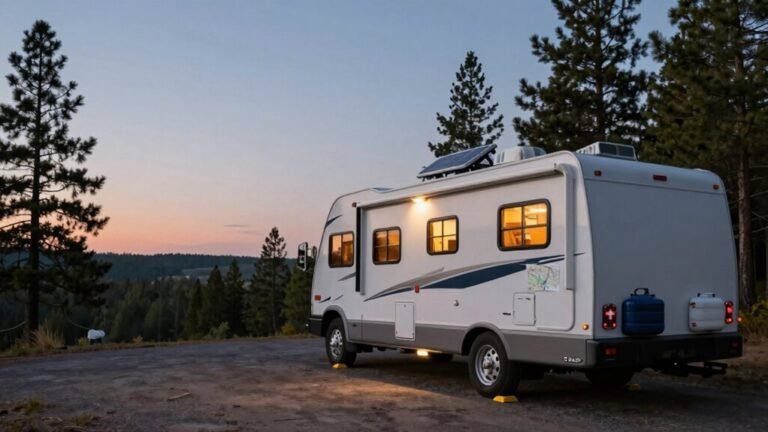
Tips for Living in Your RV During Winter
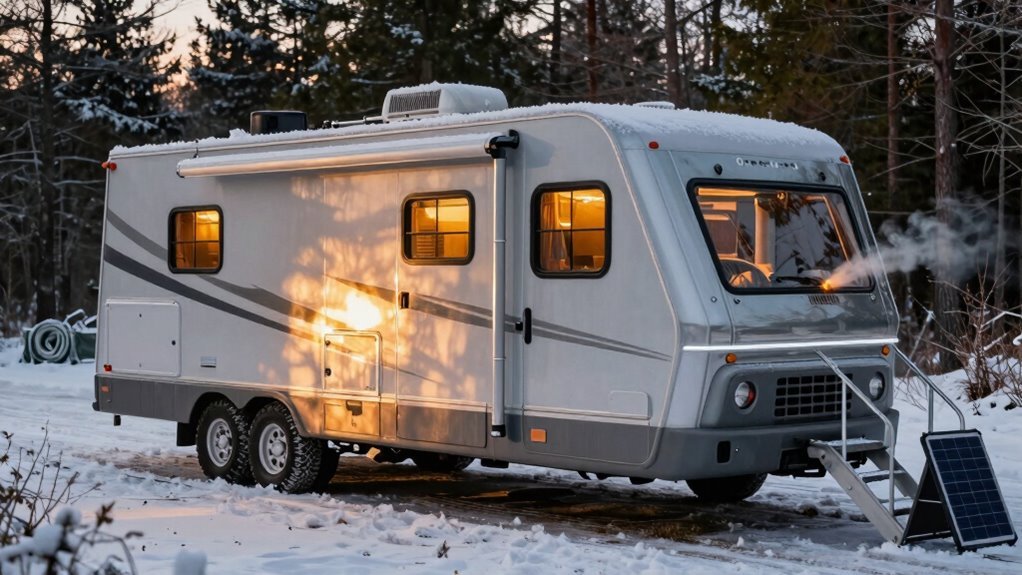
You’ve got this, winter warrior! Living in your RV during winter is doable with the right prep.
Insulate your floors and windows with Reflectix to block cold sneaks, slap on thermal curtains, and seal drafts like a pro. These steps are key for efficient living in your RV during winter.
Run a Mr. Heater Buddy for cozy, safe warmth without draining power. It’s a reliable heat source for your winter RV living setup.
Wrap pipes, keep water flowing, and stash antifreeze like it’s gold. This prevents freezing and keeps your plumbing functional.
Add layers, sleep snug, and park in sunny spots. These small choices make a big difference when living in your RV during winter.
Insulate Your RV for Maximum Heat Retention
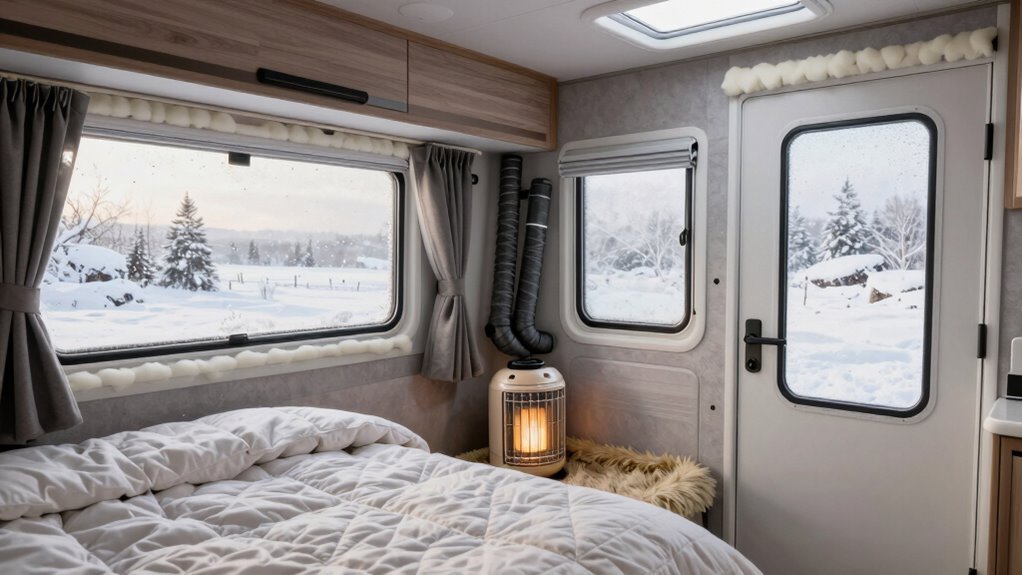
Ever wonder why your toes turn into little ice cubes the second you crawl into bed? That chill is sneaking in through uninsulated storage bays under your mattress. You can stop it—just slide foam board or Reflectix underneath to block the cold rising from below. You’ll feel the difference fast.
Don’t forget windows, either; slap on Reflectix cut slightly larger than the opening—it stays put with friction and traps heat like magic. Double it up with a gap between layers for even better insulation.
And hey, toss a pillow or DIY cover over skylights at night—heat loves to escape upward!
Seal drafty doors with foam inserts and spray foam, and use Tyvek tape to lock in warmth.
Wrap pipes, too, unless you enjoy frozen surprises.
It’s all about stopping cold where it sneaks in. Upgrade to double-paned windows for significantly better insulation during harsh winters. Stay toasty, not frosty!
Use Thermal Curtains and Window Covers
You’ve already blocked the cold from creeping in under your bed and sealed up sneaky drafts around windows and doors—now turn your attention to the glass.
Swap flimsy blinds for thick, cozy thermal curtains that trap warm air like a hug for your windows.
Made with foam backing or layered fabric, they slash drafts, cut condensation, and keep heat from sneaking out.
Measure carefully and hang rods close to the glass, letting panels stretch floor-to-ceiling for max snuggle power.
Add a cute pelmet to lock in warmth, or slap Reflectix behind them for extra muscle.
These heavy-duty shields don’t just fend off frosty mornings—they slash heating bills and stretch battery life off-grid.
You’ll sleep warmer, save money, and gain privacy and peace.
Plus, they look way better than cardboard (not that we’ve all tried that… right?).
Winter-ready windows? Yes, please.
They work year-round by also reducing heat gain during warmer months, keeping your RV cooler without overworking the AC.
Invest in a Reliable Portable Heater
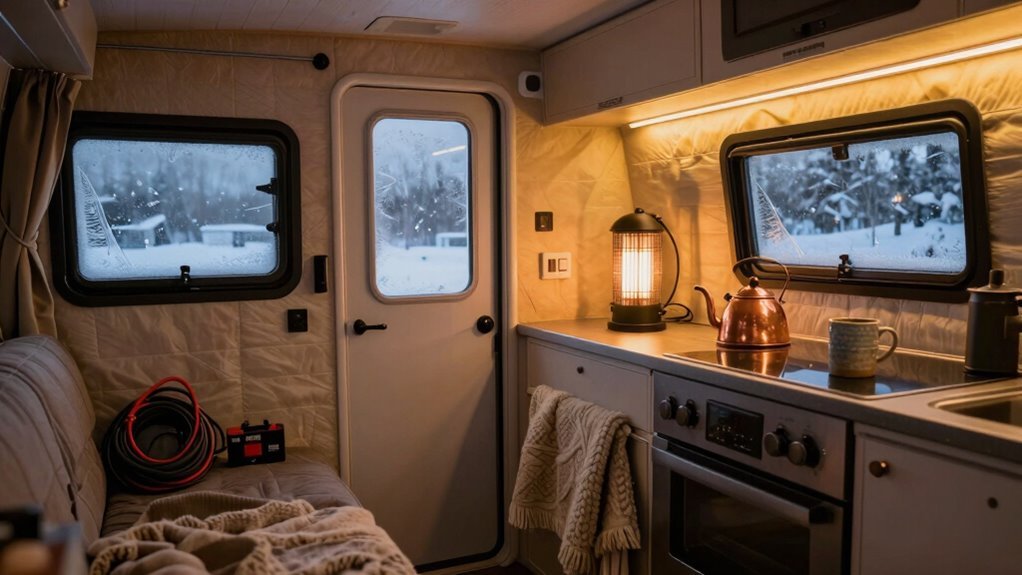
A warm, toasty RV on a frosty winter night isn’t just a dream—it’s totally doable with the right portable heater humming in the corner.
You’ve got options: go propane with a Mr. Heater Little Buddy for cozy, budget-friendly warmth, or step up to a Camco Olympian Wave-3 for silent, efficient heat.
If you’re camping large or need serious power, the Vevor 12V diesel heater sips fuel but delivers big—just one gallon per night!
Electric lovers, grab an Xtreme Heater with PTC tech to stay safe and steady all night.
These heaters are tough, RV-tough, and built to keep you comfy without turning your rig into a sauna.
And hey, no more wearing three jackets indoors—we’re aiming for livable, not frozen burrito mode.
Just pick your favorite, plug it in (or fire it up), and enjoy your winter wonderland from a delightfully warm seat.
For added safety and peace of mind, always ensure your propane heater has automatic shutoff features like those emphasized in Safety-focused guidance.
Protect Your Plumbing From Freezing
Keeping your RV’s plumbing happy in winter isn’t just smart—it’s essential, unless you enjoy the sound of bursting pipes on a freezing morning.
Wrap exposed pipes with heat tape and cover them in foam insulation to keep things cozy—think of it as a warm hug for your plumbing.
Use RV-safe antifreeze (the non-toxic kind—nobody wants a minty toilet surprise) and a bypass kit to pump it through the whole system.
If you go the air compressor route, blow out the lines but don’t skip antifreeze in traps—water’s sneaky when it hides in bends.
Spray foam and underbelly insulation? Worth every penny for full freeze defense.
Keep your interior above 65°F and crack open cabinet doors so warm air cuddles those pipes.
With a little prep, your plumbing will stay as chill (but not frozen) as you’re on a snowy morning sipping coffee.
Upgrade to Four-Season RV Tires
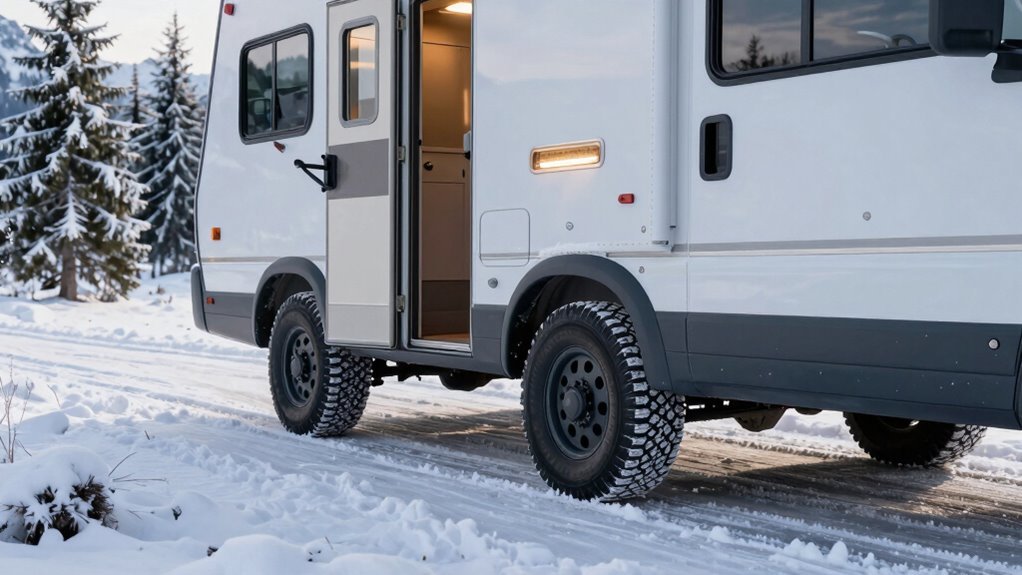
When the road ahead gets slick with snow or splashed with slush, your RV’s tires are the only thing standing between you and a wintertime wobble—and that’s where four-season RV tires shine.
You’ll get deeper grooves and notched treads that bite into snow while staying flexible in freezing temps, thanks to special rubber that won’t stiffen up.
They’re certified for winter use (hello, Three-Peak Mountain Snowflake!), so you’re safe when flakes fly.
Perfect for mild winters and occasional snow, these tires handle rain, slush, and even dry roads like champs.
No more switching tires seasonally—save space, skip the hassle.
They start around $190, come in loads of sizes, and fit most RVs with proper load and speed ratings.
Think of them as your all-weather co-pilots: steady in snow, stable in rain, and surprisingly quiet.
You’ll grip the road confidently year-round—because sliding into the New Year? So not the vacation vibe.
Utilize Skirting Around Your RV
Wrapping your RV in skirting is like giving it a cozy winter scarf—only way more effective and slightly less fashion-forward. You’ll block icy winds from sneaking under your camper, which helps keep pipes and holding tanks from freezing and bursting. It traps warm air seeping from the floor, creating a buffer zone that fights off the cold.
Plus, your heater won’t have to work as hard, saving you propane and cash. You’ve got options: vinyl’s affordable and easy to install, foam board offers top insulation, and EZ Snap handles -40°F without a drill.
Plywood’s sturdy but heavy, while insulated skirting balances price and warmth. Most systems are DIY-friendly and reusable, too. For a few hundred bucks—or a few thousand for high-end setups—you’ll stay warmer, safer, and skirting might just become your favorite winter accessory.
Who knew practical could be this cool?
Conserve Energy With Smart Power Usage
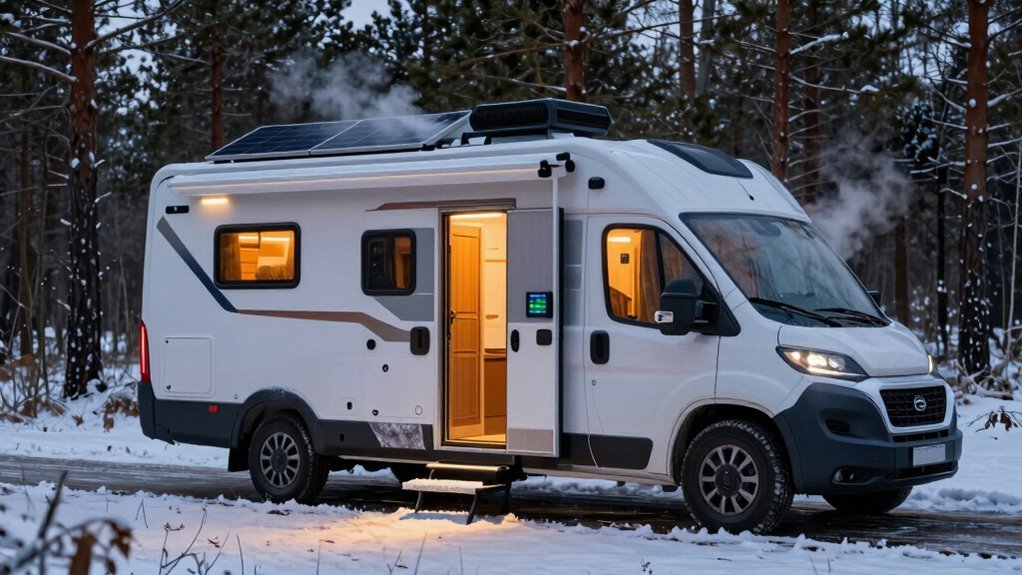
Now that you’ve wrapped your rig in cozy skirting like a burrito ready for the winter chill, it’s time to think about what’s happening inside—specifically, how you’re using power and keeping warm without draining every last drop of juice.
Throw up thermal curtains or custom shades—your windows are sneaky heat thieves. Seal doors and vents too; warmth loves to escape where you least expect it.
Run your furnace smartly: set it low at night, keep it maintained, and remember it guzzles propane when it’s frigid. You’ll burn more fuel than you think, so monitor that tank and refill early—frozen valves are *not* fun.
Solar won’t cut it in short winter days, so lean on hookups or a generator.
And hey, cook more meals inside! You’ll stay warm *and* feed your inner furnace. Extra calories mean cozy calories—bonus!
Maintain Proper Ventilation to Prevent Condensation
Even though you’re snug as a bug in your winterized RV, don’t let that cozy vibe turn into a steamy sauna.
Trapped moisture wreaks havoc—think soggy walls, foggy windows, and surprise mold parties.
Yuck!
You’ve gotta keep air moving to stay dry and healthy.
Breathe life into your rig with smart ventilation that kicks condensation to the curb.
Here’s how to stay fresh all winter long:
- Run roof vent fans daily—they’re your no-fuss moisture busters.
- Check seals around vents and AC units, replacing cracked goop before sneaky vapor slips in.
- Install insulating covers on skylights to stop frosty glass drama.
- Never skip monthly fan checks—dusty or sluggish fans won’t cut it.
A few minutes of effort saves you from a mushy, moldy mess later. Stay breezy, not damp and drafty!
Prepare for Winter Boondocking Safely
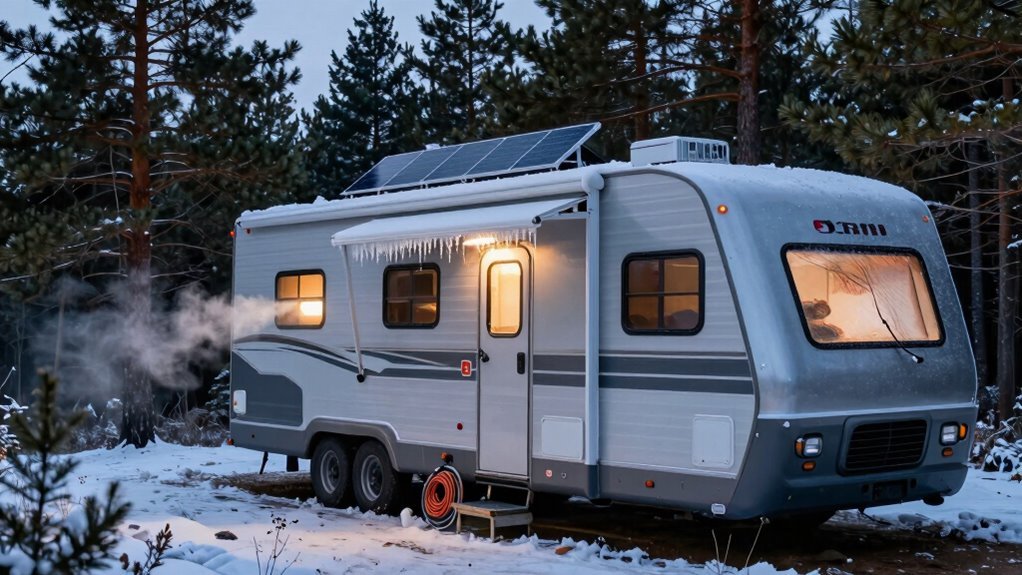
Staying warm and safe while boondocking in winter isn’t just about toughing it out—it’s about smart prep that turns freezing nights into cozy adventures.
Insulate your RV with Reflectix on windows, foam in ceiling fans, and skirting or Airskirt under the belly to keep heat in and cold out.
Use your RV furnace or a propane Buddy Heater, but skip electric heaters near clutter—they’re fire risks.
Place heaters safely and check your thermostat’s spot so it reads temps right.
Prevent frozen pipes by filling fresh water tanks, adding RV antifreeze, and using heated hoses if needed.
Pick winter-friendly spots in the Southwest using Campendium or FreeCampsites.net, ideally with hookups to stretch your battery life.
Pack warm layers, a solid sleeping bag, and emergency gear—because yes, you *can* boondock in winter, and no, you don’t have to freeze like a Popsicle to do it.
Stock Up on Essential Winter Supplies
- RV antifreeze – Keeps your plumbing from turning into an icy science experiment
- Thermal base layers and extra socks – Because cold toes are a crime against comfort
- Non-perishable meals and a trusty thermos – For when cooking feels like a polar expedition
- Carbon monoxide detector and fire extinguisher – Your quiet heroes during sleepy winter nights
Stay stocked, stay snug, and keep the cocoa hot!
Frequently Asked Questions
Can I Use a Space Heater While Sleeping in My RV?
You can use a space heater while sleeping in your RV, but only if it’s safe and you’re playing it smart.
Pick one with tip-over protection and automatic shutoff, keep it 3+ feet from anything cozy like blankets or curtains, and never skip the carbon monoxide detector check.
Stick to low wattage, plug it in directly—no extension cords—and wake up to warmth, not worry.
Safety first, snooze champion!
How Do I Keep My RV Battery Charged in Cold Weather?
You keep your RV battery charged in cold weather by using shore power or a generator to fire up the charger when it’s chilly.
Your lithium battery won’t charge below32°F, so let built-in heaters or a heat blanket warm it up first.
Solar’s great, but pair it with a DC charger from your alternator for backup.
Monitor temps with Bluetooth, and never skip the manufacturer’s tips—your battery’s your winter BFF, so treat it right!
Is It Safe to Use a Propane Grill Inside the RV?
Nope, you’re never safe using a propane grill inside your RV—don’t even think about it!
It pumps out deadly carbon monoxide, sucks up oxygen, and could blow things up faster than popcorn at a movie night.
Plus, your cozy little home on wheels?
It’s basically made of kindling.
Skip the indoor BBQ dreams and save the grilling for outdoors where it belongs.
Safety first, snack lover!
What Should I Do if My RV Pipes Freeze?
You’re not stuck—start by thawing frozen pipes with a hair dryer or heat gun, slow and steady.
Don’t crank it, you’re cooking pipes, not pizza!
Check for cracks before turning water back on.
Keep warm air flowing—leave cabinet doors open, use heating pads, and crank the furnace.
Insulate well, because surprise bursts aren’t trendy in winter.
Stay proactive, stay cozy, and let your RV laugh at Jack Frost.
How Often Should I Check My Rv’s Insulation in Winter?
You should check your RV’s insulation every few weeks during winter, especially after a deep freeze or big storm.
Get in the habit of poking around windows, walls, and underbelly skirting—look for gaps, squishy spots, or drafts sneaking in like uninvited party crashers.
If something feels off, fix it fast.
Quick checks keep your heat happy and your toes toasty—because nobody likes icy surprises while wearing pajamas.
Conclusion
You might think winter RVing sounds icy and crazy, but with the right prep, it’s cozy and totally doable. Insulate, heat smart, and protect your pipes—then watch how your rig turns into a snug winter hideout. Toss in warm layers, hot cocoa, and a fearless spirit, and hey, you’re not just surviving winter… you’re owning it, one snowy morning at a time. Brrr-illiant!
References
- https://www.fulltimefamilies.com/how-to-insulate-a-camper-for-winter/
- https://www.youtube.com/watch?v=uu2HDSZ2u50
- https://www.youtube.com/watch?v=kxd2CK5bvPY
- https://www.insulationmarketplace.com/blogs/blogs/how-to-insulate-a-rv-trailer
- https://community.goodsam.com/discussions/fulltimerversforum-board/insulating-window-for-winter/2441159
- https://permies.com/t/147066/Winter-preparation-living-trailer
- https://glassdoctor.com/blog/why-should-homeowners-install-thermal-curtains-for-winter
- https://happiestcamper.com/rv-window-coverings/
- https://forum.rvusa.com/threads/top-5-curtain-materials-that-keep-your-home-warm-during-winter.16612/
- https://www.thebugwall.com/blogs/news/reasons-why-insulated-van-curtains-are-getting-more-popular