How to Keep Your RV Cool in Summer Heat
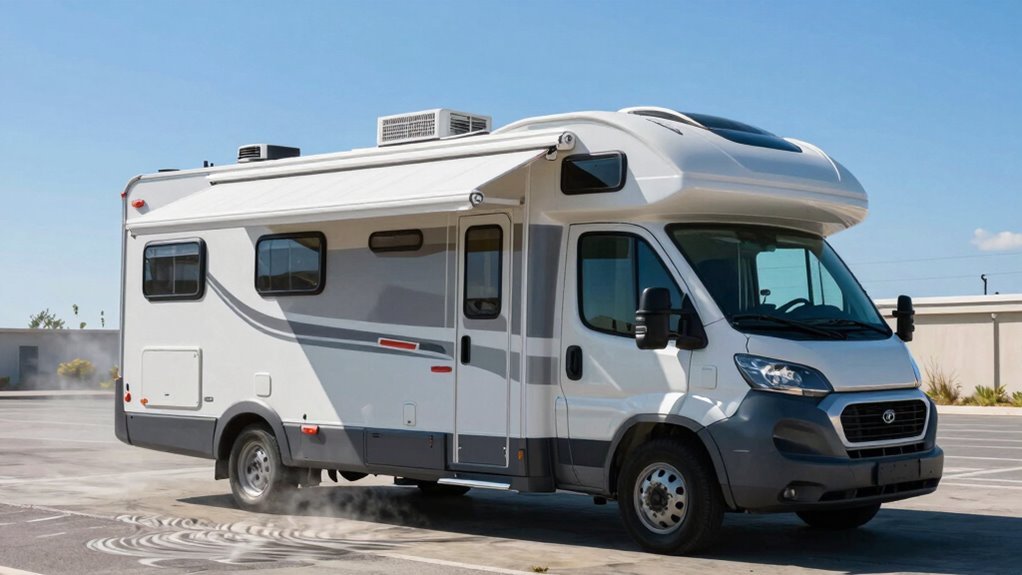
Park in the shade whenever you can—trees, carports, or even a trusty shade sail keep your RV from turning into a sauna. Toss up reflective window covers to bounce back that blazing sun and prevent excess heat from building up inside.
Crack open opposite windows to catch a cool cross breeze and improve airflow throughout the space. This simple ventilation strategy helps keep your RV cool in summer heat without relying solely on mechanical cooling.
Pop in a portable AC with enough power for your space, and let roof vents push out the hot air. These tools work together to maintain a comfortable interior temperature during peak sunlight hours.
Park in the Shade Whenever Possible
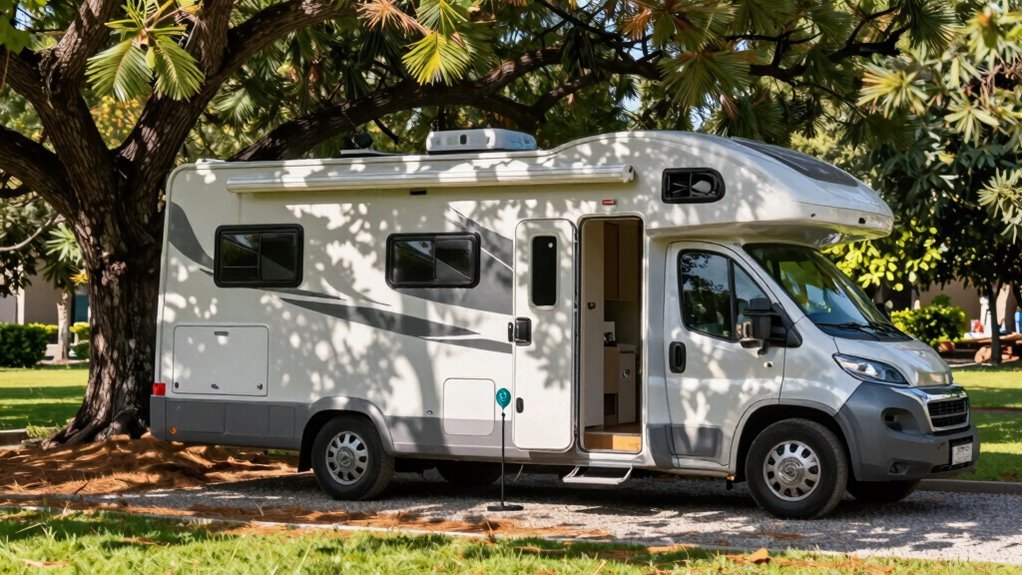
Imagine this: you step outside in the blazing summer heat, ready to hop into your RV for a fun adventure—only to be greeted by an interior that feels like a pizza oven. Yikes! But here’s the fix: park in the shade whenever possible.
It’s simple, smart, and seriously effective.
Shade keeps your RV’s inside cooler, so you’re not sweating buckets the second you open the door.
You’ll cut down on AC use, save fuel, and protect your dashboard from turning into a melted sci-fi prop.
Plus, your paint stays vibrant, your tires last longer, and your energy bills won’t skyrocket.
Think of shade as your RV’s best friend—it’s like sunscreen on a giant, awesomely practical scale.
Whether it’s trees, a carport, or a portable shelter, just find some cover.
Your future self—and your wallet—will high-five you.
Professional shade sail installations use tensioned fabric membranes to create reliable, long-term protection from the sun’s heat.
Use Reflective Window Covers and Blinds
You’ve already scored points by parking in the shade—nice move—but don’t stop there, because the sun’s sneaky and loves to sneak heat in through your windows.
Grab some reflective covers or blinds; they bounce sunlight away like tiny superhero shields.
Materials like Reflectix act as radiant barriers, keeping your RV cooler and cutting down on AC use—hello, energy savings!
Low-E options even let in light while blocking heat.
Magnetic mounts make installation a breeze, and reversible designs give you cooling by day and stealthy privacy by night.
Just make sure the reflective side faces out, or you’ll accidentally cook yourself like a slow-roasted burrito.
These covers also protect your furniture from sun damage and keep UV rays from fading your favorite camp chair.
Reduce A/C usage with reflective window covers designed to reflect sunlight and heat—this not only stabilizes interior temperature but also eases the load on your cooling system.
Pro tip: skip flimsy fabric-covered versions—they’re all talk.
Go for marine-grade or bubble-wrap styles that mean business.
Your future cool, comfy self will thank you.
Invest in Roof and Wall Insulation Upgrades

Grab your toolbox—upgrading your roof and wall insulation isn’t just smart, it’s a game-changer for staying cool on scorching summer days.
Swap out old fiberglass, which sags and absorbs moisture like a sponge, for rigid foam boards or spray foam that block heat like a superhero.
You’ll love how foam locks in cool air, especially when the sun’s turning your RV into a toaster.
Spray foam expands to seal every nook, while reflective roof coatings bounce sunlight away—team them up for a one-two punch.
Yes, spray foam’s trickier to apply, and fiberglass is cheaper, but trust us, better insulation means fewer midnight AC battles.
Think of it as a cool hug for your camper.
Protect your walls, roof, and peace of mind—because sweating in silence? So last summer.
Reflective insulation can dramatically reduce heat gain through sun-exposed surfaces.
Install Ventilating Fans for Continuous Airflow
Swap stale, sweltering air for a cool breeze that keeps your RV feeling fresh—even when the sun’s cranking up the heat. You’re not just surviving summer; you’re outsmarting it.
Start by measuring your roof’s opening—11×11 or 14×14 inches—then clean it with alcohol to ditch old gunk.
Cut a snug hole with a jigsaw, test-fit the flange, and pop those clips up slightly for smooth alignment.
Face the hinge front and the lid rear—that’s the sweet spot.
Seal it right: wrap butyl tape around the flange, press it down hard, roll it like you’re sealing a pancake flip, then caulk the seams.
Screw it in place, wire red to positive, white or black to negative—don’t fry the fuse now!
Power it up, spin that blade, and laugh as hot air high-tails it out.
Fresh air’s flowing, and so is your comfort.
Opt for Energy-Efficient Portable Air Conditioners
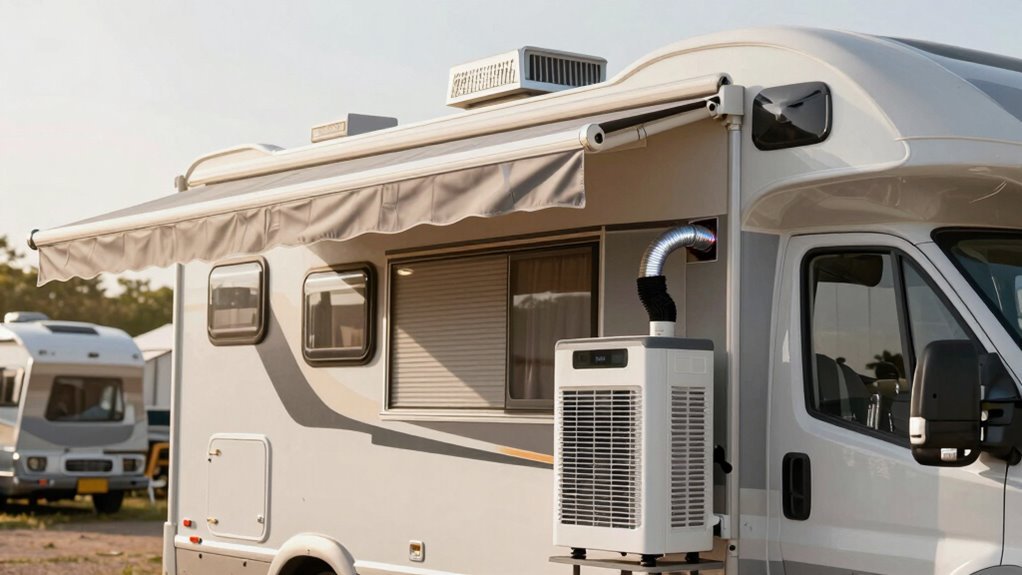
Chasing cool comfort on wheels just got smarter with energy-efficient portable air conditioners that pack serious chill without draining your power.
You’re not stuck choosing between icy breezes and killing your battery—models like BougeRV (3500BTU, just 400 watts) and Karinear (436 watts, app-controlled) keep things frosty while sipping energy.
Pick the right BTU for your space—3,000 to 5,000 for snug RVs—and enjoy cooling, dehumidifying, and fan modes in one compact box.
These lightweight champs (only 13–33 lbs!) hum quietly under 50 dB, so you’ll sleep like a bear in a snow cave—minus the snoring.
With remote controls, timers, and eco-modes, they’re smart, simple, and ready to roll.
Best part? No drills, no fuss—just roll it in, plug it in, and cool down without cooking your power budget.
Stay frosty, traveler—your mobile chill zone awaits!
Utilize Battery-Powered or Solar-Powered Fans
Beat the heat in your RV without burning through power—battery-powered and solar-powered fans are your secret weapon for staying cool when the sun turns your mobile home into a rolling sauna. You’ve got options: run a Ryobi hybrid fan on battery or shore power, charge up a Treva with a built-in light, or clip a quiet Gazeled fan right to your bunk. These fans sip energy but deliver serious airflow, perfect for boondocking or shaky hookups.
- A misting fan sprays a cool breeze that dances across your skin like a summer sprinkle
- Your 10-inch Uarter fan swivels 270 degrees, whispering sweet nothings as it lights your way
- A clip fan tucked under your shirt? Okay, maybe not dinner conversation, but it works
- Moonlit nights just got cooler—F6’s LED “sleep mode” glows like a silent lullaby
Close Off Unused Areas to Maintain Cooler Zones

Turn your RV into a cool, cozy retreat by shutting down the rooms you’re not using—think of it like giving the heat the slip by playing a little indoor hide-and-seek.
Close off bedrooms or storage areas to focus your AC where you actually hang out.
Use foam vent pillows in ceiling vents (they fit 14″x14″ like a glove) and pair them with outside covers to block heat from sneaking in.
Toss insulated Reflectix covers over skylights and sunny windows—yes, even the tinted ones that still bake like mini ovens.
Stick them on with hook-and-loop tape so they stay put.
Seal unused vents and doors tight; they turn into heat launch pads when left open.
With smart insulation and zone control, you’ll keep the chill where it counts and turn your RV into a summer haven.
Who knew staying cool could be this clever?
Cook Outside to Minimize Indoor Heat Buildup
Grilling under the open sky isn’t just about juicy burgers and smoky flavors—it’s your secret weapon for keeping the RV cool when summer heats up.
You skip the oven’s blast of heat, so your AC won’t run nonstop trying to catch up. Plus, you’ll slash electricity use and enjoy dinner prep more. Cooking outside keeps your space chill and lets you savor camp life to the fullest.
- Flames dancing as you flip burgers on a sizzling propane grill
- Foil packets cradling seasoned veggies, steaming gently over coals
- A cast iron skillet browning potatoes with a satisfying crackle
- The rich scent of garlic and herbs swirling from a camp stove skillet
You’re not just making dinner—you’re beating the heat with flair.
Open Windows Strategically for Cross Ventilation

Let the great outdoors do the heavy lifting and turn your RV into a breezy retreat by cracking windows just right. Open opposite windows to create a cool cross breeze—nature’s own air conditioner!
Position your RV so prevailing winds (usually west to east) flow freely through, and angle it so the biggest windows dodge that sizzling midday sun.
Use shaded windows during the day to draw in cooler air while keeping hot sunlight out.
Think of it like giving your RV a cool drink without the brain freeze.
And don’t forget roof vents—crack them open so hot air can escape upward like a steamy sigh of relief.
On still days, a little fan backup keeps things moving.
With a smart window strategy, you’re not just surviving summer—you’re throwing a welcome party for every invigorating breeze that passes by. Sweet, huh?
Travel During Cooler Parts of the Day
When the sun’s blazing overhead and your RV starts feeling like a baked potato, timing your travels smartly can be your secret weapon.
Hit the road early—think before 6 AM—and you’ll cruise in cooler temps, clearer light, and less glare, making driving safer and way more comfy.
Wrap up your journey by mid-morning, then chill in the shade while others melt.
When the day cools down, fire up the engine again after 6 PM and enjoy a peaceful, cooler ride under the evening sky.
- Rolling through mountain passes as the sun rises, air crisp and fresh
- Finding your campsite early, snagging the last shady spot like a pro
- Watching golden hour light dance across the horizon while you cruise
- Tucking into bed with a cool interior, no sweaty sheets in sight
Frequently Asked Questions
Can I Use Regular House Fans in My RV?
No, you shouldn’t use regular house fans in your RV—they’re built for homes, not wheels.
They gulp power, won’t run on 12V, and might fry your inverter.
Plus, they’re bulky and hate vibrations.
But hey, don’t sweat it! RV-specific fans sip energy, mount anywhere, and stay quiet.
They’re tough, portable, and perfect for adventures.
Swap the space-hogging fan for a cool little 12V buddy—you’ll save power and keep your cool, even when the road gets bumpy.
How Often Should I Clean My Rv’s AC Filter?
You should clean your RV’s AC filter every 1–3 months, or it’ll turn into a modern art piece titled “Dust Fort.” Seriously, if you’re camping in dusty spots or cooking up a storm, scrub it every month—it’s not a science experiment.
Peek at it often, and if it looks like a fuzzy beast, wash it.
Clean filters mean cold air, happy naps, and no surprise sneezes.
Don’t wait for it to choke—breathe easy and stay cool!
Will Tinting My Windows Help Keep the RV Cooler?
Yes, tinting your windows will absolutely help keep your RV cooler—you’ll notice the difference fast.
It blocks sneaky sun rays and slashes heat by up to 20°F.
You’re not just cooling the space, you’re upgrading comfort.
Plus, your AC won’t run like it’s training for a marathon.
Say goodbye to sweltering interiors and hello to chill vibes, even when the sun’s cranking.
Win-win!
Are Thermal Curtains Worth the Investment for RVS?
Oh, you *definitely* shouldn’t bother with thermal curtains—what’s the point of saving battery, right?
Spoiler: they’re totally worth it.
You’ll slash cooling costs, stretch your off-grid time, and sleep like a bear in a cave—cozy and dark.
They block heat, cut noise, and handle sun like champs.
Plus, your AC won’t sound like a jet engine.
Smart, tough, and kinda sneaky-efficient.
Don’t skip these—your future self, chilling in comfort, will thank you.
Can a Swamp Cooler Work in a Desert Climate?
Yeah, a swamp cooler can totally work in a desert climate—you’re in luck!
Super dry air helps it cool way better, often dropping temps by 20–30 degrees.
It’s also way cheaper to run than AC.
Just keep windows cracked for airflow, refill the water tank regularly, and enjoy the chill.
It’s like giving your RV a cooling desert breeze hug—no sweat, just sweet, cool comfort!
Conclusion
You’ve got this! Park in the shade, snap on those reflective covers, and let fans do the heavy lifting—your RV won’t feel like a pizza oven anymore. Cook outside, chill in cooler zones, and chase cooler breezes by traveling smart. With a few tweaks, staying cool feels easier than finding a snack in your pantry. Beat the heat like a pro and turn summer sizzle into sweet, sweet comfort!
References
- https://versatilestructures.com.au/the-importance-of-car-park-shade-structures/
- https://www.furnitureleisure.com/the-impact-of-shade-structures-on-parking-lots-and-vehicle-protection
- https://syzygyglobal.com/benefits-of-a-shaded-commercial-parking-lot-structure/
- https://sageoutdooradvisory.com/blog/data-insight-rv-sites-covered-vs-uncovered-rates/
- https://synergybuildersconstruction.com/construction-remodel-news/exploring-the-benefits-of-metal-car-parking-shade-structures/
- https://www.forestretreatrvpark.com/covered-sites-improve-your-rv-experience-and-save-money/
- https://www.rvtravel.com/shade-sun-parking-1628/
- https://www.usa-shade.com/blog/top-7-advantages-of-adding-shade-structures-to-outdoor-areas/
- https://www.mesaawning.com/blog/5-reasons-your-rv-needs-a-carport/
- https://www.nrpa.org/parks-recreation-magazine/2023/june/shade-adds-value-to-your-park/