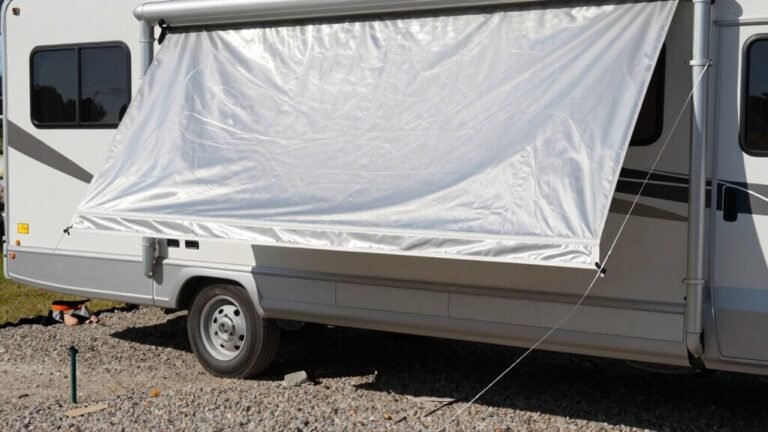
How to De-Winterize Your RV for Spring
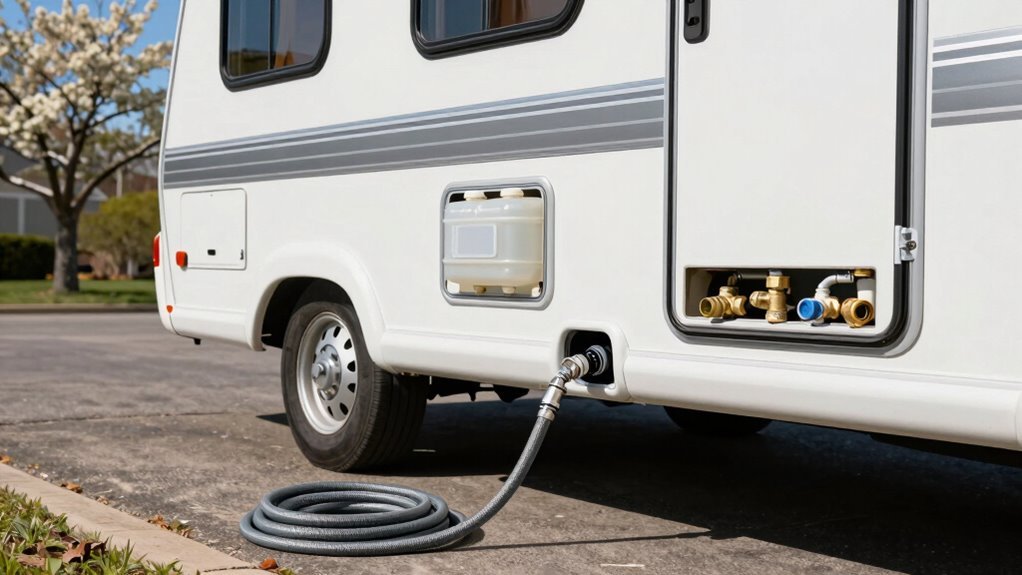
To de-winterize your RV for spring, start by flushing the fresh water system thoroughly until the water runs clear. The absence of a pink tint or sweet smell indicates that all antifreeze has been removed, ensuring your system is clean and ready.
Reconnect the propane supply safely and inspect connections for leaks before turning anything on. Test the stove, heater, and refrigerator to confirm they’re functioning properly after storage.
Wake up your RV’s batteries by checking charge levels and recharging if necessary. Top off all essential fluids and inspect tire pressure and tread depth to ensure roadworthiness.
Test every faucet, seal, and the rooftop for potential leaks that could cause damage. Pay special attention to areas prone to wear, especially after winter conditions.
Finally, bring the generator back to life by following the manufacturer’s startup procedure. Regular operation helps keep it reliable—just like morning coffee for your RV—so de-winterize your RV for spring with care and consistency.
Flush and Refill the Fresh Water System
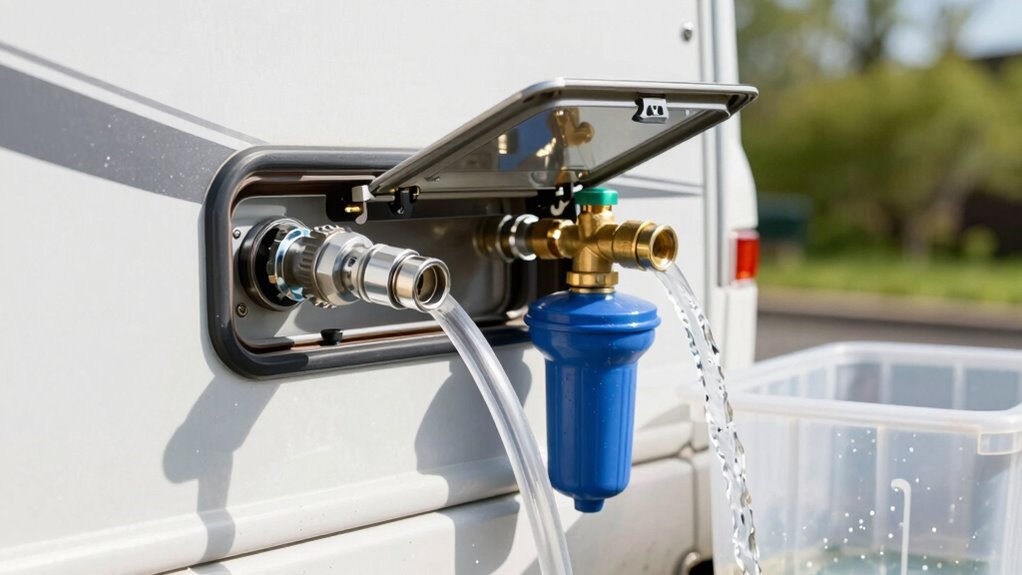
Getting your RV’s fresh water system ready for spring is like giving it a big, invigorating drink after a long nap—and it’s easier than you think.
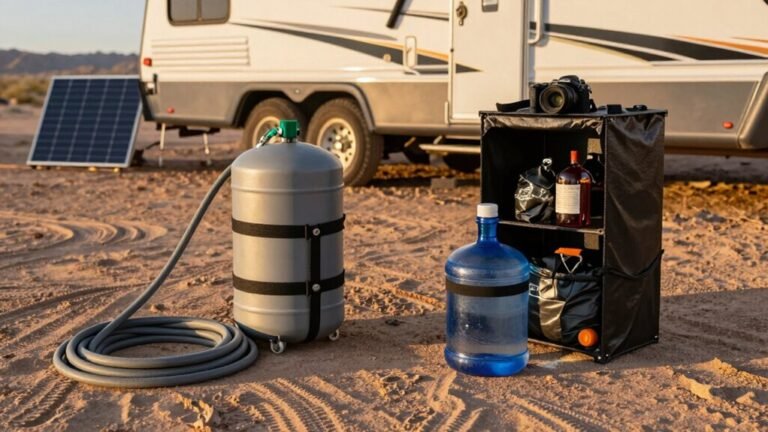
Start by flushing out that leftover antifreeze: hook up to city water or use a siphon hose with a 5-gallon jug, then open every faucet, shower, and toilet until the water runs clear—no pink tint, no funky smell.
Don’t skip the exterior shower; run cold, then hot. Flush the toilet a few times while the pump’s running.
Once clean, close the low point drains. If you stored with antifreeze in the tank, drain it all first.
Refill via the docking station or gravity-fill port, and replace those filters you pulled earlier. Run water through again to purge any lingering residue.
Make sure the by-pass valve is activated before refilling the water heater to prevent pressure buildup and ensure proper flow.
Voilà—fresh, clean water flows like it’s throwing a party in your pipes!
Inspect and Reconnect the Propane System
Now that your water’s flowing clean and fresh, it’s time to fire things up—literally.
Start by giving your propane tank a good once-over: check for rust, dents, or wobbly mounting straps, and make sure the shutoff valve turns smoothly.
Peek at the date—no expired tanks allowed!
Next, inspect the regulator and hoses—no cracks, bulges, or chew marks from uninvited critters.
Reconnect everything snugly, but don’t force it—propane likes things tight, not tantrum-tight.
Open the valve slow—nobody likes a gas rush—and grab some soapy water to bubble-test every joint.
If you see bubbles, you’ve got a leak, so tighten or replace as needed.
A gas detector helps catch sneaky leaks you might miss.
Fire up each appliance carefully and celebrate that blue flame—it means you did it right.
Just don’t light a match to “check”—we’re going for cozy, not cartoon explosion!
Always ensure the propane tanks are disconnected during winter storage to maintain safety.
Check and Recharge the RV Batteries
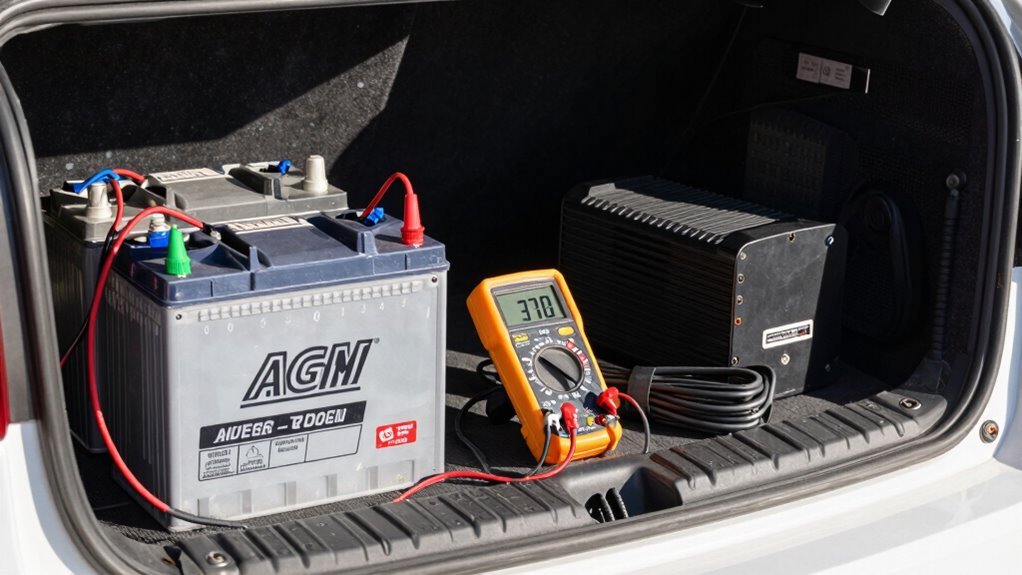
One fresh charge is all it takes to bring your RV’s power system roaring back to life!
Reconnect those batteries if you yanked them out for winter—make sure they’re snug, secure, and not going on a joyride under your rig.
Check the terminals: if they’re looking crusty, scrub off any corrosion so your power flows clean.
Peek for cracks, leaks, or bulging cases—nobody wants a battery oozing like a science experiment gone wrong.
For lead-acid types, top off each cell with distilled water—don’t drown ’em, just cover the plates.
Now, zap a multimeter on there and see what voltage you’re running.
Charge both house and chassis batteries fully—your RV charger’s got this, but be patient; it might take a while.
If a battery refuses to hold juice? Time to say goodbye.
Think of it as spring cleaning for your power—out with the old, in with the spark!
Be sure to test safety devices like the carbon monoxide detector once the batteries are charged.
Examine Tires and Wheel Components
Time to give those tires a once-over—they’ve been sitting around all winter like couch potatoes, and now they’re due for action!
Start by checking pressure when tires are cold—usually the morning after three hours of rest—since they lose 2–3 PSI a month while stored.
Don’t forget the spare or your tow vehicle’s tires!
Look closely at tread depth, wear patterns, cracks, bubbles, or gunk like road tar.
Tires older than five years need a pro’s eye; replace anything seven years or older.
Use a TPMS (like Tire Linc) for real-time pressure alerts—super helpful on your first spring trip.
Torque lug nuts, grease Zerk fittings, and service wheel bearings if it’s been 12 months or 12,000 miles.
Clean gunk off tires, apply UV-protective dressing, and you’re rolling safely into adventure season!
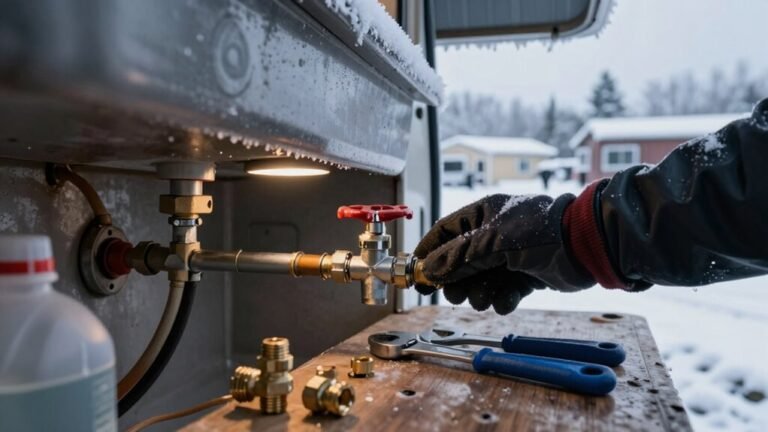
Test the Plumbing and Drain Valves
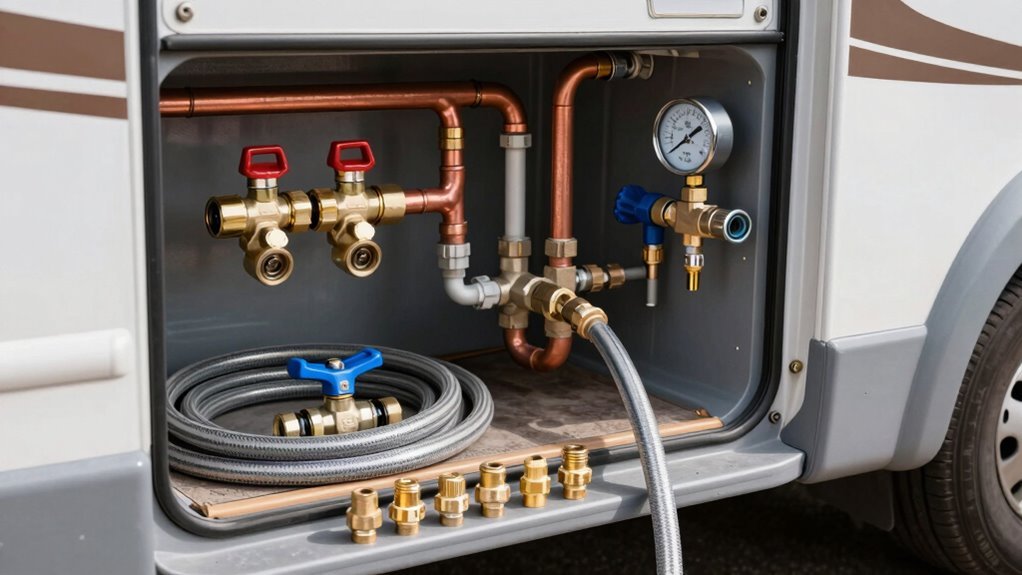
What’s sloshing around in your RV’s pipes after months of hibernation? Time to find out!
Connect your potable water hose or fill the freshwater tank, then fire up the pump or city water.
Open every faucet, shower, and toilet—inside and out—until clear water runs clean, flushing the last bits of antifreeze goodbye.
Don’t forget the outdoor shower or appliances!
Once done, double-check that all low-point drains are snugly closed and sink plugs are back in.
Reconnect any hoses you removed and make sure the hot water heater’s bypass valve is set correctly.
Now, pressurize the system and test everything: watch for steady flow, strong pressure, and zero leaks.
Peek at connections, the pump, and fittings—no drips allowed!
It’s like your RV is waking up, fresh and ready for spring adventures.
Cheers to not drinking pink water!
Inspect Seals, Vents, and Roof Components
Ever wonder what kind of shape your RV’s shields are in after a long winter nap?
Time to play detective and make sure everything’s sealed up tight and ready for spring adventures.
Water loves sneaking in where it’s not invited, so give these spots a close once-over:
- Scan your roof for cracks, torn membranes, or split seams—especially around vents, skylights, and AC units.
- Check all window, door, and slideout seals—squishy is good, cracked or missing is not.
- Inspect caulking around roof penetrations (yes, even that weird antenna you forgot about) and reseal any gaps.
- Peek at vent covers and fans—ensure they’re secure, damage-free, and not hosting a squirrel condo.
A little attention now saves a flooded floor later.
Happy shielding!
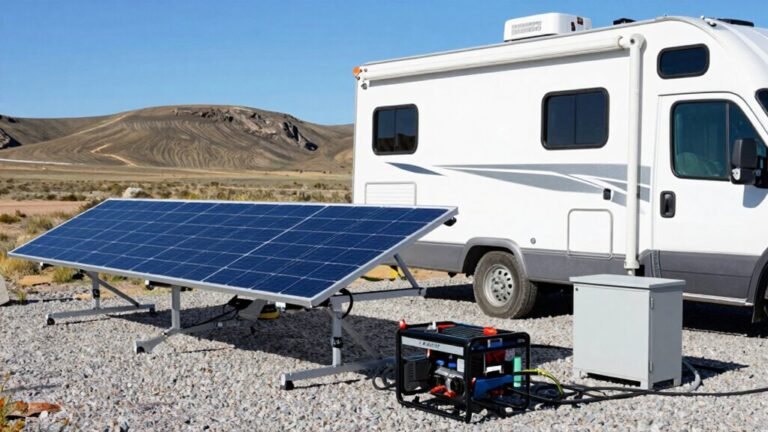
Start and Service the Generator and Electrical Systems
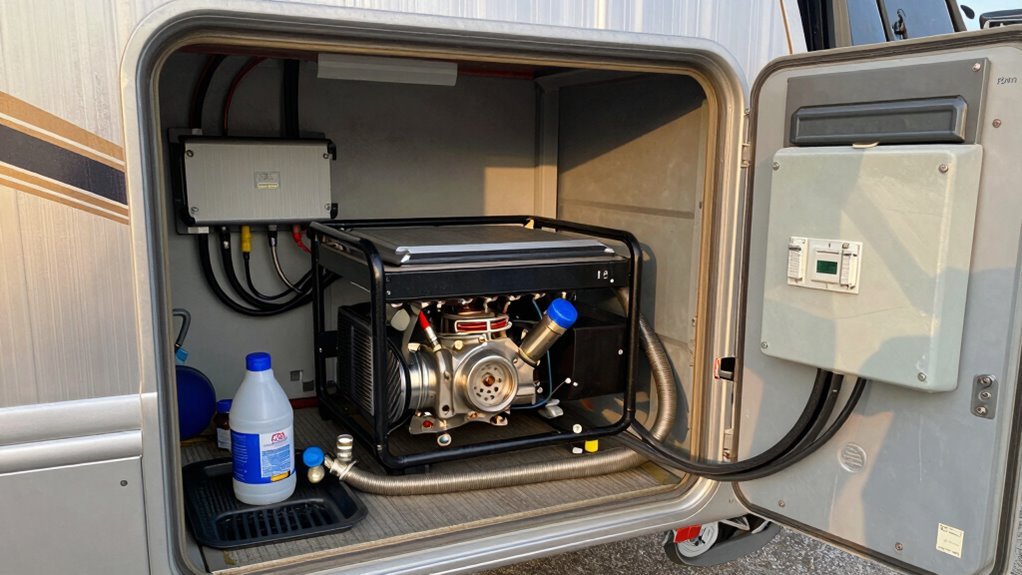
Waking up your generator after winter’s nap is like giving your RV its morning coffee—essential and best done with care.
First, clean the compartment, clearing out dirt, nests, or any unwelcome rodent souvenirs.
Check for cracked hoses, loose wires, or exhaust blockages—giving your rig a spring “check-up” keeps trouble at bay.
Pop the oil dipstick: if it’s low or looks sketchy, top it off or change it, along with the filter.
Use the oil type your generator’s manual recommends—no substitutes!
Fire it up and let it run under 50% load, like your A/C or microwave, for 30 minutes.
Listen for weird knocks or grinds—your ears are part of the diagnostic toolset!
While you’re at it, test outlets, lights, and batteries.
Don’t forget a quick load test and a peek at the shore power cord.
A little love now saves a roadside panic later!
Frequently Asked Questions
How Do I Remove Odor From RV Drains After Winterizing?
You tackle RV drain odors by first rinsing the system well—run water through sinks and showers to flush out leftover antifreeze.
Then, sprinkle baking soda down each drain; it’ll neutralize stinky smells naturally.
For extra punch, follow up with a dash of vinegar and let it fizz.
Wipe around rims with a baking soda paste, and drop in an odor-absorbing gel—boom, fresh as a spring morning!
Can I Reuse Antifreeze From My Rv’s Plumbing System?
No, you can’t reuse antifreeze from your RV’s plumbing—you drain it, you wave it goodbye.
It’s diluted, maybe smelly, and bacteria might’ve thrown a party in there.
Plus, it’s lost its mojo for protection.
Toss it safely down the drain or at a dump station—pink stuff’s biodegradable, so no guilt.
Fresh is best, like coffee or morning vibes!
What Should I Do if My Fridge Won’T Ignite After Storage?
You’ve got this—don’t panic if your fridge won’t ignite post-storage!
First, check the battery; it needs over 10.5 volts to spark things up.
Make sure the propane is flowing—listen for that *click-click-boom* of ignition.
If it’s quiet, reset the Dometic button (it’s sneaky—look for the red wires).
Tried three times? Power down, wait, then restart.
And seriously—no extension cord hacks, we’re not MacGyvering a fridge!
How Often Should I Replace My Rv’s Water Hoses?
You should replace your RV’s water hoses every 5 years, even if they look fine—quality polyurethane ones usually last that long and often come with warranties to prove it.
That cheap $35 vinyl hose? You’ll replace it every 2–3 years, costing you more over time.
Skip the hassle and splurge a little—you’ll save money, avoid leaks, and keep your water tasting fresh, not like yesterday’s sidewalk.
Is It Safe to Run the AC Before Inspecting Roof Seals?
No, you shouldn’t run your AC before checking the roof seals—it’s like turning on the shower with the bathroom door open!
Cracked or worn seals can let water sneak in, leading to big headaches (and soggy ceilings).
Take a quick look with a flashlight, make sure everything’s tight and dry, and you’ll avoid costly drips.
Safety first, comfort second—your RV will thank you later!
Conclusion
You’ve battled the post-winter chaos like a road warrior with a plunger and a plan—congrats! Your RV’s now juicier than a summer peach and ready to roll. Fires will roar, lights will flash, and the open road will beg for your dramatic return. So grab snacks, crank the tunes, and hit that gas—adventure’s waiting, and your RV’s basically a shiny, over-caffeinated beast of freedom. Let’s roll!
References
- https://www.kz-rv.com/maintenance-tips/de-winterization-of-fresh-water-tank/
- https://www.keystonerv.com/owners/de-winterize-your-rv
- https://grechrv.com/how-to-de-winterize-your-class-b-rv-step-by-step-guide/
- https://outrig.com/how-to-dewinterize-your-rv/
- https://koa.com/blog/get-your-rv-ready-for-spring/
- https://www.youtube.com/watch?v=pt6tnzv8zTs
- https://www.thecopelandgroup.com/the-ultimate-guide-to-winterizing-your-rv/
- https://www.alaskancampers.com/resource/de-winterizing-your-camper-a-spring-startup-guide/
- https://www.rv.com/rv/how-to-de-winterize-your-rv/
- https://deltaliquidenergy.com/how-to-de-winterize-your-rv-like-a-pro-to-get-ready-for-your-spring-adventures/