Common Mistakes New RVers Make (And How to Avoid Them)
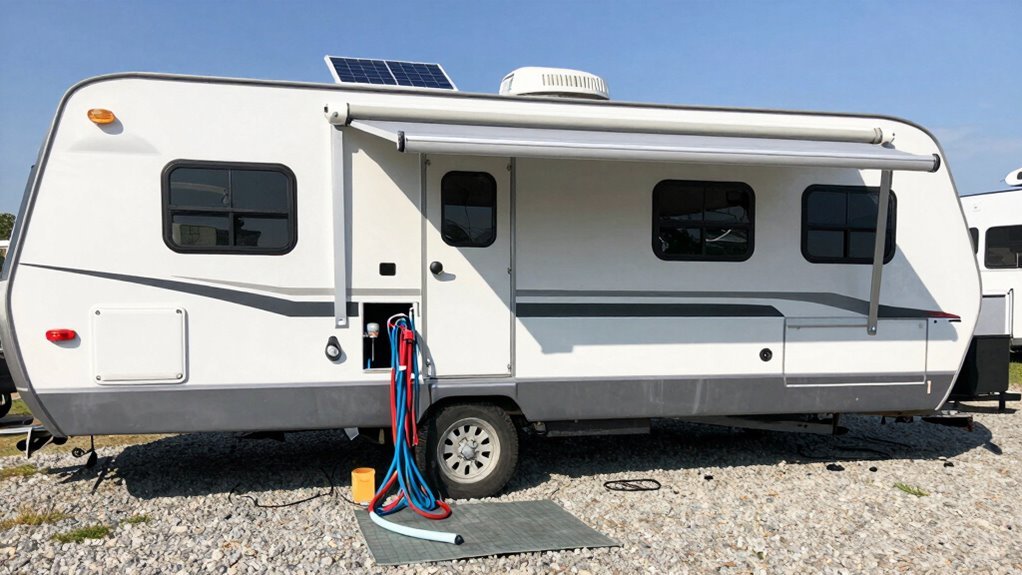
You pack like you’re moving, but your RV’s weight limit’s only 3,448 pounds—ease up on the extras! Make sure your tow vehicle can truly handle the load, not just the brochure weight. Overloading is one of the common mistakes new RVers make that can lead to dangerous driving and costly repairs.
Skip leveling? Say hello to wonky doors and a fridge that quits. Properly leveling your RV is crucial for both comfort and appliance performance.
And please, don’t let the black tank get too full—yuck. Always monitor tank levels and empty before they’re completely full to avoid backups and odors.
Test systems first so you’re not troubleshooting in the dark. This simple step prevents many of the common mistakes new RVers make once they arrive at their destination. Oh, and this is just the start of the smart, stress-free swaps you can make.
Overpacking and Underestimating Storage Limits
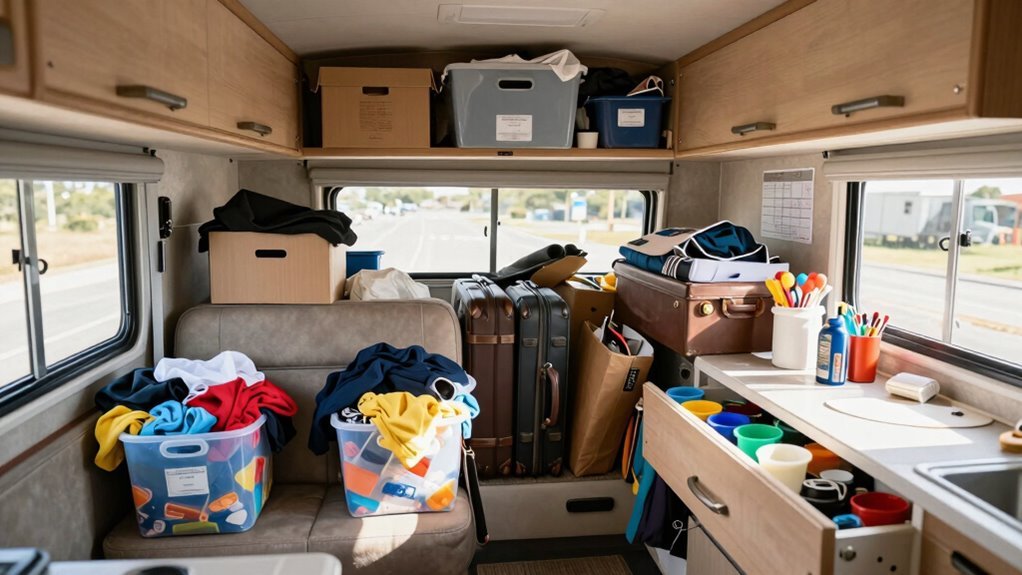
Ever wonder why your RV starts feeling more like a packed storage unit than a cozy home on wheels? You’re not alone. That “plenty of room” you saw in the brochure? It hides a weight limit—often around 3,448 pounds, and that drops fast with upgrades like bigger propane tanks or extra insulation.
Fill your water tanks, pack a month’s worth of clothes, canned food, camping gear, and that “just in case” toolbox, and boom—you’re over.
Even Class B vans surprise you with how little they truly hold.
And remember, all that gear has to be balanced, or you’ll wobble down the highway like a shopping cart with a wonky wheel.
Overpacking wears out tires, messes with handling, and can even void insurance.
But hey, no need to ditch your coffee maker! Just swap bulky items for collapsible ones, vacuum-seal clothes, and ask yourself: “Do I really need two pairs of snow boots in July?”
New rigs often lose up to 30% of their advertised cargo capacity due to added factory options and upgrades.
Lighten up, literally, and enjoy the ride.
Ignoring Tow Vehicle Compatibility and Weight Ratings
You’ve packed your RV to the brim, maybe even stuffed in that inflatable unicorn for the lake—hey, no judgment—but there’s one thing heavier than all that gear: the truth about what your tow vehicle can actually handle.
You’re not just towing; you’re hauling liquids, people, and cargo, so check that GVWR—not the dealer’s “dry weight.” That number must stay under your vehicle’s max towing limit, or you risk brake trouble or losing control.
And don’t forget tongue weight—10–15% of the trailer’s heft pushes down on your hitch, eating into your payload.
Overload it, and steering gets sketchy.
Match your hitch class to your load—Class 3 can’t do what a Class 5 can.
Even gooseneck hitches laugh at heavy loads!
Finally, that F250 vs. F350 difference? It matters.
Add a proper towing package and you’ll ride smooth, safe, and ready for fun.
GCWR includes both your vehicle’s payload and the trailer’s weight, so exceeding it can compromise safety and performance.
Skipping the Leveling Process Before Setting Up Camp
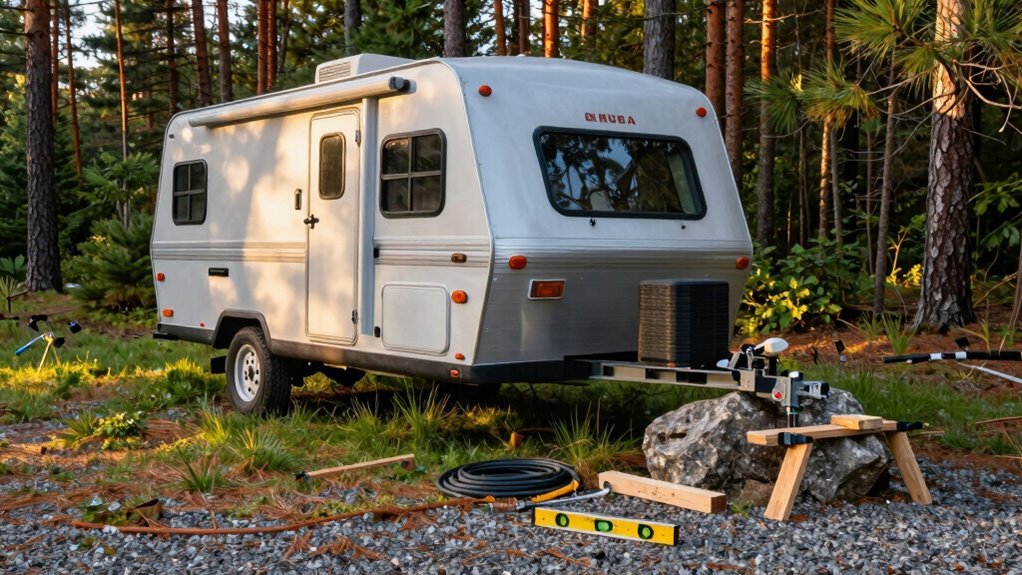
When your RV ends up crooked because you skipped leveling, it’s not just uncomfortable—it’s a setup for trouble.
You’ll battle swinging doors, wonky fridges, and slide-outs that stick or squeak.
Over time, the stress can even damage your frame or plumbing.
But hey, no need to stress—leveling’s easier than you think!
- 🚪 Doors that fly open? Not cute. Level first, avoid the slapstick.
- ❄ Your fridge hates slopes—keep it level or say goodbye to cold drinks.
- 🛠 Slide-outs aren’t fans of crooked paths—misalignment ruins them fast.
- 🔧 Stabilizer jacks aren’t lifts! Use blocks under wheels instead.
- 📏 Check side-to-side first—don’t trust the bubble by the sink.
Grab your leveling blocks or push a button if you’ve got the fancy auto-system. A few minutes now saves headaches (and repair bills) later. You’ve got this! Proper stabilization starts with knowing that stabilization and leveling are distinct.
Mismanaging Fresh, Gray, and Black Water Tanks
Juggling fresh, gray, and black water tanks like a pro keeps your RV adventures smooth—and odor-free.
You’ll want to dump your black tank when it’s two-thirds full to avoid nasty clogs and stubborn solids.
Never let any tank hit max capacity—overfilling leads to backups, leaks, or worse, a surprise splash when you least expect it.
Use only septic-safe, single-ply toilet paper; two-ply might leave you high and “unpleasant.”
Keep that black tank valve closed unless dumping—leaving it open dries out waste and creates stinky, sticky disasters.
Always dump at official stations: black first, then gray to rinse the hose (yes, really).
And don’t skip cleaning!
Flush tanks, use enzyme treatments, and sanitize regularly.
Monitor sensors—they lie when dirty.
Treat your tanks right, and they’ll return the favor with hassle-free road trips.
Failing to Test Systems Before Hitting the Road
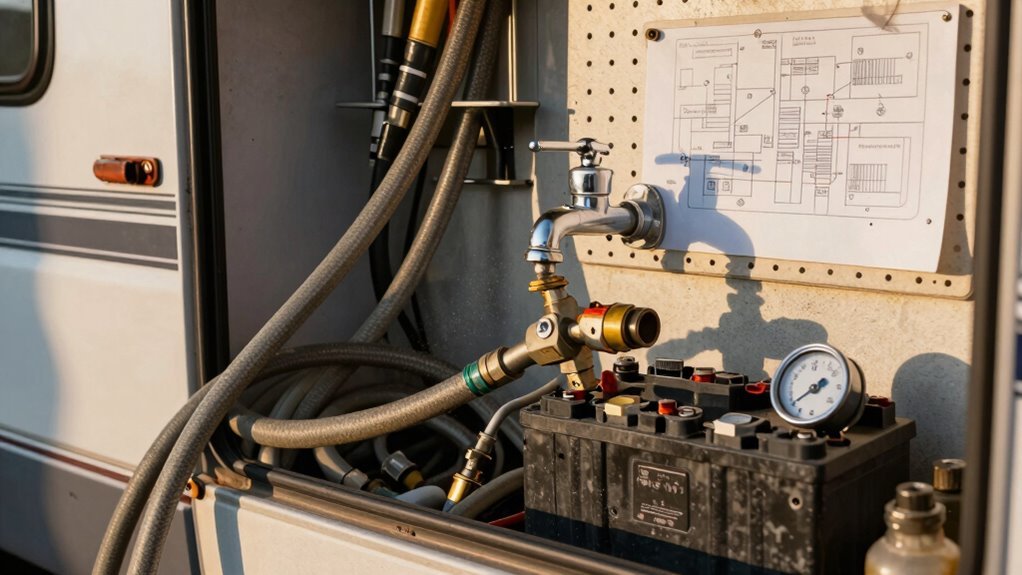
Skipping pre-trip checkups? You’re risking more than just a bumpy start—you could be headed for roadside headaches no one wants.
Don’t wait until your fridge quits or your lights flicker to realize something’s off.
A little testing now saves big stress later.
Think of it like a pre-adventure ritual: quick, smart, and totally worth it.
- 🔋 Check battery voltage—12.6 volts means you’re good to go
- 🔌 Plug in and test shore power so lights and fans stay happy
- 🧊 Fire up the fridge on AC andpropane—cold drinks wait for no one
- 🔥 Confirm your stove and water heater fire up without fuss
- 🚨 Test smoke and CO detectors—safety’s the real MVP
Spend a few hours now to avoid “uh-oh” moments later. Your future self will high-five you mid-campsite.
Frequently Asked Questions
Can I Live in My RV Full-Time Year-Round?
Yes, you can live in your RV full-time year-round—lots of people do!
Just make sure it’s built for 365-day living, or plan for extra maintenance.
You’ll need steady power, water, and internet, especially if you’re working remotely.
Many full-timers love the freedom, fishing, hiking, and road-tripping with the family.
Heck, even your dog’ll think you’re a genius—for a while!
Are Pets Allowed in Campgrounds and RV Parks?
Yes, you can bring pets to most campgrounds and RV parks—many even roll out the red carpet for furry co-pilots!
You’ll find dog parks, pet washing stations, and fenced play areas waiting for you.
Just check each park’s pet policy first, because rules vary.
Keep your pup leashed, clean up after them, and you’ll both have a tail-wagging good time under the stars.
Who’s ready for adventure?
How Do I Find Safe Overnight Parking Spots?
You hunt for safe overnight spots like a treasure seeker with a map lit by neon signs and starlight.
Check Walmart, Cracker Barrel, or Flying J—they’re your RV’s best friends.
Call ahead, read signs, dodge ticket traps.
Pick busy, well-lit places where night owls and security cameras keep watch.
Think of it as camping in the real world—safe, smart, and kind of fun.
You’ve got this!
What Insurance Do I Need for My RV?
You’ll need liability coverage for your motorized RV—it’s the law and protects you if you’re at fault.
Add full-coverage and collision for theft, accidents, and storms; they’re a smart move.
If you live in your RV full-time, get full-timer coverage for home-like protection.
Tack on roadside assistance and personal belongings coverage too.
It’s like seatbelts for your stuff—no one thinks they’ll need it, until they do!
Can I Use Regular Household Appliances in My RV?
No, you can’t use regular household appliances in your RV—they’re built for bigger power systems and could fry your circuits.
Your RV runs on limited amps, so plugging in a hair dryer or space heater might trip breakers or cause overheating.
Instead, go for RV-rated gear designed to sip power, not gulp it.
Swap in an induction burner or Instant Pot, and you’ll cook easy without cooking your electrical system—safety and convenience, with a side of peace of mind!
Conclusion
You’ll worry about forgetting something, but hey, even pros once drained gray water into the fresh tank—oops! Just double-check systems before you roll out, pack smart, level up, and know your vehicle’s limits. Avoid these hiccups, and you’re golden. RV life’s all about freedom, adventure, and a little bit of happy chaos—so laugh, learn, and hit the road with confidence. Your home-on-wheels awaits!
References
- https://ourfutureinanrv.wordpress.com/2017/07/23/cargo-capacity/
- https://leisurecw.com/rv-life/excess-baggage-tips-for-safe-and-smart-storage-in-your-rv/
- https://rvshare.com/blog/travel-light/
- https://escapecampervans.com/blog/traveling-campervan-vs-rv/
- https://toystoragenation.com/2025/04/11/trends-data-and-perspective-what-makes-class-a-rv-boat-storage-a-solid-investment/
- https://roadville.com/camp-the-range/maximizing-your-rv-lifestyle-long-term-camping-strategies/
- https://www.rvtravel.com/cargo-capacity-nightmare-1077/
- https://www.myrvsd.com/blog/what-not-to-pack-in-your-rv–72235
- https://www.outdoorsy.com/blog/3-ways-to-tow-a-car-behind-your-rv
- https://heartlandrvs.com/towing-guide-how-to-choose-the-best-rv-tow-vehicle-heartland-rvs/