How to Choose the Right RV Water Filter
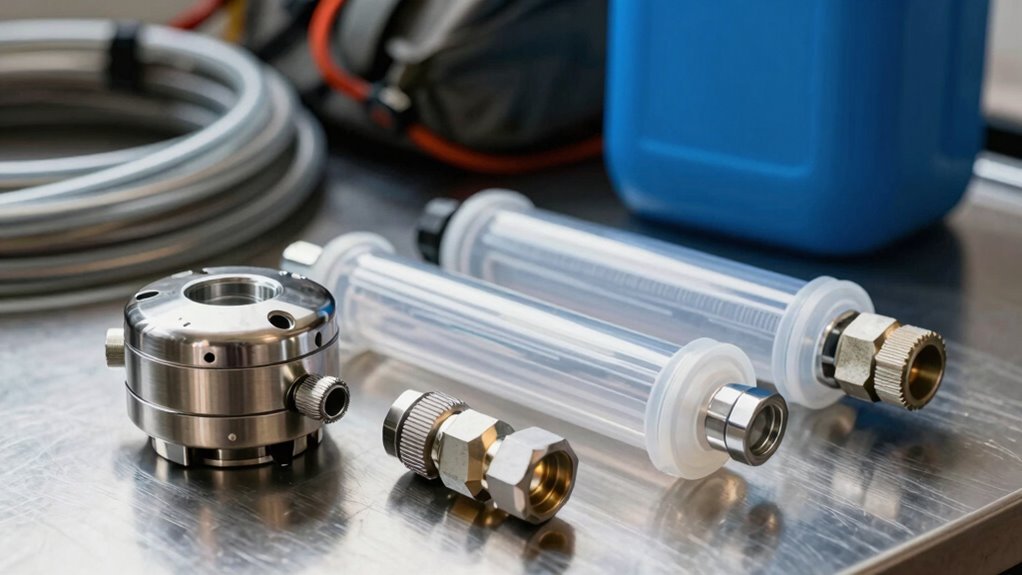
When choosing the right RV water filter, your top priority should be clean, great-tasting water on the road. Skip the sketchy campground water and opt for a reliable filtration system that fits your setup and usage.
Go for an inline filter if you value “screw-and-go” convenience and portability. For longer filter life and heavy-duty protection, consider upgrading to a canister system.
Block sediment with a 5-micron filter, eliminate bacteria using UV purification, and remove chlorine taste with activated coconut carbon. These features ensure your water is safe, fresh, and pleasant to drink.
To maintain strong water pressure throughout your RV, aim for a flow rate of 5–6 GPM with 3/4-inch ports. This keeps showers powerful and faucets flowing without hiccups.
Compact size is key when space is tight under the sink or in storage compartments. Make sure the filter fits comfortably in your available space.
Budget-friendly options start around $40, while high-end systems can reach $600. There’s a right RV water filter for every need and price point.
Replace your filter every few months to keep water tasting fresh and the system running efficiently. Staying on schedule prevents buildup and ensures consistent performance.
Understanding RV Water Filter Types
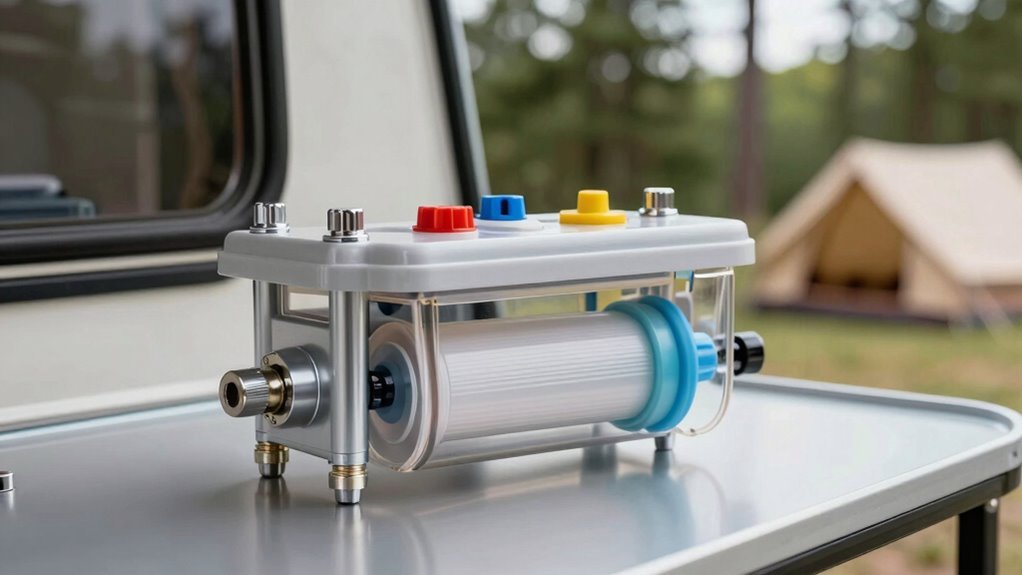
If you’ve ever turned on your RV faucet and gotten a whiff of pool water, you know why a good filter isn’t just smart—it’s essential.
You’ve got options, and each one brings something fun to the table.
Inline filters? Super easy—just screw them on and go.
They knock out chlorine and gunk fast.
Canister systems are tougher, lasting longer and handling heavier crud like a champ.
Multi-stage setups are the all-stars, tackling everything from lead to odors with fancy layers.
Want to nuke bacteria? UV purifiers do that—with light!
Yes, really.
And if you love clean sips on the fly, countertop or under-sink filters give you bottled-water vibes without the plastic.
You’re not just filtering water—you’re upgrading your whole RV life.
Pick your favorite player, hook it up, and enjoy every glass.
Your morning coffee will thank you.
Kohree RV Water Filter is NSF Certified.
Key Contaminants to Filter Out
You’ve picked your player—maybe it’s a slick inline filter, a rugged canister, or a high-tech UV setup—and now it’s time to talk about what you’re actually blocking from your water.
Say goodbye to yucky stuff like sand, rust, and silt—those little troublemakers clog pipes and turn your drink cloudy.
A solid 5-micron pre-filter stops them cold.
Now, bacteria? E. coli and giardia don’t stand a chance against ceramic filters with a 0.9-micron punch.
And chlorine? It’s why your water tastes like a swimming pool party gone wrong.
A coconut carbon block scrubs it out fast, improving taste and smell.
Heavy metals like lead and mercury? KDF and carbon team up like superheroes to remove them.
Pesticides, pharmaceuticals, and weird chemicals? Activated carbon’s got your back.
You’re not just filtering—you’re future-proofing every sip.
Now that’s peace of mind on the road.
Ultrafiltration systems can also block viruses, which most filters miss, thanks to their 0.02 micron ultrafilter membrane.
Flow Rate and Water Pressure Considerations
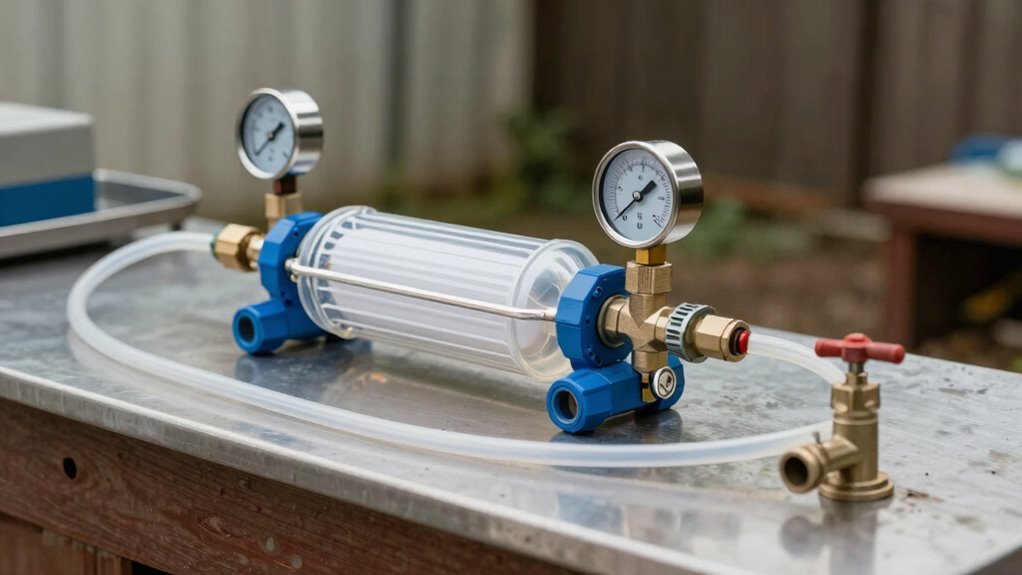
Ever wonder why your shower sputters or your sink trickles when the filter’s in play?
It’s likely your filter can’t keep up.
Most RV fixtures need 1.5–2.5 GPM, so if your filter delivers less—say, just 1.8 GPM on an inline model—you’ll feel the squeeze.
High-flow filters (up to 10 GPM!) handle showers, sinks, and kitchen taps without breaking a sweat.
Bigger canisters and 3/4-inch ports help maintain pressure, while dual-canister systems push 6–6.5 GPM with ease.
Just don’t forget: tighter filtration (like 0.2 microns) slows flow, unless you’ve got a high-tech model that defies physics.
Aim for 5–6 GPM if you love multitasking.
And peek at pressure ratings—built-in regulators cap things at 50 PSI to protect your rig.
No one wants a geyser in the galley!
With the right flow, your RV runs smoothly, and your shower stays gloriously strong.
The Freedom RV Water Softener System delivers consistent flow and pressure while improving water quality for a truly reliable RV experience.
Filter Longevity and Replacement Frequency
How long can you squeeze out of your RV water filter before it throws in the towel? Most filters last 3–6 months, but it really depends on how hard you’re pushing them.
If you’re living full-time or hitting sketchy water sources, you’ll swap them more often—maybe every few months.
Sediment filters usually tap out after 2–3 months, while carbon block types last about 3–4.
You’ll know it’s time when the water tastes off, smells funky, or the pressure drops like a bad Wi-Fi signal.
If your filter looks discolored, slimy, or like it’s growing its own ecosystem, yep, replace it yesterday.
Heavy use? That 10-inch filter handles up to 2,000 gallons, but a 5-inch taps out around 1,000.
Keep an eye on those UVC lamps and pre-filters too—they’re team players.
When in doubt, change it.
Fresh filters mean happy, clean sips every time.
Size and Installation Requirements
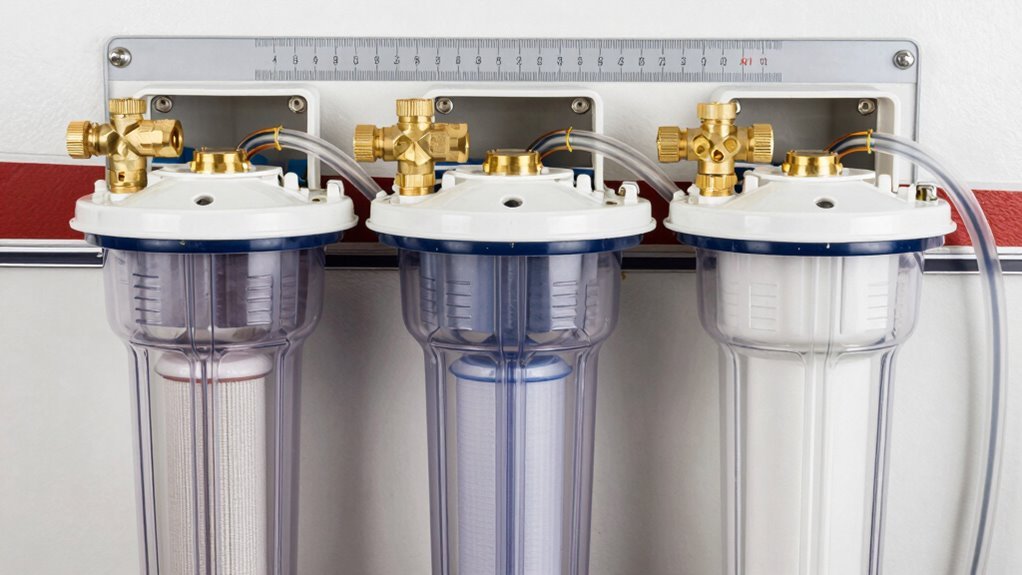
Now that you’ve got a handle on how often to swap out your filter, let’s talk about where—and how—it fits into your rolling home.
You’ve got options: compact canisters (14.5” or smaller) tuck neatly under sinks, while jumbo models (up to 20”) offer more space for water to flow.
Got tight quarters? Inline filters are about as long as a ruler and screw right onto your hose—no sweat.
Most use standard 3/4” threads, so they click onto campsite connections like Lego bricks.
Prefer pro-level cleanup? Multi-canister setups stack smartly and fit in odd corners.
They come with wrenches, easy-screw lids, and even pressure release valves—because nobody wants a surprise shower during maintenance.
Whether you’re drilling or just threading, installation’s DIY-friendly.
Pick a system that fits your space and skills, and you’ll be sipping clean water faster than your dog finds the nearest fire hydrant.
Budget and Value Comparison
A solid water filter doesn’t have to drain your wallet—some great options start at just $35 and fit like a glove on most rigs.
Grab a Tastepure or Clear2O for under $40, and you’ll slash chlorine, sediment, and funk from your water in no time.
These budget champs last about three months, perfect for weekend warriors.
If you’re hitting the road more often, spring for a mid-range pick like the Beech Lane dual system—brass fittings, two-stage filtration, and still easier on your budget than premium crews.
Sure, splurging on a $600 Clearsource Ultra sounds intense, but it nukes 99.99% of nasties and flows like a champ.
Still, you don’t need a spaceship to enjoy clean water—smart picks at any price mean you’ll sip easy, save cash, and laugh every time the tap runs clear.
Frequently Asked Questions
Can I Use a Household Water Filter on My RV?
You *can* use a household filter on your RV, but it’s like bringing a library book to a rock concert—awkward and underprepared.
They handle basic stuff okay, but skip pressure surges, frequent moves, and sketchy campground water.
Plus, they won’t protect your RV’s plumbing like an RV-specific filter will.
For real peace of mind—and fewer “what’s that smell?” moments—stick with gear built for the road.
Do RV Water Filters Remove Chlorine Taste and Odor?
Yes, you can totally banish that nasty chlorine taste and stink from your RV water!
Most RV filters use carbon block or GAC to zap chlorine, leaving your water tasting fresh and clean.
Think crisp mountain spring, not pool water.
Brands like FRIZZLIFE and Clear2O crush chlorine and odors, so you’ll actually enjoy every sip—no more “swimming pool” aftertaste.
Drink up, happy camper—you’ve earned it!
Are Filtered Shower and Toilet Water Safe to Drink?
Nope, you shouldn’t drink filtered shower or toilet water—even if it looks clean.
Those filters don’t kill germs like E. coli or Legionella, and yuck, nose entry? Big no-no.
Plus, bacteria love chilling in stale lines, and chemicals might still linger.
Save yourself the stomach drama—stick to bottled water or a trusted filtered faucet.
Your tummy will thank you, and hey, hydration’s important, but not at the cost of turning into a human fountain!
How Do I Winterize an RV Water Filter System?
You wanna keep your RV’s water system from turning into an icy headache, right?
Start by removing the filter and draining the base—nobody likes a frozen surprise.
Toss old cartridges, reinstall the empty housing, or pop in a bypass tube.
Then, follow your full winterization steps: drain tanks, bypass the heater, and pump in antifreeze.
Voilà, you’re set!
Your pipes will thank you later—no tears, just cheers!
Can I Install Multiple Filters for Better Purification?
You can absolutely install multiple filters for better purification, and you’ll love the results.
Toss in a sediment filter and a carbon filter, and boom—cleaner water for drinking, cooking, and showers.
It’s like giving your RV’s plumbing a superhero team.
Plus, it helps prevent gunk buildup, so your system stays happy.
Trust me, your water will taste so fresh, you’ll forget you’re on wheels!
Conclusion
You’ve got this! Choosing the right RV water filter is like picking a trusty travel buddy—it’s got to keep up with your pace. Pick one that fits your rig, tastes great, and lasts a while. Clean water means happy adventures, so don’t cut corners. Remember: “A drop of prevention is worth a gallon of cure!” Stay fresh, stay smart, and hit the road with confidence—you’re all set!
References
- https://ourcampfireunplugged.com/best-rv-water-filter/
- https://www.witsengineer.com/best-rv-water-filter-systems/
- https://www.rvupgradestore.com/blog-rv-water-filters-s/1266.htm
- https://www.youtube.com/watch?v=mbOqLpkbqow
- https://www.harvesthosts.com/blog/a-guide-to-rv-water-filtration-filters-insights-from-rvers
- https://camcooutdoors.com/blogs/news/blog-camco-water-filter-guide
- https://www.kohree.com/blogs/buyers-guides/choosing-best-water-filters-for-rv
- https://www.rvnetwork.com/topic/142286-which-simple-inline-water-filters/
- https://premieresales.com/blogs/news/best-rv-water-filter-systems-2024
- https://todayissomeday.net/blog/rv-water-filters-made-easy