Boondocking Etiquette: Leave No Trace Camping
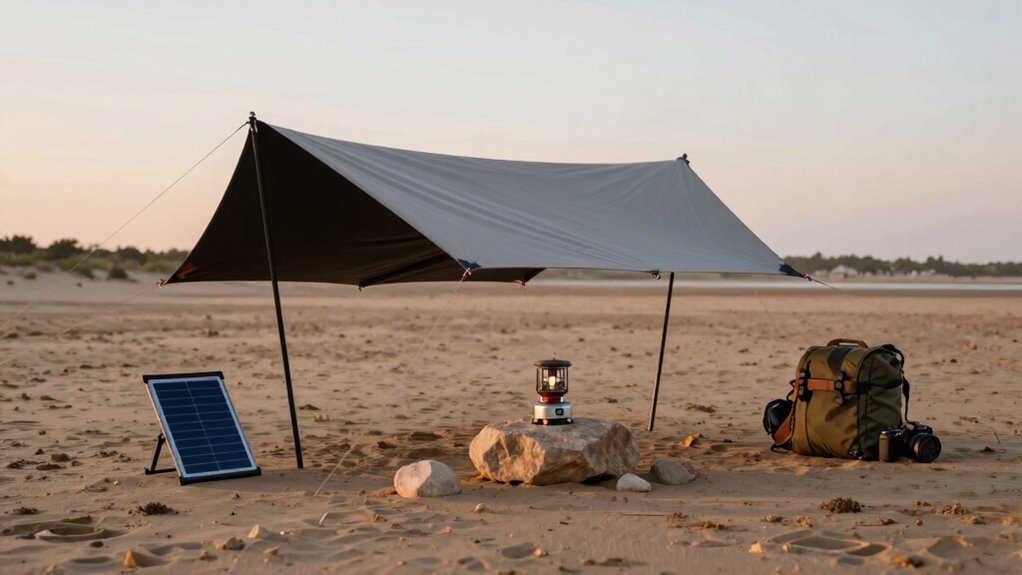
Boondocking etiquette means leaving nature exactly as you found it. You pack it in, you pack out—trash, food scraps, and all, a core principle of Leave No Trace camping.
Keep fires small and use existing fire rings, or create a mound fire on bare soil to minimize impact. Toss nothing down sinks, and dump grey water at least 200 feet from streams or water sources.
Always store food securely to avoid attracting wildlife. Be a quiet, respectful neighbor to both animals and fellow campers.
Leave rocks, cones, and cairns undisturbed, preserving the natural landscape. You’re not just passing through—you’re part of the wild story, and the next chapter’s full of even smarter tips.
Plan Ahead and Prepare
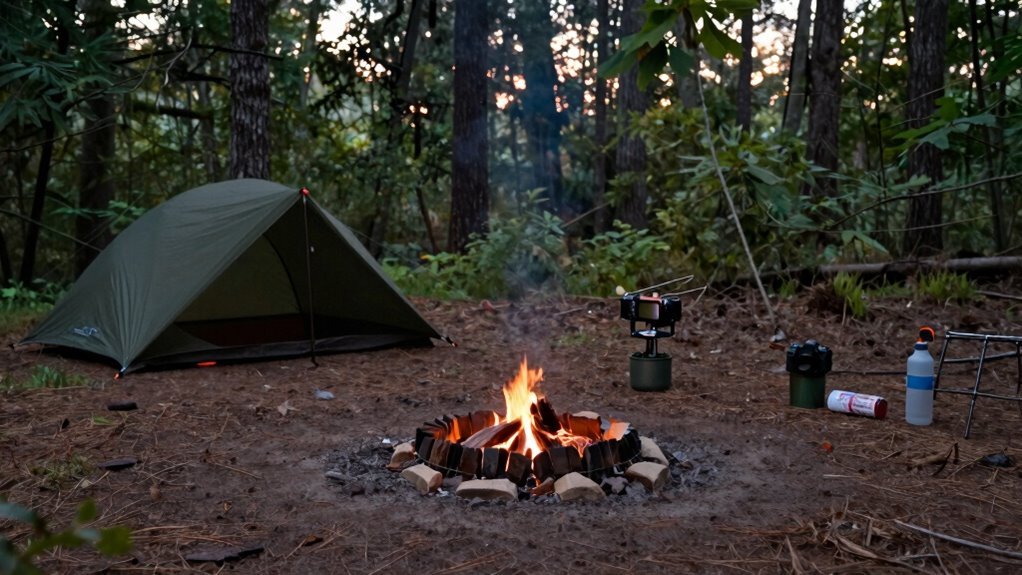
Getting your boondocking adventure off on the right wheel starts with smart planning—because showing up to a remote spot hoping for the best is more like a game of roulette than camping.
You’ve got to research first: pick already-used sites to protect nature and skip fragile grass or animal pathways.
Check BLM lands in western states like Arizona or Montana—they’re boondocker gold, but confirm dispersed camping is allowed.
Don’t be *that* person who shows up to a wildlife refuge unaware.
Scout spots ahead and keep backup sites in your pocket—popular areas get busy fast.
Weather matters too: watch for storms, ice, or flash floods, especially near rivers.
And hey, don’t park on sand or dirt that turns into a slip-n-slide when wet.
Come prepared, not surprised—your future self, stuck in the mud, will thank you.
Always verify area-specific regulations via ranger office, phone, or online, as time limits vary by location.
Dispose of Waste Properly
You’ve gotta handle waste like a pro when you’re out there under the stars—because nobody wants to be “that camper” who leaves behind a smelly surprise for the next crew.
Toss trash in lined, lidded bins to curb stink, and haul it out when remote spots lack dumpsters.
Burn paper and tiny plastics in a box, but skip the big plastic—it spews nasty fumes.
Scrape food scraps into the trash, not your sinks.
Use biodegradable soap, scrub dishes outside, and dump grey water far from streams.
Empty black tanks only at proper stations—never on the ground, ever.
Portable tanks with wheels make dumping easier and cleaner.
And hey, recycle what you can, reuse towels, and compost toilet waste if you’re fancy.
Every bit you pack out keeps nature looking pristine.
When disposing of larger volumes, seek out landfills, transfer stations as preferred options.
Do it right, and you’ll sleep easy knowing you left no trace but footprints—and maybe a few happy campfire stories.
Leave What You Find
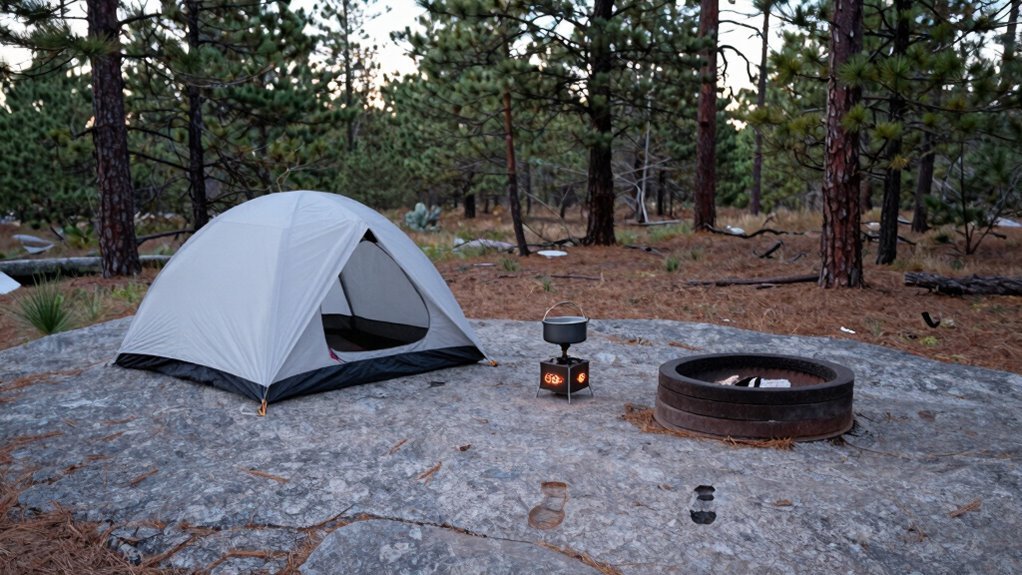
Most of the time, Mother Nature’s already set the scene perfectly, so go ahead and let the forest keep its trinkets.
When you’re out there, remember: leave what you find so others can enjoy the same awe and surprise.
That cool-looking rock, ancient arrowhead, or oddly balanced stack of sticks? Yeah, don’t be the cairn bandit.
- Leave rocks, plants, and artifacts right where they are—they’re not souvenirs, they’re part of the story.
- Don’t dig trenches or build lean-tos—your campsite should vanish like you were never there (magic trick, right?).
- Put back pine cones, twigs, and surface rocks—return the space to its natural state, like tidying up after a stealthy woodland party.
You’re a guest in this wild, beautiful place, not a decorator. Plus, someone else’s “Whoa!” moment might depend on you keeping things just as you found them. Even in remote wilderness areas, your impact should be as light as your footprint.
Minimize Campfire Impact
Thinking of toasting marshmallows under the stars?
Do it right by using established fire rings—never carve new ones.
Keep fires small and cozy, below knee height, so they’re easy to manage and leave less scar on the land.
Burn only dead, downed wood you find nearby, ideally within 50 miles, to stop invasive bugs from hitching a ride.
If there’s no ring, build a mound fire on mineral soil 3–5 inches thick.
Always drown your fire completely, stir the ashes, drown again, and make sure it’s cold to the touch—you’ll avoid surprise flare-ups and angry forest rangers.
Never use dirt alone; it traps heat!
Skip fires when winds blow over 5 mph or restrictions are in place (May–November, often).
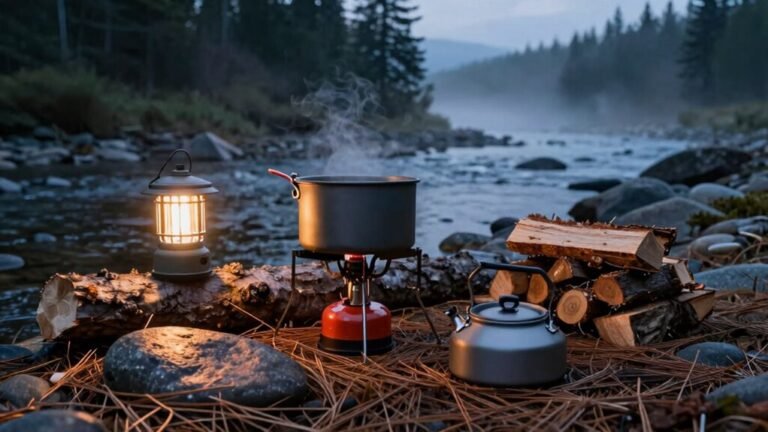
Better yet, fire up a camp stove—it’s efficient, permitted, and won’t turn your night into a wildfire watch.
Play it smart, stay safe, and keep those starlit moments sweet!
Respect Wildlife and Other Visitors
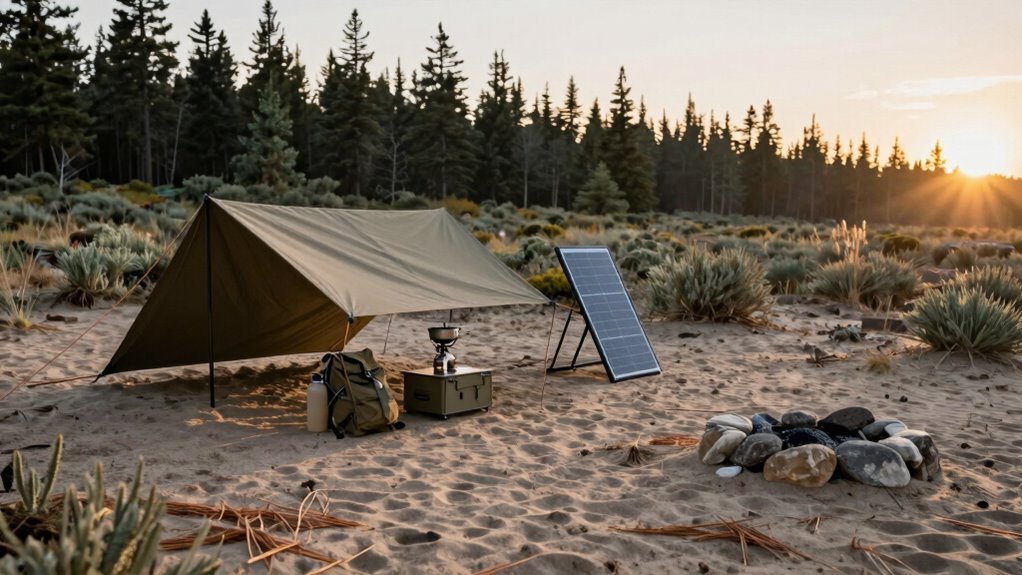
What’s better than spotting a deer at dawn or hearing an owl call from the pines? Not much—but you’ve got to respect the wild to keep those moments magical. Give animals space, never feed them (seriously, your sandwich isn’t doing them any favors), and keep Fido on a leash so he doesn’t turn into a backyard-wildlife drama queen. Other campers are out here for peace, too, so keep noise down and lights off—nobody wants a disco in the desert at midnight.
- Observe wildlife quietly from a distance, especially during mating or nesting seasons
- Store food, trash, and smelly stuff (yes, toothpaste counts) in bear-proof containers or hangs
- Be neighborly: camp away from others, yield on trails, and share a friendly hello
Respecting nature and fellow explorers keeps the adventure wild, safe, and welcoming—for everyone.
Frequently Asked Questions
Can I Boondock on Private Land Without Permission?
No, you can’t legally boondock on private land without permission—it’s trespassing, and no one wants a surprise visit from the sheriff.
Always ask the landowner first; it’s simple, respectful, and keeps you out of trouble. Many are happy to say yes if you’re polite and responsible. Think of it like borrowing a cup of sugar—just way more fun since it comes with stars, campfires, and zero Wi-Fi!
How Do I Find Boondocking Spots Using Apps or Maps?
You just open apps like iOverlander or Campendium and tap “free camping” to see spots nearby—super easy.
Drop a pin, check reviews, photos, and cell signal notes before you go.
The Dyrt’s got drive-time filters, while Gaia GPS shows off-grid trails.
Throw in OnX Offroad for rough roads, and boom, you’re golden.
Just don’t forget to pack out your trash—nobody likes a messy camper!
Is It Safe to Boondock Alone as a Woman?
Yeah, it’s safe to boondock solo as a woman—stats prove it!
Stranger danger’s way rarer than skunks at a campsite snack swap.
Theft’s the top worry, but you can dodge risks with know-how and preparation.
Stick to populated spots, trust trusted sites like Boondockers Welcome, and pack skills with your gear.
You’ve got this—wildlife’s more startled than scary, and most trails are totally tame.
Stay smart, stay sunny, and savor the solitude!
What Should I Do if Someone Confronts Me at My Campsite?
Stay calm and greet them with a smile—it’ll ease the tension fast.
You’re not in trouble yet, so listen closely, nod, and say you’ll fix things right away.
Don’t argue, even if you’re right.
Pack up calmly, leave no trace, and move to a legal spot.
Think of it like a surprise pop quiz from Mother Nature—she’s strict, but you’ve got this!
Are Drones Allowed While Boondocking on Public Lands?
Drones are allowed while boondocking on most public lands, but you’ve got choices to make.
Stick to BLM or national forest areas—skip national parks, where drones are a big nope.
Keep it under 400 feet, stay clear of wildlife, and don’t buzz campers.
Respect solitude like you’re sneaking popcorn into a movie—quietly and kindly.
And hey, don’t be *that* guy with the buzzing drone at sunset.
Conclusion
You’re the quiet hero of the wild, leaving only footprints like whispers in the dust. Pack out trash like a pro, skip the campfire drama, and let rocks, plants, and critters do their thing. Respect others with a wave, not a blare. Every choice you make is a brushstroke on nature’s canvas—keep it clean, kind, and full of awe. You’ve got this, trail whisperer!
References
- https://activetraveladventures.com/boondocking-how-to-camp-for-free/
- https://adventureswithtucknae.com/boondocking-for-beginners/
- https://blog.campingworld.com/gear-and-accessories/off-grid-camping-essentials/
- https://www.harvesthosts.com/blog/must-have-boondocking-essentials
- https://beachnana.com/blog/preparing-for-a-boondocking-advanture
- https://rvshare.com/blog/boondocking-road-trip-packing/
- https://www.rvwithtito.com/articles/boondocking-checklist/
- https://takebackroads.com/2019/10/14/how-to-camp-for-free-essential-gear-for-wild-camping/
- https://www.lamesarv.com/blog/lifestyle/your-downloadable-boondocking-checklist-for-camping-under-the-changing-leaves
- https://girlcamper.com/your-essential-boondocking-checklist-for-rv-camping/