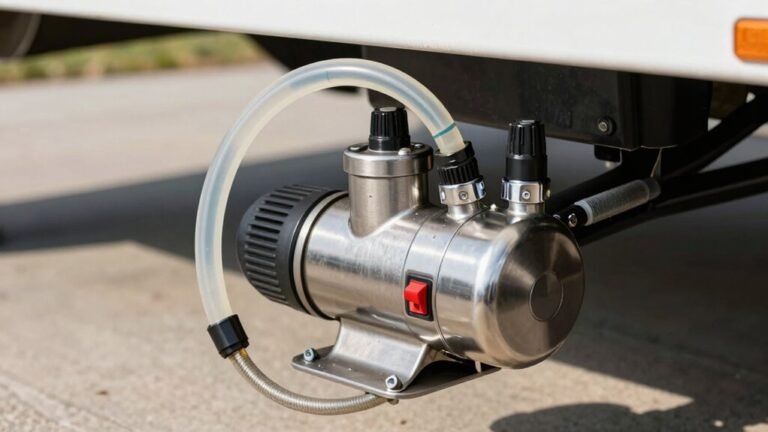
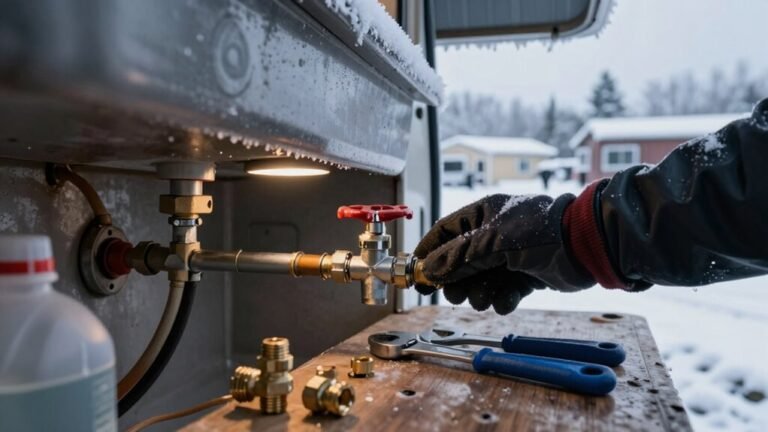
5 Best RV Water Pumps for Smooth, Reliable Road-Trip Hydration
Imagine this: you’re parked beside a misty mountain stream at dawn, coffee brewing, and you reach for the tap—only to be met with silence.
A reliable RV water pump keeps that moment from turning into a dry camp fiasco.
You need consistent pressure, quiet operation, and durability—like 7 GPM at 70 PSI or energy-efficient 12V draws.
The best RV water pumps deliver performance without draining your power or peace.
But which one balances all these features when trade-offs hide in the specs?
Finding the right model means understanding what truly matters on the road.
| Kohree RV Fresh Water Pump 7GPM | 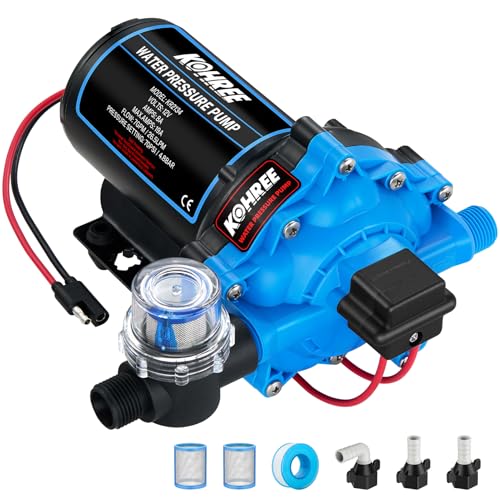 | Best Overall | Flow Rate (GPM): 7.0 GPM | Pressure (PSI): 70 PSI | Voltage: 12V DC | VIEW LATEST PRICE | Read Our Analysis |
| WASSERMANN RV Water Pump 12V 4.0GPM |  | Budget-Friendly Pick | Flow Rate (GPM): 4.0 GPM | Pressure (PSI): 45 PSI | Voltage: 12V DC | VIEW LATEST PRICE | Read Our Analysis |
| SEAFLO 33 Series 12V Water Pump | Most Reliable | Flow Rate (GPM): 3.0 GPM | Pressure (PSI): 45 PSI | Voltage: 12V | VIEW LATEST PRICE | Read Our Analysis | |
| Upgraded 12V RV Water Pump – 4.5 GPM |  | Quietest Option | Flow Rate (GPM): 4.5 GPM | Pressure (PSI): 45 PSI | Voltage: 12V | VIEW LATEST PRICE | Read Our Analysis |
| SHURFLO 4008-101-A65 New 3.0 GPM RV Water Pump Revolution 12V |  | Editor’s Choice | Flow Rate (GPM): 3.0 GPM | Pressure (PSI): 55 PSI | Voltage: 12 VDC | VIEW LATEST PRICE | Read Our Analysis |
More Details on Our Top Picks
Kohree RV Fresh Water Pump 7GPM
If you’re tired of weak water pressure in your RV or dealing with pumps that can’t handle dry runs, the Kohree RV Fresh Water Pump 7GPM might just be the upgrade you’ve been low-key dreading to research—because let’s be honest, who really enjoys plumbing surprises on the road?
You’re getting a 12V DC pump that pushes 7 gallons per minute at 70 PSI, so showers actually feel consistent, not like a sputter-fest. It’s self-priming up to 10 feet vertically (or 155 feet horizontally), thanks to a five-chamber diaphragm and a sturdy pressure switch that won’t quit.
Worried about dry starts? Don’t—this thing handles them safely, thanks to thermal overload protection that prevents burnout and extends lifespan. The included strainer catches debris, reducing clogs.
While you might spot a bit of residual water post-test (from pre-shipment QC checks), sealing tape guarantees leak-proof connections. It’s CE-certified, so safety and performance are verified.
Honestly, whether you’re rigging it in an RV, boat, or even for yard irrigation, you’re getting solid, no-nonsense function—without the drama.
- Flow Rate (GPM):7.0 GPM
- Pressure (PSI):70 PSI
- Voltage:12V DC
- Self-Priming:Up to 10 ft
- Run Dry Capability:Yes (safe dry-run)
- Certifications:CE-certified
- Additional Feature:Five-chamber diaphragm design
- Additional Feature:Includes strainer filter
- Additional Feature:Sealing tape included
WASSERMANN RV Water Pump 12V 4.0GPM
The WASSERMANN RV Water Pump 12V 4.0GPM stands out as a reliable workhorse for DIY campers and weekend adventurers who demand steady water pressure without the fuss of complicated installations. This black-and-grey plastic powerhouse delivers 4.0 gallons per minute at 45 PSI, self-primes efficiently, and handles short dry runs without frying itself.
You’ll appreciate the auto-start pressure switch that kicks in the moment you open a tap. The 12V DC motor runs smoothly off a battery or cigarette lighter socket, making it convenient for on-the-go use.
While it’s not the quietest pump out there—let’s be honest, are any of them truly silent—it operates with minimal disruption. Its compact size measures 8.15 x 5.12 x 4.86 inches and weighs just 4.17 pounds, fitting easily into tight RV spaces.
With a 98-foot max lift, it’s more than capable for camper, marine, or even garden use. The included filter and four adapters make setup a breeze, reducing hassle during installation.
Sure, it’s not as powerful as higher-end models, but at 4.3 stars from over 1,200 reviews and a solid Amazon ranking, it’s clearly doing something right.
- Flow Rate (GPM):4.0 GPM
- Pressure (PSI):45 PSI
- Voltage:12V DC
- Self-Priming:Up to 98 ft
- Run Dry Capability:Short time safe dry-run
- Certifications:Not specified
- Additional Feature:Comes with 4 adapters
- Additional Feature:Cigarette lighter compatible
- Additional Feature:4.3/5 rated by users
SEAFLO 33 Series 12V Water Pump
You’ll want the SEAFLO 33 Series 12V water pump—specifically the SFDP1-030-045-33 model—if you’re outfitting an RV, boat, or off-grid cabin and need reliable, quiet, and code-compliant water delivery under real-world conditions, not just ideal lab setups.
It delivers 3.0 GPM at 45 PSI—thanks to its 3-chamber diaphragm—so you can run up to four fixtures without a pressure drop, which, let’s be honest, is more than most camp sinks and showers really need anyway.
You’ll appreciate the self-priming capability (up to 6 ft), run-dry protection, and ultra-quiet operation—noise is dampened, not ignored—plus, it’s certified to NSF/ANSI 61, 372, and NSF 24, so your water stays safe.
And with a 4-year warranty, trusted OEM use across major RV brands, and 1/2-14 MNPT ports for easy installation, it’s built to last—no surprises, just steady flow.
- Flow Rate (GPM):3.0 GPM
- Pressure (PSI):45 PSI
- Voltage:12V
- Self-Priming:Up to 6 ft
- Run Dry Capability:Run dry capable
- Certifications:NSF, UL, CSA, ANSI/CAN
- Additional Feature:4-year limited warranty
- Additional Feature:Supplies up to 4 fixtures
- Additional Feature:OEM trusted by major RV brands
Upgraded 12V RV Water Pump – 4.5 GPM
Craving steady water pressure without the racket? This upgraded 12V RV water pump delivers 4.5 GPM and a solid 45 PSI—enough flow for showers and sinks—while running whisper-quiet, thanks to its copper motor and NSK double ball bearings, a rare upgrade over standard sealed bearings.
It auto-starts at 15 PSI and shuts off at 45 PSI, preventing pressure spikes, and includes thermal and over-pressure protection for safety. Built to last, it features a stainless steel seal ring, Japan-imported drive bearing, and a rugged engineering plastic body.
CE-certified and backed by a 3-year warranty, it’s a reliable pick for RVs, campers, trailers, or boats—though it won’t fix low tank levels.
- Flow Rate (GPM):4.5 GPM
- Pressure (PSI):45 PSI
- Voltage:12V
- Self-Priming:Not specified
- Run Dry Capability:Not specified
- Certifications:CE certified
- Additional Feature:Copper motor construction
- Additional Feature:NSK double ball bearings
- Additional Feature:Stainless steel seal ring
SHURFLO 4008-101-A65 New 3.0 GPM RV Water Pump Revolution 12V
Wondering which RV water pump delivers steady 3.0 GPM flow without the racket? The SHURFLO 4008-101-A65 runs quiet thanks to its internal bypass, cutting noise and reducing cycle frequency—perfect for late-night trips to the sink.
You get consistent 55 PSI pressure, a 7.5-amp draw, and dry-run protection, so you won’t fry it during hookups. It self-primes up to 6 feet, installs in any position, and includes a built-in check valve to stop backflow.
At 4.9” x 8.1” x 4.3”, it’s compact enough for tight compartments. Just know—it might arrive damp from factory testing.
Reliable? Absolutely. Whisper-quiet? Pretty close.
- Flow Rate (GPM):3.0 GPM
- Pressure (PSI):55 PSI
- Voltage:12 VDC
- Self-Priming:Up to 6 ft
- Run Dry Capability:Runs dry without damage
- Certifications:Not specified
- Additional Feature:Internal bypass system
- Additional Feature:Built-in check valve
- Additional Feature:Installs in any position
Factors to Consider When Choosing RV Water Pumps
You’ll want to match your pump’s flow rate—typically 3.0 to 4.5 GPM—to how many fixtures you’re running at once, or you’ll end up choosing between a weak shower and a half-flushed toilet. Make sure it’s compatible with your power source (12V DC is standard), can maintain 40–60 PSI without cycling constantly, and won’t drown out your morning coffee with excessive noise—because who really enjoys a symphony of mechanical grumbles before sunrise? And while no pump is invincible, models with brass internals and sealed motors tend to outlast cheap plastic cousins when hit with hard water or winter surprises.
Flow Rate Needs
How much water does your RV really need on demand? If you’re running the sink, shower, and outdoor hose all at once—because, let’s be honest, camping chaos happens—you’ll want a pump delivering 4–7 gallons per minute (GPM) to keep pressure steady.
These higher-flow models handle multiple fixtures without sputtering, especially important in longer or narrower plumbing lines where friction eats into performance. But if it’s just a quick hand-wash or coffee-brewing situation, a 3–4 GPM pump might cut it.
You’ll notice a drop in pressure when two taps open simultaneously with a lower-flow pump. Match your peak flow needs to real usage: how many outlets run at once, and for how long?
A 5+ GPM pump paired with a proper pressure switch maintains that sweet spot of 45–55 psi, even under demand. Bottom line? Don’t guess—calculate your worst-case water day.
Pressure Requirements
A solid flow rate means little if your pump can’t maintain consistent pressure across the system, especially when multiple fixtures come online. You’ll want a pump that kicks in around 15–20 psi and shuts off near 45–55 psi—most do, but not all.
Models with a 55 psi cutoff deliver stronger flow to showers or upstairs sinks, which helps when dealing with friction loss in long or narrow pipes. Some high-output pumps even reach 70 psi, but unless your hoses, seals, and tanks are rated for that, you’re just begging for leaks—why push it?
Always match the pump’s pressure range to your RV’s plumbing specs; too low and you’ll suffer weak flow, too high and you’ll wear out components faster than a cheap water filter. Adjustable or not, the right cut-off keeps cycling to a minimum while keeping pressure steady—because nobody enjoys sputtering mid-shower.
Power Source Compatibility
While your RV’s plumbing doesn’t care what’s powering the pump, your electrical system definitely does. Choosing a 12V DC model isn’t just standard—it’s essential—since nearly every RV water pump runs on this voltage and relies on your coach battery or a cigarette lighter outlet for power.
You’ll want to check the pump’s max current draw, typically 3–7 amps, to avoid tripping breakers or draining your battery too quickly, especially when off-grid. Look for models with auto start-stop pressure switches that work reliably on 12V, cutting power when taps close to save energy.
If you’re running multiple pumps or accessories, confirm your system can handle the combined load. Don’t forget to use the proper wire gauge to prevent voltage drops and ensure consistent performance.
Sure, some pumps have fancy internal controllers or dry-run protection, but they demand a steadier power supply. Ask yourself: is your setup ready to support those demands?
Noise Level Considerations
Since silence beats decibels when you’re trying to enjoy a quiet night in the woods—or your own thoughts—picking an RV water pump that won’t sound like a jackhammer in a cereal box matters more than you might think. Models with “whisper-quiet” operation use vibration-dampening mounts to cut airborne noise by up to 50% compared to basic rigs.
A 3-chamber diaphragm design smooths water flow and reduces pulsation, making the pump feel less intrusive. This subtle improvement goes a long way in maintaining peace during quiet moments.
Built-in bypass systems help prevent rapid on/off cycling, which can disrupt a serene environment. Sudden starts can jolt you mid-tea sip—avoiding those spikes in noise enhances overall comfort.
Self-priming pumps with dry-run protection eliminate noise caused by strain or empty running. These features contribute to quieter, more reliable operation over time.
Internally, stainless steel or copper housings paired with NSK double ball bearings run smoother and quieter than cheaper alternatives. Because no one signed up for a midnight symphony from their plumbing.
Durability and Build Quality
You just spent your last quiet evening listening to a pump that sounded like a distant popcorn machine—was it really worth the trade-off? Don’t bet on it.
You need a pump built to handle constant pressure cycles, vibration, and the occasional dry start. Look for corrosion-resistant materials like EPDM or Santoprene diaphragms—they last longer when doused in potable water day after day.
Toss in stainless steel seal rings, sealed bearings, and rugged drive bearings, and you’ve got a pump that won’t quit when the road gets rough. Thermal overload protection shuts things down before the motor fries.
Built-in check valves and bypasses reduce backflow stress, while sturdy mounts keep the pump from rattling loose. Sure, higher-end models cost more, but their longer warranties and proven design—often tested to marine-grade standards—mean fewer breakdowns and more peace of mind.
Certifications and Safety Standards
Ever wonder what actually keeps your morning coffee safe—besides your shaky hands at the camp desperado? It’s the certifications backing your RV water pump.
When you pick a model with NSF/ANSI/CAN 61 & 372, you’re confirming it won’t leach harmful stuff into your drinking water—critical for long trips. NSF 24 ensures the pump’s actually built for RV plumbing systems, not just adapted from household junk.
If it runs on electricity—like most—you’ll want UL 778, which confirms the motor’s safe for liquid pumping and won’t spark hazards. For Canadian trips, CSA C22.2 No. 108 isn’t optional—it’s the law.
And if you’re eyeing international use, CE marks mean it meets strict EU health and environmental rules. These aren’t just stickers; they’re proof you won’t trade convenience for risk.
Skip them? You might save $20—then pay double in medical bills.
Frequently Asked Questions
How Long Do RV Water Pumps Typically Last?
They usually last 5 to 10 years, depending on your usage and maintenance. You’ll extend their life by draining them in winter, using clean water, and checking for leaks regularly. Proper care keeps them running smoothly trip after trip.
Can I Install an RV Water Pump Myself?
Yeah, you can install an RV water pump yourself if you’ve got basic tools and some DIY confidence. Just shut off the power, disconnect the old pump, hook up the new one, and check for leaks—it’s straightforward once you get started.
Do RV Water Pumps Work Without a Battery?
68% of RVers don’t realize their pump needs power to run. You can’t operate your RV water pump without a battery—it’s what powers the motor. Even if hooked to shore power, the pump relies on 12V DC from the battery to work.
Are RV Water Pumps Noisy During Operation?
Yes, they can be noisy when running, but you’ll notice quieter operation with newer models or diaphragm pumps. You’ll want to check decibel ratings before buying so you’re not startled by the hum mid-night.
Can I Use an RV Water Pump With City Water?
You can’t use your RV water pump with city water—just turn it off. City water pressure runs the system directly, and using the pump could damage it or cause leaks. Just open the valve, connect the hose, and let the external pressure do the work safely.
Conclusion
You’ve got options, but picking the right RV water pump? It’s like choosing a coffee order—personal, but better when informed. Whether you need the Kohree’s 7 GPM punch or the SHURFLO’s quiet 55 PSI hum, each has trade-offs: flow rate vs. noise, size vs. durability. Sure, does *any* pump thrill you? Probably not—but reliability, self-priming, and thermal protection? That’s the real win on the road.