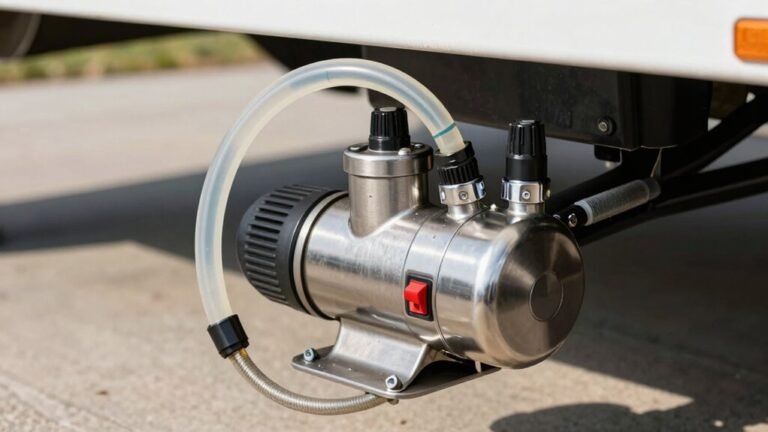
5 Top-Rated RV Water Pressure Regulators for Hassle-Free Camping
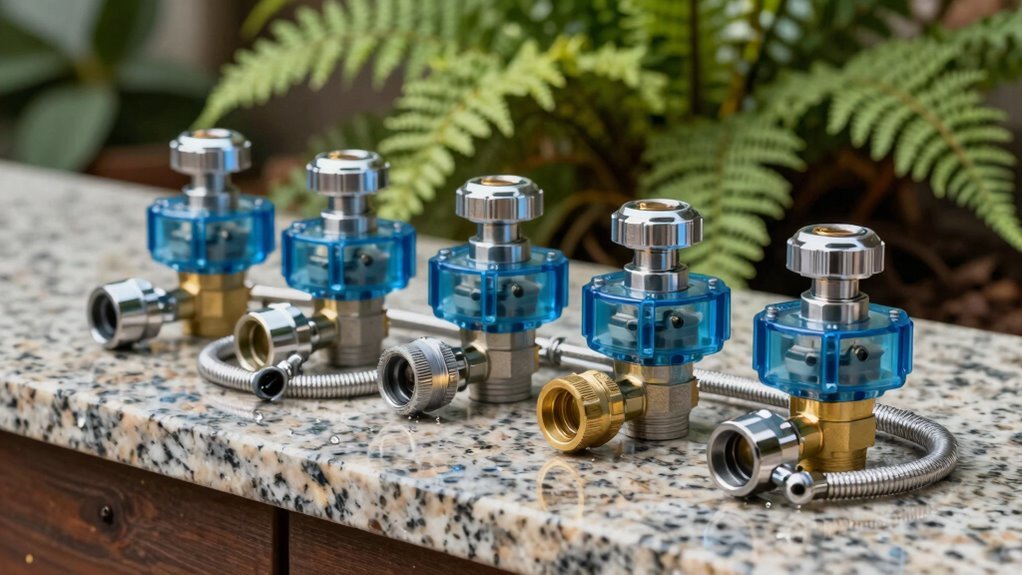
Did you know nearly 70% of RV plumbing failures stem from improper water pressure? A reliable RV water pressure regulator keeps flow steady around 45 psi, protecting your rig’s entire water system from damage.
You want a regulator that’s durable, precise, and ideally includes a built-in filter for added protection. Unfortunately, not all models deliver consistent performance—some suffer from inaccurate gauges or brittle fittings.
These common flaws can compromise your RV’s plumbing, making it crucial to choose a top-rated RV water pressure regulator. The right one ensures hassle-free camping and long-term system reliability.
| RVGUARD Brass RV Water Pressure Regulator Valve | 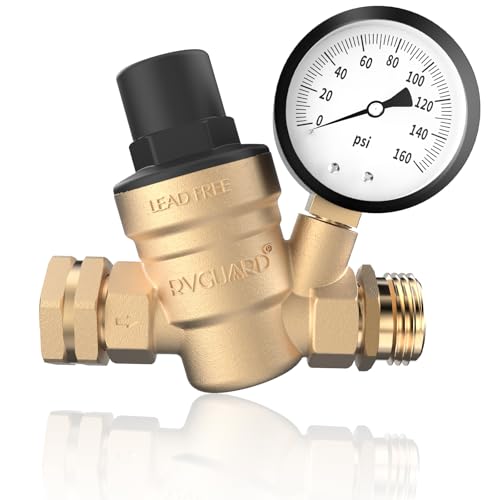 | Best Overall | Material: Lead-free brass (C46500) | Factory PSI Setting: 45 PSI | Max Input Pressure: Not specified | VIEW LATEST PRICE | Read Our Analysis |
| Firebelly RV Water Filter & Regulator Kit |  | Best Filtration | Material: Brass (lead-free, not specified grade) | Factory PSI Setting: 45 PSI | Max Input Pressure: Not specified | VIEW LATEST PRICE | Read Our Analysis |
| OULEME RV Water Pressure Regulator Valve |  | Top Value Pick | Material: Lead-free brass | Factory PSI Setting: 45 PSI | Max Input Pressure: 160 PSI | VIEW LATEST PRICE | Read Our Analysis |
| RV Water Pressure Regulator Valve with Gauge |  | Reliable Baseline | Material: Lead-free brass | Factory PSI Setting: 45 PSI | Max Input Pressure: 160 PSI | VIEW LATEST PRICE | Read Our Analysis |
| RVGUARD Brass Water Pressure Regulator for RV | | Editor’s Choice | Material: Lead-free brass (C46500) | Factory PSI Setting: 45 PSI | Max Input Pressure: Not specified | VIEW LATEST PRICE | Read Our Analysis |
More Details on Our Top Picks
RVGUARD Brass RV Water Pressure Regulator Valve
If you’re the kind of RVer who’d rather not gamble with your plumbing—like handing a loaded hose to a house made of dreams—then the RVGUARD Brass RV Water Pressure Regulator Valve is your best defense against surprise bursts and hidden contamination.
You’re dealing with a rugged, lead-free Class C46500 brass body—tested at just 0.13% lead, well under the 0.25% NSF/ANSI 372 limit—so you’re not just protecting pipes, you’re safeguarding your water.
With a factory-set 45 PSI (easily adjustable clockwise or counterclockwise via screwdriver), plus a built-in gauge and inlet screen filtering debris, you’re getting precision, safety, and real-time feedback—no guesswork, no drama, just reliable flow.
- Material:Lead-free brass (C46500)
- Factory PSI Setting:45 PSI
- Max Input Pressure:Not specified
- Adjustment Method:Screwdriver
- Includes Gauge:Yes
- Inlet Screen Filter:Yes
- Additional Feature:Lead-free Class C46500 brass
- Additional Feature:NSF/ANSI 372 certified
- Additional Feature:Compatible with all American sources
Firebelly RV Water Filter & Regulator Kit
For RV owners who treat their rig like a mobile home—because it *is*—the Firebelly RV Water Filter & Regulator Kit stands out as a do-it-all solution that doesn’t make you choose between pressure protection and clean drinking water. It combines a 55 psi brass pressure regulator with an inline ISO-certified KDF/GAC carbon filter for comprehensive performance.
This filter reduces chlorine by 97%, heavy metals like lead and mercury by up to 95%, and fluoride by around 60–70%, depending on flow rate. While fluoride removal isn’t total, this level of purification is impressive for a single-stage unit.
You simply attach the kink-resistant hose and connect it directly to your rig—no fancy tools, no headaches. It’s ideal for campground hookups, marine use, or even gardening.
The built-in screen filter adds an extra layer of defense against sediment and debris. Backed by a family- and veteran-owned U.S. company that actually camps, this kit is built for real-world use.
- Material:Brass (lead-free, not specified grade)
- Factory PSI Setting:45 PSI
- Max Input Pressure:Not specified
- Adjustment Method:Not specified
- Includes Gauge:Yes
- Inlet Screen Filter:Yes (built-in filter screen)
- Additional Feature:ISO Certified KDF/GAC filter
- Additional Feature:Kink-resistant hose attachment
- Additional Feature:Veteran and family owned brand
OULEME RV Water Pressure Regulator Valve
You’ll want the OULEME RV Water Pressure Regulator Valve if you demand precise, tool-free adjustments and long-term durability without overpaying. This isn’t just another bulky regulator cobbled together with cheap plastic, but a thoughtfully engineered, lead-free brass unit with a 3/4″ standard connection that fits nearly every RV and camper.
You can tweak pressure easily with the handy lever—no tools, no hassle. Thanks to its silicone oil-damped gauge (accurate up to 160 PSI, factory-set at ~45), readings stay clear and steady.
The dual filters trap gunk before it reaches your system. The silicone oil doesn’t just smooth the dial—it reduces wear, so the mechanism lasts.
Sure, OULEME’s not a household name like Camco, but for a lead-free brass build under $30 that reliably handles pressure spikes while resisting corrosion, why pay more? It’s not flashy, but it’s functional, straightforward, and built to outlast flimsy competitors—ideal for campers who’d rather not wrestle failures at the water spigot.
- Material:Lead-free brass
- Factory PSI Setting:45 PSI
- Max Input Pressure:160 PSI
- Adjustment Method:Handle (tool-free)
- Includes Gauge:Yes (silicone oil-filled)
- Inlet Screen Filter:Yes (double filters)
- Additional Feature:Handle-adjustable without tools
- Additional Feature:Silicone oil gauge for durability
- Additional Feature:Double filter system
RV Water Pressure Regulator Valve with Gauge
A solid pick for RVers who want precise control and real-time feedback, this brass, lead-free regulator features an integrated gauge that steps up where basic models fall short. It delivers a pre-set 45 PSI reduction, adjustable with a screwdriver, for reliable water pressure management.
You also get peace of mind from NSF-compliant lead levels under 0.13%, ensuring safer drinking water. The 3/4” garden hose threads and NHT standard fittings offer wide compatibility with common RV and campground hookups.
A built-in filter traps sediment before it reaches your plumbing, protecting pumps and appliances. Just remember to check the screen regularly—when was the last time you cleaned it?
Bubbles in the gauge are normal, caused by temperature shifts or movement—no need to panic. To adjust pressure, turn clockwise to increase or counterclockwise to decrease, then cycle the water 3–5 times to stabilize.
Always recheck the setting after adjusting—nobody wants a surprise 60-PSI blast in the shower.
- Material:Lead-free brass
- Factory PSI Setting:45 PSI
- Max Input Pressure:160 PSI
- Adjustment Method:Screwdriver
- Includes Gauge:Yes
- Inlet Screen Filter:Yes
- Additional Feature:Pre-set at 45 PSI
- Additional Feature:Bubble-resistant gauge behavior
- Additional Feature:Multi-step pressure adjustment process
RVGUARD Brass Water Pressure Regulator for RV
This isn’t just any pressure regulator—RVGUARD’s brass model is the kind of no-nonsense fix you’ll want if you’re tired of guessing whether campground water pressures will blast your RV’s pipes to smithereens. You’re dealing with a rugged, lead-free Class C46500 brass body—tested at under 0.13% lead, well below the NSF/ANSI 372’s 0.25% limit—so you know it’s safe for drinking water.
With a 3/4″ garden hose thread inlet, it hooks up easily to any American water source, and the built-in screen filter catches gunk before it invades your system. It’s factory-set at 45 PSI—plenty for most RVs—but you can tweak it with a screwdriver (clockwise to raise, counterclockwise to lower).
The gauge gives real-time feedback, so you’re not flying blind—because who really trusts a campground spigot, right?
- Material:Lead-free brass (C46500)
- Factory PSI Setting:45 PSI
- Max Input Pressure:Not specified
- Adjustment Method:Screwdriver
- Includes Gauge:Yes
- Inlet Screen Filter:Yes
- Additional Feature:Lead content tested <0.13%
- Additional Feature:Inlet screen protects plumbing
- Additional Feature:Works with NH thread connections
Factors to Consider When Choosing RV Water Pressure Regulators
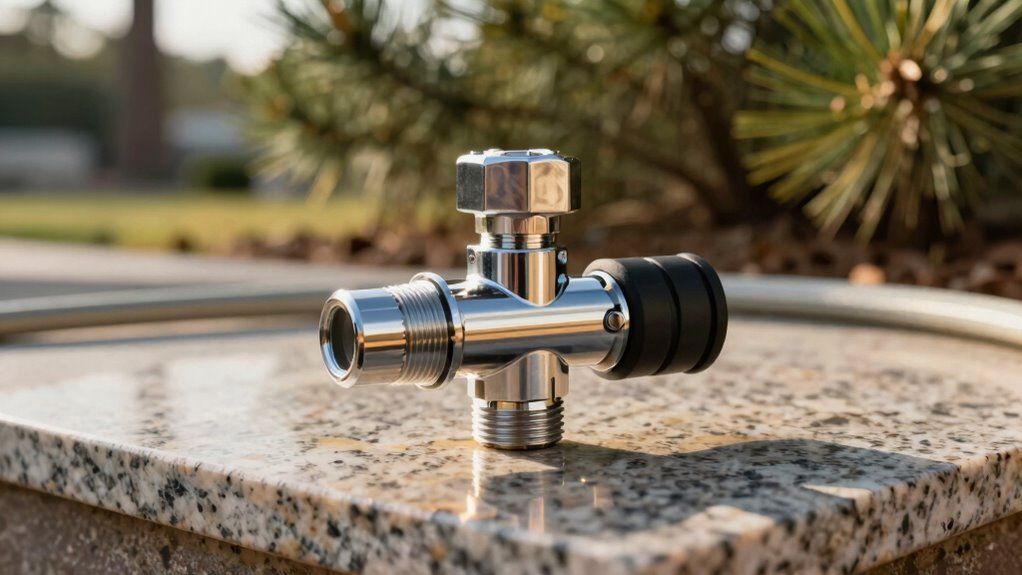
You’ll want a regulator that meets material safety standards and carries lead-free certification—because drinking water shouldn’t come with a side of contaminants, even in trace amounts. Look for one with easy pressure adjustment and a reliable gauge; after all, what good is a 55 psi limit if you can’t trust the readout—or tweak it fast when hooking up at a sketchy municipal spigot? And don’t overlook the built-in filtration—some models catch sediment like a champ, while others barely strain out the basics, leaving your plumbing to pay the price.
Material Safety Standards
When selecting an RV water pressure regulator, don’t overlook the materials—especially since most models rely on lead-free brass, like Class C46500, to meet consumer safety standards. You’re right to care about what touches your drinking water, and honestly, who wouldn’t wonder if that shiny fitting could leach something sneaky?
Good news: these regulators typically test below 0.13% lead—stricter than the NSF/ANSI 372 standard of 0.25%. That’s not just safe, it’s overqualified.
Plus, inlet screens do more than you’d think, filtering grit and gunk that could compromise water quality or damage internal components. And let’s not forget—these parts aren’t just sitting pretty; they’re built to handle typical RV water pressures (often up to 100 psi) and temps without cracking under stress.
Material integrity isn’t a bonus, it’s a baseline. So, while you’re checking specs, remember: solid materials mean safer showers, cleaner coffee, and fewer “wait, is that supposed to taste like metal?” moments.
Lead-Free Certification Compliance
So, how confident can you really be that your RV’s water regulator won’t leach lead into your morning coffee? Pretty confident—if it’s certified lead-free under NSF/ANSI 372, that is.
These top-rated regulators use Class C46500 lead-free brass, keeping lead content below 0.13%, well under the standard’s 0.25% threshold. That’s not just a nice-to-have—it’s critical for protecting your potable water system from contamination.
Manufacturers aren’t just guessing; they test rigorously to guarantee compliance, so you’re not sipping on anything sketchy. You should still check labels or product specs periodically, though—certifications can lapse, and replacements might not always meet the same bar.
It’s a small step, sure, but it keeps your water safe and your conscience clear. No one wants a side of heavy metals with their oatmeal.
Pressure Adjustment Ease
Just because your regulator keeps lead out of your water doesn’t mean it should force you to wrestle with a tiny screwdriver every time you hook up to a new campsite’s water supply—luckily, most models make pressure adjustment straightforward. A simple turn of a screwdriver-accessible knob lets you fine-tune from the standard factory setting of 45 PSI.
You can boost pressure by turning clockwise (up to 60 PSI on many units) or dial it down counterclockwise if the flow feels too harsh—no rocket science, just basic mechanics. Some premium versions even skip the screwdriver entirely, using ergonomic handles for tool-free tweaks in under 10 seconds.
Sure, does it really take that much effort to dig out a multi-tool? Maybe not—but when you’re setting up camp after a long drive, isn’t convenience worth something? These small design choices add up.
Gauge Accuracy Importance
Ever wonder why your RV’s water system feels off—spurting like a geyser or trickling like a tired hose—only to find out the regulator’s gauge looked right but lied? You’re relying on that dial to hold the line at 45 PSI, the sweet spot most regulators target, but if the gauge drifts or fails, you won’t know until a faucet leaks or the water heater underperforms.
A readable, accurate gauge gives instant feedback—like a dashboard warning light—so you can catch pressure creep before it stresses plastic lines or damages seals. Many top models use silicone-filled gauges, which dampen needle vibration (a sneaky source of misreads) and slow internal wear, so your readings stay reliable over months or years of bouncing down back roads.
Skimp on gauge quality, and you’re flying blind—maybe saving a few bucks now, but risking repairs later. Don’t let a fuzzy dial turn a simple hookup into a plumbing gamble.
Filtration System Quality
What if your RV’s water tasted better and its plumbing lasted longer—not from magic, but from what you’re filtering out before it even hits the regulator? You can make that happen by choosing a regulator with a built-in filtration system that uses ISO-certified KDF and granular activated carbon (GAC) media.
This combination is proven to reduce chlorine, heavy metals like lead, and even microbial growth such as mold. A multi-stage setup using both KDF and carbon tackles a broader range of contaminants than basic screens alone.
Don’t overlook the inlet screen, either—it catches sand, rust, and debris before they enter your system. This helps protect both the regulator and your RV’s internal plumbing from damage.
Look for units that advertise certified filtration standards, such as ISO, NSF, or KDF-specific claims, as these typically offer more consistent performance. While no filter is perfect, regular cartridge replacement every 6–12 months ensures ongoing effectiveness.
Combining pre-filter screening with active filtration media means cleaner, safer water flows through your RV system every time.
Compatibility With Hose Types
You’ve already taken steps to guarantee clean, safe water with a regulator that includes a decent filtration system—now it’s time to make sure that water can actually get into your rig without leaks or headaches. Most RV regulators use a 3/4-inch garden hose thread (GHT) inlet, which matches standard commercial RV hoses and campground spigots—so if yours does too, you’re golden.
Some list 3/4″ NH (national hose) threading, which, despite the different name, is actually the same as GHT, so don’t stress the jargon. The key? Match your regulator’s inlet to your hose or water source to skip the adapter hassle.
Many feature built-in inlet screens that catch debris before it enters the hose—smart, right? They protect your regulator and plumbing downstream.
But if your hose has odd threading (because, let’s face it, not all gear plays nice), grab the right adapter. A snug, leak-free connection isn’t optional—it’s essential.
Durability in Outdoor Use
While camping means roughing it in style, your water pressure regulator shouldn’t be left to fend for itself against the elements. Choose one built to last, like those made from lead-free brass, which resists corrosion and handles extreme temperatures from −20°F to 120°F without cracking.
Models with inlet screens are essential—they catch grit and sediment from questionable campground water sources. This keeps internal components clean and significantly extends the regulator’s lifespan.
A 160 PSI rating ensures protection even when park water pressure spikes unexpectedly. Aim for a steady 45 PSI baseline with adjustable settings to avoid stressing your RV’s plumbing at every new site.
Some regulators feature oil-filled gauges and reinforced fittings to reduce vibration damage. This added durability matters, especially when navigating bumpy backcountry roads where smooth rides are rare.
Frequently Asked Questions
Can I Install a Water Pressure Regulator Myself?
Yes, you can install it yourself—just screw it onto your RV’s water inlet before connecting the hose. It’s quick, needs no tools, and guarantees you avoid damaging your plumbing with high pressure.
Do RV Water Pressure Regulators Require Maintenance?
Yes, you do need to diligently detect debris, dry out devices, and double-check connections. You’ll prevent problems and prolong performance by periodically poking, probing, and purging your RV’s pressure regulator—simple steps save you stress, money, and messy, malfunctioning surprises down the road.
Are All RV Regulators Compatible With City Water?
No, not all RV regulators work with city water. You’ve got to check the specs—some can’t handle high input pressure. Make sure yours is rated for it, or you’ll risk damaging your RV’s plumbing when you connect to city water sources.
How Often Should I Replace My Regulator?
You should replace your regulator every 2–3 years. Dust meets hose threads, sun bleaches the casing—tiny clues pile up. You notice drips, hear sputters, then water spikes. Don’t wait. Swap it out before the gasket fails and ruins your hookup.
Can High Water Pressure Damage My RV Plumbing?
Yes, high water pressure can damage your RV plumbing. You’ll risk burst hoses, leaking joints, and cracked fixtures. You should always use a regulator to keep pressure safe. It’s one of the best ways you can protect your system.
Conclusion
You’ve seen the top picks, but remember—choosing the right regulator isn’t just about pressure, it’s about peace of mind; after all, an ounce of prevention is worth a pound of plumbing. With lead-free brass bodies, 45 psi factory settings, and silicone-filled gauges, these models deliver reliable flow from 20–80 psi input (and up to 100°F water). Sure, none filter fluorides perfectly—but integrated KDF/GAC media helps. So, ask yourself: why risk a burst hose when a solid, vibration-resistant regulator costs less than a tank repair?