5 Best RV Water Filters for Cleaner, Fresher Travel Adventures
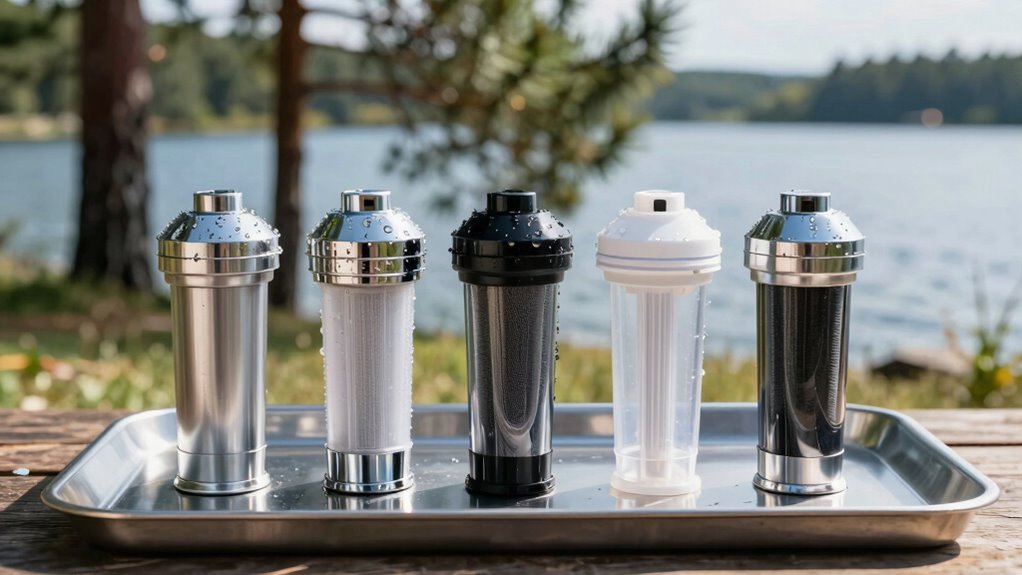
You’re hooked on road trips, but let’s be honest—sketchy water pressure and questionable campground spigots? Not exactly invigorating.
A solid RV water filter tackles chlorine, sediment, and heavy metals, making your water safer and tasting better.
With options filtering down to 0.2 microns and flow rates up to 2.5 GPM, you won’t be waiting forever to fill a glass.
The best RV water filters ensure cleaner, fresher water no matter where you park.
Wondering which one actually keeps up without busting your setup? That’s where the real differences in performance and durability show.
| Camco Tastepure RV Water Filter (40043) |  | Best Overall | Filtration Stages: 6-stage | Filter Type: Inline | Certification: NSF/ANSI 42, 53, 372 | VIEW LATEST PRICE | Read Our Analysis |
| Camco Tastepure RV Water Filter 4-Pack |  | Best Value | Filtration Stages: 6-stage | Filter Type: Inline | Certification: NSF/ANSI 42, 53, 372 | VIEW LATEST PRICE | Read Our Analysis |
| Stream RV Water Filter 3-Stage System |  | Budget-Friendly Pick | Filtration Stages: 3-stage | Filter Type: Inline | Certification: NSF-certified | VIEW LATEST PRICE | Read Our Analysis |
| GLACIER FRESH RV Water Filter (3-Stage) |  | Editor’s Choice | Filtration Stages: 3-stage | Filter Type: Inline | Certification: Not specified | VIEW LATEST PRICE | Read Our Analysis |
| Camco Tastepure RV Water Filter (40043) | | Best Overall | Filtration Stages: 6-stage | Filter Type: Inline | Certification: NSF/ANSI 42, 53, 372 | VIEW LATEST PRICE | Read Our Analysis |
More Details on Our Top Picks
Camco Tastepure RV Water Filter (40043)
If you’re the kind of RVer who values clean, great-tasting water—whether you’re hooking up at a campground with sketchy supply lines or just tired of tasting chlorine in your morning coffee—the Camco Tastepure RV Water Filter (40043) is your best bet.
You get Hex-Flow’s 6-step filtration, a GAC and KDF combo that fights bacteria and mold when idle, and NSF/ANSI 42 and 53 certifications—all while being lead-free per NSF/ANSI 372. Its 20-micron sediment filter blocks silt, and the wide-body design boosts water flow.
You can even use it for gardening or washing the dog. Made in the USA with durable materials, it’s not magic—but it’s close.
- Filtration Stages:6-stage
- Filter Type:Inline
- Certification:NSF/ANSI 42, 53, 372
- Sediment Filtration:20-micron
- Flow Performance:High-flow
- Made In:USA
- Additional Feature:Patented Hex-Flow Technology
- Additional Feature:Includes flexible hose protector
- Additional Feature:Ready-to-use kink protection
Camco Tastepure RV Water Filter 4-Pack
You’re going to appreciate the Camco Tastepure RV Water Filter 4-Pack if you demand clean, great-tasting water on the road. Its Hex-Flow Technology uses a true 6-layer filtration process—not just marketing hype—to tackle chlorine, sediment, and unwanted tastes.
You get GAC and KDF layers that help control bacteria and mold when the filter sits idle. That’s a handy feature for extended trips or seasonal storage.
The 20-micron sediment filter has a wide-body design that boosts flow without sacrificing protection. It’s certified to NSF/ANSI 42, 53, and 372 standards, ensuring it’s truly lead-free and made in the USA with strict quality control.
You can hook it to any standard hose for use in RVs, boats, or even gardening. Four filters per pack mean you’re covered for a while—though, let’s be honest, when was the last time you actually replaced your filter on schedule?
- Filtration Stages:6-stage
- Filter Type:Inline
- Certification:NSF/ANSI 42, 53, 372
- Sediment Filtration:20-micron
- Flow Performance:High-flow
- Made In:USA
- Additional Feature:4-pack value bundle
- Additional Feature:Wide body flow design
- Additional Feature:High-quality USA materials
Stream RV Water Filter 3-Stage System
The Stream RV Water Filter 3-Stage System is the go-to solution for road-trippers, weekend warriors, and full-time campers who demand clean, great-tasting water without sacrificing space or flow — especially if your rig’s plumbing setup leans more DIY than deluxe. You get 3-stage filtration that removes chlorine, heavy metals, VOCs, and sediment, giving you crystal-clear water safe for drinking, cooking, or even showering.
With a solid 2.5 GPM and zero pressure drop, it keeps your water pressure steady — no puny flow here. It’s compact, lightweight, and fits tight spaces (perfect for campervans or tiny homes), includes a mounting bracket, and lets you swap filters tool-free.
Made in the USA and NSF-certified, it meets strict safety and performance standards — because, hey, you’re camping, not auditioning for a survival show.
- Filtration Stages:3-stage
- Filter Type:Inline
- Certification:NSF-certified
- Sediment Filtration:Not specified
- Flow Performance:2.5 GPM
- Made In:USA
- Additional Feature:2.5 GPM no pressure drop
- Additional Feature:Tool-free filter changes
- Additional Feature:Mounting bracket included
GLACIER FRESH RV Water Filter (3-Stage)
Glacier Fresh’s 3-stage RV water filter isn’t just another inline add-on—it’s a precision-tuned system for travelers who demand cleaner, better-tasting water without sacrificing flow or durability. It features a 0.2-micron high-flow filter that removes fine particulates, including submicron contaminants.
The second stage uses charcoal and coconut shell carbon to significantly improve taste and eliminate unpleasant odors. This combination effectively reduces chlorine and common organic compounds found in municipal and well water.
A sediment prefilter comes first in the sequence, capturing larger particles to extend the life of the downstream stages. This means fewer replacements and more value over time, especially in areas with inconsistent water quality.
Designed for convenience, the filter works seamlessly with both city water and well sources at campgrounds. Stainless steel quick-connect fittings allow for tool-free installation and a secure, leak-free connection.
Housed in lightweight polycarbonate carbon fiber, the unit is both durable and easy to transport. Its compact design makes it ideal for use in RVs, camper vans, and boats.
You can expect reliable performance for 3 to 4 months with average use and decent source water. While it doesn’t purify heavily contaminated water, it’s perfectly suited for standard campground supplies—because when was the last time you saw a boiling water advisory posted at your favorite site?
- Filtration Stages:3-stage
- Filter Type:Inline
- Certification:Not specified
- Sediment Filtration:Prefilter (0.2-micron mentioned for main filter)
- Flow Performance:High-flow
- Made In:Not specified
- Additional Feature:0.2-micron high-flow filter
- Additional Feature:Stainless steel quick connects
- Additional Feature:Ultra-lightweight carbon fiber frame
Camco Tastepure RV Water Filter (40043)
Looking for an RV water filter that doesn’t just claim to purify but actually delivers measurable results? The Camco Tastepure RV Water Filter (40043) uses Hex-Flow’s 6-step filtration—GAC and KDF layers included—to reduce chlorine, odors, sediment (down to 20 microns), and contaminants, backed by NSF/ANSI 42 and 53 certifications.
It’s made in the USA, complies with strict lead-free laws, and its wide-body design maintains solid water flow—no annoying pressure drops. You can hook it to any standard hose, use it for camping, boats, even gardening, and the included hose guard prevents kinks.
Sure, it won’t turn ditch water into sparkling wine, but it reliably delivers clean, great-tasting water—without the guesswork.
- Filtration Stages:6-stage
- Filter Type:Inline
- Certification:NSF/ANSI 42, 53, 372
- Sediment Filtration:20-micron
- Flow Performance:High-flow
- Made In:USA
- Additional Feature:Patented Hex-Flow Technology
- Additional Feature:Includes flexible hose protector
- Additional Feature:Ready-to-use kink protection
Factors to Consider When Choosing an RV Water Filter
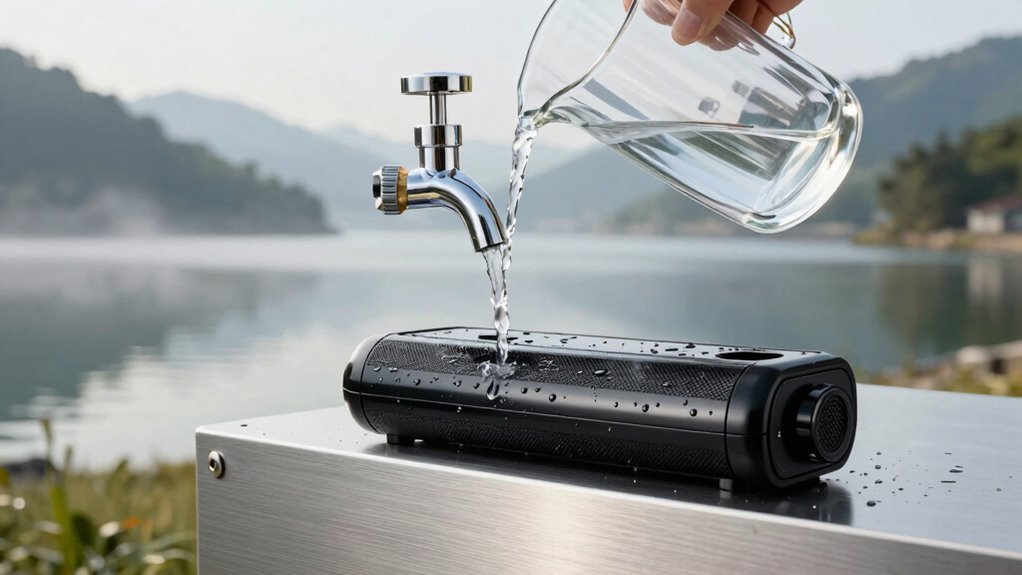
You’ll want to pick an RV water filter that matches your travel habits and water sources—after all, what works at a pristine campground might struggle in a dusty desert hookup. Think about filtration tech (like carbon block vs. hollow fiber), your local water quality (especially if you’re seeing gunk at 500+ ppm TDS), and whether you can live with a 0.5 GPM flow rate during morning showers. Installation should be quick—no tools, please—and the housing better survive a bumpy backroad without leaking, because nobody enjoys a wet storage bay.
Filtration Technology
Why do some RV water filters perform better over time while others falter after a few campground hookups? Because their filtration technology isn’t just about trapping gunk—it’s about smart, layered defense.
You’re not just sipping water; you’re running it through a 20-micron sediment filter first, shielding internal parts and keeping flow steady. Then comes the real magic: GAC and KDF media team up—cutting chlorine, ditching odors, and making it tough for bacteria or mold to grow when the rig’s sitting idle.
Many top filters use Advanced 6-Step (Hex-Flow) systems, stacking six layers to tackle contaminants from every angle. Some even go submicron (0.2-micron!) for ultra-fine particles.
And don’t overlook NSF/ANSI 42 and 53 certifications—those aren’t just stickers, they’re proof your filter actually delivers on taste, odor, and particulate reduction.
Water Quality
What really makes one filter turn murky, chlorine-heavy water into something pleasantly drinkable while another barely keeps up? You’re dealing with real variables: taste, odor, sediment, and invisible contaminants.
To get it right, look for filters that use GAC (granular activated carbon) and KDF media—they cut chlorine and curb bacteria growth during idle stretches (a sneaky issue you won’t notice until it’s gross). A 20-micron sediment layer stops silt fast, but if you want serious clarity and safety, step up to a 0.2-micron high-flow model—it kills finer particulates cold.
For full coverage, 3-stage systems take down chlorine, heavy metals, and VOCs (volatile organic compounds) like a pro. Sure, no filter purifies completely—don’t expect it to replace lab-grade treatment—but done right, your tap water won’t taste like a public pool either.
You’ll actually *want* that second glass.
Flow Rate
How fast does your water really need to flow before it feels instant—2.5 gallons per minute, maybe more? You’ll want a filter that keeps pace without sputtering, especially when showering or rinsing dishes.
High-flow designs deliver, often rated at 2.5 GPM or higher, so you’re not waiting around. A wide-body inline housing reduces restrictions, letting water move freely while still trapping contaminants.
Inside, a 20-micron sediment filter catches silt and debris that could clog finer stages, maintaining strong flow over time. Quick-connect fittings help too—no fumbling with threaded joints means less downtime and quicker access to clean water.
Sure, ultra-fast flow sounds great, but only if it doesn’t sacrifice filtration depth. Some systems strike that balance well, though others promise speed and underdeliver when the filter loads up.
Choose wisely—flow matters, but consistency matters more.
Ease of Installation
Even if you’re not the handiest traveler, most RV water filters make installation feel less like plumbing and more like snapping together a well-designed tent—thanks to quick-connect fittings that click into place without wrenches or leaks. You’ll appreciate the included mounting bracket, which lets you secure the unit to a wall or panel in under five minutes, no specialty tools required.
Since it’s compatible with standard 3/4-inch garden and drinking water hoses, you won’t wrestle with adapters at the campground spigot. The compact, lightweight design slips neatly into tight storage spots—think under sinks or inside exterior compartments—without sacrificing accessibility.
And when it’s time to change the cartridge, tool-free access means you’re done in seconds, not minutes. Sure, you might still fumble the first connection in the dark—but honestly, what setup doesn’t?
Durability and Build
A well-built RV water filter won’t quit on you after two seasons of cross-country bumps and campground hookups. Look for one with a corrosion-resistant housing, like reinforced polycarbonate or carbon-fiber composite, that shrugs off UV rays, freezing temps, and the occasional drop on the pavement.
You’ll want reinforced fittings and stainless steel quick-connects to handle constant threading and unthreading. Plastic threads strip fast, so durable materials make a big difference in longevity.
Designs with ultralight yet rugged frames maintain strength without adding bulk. At just 3–5 inches long, they tuck neatly into tight RV compartments.
A solid build also means tool-free cartridge swaps that don’t compromise sealing integrity. Because who brings a wrench on a weekend trip?
These features add up: fewer leaks, longer life, and less downtime chasing drips mid-pour. Sure, no filter is indestructible, but why replace it yearly when you can expect three seasons or more from a resilient model?
Certifications and Safety
You’ve invested in a rugged RV water filter that can survive rocky backroads and seasonal temperature swings, but durability means little if what’s inside isn’t actually keeping your water safe. You need certifications that back up those clean-water promises.
Look for NSF/ANSI 42 (taste and odor reduction) and 53 (contaminant removal like chlorine and lead), since they verify real performance, not just marketing fluff. These standards ensure the filter delivers on its claims.
Check for CSA certification to NSF/ANSI 372, which confirms the filter’s materials are truly lead-free—because what good is filtering water if the filter itself poisons it? Federal and state lead-free laws also require this, so don’t skip it.
Make sure the product is NSF-certified for RV use or meets portable filtration standards, so it’s built for life on the move. This ensures it can handle the unique demands of travel and varying water sources.
Why not go for filters made in the USA, with clear testing records and solid quality control? When safety’s on the line, documented reliability beats guesswork every time.
Frequently Asked Questions
Can I Install an RV Water Filter Myself?
Yes, you can install an RV water filter yourself. Just shut off the water, attach the filter to the fresh water inlet, tighten the connections, and test for leaks. It’s straightforward, and you’ll have cleaner water in no time.
How Often Should I Replace My RV Water Filter?
You’ve gotta swap your RV water filter every 3 to 6 months—depending on use—or risk sipping gunk that’d make a swamp jealous. Don’t push it; stale filters turn your fresh water into filthy soup real quick.
Do RV Water Filters Remove Bacteria and Viruses?
No, most RV water filters don’t remove bacteria and viruses—you’ll need a UV purifier or specialized system for that. Regular filters clean sediment and chlorine, but they won’t kill microbes, so don’t rely on them alone for unsafe water sources.
Are All RV Water Filters Compatible With City Water?
No, not all RV water filters work with city water—you gotta check specs first. Some’re made just for wells or lakes. Don’t be a 19th-century prospector; modern rigs need modern fixes. Match pressure, flow, and thread type, or you’ll wind up dry.
Can I Use a Water Filter With My Rv’s Onboard Tank?
Yes, you can use a water filter with your RV’s onboard tank. Just install it between the fill point and tank inlet, and it’ll clean water as you fill up. Make sure it’s inline and designed for tank protection.
Conclusion
You might think changing filters is a hassle, but with quick-connect fittings and 20-micron sediment stages—like on the Glacier Fresh or Camco 4-pack—you’re swapping in seconds, not minutes. These NSF-certified, lead-free systems (some lasting 6–12 months) handle 2.5 GPM flows without pressure drops, so your shower won’t turn into a sad trickle—effective, durable, and surprisingly simple.