What to Know Before Living in an RV Full-Time
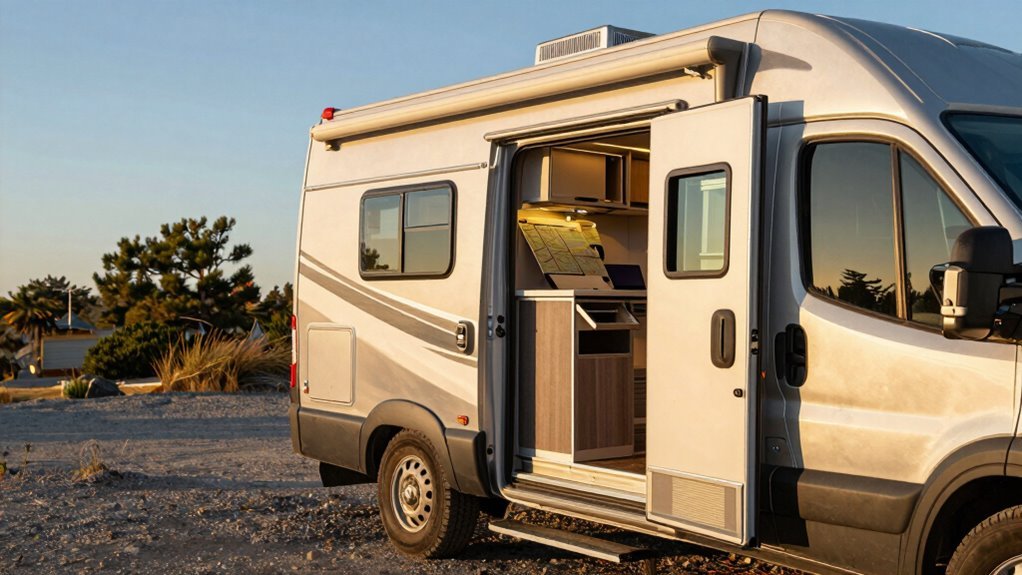
You’ll swap closet space for campfires and learn to love hidden storage—even your shoes get their own wall. Tiny living means honest talks, fewer slamming doors, and laughing through the cozy chaos.
Pack for all weather, chase sunshine, park smart, and keep Wi-Fi strong with hotspots or Starlink. Work moves with you, rent vanishes, but friendships shift—bring good stories and an open heart, and you’ll find your rhythm out there. Living in an RV full-time changes how you see home, space, and connection.
Assessing Your Space and Storage Needs

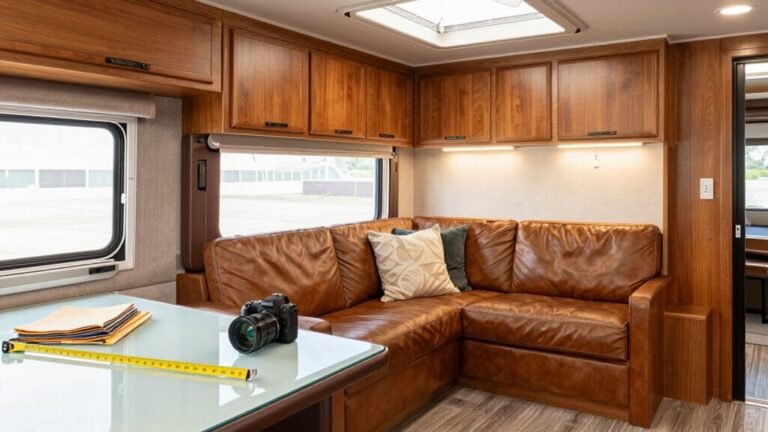
Ever wonder how tiny homes hold so much stuff without feeling cluttered? Well, in your RV, every inch works hard—especially with clever hidden storage.
You’ll stash linens under your bed, slide snacks into pull-out couch compartments, and tuck shoes into wall-mounted TRONES.
Your entertainment center? It’s not just for the TV—it’s packed with cubbies.
In the kitchen, pull-out drawers and magnetic spice racks keep things handy but out of the way.
The bathroom vanity holds more than toothpaste—think cleaning supplies under the sink and towels on hooks.
Even your ottoman can double as a stash spot.
With hanging organizers, tension rods, and stackable bins, you’ve got options everywhere.
It’s like RV Tetris, but way more fun.
You won’t miss bulky furniture—you’ll love how snug and smart it feels.
And hey, less clutter means more room to dance in your socks.
Who knew tiny could be this tidy?
Consider choosing non-breakable materials to ensure safety and durability while on the move.
Navigating Weather and Seasonal Challenges
You’ve got your cozy RV organized down to the last spice jar, but now let’s talk about what’s happening *outside* those tidy walls—because Mother Nature doesn’t care how neat your sock drawer is when a winter storm rolls in.
You’ll feel every cold snap and heatwave more deeply in your mobile home, so staying ahead of the weather’s mood swings is key.
Keep an eye on forecasts, vent well to fight winter condensation, and be ready to bolt if snow or storms threaten.
Frozen pipes? Not on your watch—use heated hoses or leave a drip running.
And when temps plummet overnight, trust us, extra propane tanks are lifesavers.
The fun part? You can chase sunshine like a snowbird, dodging winter by migrating south.
Sure, black ice and surprise blizzards mean you’ll sometimes hunker down, but hey—where else can you wake up in summer, even in December?
Having a battery-backed router can keep you connected during power outages, maintaining internet access for work and entertainment.
Finding Legal and Safe Places to Park

Where can you rest your wheels without breaking the rules or spooking the neighbors?
You’ve got options!
Check local ordinances first—many cities limit street parking or require permits.
HOAs might side-eye your RV, so read the fine print to dodge fines.
Craving free overnight spots? Try Cracker Barrel, Flying J, or even Costco—they often welcome RVs with open arms.
Love nature? BLM land offers free, first-come camping (just don’t overstay the 14-day limit).
National and state parks are scenic but usually need reservations.
For quirky charm, join Harvest Hosts or Boondockers Welcome to park on farms or backyards—yes, really!
And don’t forget VFW lots or church parking with permission.
With a little planning, you’ll find safe, legal spots that feel like home—no drama, just adventure.
The road’s open, and your home fits on it!
Always verify local zoning laws before settling in for long-term stays.
Managing Utilities and Off-Grid Power
How do you keep the lights on, the water flowing, and the coffee brewing when you’re miles from the nearest power line?
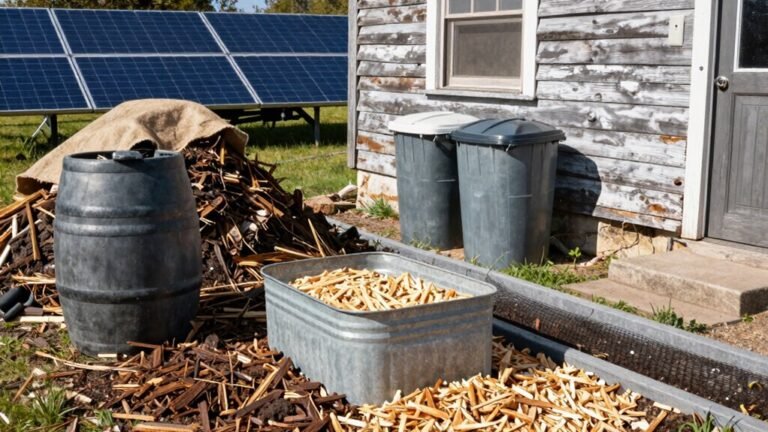
You tap into shore power at RV parks to run appliances and charge batteries, or go off-grid with solar panels—rooftop or portable—that turn sunshine into juice.
A backup generator helps on cloudy days or heavy usage nights.
You’ll manage freshwater tanks for drinking and showering, refill often, and filter water from sketchy sources like a pro.
Greywater and blackwater tanks need regular dumping at approved stations—gross but oddly satisfying.
Propane keeps your fridge humming and meals hot.
Costs run $100–$300 monthly, but solar slashes fees and boosts freedom.
With smart conservation and the right setup, you’ll boondock longer, worry less, and laugh when the grid goes down—while your lights stay on.
Staying Connected With Internet and Phone Service
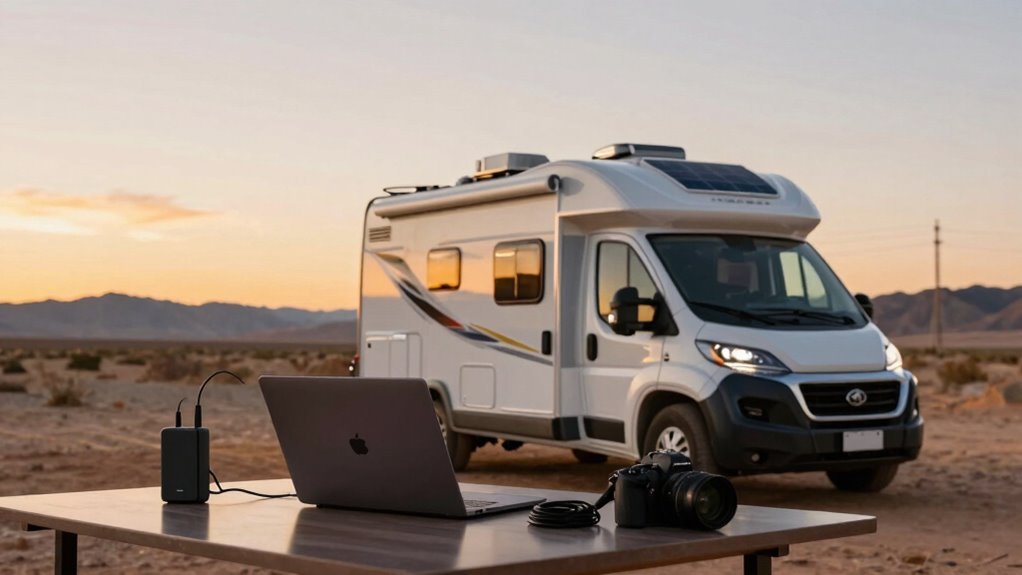
Powering your RV isn’t just about keeping the coffee hot—it’s also about staying in touch with the world while you roam.
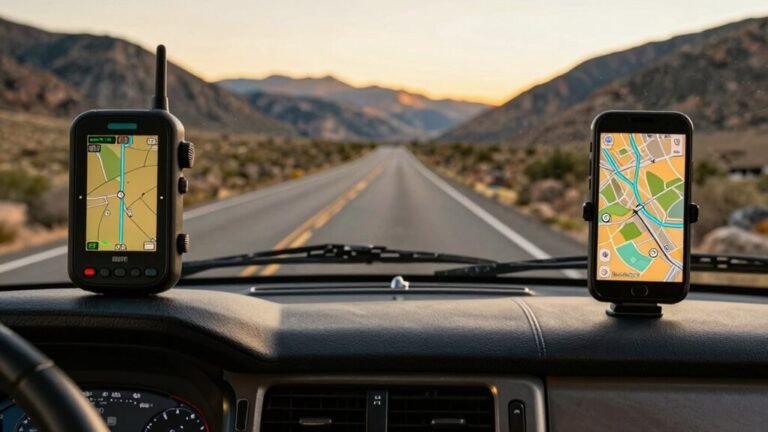
You’ve got options: tap into T-Mobile’s 5G with their AWAY plan, grab Starlink Roam for remote zones (sky view required!), or use UbiFi’s unlimited 4G LTE for streaming without stress.
Got a weekend trip? A Verizon Jetpack or T-Mobile hotspot’s got your back.
Want full-time freedom? Pair a Pepwave router with Starlink or boost your signal using external antennas—because nobody likes buffering in BFE.
Multi-network devices like Nomad Internet or TravlFi hop on the strongest signal, so dead zones don’t kill your vibe.
Sure, rural spots still test reliability, but smart setups keep you connected from mountain tops to desert trails.
And hey, if your cat’s live-streaming naps, you’re probably doing something right.
Stay linked, stay laughing, and keep roaming—online too.
Handling Mail, Banking, and Legal Residency
Juggling mail, banking, and residency on the road might sound like a circus act, but it’s totally doable with the right setup—and no, you don’t need a permanent address to keep your life in order.
Sign up for a mail forwarding service like Escapees or Traveling Mailbox, and you’ll get a real street address in states like Texas or South Dakota—perfect for legal paperwork, bank accounts, and even vehicle registration.
You can scan, forward, or toss your mail from your phone, no circus juggling required.
Prefer free options? Try USPS General Delivery at local post offices, but remember: it’s great for short stays, not constant nomads.
UPS Store or family hand-offs work too if you’re okay with less flexibility.
Just pick a reliable address and stick with it—your IRS and bank will thank you.
With the right system, you’re not just surviving the nomadic life—you’re mastering it, one forwarded letter at a time.
Budgeting for Fuel, Maintenance, and Campground Fees
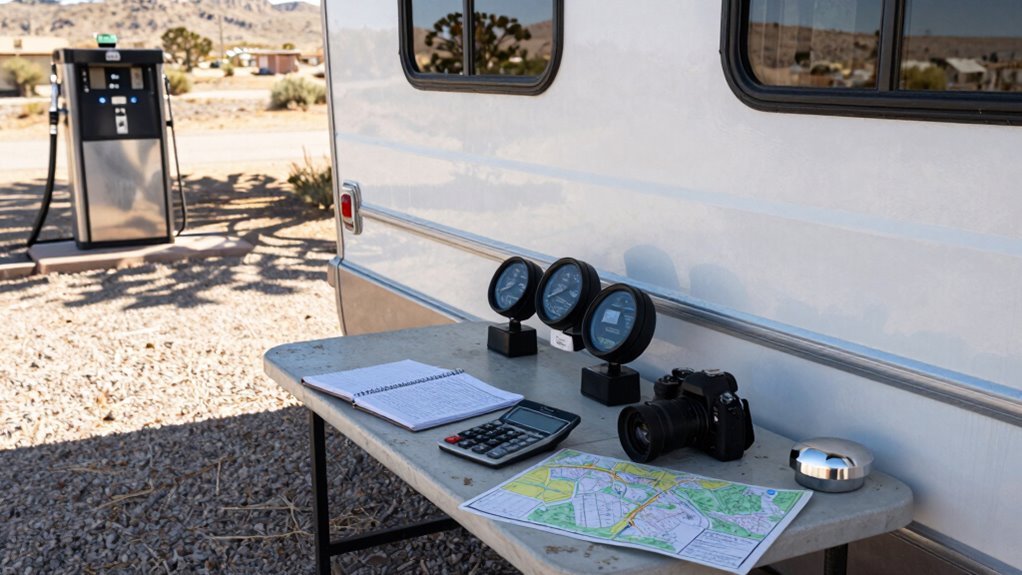
Skip the spreadsheets for a sec—budgeting on the road doesn’t have to be a drag show.
You’ll likely spend around $350 a month on fuel if you’re driving 8,000 miles a year, but towing your rig can spike those costs fast.
Plan $400 monthly for gas and maintenance to stay safe.
Proactive checkups save big—preventative care beats a $5,000 breakdown any day.
Insurance runs $300 a month, covering your wheels, rig, and health, so don’t skip it.
Campground fees? They range from $12 a night with memberships to over $1,000 monthly in pricier spots.
But guess what—boondocking or camp hosting slashes costs, sometimes down to $1,000 total a month.
Use Thousand Trails and save nearly $18,000 a year in camping fees.
Stay savvy, keep rolling, and let your budget work *for* you, not against you.
Adapting Your Career or Income Stream
While your dream of hitting the open road might feel like a total escape from the 9-to-5 grind, the truth is, most folks like you’re still earning—just from a different zip code every week. You’re likely remote, digital nomad–ready, or already logging in from a national park. Over half of RVers work remotely, especially millennials and young pros who’ve turned Wi-Fi into their office view.
Many young families keep full-time jobs while bringing in over $75K a year—turns out, RV life doesn’t mean giving up stability. Freelance gigs, side hustles, or seasonal gigs? Totally doable. Whether you’re boondocking or parked seaside, work follows you—thanks to laptops and hotspots. Employers now embrace flexibility like never before, so you can chase sunsets and paychecks at the same time.
Who says you can’t answer emails in flip-flops? Work doesn’t stop—you just upgraded your backdrop.
Maintaining Relationships and Personal Well-Being

You’ve got your work setup fine-tuned, logging in from mountain passes and desert trails with your trusty hotspot by your side—earning while exploring is officially your life.
Now, let’s talk about the people and feelings that keep your world balanced.
Living in 250–400 square feet means you’re always bumping into your partner—literally and emotionally.
There’s no slamming a door and walking away, so honest talks and quick fixes are a must.
You’ll laugh, maybe cry, and definitely learn to listen like a pro.
Old friendships might fade, and Aunt Carol won’t stop asking when you’re “coming back to real life,” but you’ve got each other.
Make time to check in, breathe, and take solo walks when the walls feel too close.
And hey, dating as a solo RVer? It’s like an audition—but hey, at least you’ve got great stories.
Frequently Asked Questions
Can I Live in an RV With Children?
Yeah, you can absolutely live in an RV with your kids—it’s a blast!
You’ll just need a big enough rig with room for everyone, maybe a cozy bunk or two.
Most families do virtual school or homeschool, so learning keeps rolling.
You’ll hit trails, parks, and new towns daily, making education an adventure.
Just watch the budget and maintenance, ’cause surprise repairs? Not exactly family movie night material.
Is RV Living Allowed in My City?
You can’t legally live in your RV everywhere—cities like San Francisco say no to full-time stays on streets, and others ban overnight parking.
Check your local rules first, ’cause you don’t want a surprise ticket or tow.
Some places allow short-term parking, but long-term?
That’s trickier.
Look up zoning laws and parking ordinances—you’ll save yourself headaches (and maybe your bacon).
What About Emergency Medical Access on the Road?
You’ve got emergency care covered—literally.
Paramedics take you to the nearest ER, and thanks to the Affordable Care Act, your copay stays the same, even if the hospital’s out-of-network.
Just don’t treat ERs like a drive-thru; they’re pricey!
For non-emergencies, urgent cares and telemedicine are your best friends.
Apps help you find trusted clinics fast, and Medjet’s got your back for serious situations far from home.
Stay smart, stay healthy, and keep adventuring!
How Do I Register My RV for Residency?
You register your RV for residency by picking a RVer-friendly state like South Dakota, Texas, or Florida—no, you don’t need a permanent house!
You’ll swear to full-time travel, prove identity and address, then register your vehicle.
You’ll need a title, ID, and proof of residency, like mail or a campground receipt.
You get the license and registration in your new home state, often with no income tax.
Easy, right?
Can I Have Pets While Living in an RV?
You can absolutely have pets while living in an RV—but you’ll need to plan smart and pack patience!
Dogs love adventures but need routine walks and cozy spots to crash.
Cats adapt well indoors but hate chaos.
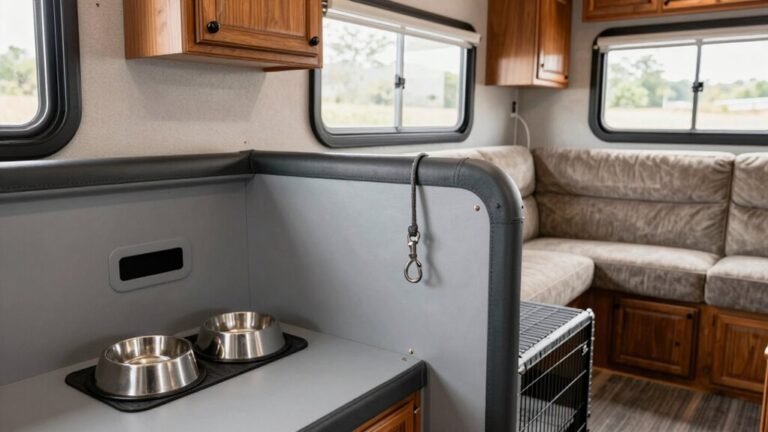
Secure your space like a pet-proof fortress, stick to health schedules, and always follow campground rules.
Keep them safe, happy, and close—because hey, they’re not just pets, they’re tiny travel buddies with fur and attitude!
Conclusion
You’ve got this! Think of Sarah, who swapped her apartment for a cozy RV and now works remotely from national parks. Sure, she once tried to shower during a windstorm—total comedy—but she’s happier, freer, and living on her terms. With smart planning, a dash of grit, and a good Wi-Fi hotspot, your RV dream can thrive. It’s not just living—it’s adventuring, everyday!
References
- https://www.extraspace.com/blog/home-organization/rv-design-organization-ideas/
- https://www.rvezy.com/blog/rv-storage-hacks
- https://www.youtube.com/watch?v=ugiYESJ0_m8
- https://www.youtube.com/watch?v=L6yAjkw4WWc
- https://www.fulltimefamilies.com/rv-storage-and-organization-hacks/
- https://www.campingworld.com/c/rv-furniture-decor/interior-storage-organization
- https://www.youtube.com/playlist?list=PLJsTbI4IKRk7BxP9o6iZ7bzmHoGi4BCwW
- https://rvwithus.net/2021/03/02/surviving-cold-and-snow-while-living-fulltime-in-our-rv/
- https://popehaven.com/the-pros-and-cons-of-full-time-rv-living/
- https://theadventuredetour.com/dangers-of-living-in-an-rv-rv-safety-risks/