Can I Run My RV Air Conditioner on Battery?
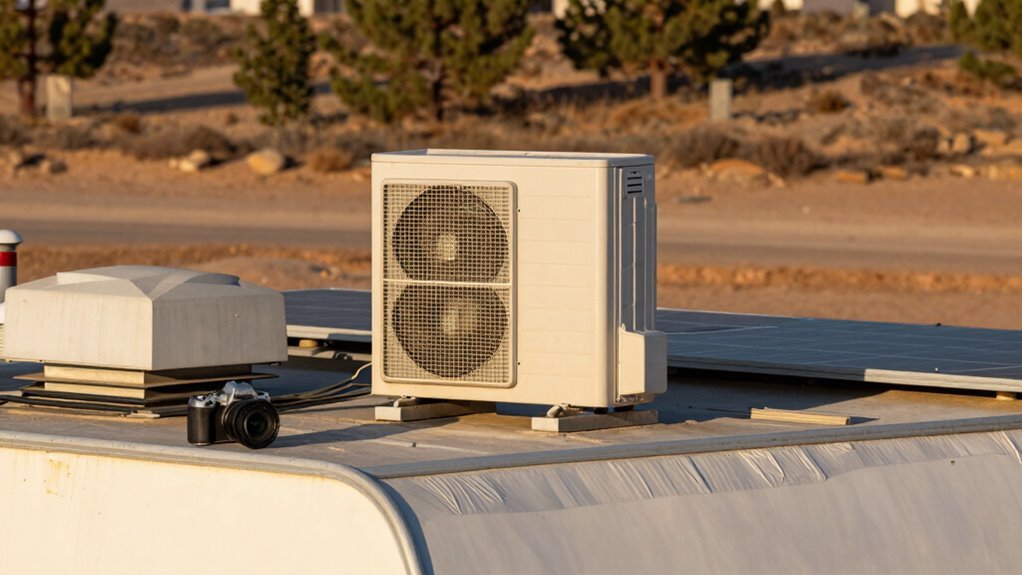
You bet you can run your RV air conditioner on battery—just make sure you’ve got the juice to back it up! A lithium battery bank and a 3,500-watt pure sine wave inverter handle the startup surge like champs.
Bigger batteries mean longer cool nights, and pairing efficient AC units with solar keeps you powered even off-grid. It’s not magic, just smart setup—and a little watt-know-what-it-takes to stay comfy wherever you park. You’ll see how to make it all work smoothly.
How Much Power Does an RV Air Conditioner Use?
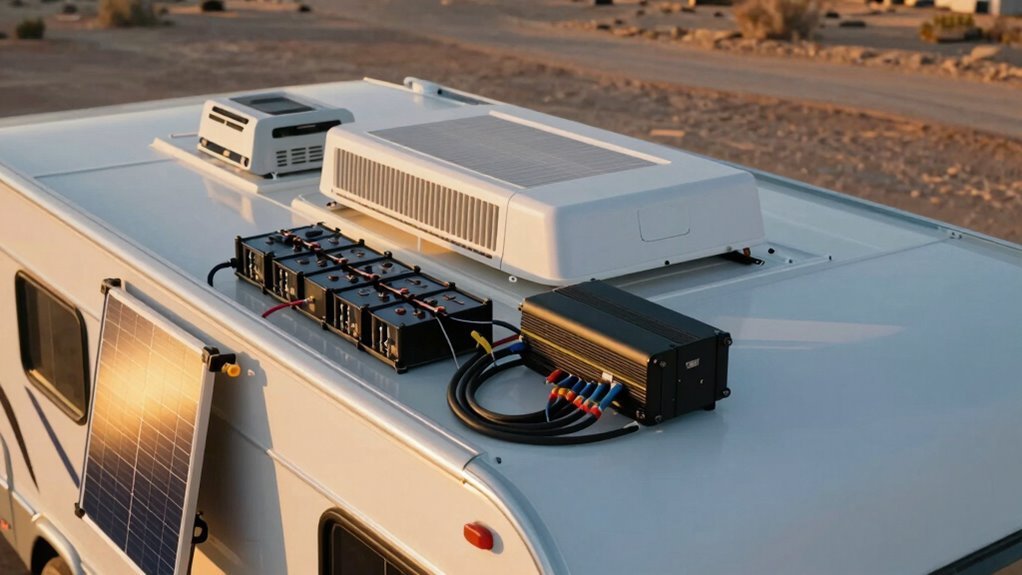
Ever wonder why your RV’s air conditioner feels like it’s sucking up all your power the moment it kicks on?
That’s because starting a unit can take 2,000 to 3,500 watts—way more than it uses once running.
Your 13,500 BTU model might need 2700 watts to start, then settles to just 1250–1600 watts.
Bigger 15,000 BTU units pull up to 1900 running but surge to 3500 at startup.
Even smaller 8,000 BTU models jump to 1600 watts when firing up.
Running watts usually range from 700 to 1900, depending on size and efficiency.
And no, your eyes aren’t playing tricks—ACs really do hog juice.
But hey, that cool blast on a hot day? Totally worth it.
Just make sure your system can handle the surge, or you’ll be left sweating—and probably grumbling at your breaker box.
This surge happens because air conditioners require significantly more power to start than to run, a difference known as starting watts vs running watts.
Battery Types and Their Role in Powering RV AC Units
You just saw how much power it takes to kick an RV air conditioner to life—those startup surges are no joke.
But lithium batteries? They’re up for the challenge, handling spikes of around 200 amps like champs.
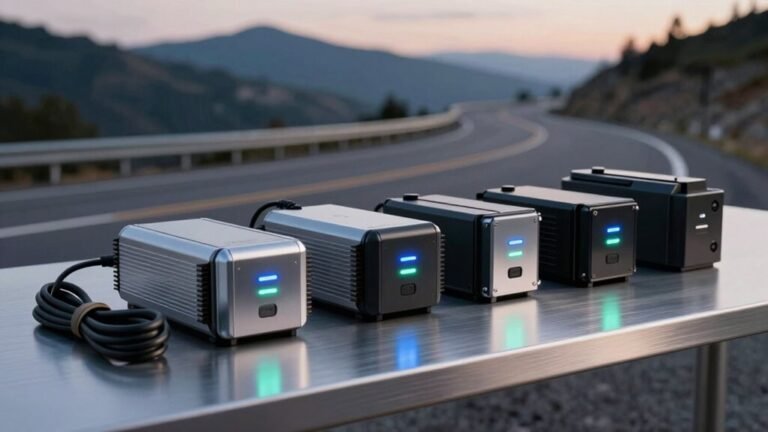
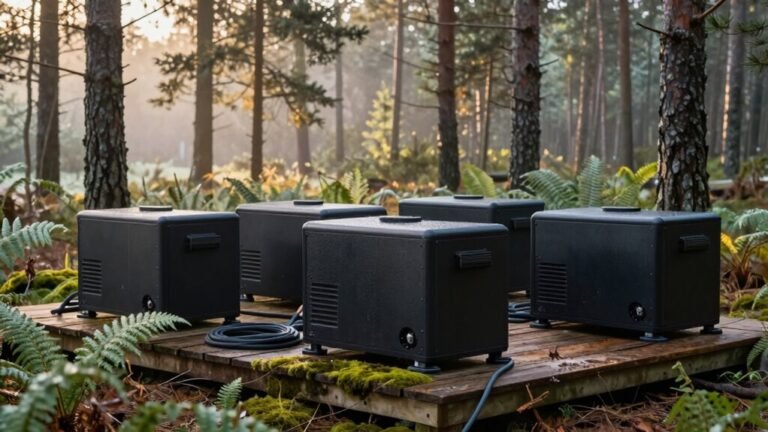
A single 12V 100Ah lithium unit might only run a standard rooftop AC for about 30 minutes, but team up a few and you’ve got hours of cooling—up to 20 with a 4,000Wh system.
Need all-night comfort? Aim for at least 400 amp-hours in your battery bank.
Pairing lithium with efficient DC or variable-speed AC units stretches every watt, letting you chill without the thrill of draining power in a flash.
Yeah, they cost more upfront, but their long life and performance make them the smart play for off-grid adventurers.
Who knew staying cool could feel this smart?
1,700 watts is typically required to run most RV air conditioners, making high-capacity batteries essential for sustained off-grid use.
The Inverter’s Role in Converting Power for Your AC
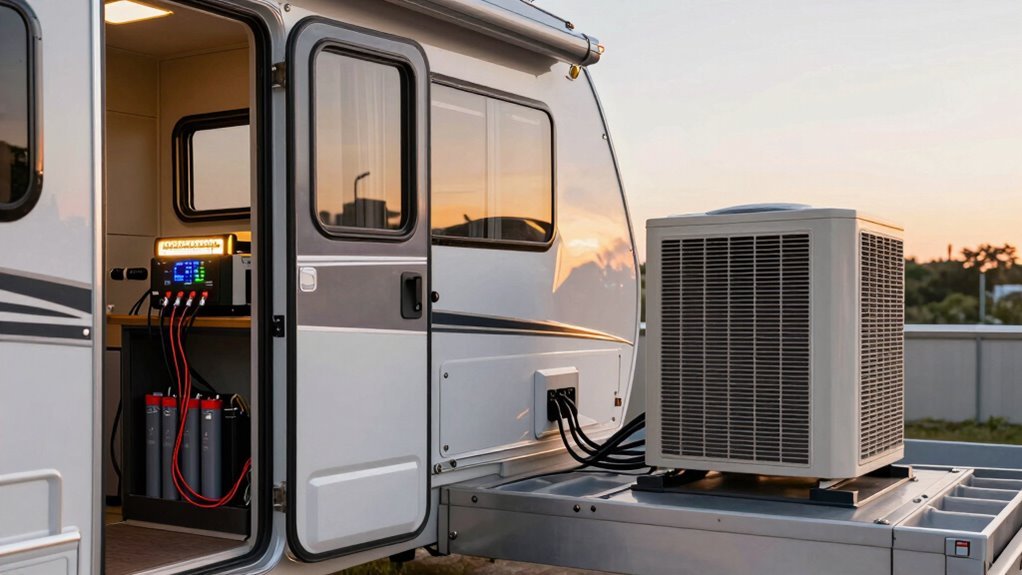
How does your RV’s air conditioner roar to life without plugging into shore power?
Your inverter makes it happen!
It takes DC power from your batteries and magically transforms it into the 120V AC power your AC craves.
Think of it as a power translator—your batteries speak DC, but your AC only understands AC.
A pure sine wave inverter does this smoothly, mimicking grid power so your AC runs happily.
Size matters: get one that can handle both running and startup surge—think 3,500W+ for safety.
A good inverter is over 90% efficient, so little energy’s wasted.
And guess what? Inverter-driven ACs are superstars, saving energy, cutting noise, and lasting longer.
With the right setup, you’re not just surviving off-grid—you’re chilling in style!
It must also handle the high inductive load typical of RV air conditioners to avoid overheating and ensure long-term reliability.
Solar Charging: Keeping Your Batteries Powered Off-Grid
What keeps your RV’s batteries humming like a happy tune when you’re miles from the nearest power outlet?
Solar panels, of course!
You’ve got options: sleek monocrystalline ones that sip sunshine efficiently, or budget-friendly polycrystalline panels that still pack a punch.
Prefer something lightweight? Flexible panels stick right to your roof and won’t weigh you down.
They all turn sunlight into power, but don’t skip the charge controller—it’s the bouncer that keeps your batteries from getting overcharged.
Go with MPPT for max efficiency, or PWM if you’re keeping things simple.
Your battery bank stores all that sunny goodness so you’ve got juice when clouds roll in.
With solid wiring, fuses, and a little sunshine, your system runs smooth, safe, and ready for adventure.
Who knew going off-grid could feel this easy—and this fun?
Real-World Tips for Running Your AC on Battery Power
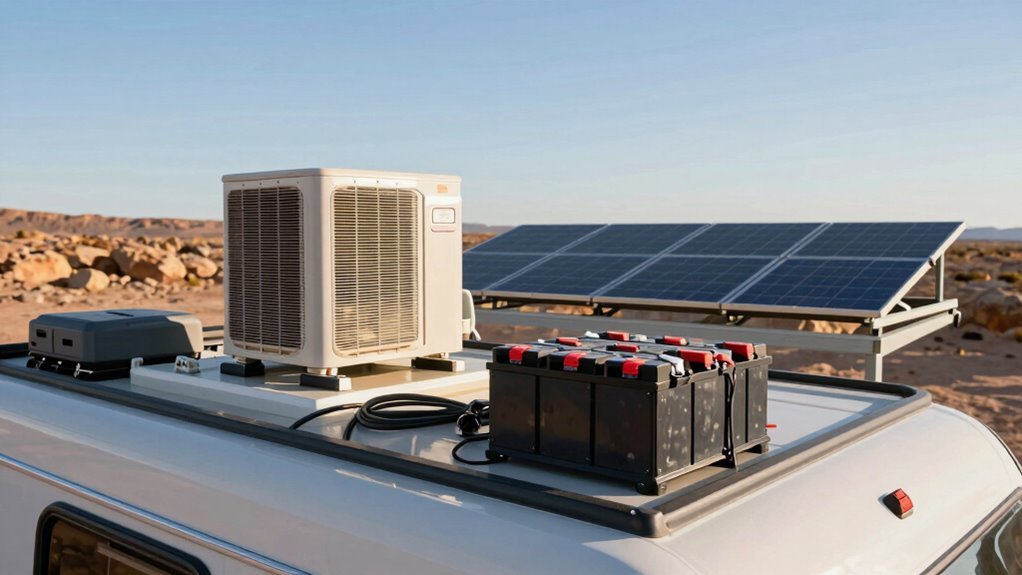
Ever wonder how long your AC can truly run when you’re boondocking under a blazing sun with no shore power in sight?
You’re not doomed to melt—smart choices keep you cool without draining your batteries by sunset.
Here’s how:
- Pick the right unit: Swap your power-hungry rooftop AC for a DC-powered or variable-speed model like the Dometic RTX 2000—it sips energy like a straw.
- Size your battery bank smart: A 200Ah lithium setup gives you over 2 hours of cooling; double it and you’re laughing through the night.
- Set it and forget it: Keep your thermostat at 75°F—your AC cycles less, saves power, and still keeps the swamp monster out of your RV.
Toss in a pure sine wave inverter and maybe a fan for extra breeze, and boom—chill mode activated.
Who knew staying cool off-grid could feel this easy?
Frequently Asked Questions
Can I Run My RV AC While Driving?
Yes, you can run your RV AC while driving—go ahead and stay cool on the road!
Just make sure you’ve got a solid setup: a 400 amp-hour lithium battery and a 2000-watt inverter should do the trick.
Your alternator will chip in a little, but don’t expect miracles.
Toss in a soft start to ease the power punch, and you’re golden.
Just maybe skip the popcorn machine—save the extra juice!
Will Running the AC Drain My Starter Battery?
Yep, running the AC can drain your starter battery, especially if it’s linked to your house system.
Those big startup surges pull hard, and if your setup shares batteries, your starter’s taking the hit.
Add in furnace fans or parasitic gremlins, and it’s a slow-motion battery robbery.
Use a disconnect switch, keep systems separate, or upgrade to lithium—you’ll sleep better knowing your rig won’t leave you stranded!
How Long Can I Run the AC on Batteries Alone?
You can run your AC on batteries alone for about 1.5 to 2.5 hours, like a quick nap under a shady tree on a hot day.
Two 100Ah lithium batteries give you around 90 minutes, while bigger banks stretch it.
Add more batteries, and boom — you’re chilling longer.
Lead-acid? It works, but don’t expect miracles.
Keep that inverter happy, and stay cool without sweating your power bill.
Is It Safe to Run AC on Battery in Winter?
Yeah, you *can* run your AC on battery in winter, but hold up—cold weather already slows your battery down like it’s hibernating.
If it’s not fully charged, that poor thing might freeze and quit on you. You’ll need a beefy battery bank, proper insulation, and maybe a backup power source.
Think of it like giving your RV a winter jacket—without it, things get chilly, fast!
Do I Need a Generator Backup When Using Battery Power?
Yes, you’ll usually need a generator backup—it’s the safety net when your battery bank hits a brick wall.
You’re running power-hungry magic, not a flashlight, and even big lithium setups can’t play all night without help.
Solar’s great, but clouds don’t pay bills.
Conclusion
You’re the captain of your cool comfort, steering through summer’s heat with battery power as your trusty first mate. Sure, running your RV AC on batteries isn’t a walk in the park—it’s more like a dance with energy limits. But with the right setup, you’ll breeze through off-grid nights, sun-kissed and sweat-free. Think of it as air conditioning magic, powered by sunshine and smarts! Stay chill, adventurer—your cozy oasis is just a switch flip away.
References
- https://www.renogy.com/blogs/general-solar/how-many-watts-does-an-rv-air-conditioner-use
- https://growattportable.com/blogs/news/watts-an-rv-ac-use
- https://www.rvwithtito.com/articles/how-much-power-do-rv-air-conditioners-use/
- https://diysolarforum.com/threads/how-much-solar-needed-to-run-13-000-btu-ac-only-occasionally-in-rv-motorhome.85807/
- https://www.ramsond.com/wattage-chart/
- https://rvtechcourse.com/blogs/tech-tips-with-todd-henson/off-grid-rv-living-understanding-air-conditioner-power-needs-and-battery-setups
- https://www.stresslesscamping.com/blog/rvac-battery
- https://www.redodopower.com/blogs/learn-about-lithium/a-200ah-battery-run-an-air-conditioner
- https://battlebornbatteries.com/run-rv-ac-unit-on-lithium-batteries/
- https://www.etrailer.com/faq-how-many-batteries-to-run-rv-ac.aspx