RV Camping in National Parks: What to Know
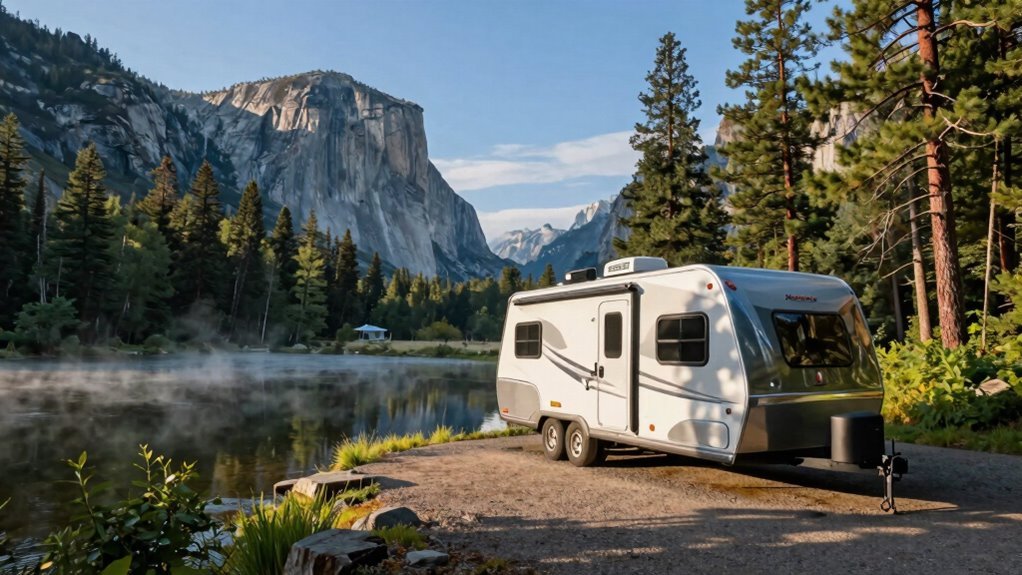
RV camping in national parks offers adventure at every turn, with most campgrounds accommodating rigs under 27 feet. While full hookups are rare, popular spots like Watchman in Zion and Morefield in Mesa Verde provide amenities for a comfortable stay.
Book early on Recreation.gov—prime RV camping sites in national parks fill up quickly. Shuttles, size restrictions, and unexpected closures mean flexibility is essential for a smooth trip.
Pack games like Monopoly to enjoy quiet evenings, but always prioritize peace and respect for nature. Leave no trace, and don’t miss the incredible stargazing that awaits after dark.
Choosing the Right National Park for Your RV
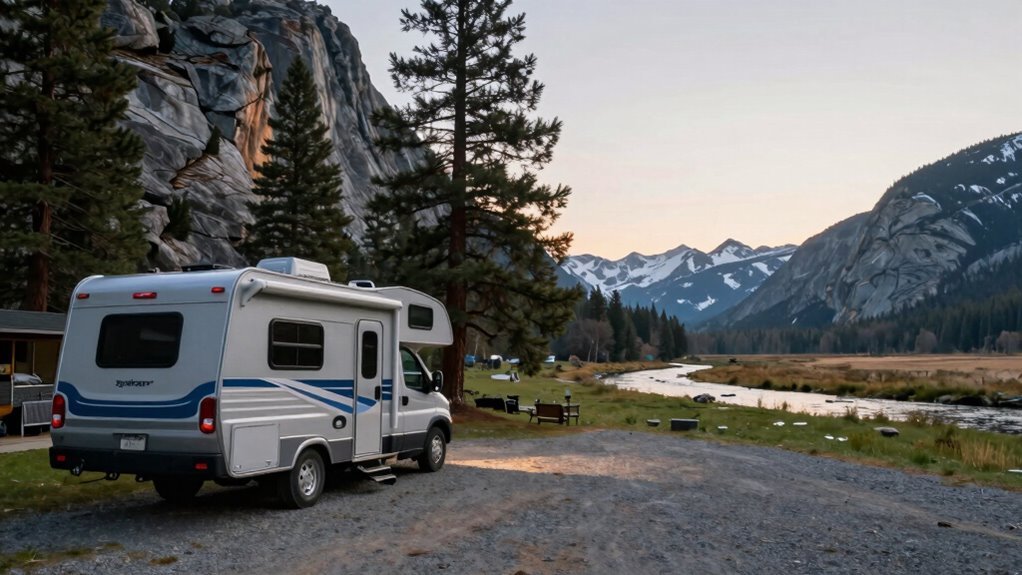
Where should you roll your RV for the ultimate national park adventure?
Think big, but pack smart.
If red rocks and starry skies call your name, Utah’s your playground—Arches, Zion, and Bryce Canyon offer stunning views and RV-friendly routes like Main Park Road and Newfound Gap Road.
You’ll find hookups at Zion’s Watchman Campground, plus shuttles to skip the stress.
Craving swamps and wild glades? Everglades has 173 spots just for RVs, with 30- and 50-amp power—gators not included, but they might wave.
Great Smoky Mountains serves cozy forest vibes with 48 RV spaces among eight campgrounds.
And don’t count out Yellowstone or Glacier—big skies, dry camping, and quick access to grub and gear.
Sure, some parks are remote, but isn’t that the point?
Your RV’s not just a rig, it’s your ticket to roam.
Yellowstone offers the most RV sites of any national park with 2028 spots across 11 campgrounds.
Understanding Campsite Reservations and Availability
You’ve picked your dream park and your RV’s gassing up with anticipation—now it’s time to snag a spot to park that home on wheels.
Most national park campgrounds book through Recreation.gov, so create an account early—those spots vanish fast!
Some parks use different systems, so always check the “Plan Your Visit” page or the NPS App’s “Where to Stay” section.
Sites typically open 90 days ahead, and high-demand places like Arches or Jenny Lake sell out in seconds—sometimes to bots, not campers.
Set alerts, use tools like Camp Scanner, and watch for cancellations; 433 people once raced for one spot!
A few sites are first-come, first-served, but don’t bet on luck.
Know the rules, check facilities, and download maps offline.
With sharp timing and smart prep, you’ll claim your slice of wilderness—no tent-pitching required!
RV and towable camper sites vary by configuration, so confirm whether your spot allows for pull-through or back-in setups to avoid tight squeezes upon arrival.
Navigating RV Size Restrictions and Access Roads
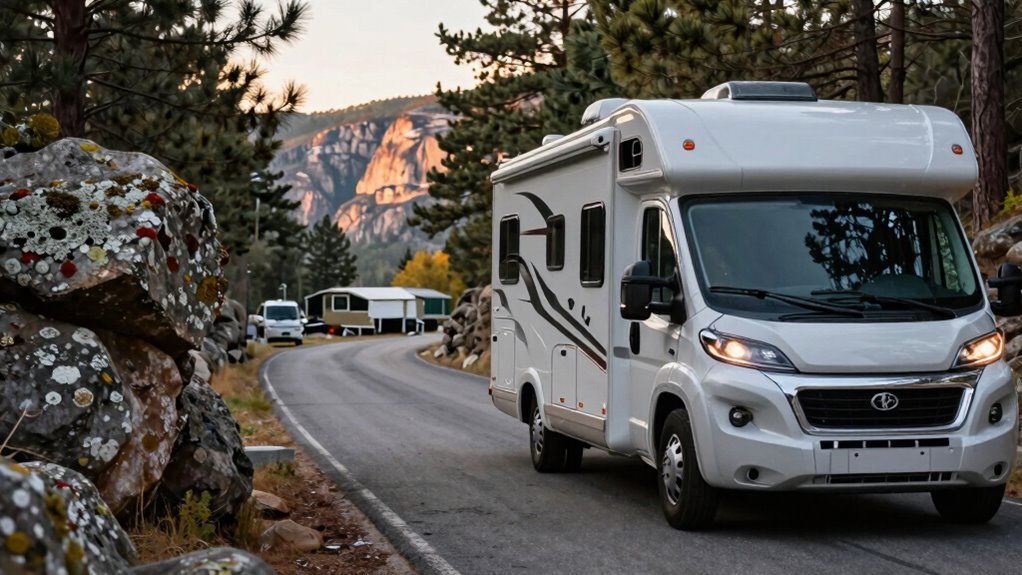
How big is too big when the open road leads to national parks?
Well, if your rig’s over 30 feet, you might start running into trouble—literally.
Most parks welcome RVs up to 27 feet on average, and 84% of camproots fit rigs under 29 feet.
But go bigger, and options shrink fast: only 53% handle 40-footers.
Some parks, like Capitol Reef, cap lengths at 26 feet, while others like the Grand Canyon’s South Rim allow up to 50.
Watch for road rules too—Zion’s tunnel demands permits, and height limits can surprise you.
Even if your RV fits a campground, the road there might not.
Aim for 25–30 feet, and you’ll dodge most headaches.
It’s like Goldilocks said: not too big, not too small—just right leaves you free to explore more parks without backtracking!
30–50 feet can be accommodated in some parks, but availability is limited and varies by location.
Making the Most of Limited Hookup Options
Ever wonder why so many RVers show up at national parks looking like they’ve got a plan?
Because they do—most parks offer few or no hookups, so smart campers prepare.
Only about a dozen spots across the system have full or partial hookups, like at Grand Teton’s Colter Bay or Mesa Verde’s Morefield Campground, and they book fast.
If you want water and power, reserve early on Recreation.gov—spots like Yellowstone’s Fishing Bridge fill quicker than you can say “generator.”
Most places, like Acadia or Zion, offer dry camping, so you’ll need to conserve power and water like a pro.
But hey, that’s part of the adventure!
And when in doubt, check nearby private campgrounds—places like Grand Canyon Railway RV Park deliver full hookups, plus perks like Wi-Fi and pools, just minutes from the action.
Generator Use Rules in National Park Campgrounds
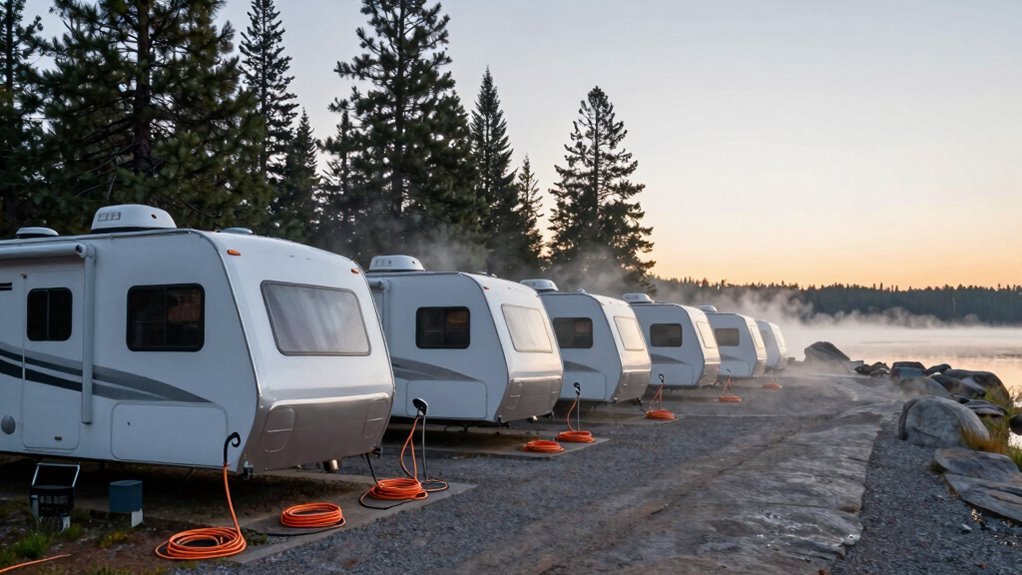
Most national parks let you run a generator, but they’ve got rules to keep the wild sounds wild.
You can’t fire it up anytime—quiet hours typically run from 9 or 10 p.m. to 6 or 7 a.m., and noise must stay under 60 decibels at 50 feet (that’s like a quiet conversation).
In Yosemite, crank it only 7–9 a.m., 12–2 p.m., or 5–7 p.m.; Mount Rainier’s similar, but skip Loop E—it’s generator-free.
Some parks, like Yellowstone’s Fishing Bridge, allow use in designated zones and times.
You’ll only find generators allowed in developed campgrounds, never in the backcountry or roadside camping spots.
Always check the NPS website before you go—rules vary wildly, and surprise!
Some parks ban them entirely.
Respect the rules, keep the peace, and let the coyotes and crickets keep their spotlight—they were here first!
Locating and Using Dump Stations Properly
Where do you head when nature calls—for your RV, that is?
Head to a dump station, your go-to pit stop for waste.
Most national parks have them near campground hubs or stores, and some—like Bryce Canyon and Death Valley—offer dedicated spots.
Can’t find one inside? Check nearby towns; they’re often within two miles.
Use online tools like Recreation.gov or the NPS website to pinpoint the closest one.
If you’re camping onsite, dumping’s usually free—bonus!
No reservation? Expect a small $5 fee.
Always check for water access and trash cans while you’re there.
And hey, no camping overnight at dump stations—just in, do your business, and roll out.
RVers love sharing tips online, so check reviews for the cleanest, quirkiest, or most scenic spots.
Keep it clean, follow the rules, and you’ll keep the journey—and the tanks—running smoothly.
Preparing for Seasonal Closures and Weather Conditions
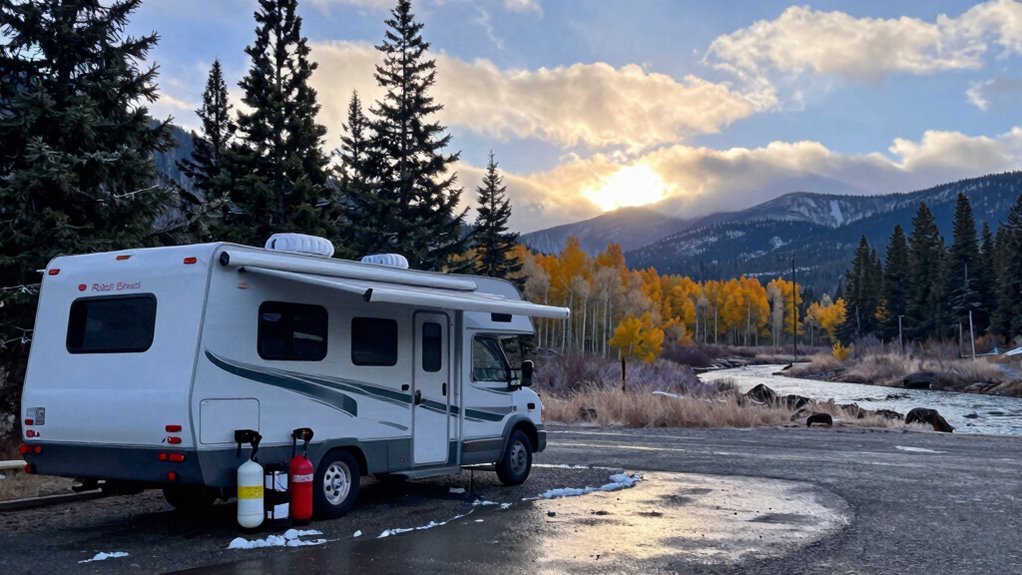
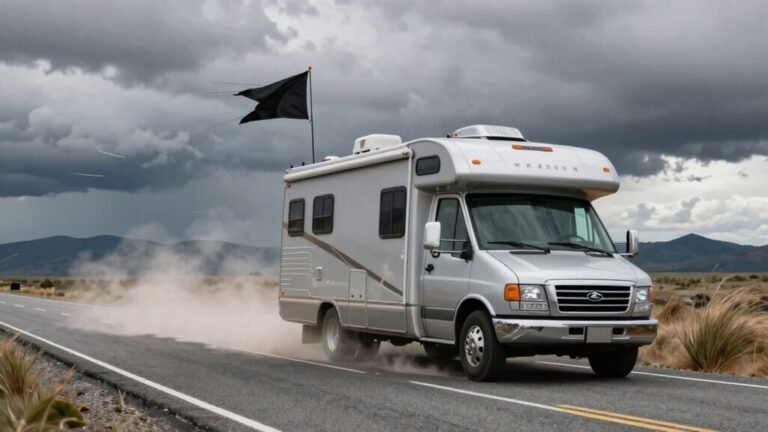
What’s the weather doing up that mountain pass, and will the campground even be open when you arrive?
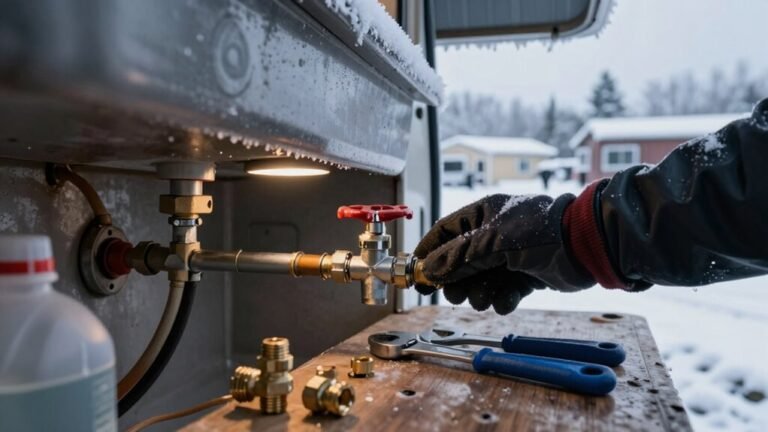
Don’t let surprises ruin your trip—seasonal closures, weather hiccups, and staffing shortages happen more often than you’d think. A campground might be shut down for road repairs, a favorite trail could be closed after a storm, or ranger programs canceled due to missing staff. The smart rig rider checks ahead and rolls with a flexible plan.
- Snow piles high on Teton passes by November, blocking scenic backroads until spring.
- Grand Teton’s Gros Ventre shuts September 28, so don’t book that fall foliage spot too late.
- Arches halted Fiery Furnace tours—staffing issues can nix even the coolest adventures.
- Hurricane damage idled Village Creek campsites—nature calls the shots, not your itinerary.
Always check NPS alerts and Recreation.gov—your dream detour could be a closed gate without a quick website peek.
Packing Essentials for a National Park RV Trip
You’ve checked the weather, confirmed the campground’s open, and mapped out your route—now it’s time to pack smart so you’re ready for anything from sudden mountain showers to impromptu s’more sessions under the stars.
Grab your license, rental docs, and park passes—you’ll need ‘em at check-in.
Don’t forget a paper map; cell service loves to ghost you in the wild.
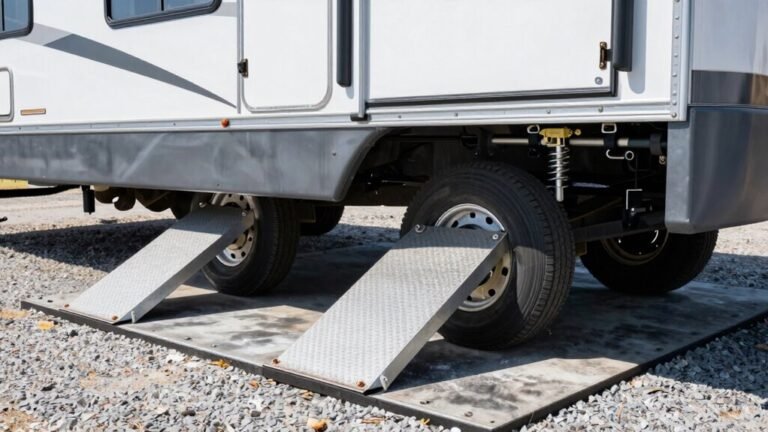
Pack your leveling blocks, hoses, and surge protector so your RV stays steady and powered.
Bring weather-ready clothes, hiking boots, and a trusty rain jacket—even in summer, clouds throw tantrums.
Toss in camp chairs, a lantern, and maybe a hammock if you’re feeling fancy.
Stock the kitchen with soap, coffee gear, and bug spray (because nothing says “romance” like swatting mosquitoes).
Your first aid kit, sunscreen, and bear spray (in bear country!) are non-negotiable.
Oh, and pack games—Monopoly gets wild when you’re off-grid.
You’re not just packing—you’re prepping for adventure.
Respecting Park Regulations and Leave No Trace Principles
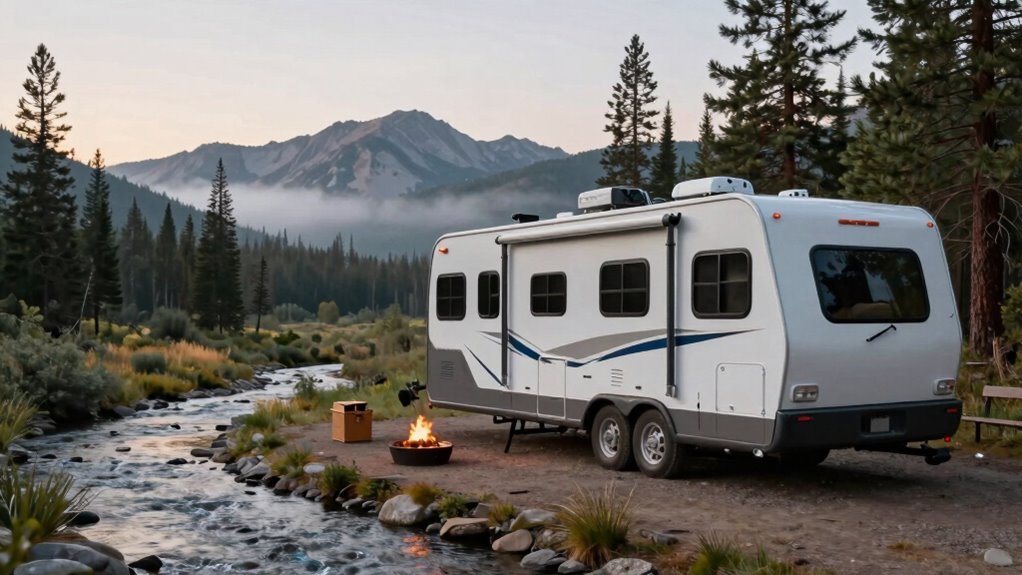
Even if you’re itching to roam free like a wild bison, sticking to the rules keeps the adventure fun for everyone and the parks pristine for the next crew.
You’ve got to play by the park’s playbook—know your RV’s length, respect site limits, and never sneak a midnight snack in the woods.
Follow designated spots, keep the noise down during quiet hours, and skip the generator rave.
It’s all about leaving no trace, so pack out every crumb and crush.
- Park only where allowed – no surprise overnighters in trailhead lots.
- Respect RV size limits – that 40-foot dream camper mightn’t fit in Yosemite Valley.
- Run generators wisely – nobody wants your morning coffee soundtrack at 6 a.m.
- Stick to stay limits – 14 days max, then give someone else a turn.
Frequently Asked Questions
Can I Bring My Pet on Hiking Trails in National Parks?
You can bring your pet on some hiking trails in national parks, but it’s not a free-for-all—Fido’s got to stay leashed and out of wilderness zones.
Most parks say “nope” to pets on trails to protect wildlife, but a few, like Shenandoah and Acadia, welcome your furry buddy.
Always check rules online, pack out waste, and keep Rover from chasing chipmunks—he’s on vacation too!
Are Fire Pits Allowed at RV Campsites in National Parks?
You bet—fire pits are usually allowed at RV campsites, but *only* if the park says yes and you follow the rules.
You’ll find metal rings or grills right at your site, so no hauling your own.
Just don’t expect to roast marshmallows every time—some parks, like Joshua Tree, ban fires in summer.
Always check current rules, ‘cause Mother Nature doesn’t care how cozy you want your campfire to be!
Is Wifi Available at National Park RV Campgrounds?
You’ll find WiFi at some national park RV campgrounds, but don’t count on it at your site.
Most parks only offer it at lodges or visitor centers—if at all.
Think slow speeds, one-device limits, and no binge-watching your favorite shows.
Upload a photo? That might take all afternoon!
Still, your trip’s not totally off-grid—check nearby towns or private parks for better connections.
Pack patience, download what you need, and embrace the digital detox—it’s kind of liberating!
Can I Fish From My RV Campsite in a National Park?
You can’t always fish right from your RV campsite—rules vary by park, so don’t toss that line out just yet!
Some spots, like Fishing Bridge RV Park, forbid fishing entirely from nearby areas.
Others let you cast a rod if you’re properly permitted and follow local rules.
Check the park’s latest bulletin, grab your license, and make sure you’re not breaking any “no fishing” signs.
When in doubt, ask a ranger—better safe than reeled in!
Are There Age Restrictions for Renting RVS for Park Trips?
Yeah, there’s usually an age limit—you’ve gotta be at least 25 to rent an RV with most companies.
They figure younger drivers are riskier, especially on long trips.
But hey, if you’re 21–24, Outdoorsy’s got your back if you’ve got a clean record and don’t mind a $25 nightly surcharge.
Just team up with an older pal or parent if needed, and you’ll be cruising to the parks in no time—adventure waits for no one!
Conclusion
You’ve got your rig, your route, and your sense of adventure—now go claim your slice of wilderness glory! Just remember: park early, pack smart, and don’t be *that* camper revving their generator at midnight like it’s a 1980s arcade race game. National parks welcome you with open trails and starry skies, so tread lightly, laugh often, and let Mother Nature be your ultimate GPS. Happy camping!
References
- https://www.lonelyplanet.com/articles/best-us-national-parks-rv-travel
- https://www.campingkiddos.com/blog/best-rv-camping-utah-national-parks
- https://www.winnebago.com/lifestyle/winnebagolife/travel/beginner-guide-to-rv-camping-in-national-parks
- https://www.cinderstravels.com/best-rv-parks/
- https://usparkpass.com/ultimate-guide-to-rv-travel-to-national-parks/
- https://www.nps.gov/subjects/camping/campground.htm
- https://www.recreation.gov
- https://www.nps.gov/subjects/camping/finding-and-setting-up-a-campsite.htm
- https://www.youtube.com/watch?v=G8gFa66FqYs
- https://www.lastateparks.com/reservation-information