Is It OK to Leave Your RV Plugged In All the Time?
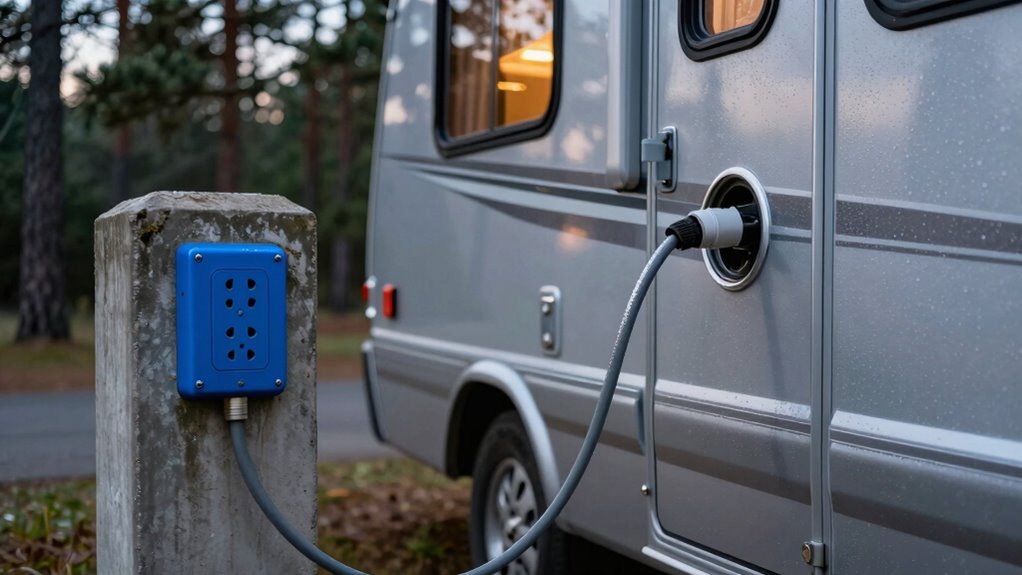
Yes, you can leave your RV plugged in all the time—especially if it has a smart converter. This device monitors your battery and switches to a gentle float charge to prevent overcharging, which helps preserve battery life.
It’s important to have surge protection in place, as electrical spikes from storms can damage your RV’s electronics. Leaving your RV plugged in is much like charging your phone overnight: safe and convenient when the right precautions are taken.
And hey, there’s a bit more to keep things running smoothly. Regular checkups ensure your system remains in top shape over time.
Understanding Your RV’s Charging System
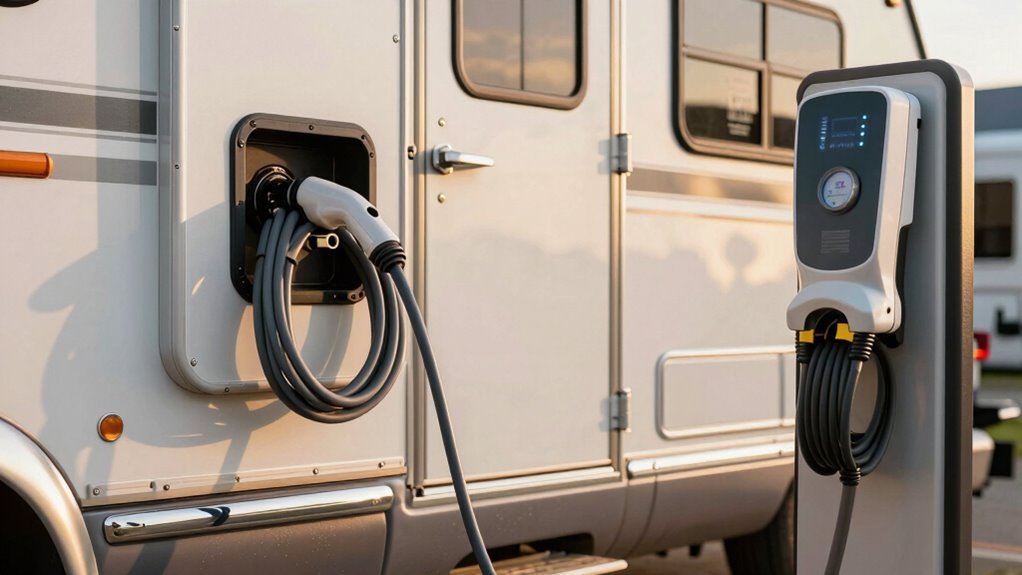
While your RV’s plugged in at the campsite, its charging system quietly works behind the scenes to keep everything powered up and ready to go.
Your converter kicks in, transforming shore power into 12V DC to run lights, fans, and that all-important fridge.
It also charges your house batteries using smart three-stage charging—bulk, absorption, and float—so your batteries stay healthy and full, like a good morning coffee, without boiling over.
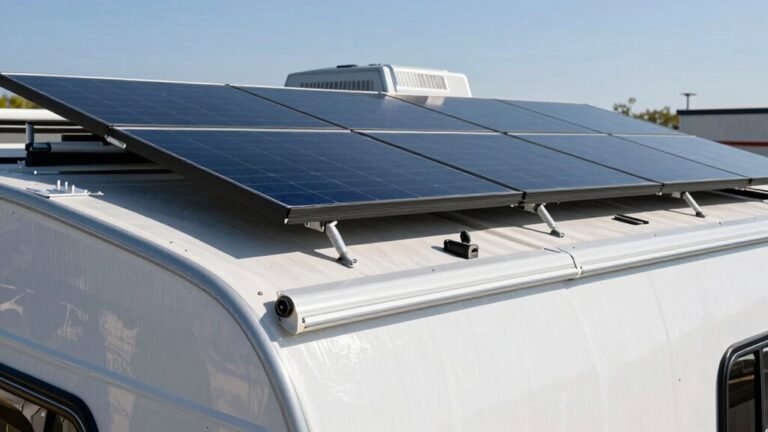
If you’ve got solar panels, their controllers play nice too, stepping down voltage so your batteries don’t get cranky.
When driving, the alternator and charge solenoid team up to juice up batteries, then smartly disconnect when parked.
Whether you’re running a cozy 6V setup or a beefy 400Ah lithium bank, your system’s got it covered.
And with polarity-coded connectors and fused panels, everything stays safe, neat, and shock-free—because nobody likes a surprise zap with breakfast.
This process ensures that float mode maintains a safe voltage to prevent overcharging during extended plug-in periods.
The Risks of Overcharging Your House Batteries
You wouldn’t leave your phone charging forever, so don’t do it to your RV batteries—they’ll thank you for the break.
Overcharging stresses both lead-acid and lithium batteries, cooking them from the inside out.
Too much voltage heats things up, makes gases build, and can even burst a battery, leaking acid in your RV—yikes!
With lithium, over-voltage can brick the whole system, and no, you can’t just “restart” it like your router.
Even smart setups wear down over time if you’re always plugged in.
Old or faulty converters might keep pumping energy nonstop, turning your battery into an overheated mess.
That means shorter life, weaker performance, and in worst cases, fire or fumes.
Yeah, it’s that serious.
A small trickle charger can overcharge FLA or AGM batteries if connected for days, and without proper regulation, this risk increases significantly—highlighting the danger of direct panel-to-battery connections.
How Smart Converters Help Prevent Battery Damage
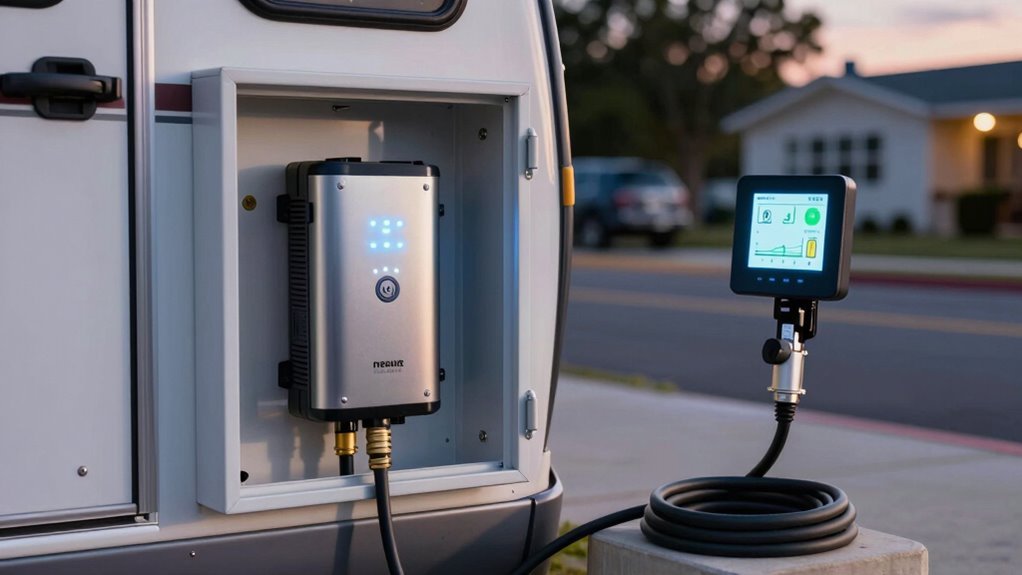
Okay, so you’re sold on giving your batteries a break—awesome.
Smart converters’ve got your back, using multi-stage charging to feed your batteries just right: bulk charge first, then absorption, and finally a gentle float to top them off.
They auto-adjust voltage so you never overcharge, protecting plates and electrolyte like a pro.
Plus, they sense temperature—dialing down juice when hot, boosting it when cold—so your battery’s always comfy.
Real-time monitoring tracks voltage, current, and heat, sounding alarms if something’s off and cutting power before damage happens.
These brainy boxes don’t just charge—we guard, adapt, and extend your battery’s life.
You’ll dodge early replacements, stay safe from hazards, and enjoy reliable power whenever needed.
Honestly, it’s like having a tiny, super-smart caretaker living in your RV panel.
Pretty neat, right?
You’re not just plugged in—you’re protected.
Maximum Power Point Tracking ensures your solar energy is converted with peak efficiency, even as conditions change.
The Importance of Surge Protection for Shore Power
When you plug your RV into shore power, you’re not just hooking up to electricity—you’re inviting the whole grid, warts and all, straight into your home on wheels.
Campground pedestals can be sneaky, with messed-up wiring, voltage spikes, or even zero grounding—yikes!
A good surge protector jumps in like a superhero, diverting surges, spotting reversed polarity, and shutting things down before your fridge or TV throws a tantrum.
It’s not just about lightning; flaky power and jostled RV wiring make everyday risks.
Lucky for you, portable or hardwired models match your 30- or 50-amp setup and pack serious smarts—think 24/7 monitoring and auto-off for any hiccup.
Aim for 3,000+ joules and a lifetime warranty.
With weatherproof toughness and built-in testers, it’s the peace-of-mind buddy your RV definitelywants on speed dial.
Don’t plug in blind—protect first!
Tips for Maintaining Battery Health While Plugged In
Ever wonder why your RV battery taps out faster than a phone at a music festival?
It’s probably because your standard converter’s overcharging it, boiling off electrolyte fluid and killing capacity fast.
But you’ve got options!
Swap to a smart charger—it knows when your battery’s full and backs off, like a pro barista stopping the espresso shot just right.
Use a battery maintainer to keep power steady without the risks, especially in winter.
Check water levels monthly, clean those terminals, and bust corrosion before it ruins your groove.
And don’t forget, even when plugged in, your battery enjoys a little workout—cycle it every once in a while.
With a smart setup, you’ll dodge sulfation, save energy, and keep your battery happy for seasons.
Think of it as a spa day with extra amps!
When to Unplug Your RV From Shore Power
What’s the perfect time to pull the plug on your RV’s shore power? When you’re done using it—simple as that!
Turn off your RV’s circuit breaker first, then the pedestal’s—no sparks, no drama.
Unplug your RV side before the pedestal side, and use one hand to stay safe.
See any damage, corrosion, or tripped breakers? Report it to the campground crew.
If your surge protector freaks out or detects a spike, unplug fast—better safe than sorry.
Planning long-term storage? Disconnect everything, including the battery, to avoid slow drains.
And hey, don’t forget to match your 30- or 50-amp cord correctly—no Franken-plugs!
Test GFCIs monthly, keep cords dry, and inspect for wear.
When in doubt, power down.
It’s like saying “goodnight” to your RV—sweet dreams, and keep it safe ‘til next time!
Frequently Asked Questions
Can I Leave My RV Plugged in During Winter Storage?
Yes, you can leave your RV plugged in during winter storage, but only if you’ve got a smart charger or three-stage converter—otherwise, you’ll risk frying your batteries.
Keep ’em charged, not cooked!
If it’s freezing cold, unhook the batteries and stash them somewhere warm.
Think of them like pets: you wouldn’t leave them shivering, right?
And don’t forget surge protection—nobody likes a fried fridge!
Does Leaving My RV Plugged in Void the Warranty?
No, leaving your RV plugged in won’t void the warranty—phew!
Manufacturers don’t throw a fit over a constant charger like a drama queen spotting a mismatched sock.
Your warranty’s real pet peeve? Living full-time in your rig while claiming “recreational use.”
Keep it plugged, keep it charged, just don’t move in permanently and call it camping.
Simple. Think of it like a spa day—for your battery, not your mailbox.
Will Constant Charging Reduce My Battery’s Lifespan?
Nope, constant charging won’t kill your battery if you’ve got a smart charger—phew!
Those brains keep your battery happy and topped off without overdoing it.
Think of it like snacking smart instead of binging.
With a multistage charger, you’re actually helping your battery last longer.
Just don’t try this with an old-school charger unless you want a grumpy, short-lived battery.
You’ve got this!
Is It Safe to Leave My RV Plugged in While Driving?
Nope, you’re not winning any road trip awards by leaving your RV plugged in while driving—more like risking a cord-chewing dragon at the campsite!
Unplug before you roll, or that shore power cord might snap like a rubber band.
You’ll avoid sparks, prong damage, and turning your rig into a surprise road-side science experiment.
Stay safe, smarty—your RV’s electrical system will thank you with fewer tantrums!
Can I Use Solar Power While Plugged Into Shore Power?
You can totally use solar power while plugged into shore power—it’s like having your cake and charging it too!
Your solar panels keep topping off the batteries during the day, while shore power handles big appliances.
They play nice together, thanks to smart inverters or charge controllers.
No conflicts here—just free sun juice adding extra oomph.
Think of it as teamwork: shore powers the show, and solar sneaks in to boost your battery life.
Win-win!
Conclusion
You bet, leaving your RV plugged in is totally fine—especially with a smart charger watching over things. Worried about frying your batteries? Don’t be! Modern converters are like battery babysitters, shutting off power when levels are just right. Just add surge protection, check your setup now and then, and you’re golden. Think of it as a spa day for your RV—plugged in, pampered, and perfectly powered!
References
- https://www.nirvc.com/blog/rv-batteries-and-chargers/
- https://www.vatrerpower.com/blogs/news/camper-battery-charging-on-30-amp-power
- https://ca.renogy.com/blogs/off-grid-power/typical-rv-wiring-diagram-explained-any-better-solution-available
- https://www.youtube.com/watch?v=l3djoLH_tro
- https://bsbelectric.com/solutions/rv-electrical-components/
- https://www.batterystuff.com/battery-chargers/rv-converters/
- https://www.lazydays.com/rv-service/guide/rv-service-faqs/electrical-system/
- https://rvelectricity.substack.com/p/can-a-solar-panel-overcharge-an-rv
- https://bateriapower.com/blogs/page/are-you-making-this-mistake-with-your-rv-battery-why-you-might-need-to-disconnect
- https://lifelinebatteries.com/blog/what-you-need-to-know-about-rv-batteries-overcharging/