RV Mattress Guide: Choosing the Right Size and Type
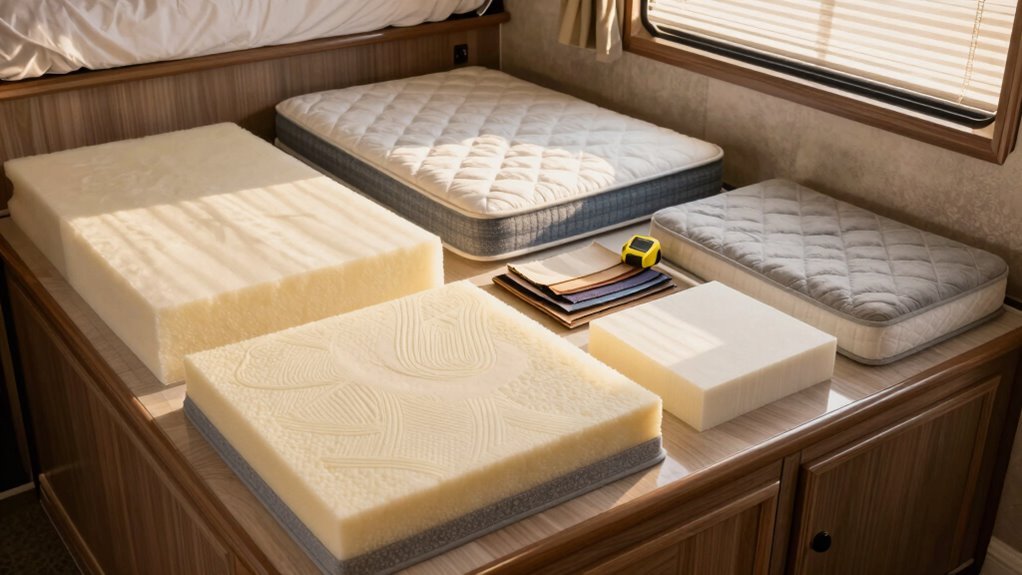
You’re ditching that lumpy RV bed, right? Smart move—choosing the right RV mattress starts with knowing your space, so measure carefully before buying.
RV mattresses run shorter and skinnier than regular ones, so double-check your dimensions to find the right size. Getting the proper fit ensures comfort and prevents wasted money.
Go for foam if you want light, cool comfort that resists motion transfer. Or pick a hybrid if you prefer a bouncier feel with extra support.
Watch the thickness—too thick and you might bang your head on the cabinet above. Keep it under 8 inches in most models for safer, easier movement.
And hey, weight matters when you’re rolling down the highway. A lighter RV mattress can improve fuel efficiency and handling on long trips.
Understanding RV Mattress Sizes
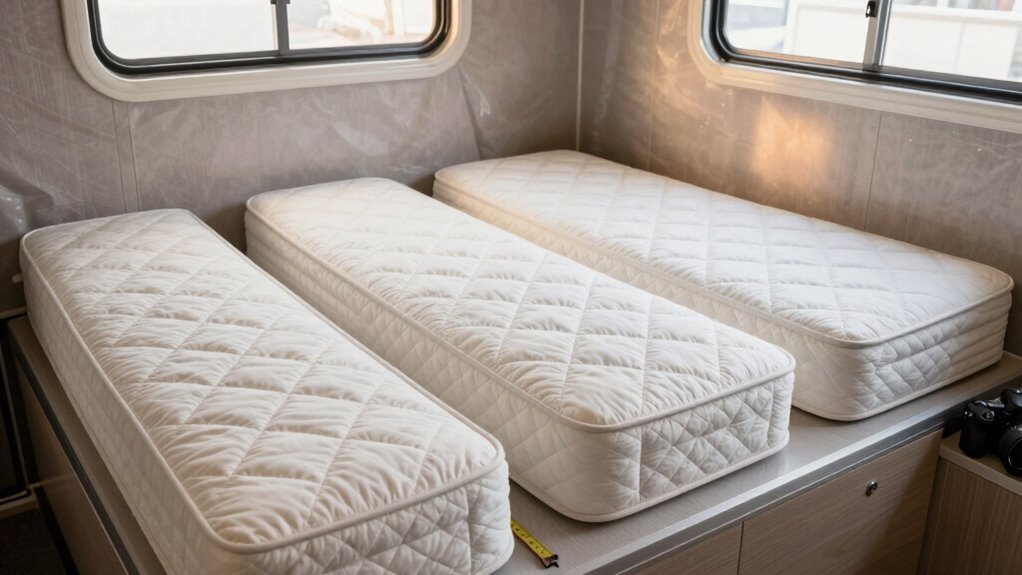
Ever wonder why your RV mattress doesn’t fit a regular bed frame at home? That’s because RV beds don’t play by standard rules.
You’re likely using a short queen (60 x 75) instead of a full 80-inch residential queen, or squeezing into a 53-inch RV full that’s skinnier than a typical double.
Kings? Surprise—they come in 72-inch widths and even shorter lengths.
Bunk beds? They can be as narrow as 28 inches—more “cozy twin” than “sleep sanctuary.”
These funky sizes pack more sleeping options into tight spaces, but they also mean off-the-shelf sheets mightn’t work.
Don’t sweat it though—suppliers now offer RV-specific mattresses in all shapes, including custom cuts for those odd corners or slide-outs.
So, when you’re chasing comfort on wheels, remember: RV sizing isn’t weird, it’s just wiser.
Who needs normal when you’ve got perfectly tailored naps?
Many RV mattresses are designed with custom RV mattress sizes to fit unique floorplans like slide-outs and angled corners.
Measuring Your RV Bed Space Accurately
How do you nail the perfect fit for your RV mattress when every inch counts? You measure like a pro—twice, and then measure again! RV beds aren’t standard, and a few off inches mean your dream mattress mightn’t fit, or worse, blocks a doorway.
Skip the “oops” moment with precise, hands-on measuring.
- Measure width and length from inner bedframe edges, not the outer frame.
- Check multiple points—many RV beds taper or angle weirdly.
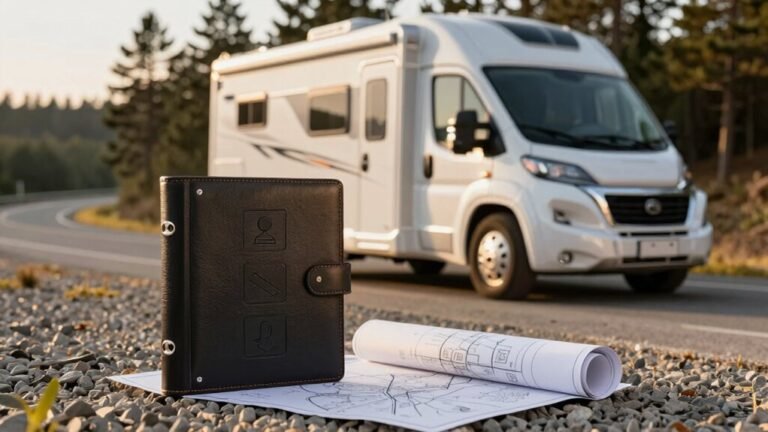
- Sketch odd shapes—use paper or cardboard to trace curves, cutouts, or corners.
- Mind the clearances—don’t forget headroom, walkways, and how you’ll wrestle that mattress onboard!
Grab a tape measure, a pencil, and maybe a snack (because this *is* kind of fun, right?). Accurate numbers mean sweet dreams—no cramming, no returns, just cozy, custom-fit comfort on the road.
Many camper mattresses are custom-sized to fit non-standard spaces in RVs.
Comparing Mattress Types for RV Use
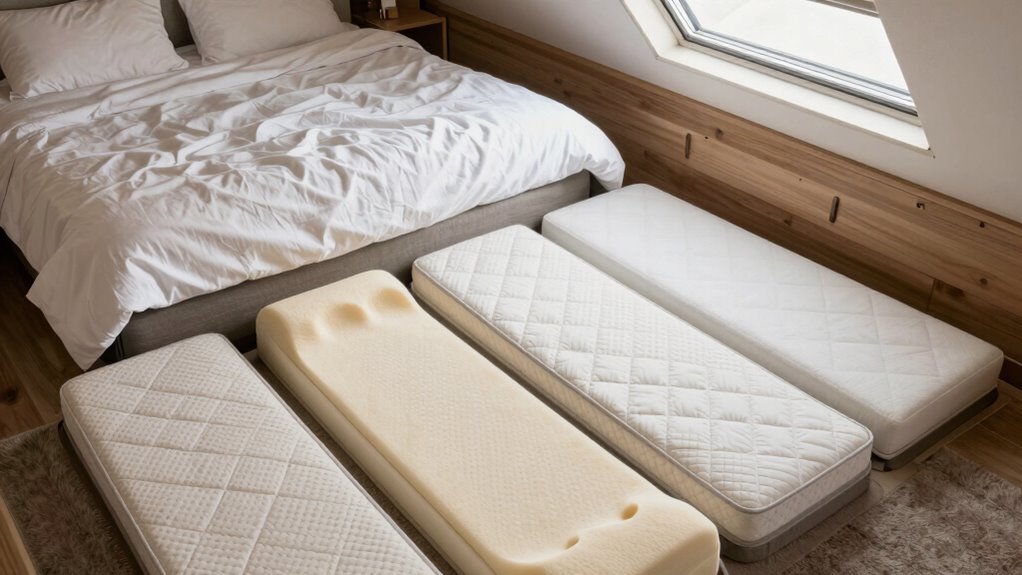
Now that you’ve measured your space down to the last inch—snack crumbs and all—it’s time to pick the perfect mattress to fill it.
Foam mattresses, like the Dreamfoam Essential, are light, comfy, and come in tons of sizes with gel to keep you cool.
You’ll love how they hug your body without sinking too deep.
Hybrids, such as the Brooklyn and Helix models, mix coils and foam for bounce, support, and less partner disturbance—ideal if you share the bed.
Innerspring beds are firm and budget-friendly but heavy and outdated for most RVers.
Latex offers a bouncy, eco-friendly ride that feels like floating—great if you run hot.
And don’t count out airbeds or custom picks like Tochta Utopia—they give you full control over comfort.
Each type has perks, so think about how you sleep, not just your rig.
Many RV-specific models feature lightweight construction, making them easy to install and reposition during setup.
Evaluating Thickness and Support Needs
Why do some mattresses feel like a cloud while others act more like a trampoline—or worse, a sidewalk?
It all comes down to thickness and how well it supports your body and your RV lifestyle.
Too thin, and you’ll feel every spring.
Too thick, and you mightn’t close the overhead cabinet—awkward!
You want something just right, like Goldilocks, but without the home invasion.
Here’s what to think about:
- Thickness range: Most RV mattresses run 5–10 inches; 6–8 inches hits the sweet spot.
- Support level: Thicker usually means better long-term support, especially with hybrids or latex.
- Sleep style: Side sleepers love softer, medium-firm layers, while heavier sleepers need firmness.
- Material matters: Foam saves space, hybrids add bounce and breathability, and latex gives durable buoyancy.
Choose smart, sleep better—and avoid back pain in tight quarters!
Considering Weight and Space Limitations
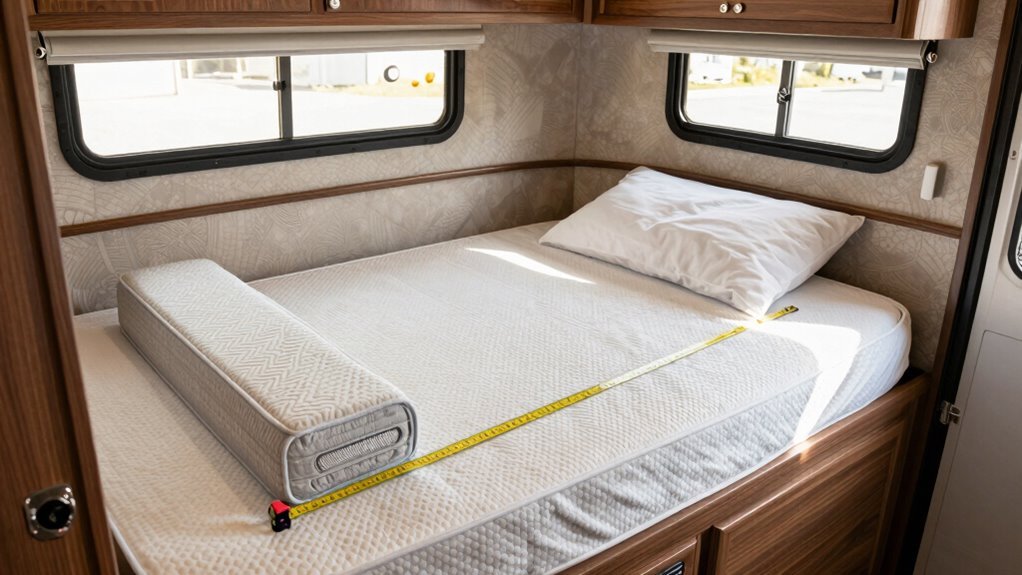
While your dream of cloud-like comfort on the road sounds ideal, don’t let a heavy mattress weigh you down—literally.
Your RV has a GVWR, the max safe weight it can handle, so check your specs and calculate wisely.
Add up dry weight, cargo, water, and propane to see what’s left for your mattress.
A 100-pound foam bed might seem cozy, but it could gobble up your entire cargo allowance—oops.
Most RV mattresses are lighter than home ones, with a queen weighing around 72 pounds, but every pound counts, especially in smaller rigs.
Bunk beds? Go thin and light.
Tight space? Measure twice, buy once—Queen Short (60×75) often fits better than a full.
Match your pick to framing limits and weight capacity, because swerving on a hill isn’t part of the adventure.
Stay safe, sleep smart, and keep your rig rolling smoothly.
Choosing Materials for Comfort and Durability
You’ve gotta sleep snug as a bug when you’re miles from home,
so picking the right mattress material is your ticket to sweet, uninterrupted road dreams.
- Memory foam hugs your curves like a cozy bear, especially great for side sleepers—plus, gel-infused versions keep you cool when the heat’s on.
- Hybrids mix foam comfort with bouncy pocket coils, giving you support and spring without the sag—ideal if you like a little bounce in your sleep.
- Latex is springy, naturally fresh, and eco-friendly, fighting allergens like a mattress superhero (though finding RV sizes can be tricky).
- Budget foam? Light and cheap, yes—but go high-density to avoid sleeping on a sad, saggy pancake after six months.
Pick smart, sleep sound, and let the open road lull you into dreamland—without the backache.
Tips for Transporting and Installing Your Mattress
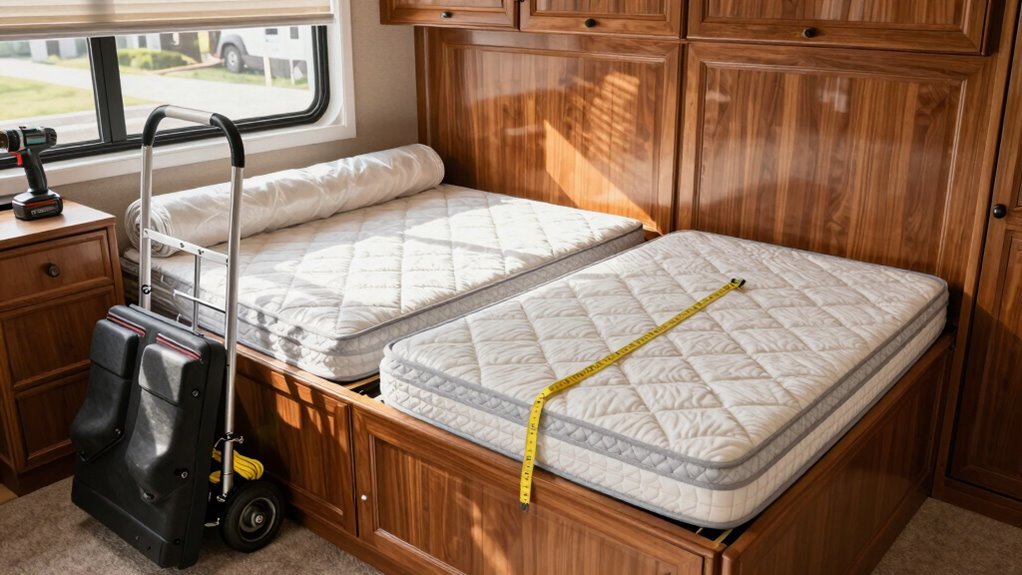
Getting your mattress to the RV without a meltdown—yours or the foam’s—starts with a little smart prep.
Lay it flat or stand it upright before sliding it into a breathable bag—no sweaty memory foam allowed!
Reinforce the bag with tape, clear your path, and make sure doors swing wide.
Choose a moving truck or roomy SUV, and skip the tiny sedan unless you enjoy drama.
Use a dolly to lift and load, keep foam flat, and secure everything with ratchet straps—flapping mattresses look silly on highways.
If strapping it roof-first, check for tears and tie down tight.
For tight RV spaces, vacuum-seal foam or fold it temporarily—think origami, not origa-mess!
Store in under-bed spots or closets, and use reusable bags if you move often.
With the right moves, you’ll nap easy knowing your bed survived the trip—unlike your last road snack.
Frequently Asked Questions
Can I Use a Regular Home Mattress in My RV?
No, you can’t just toss a regular home mattress in your RV—it’ll be too big and too heavy.
RVs need shorter, narrower beds like short queens or RV kings.
Home mattresses won’t fit snugly and might mess up your floor or frame.
Plus, they’re heavier than your rig can handle.
But hey, don’t sleep on the floor!
Grab a proper RV mattress—light, custom-sized, and made to keep you comfy without the squeeze.
How Often Should I Replace My RV Mattress?
You’ll probably need to replace your RV mattress every five to seven years—funny how that’s about when your favorite sneakers wear out, huh?
If you’re living full-time on the road, swap it sooner, maybe every five years.
You’ll know it’s time if you wake up stiffer than a boarded-up cabin, see deep sags, or notice lumps.
Treat it well—rotate it, protect it, keep it dry—and it might last up to ten!
Are RV Mattresses Compatible With All Bed Frames?
No, they’re not—you can’t just toss any mattress onto your RV frame and hope for the best.
RV beds are quirky, like cousins who show up uninvited, needing special sizes and support.
Standard mattresses? They’ll hang off edges or squish into slides, causing chaos.
You’ve gotta match your mattress to your frame’s exact fit, support, and height—because nobody wants a bed that moonlights as a doorstop or a storage killer.
Do RV Mattresses Come With Warranties?
Yes, most RV mattresses come with warranties that’ll last longer than your favorite road trip snack. You’re covered for 10 to 25 years, depending on the brand, with protection against sagging over 1.5 inches, foam splits, and zipper fails.
The first decade’s usually worry-free—full replacement if needed. Just don’t blame the mattress if your dog chews it; those shenanigans aren’t included!
Can I Clean My RV Mattress Myself?
You can totally clean your RV mattress yourself—no pros needed!
Spot clean spills fast with mild soap and water, then blot it dry.
For stink? Sprinkle baking soda, let it chill awhile, then vacuum it up.
Tough stains? A dash of vinegar or baking soda paste works magic.
Just don’t soak it, and never skip drying—it’s the MVP move.
Your mattress will smell fresh and feel like a cozy cloud again!
Conclusion
You’ve measured twice, picked a mattress type, and hustled it into your rig—only to realize it’s *just* a half-inch too wide, huh? Irony loves an RV owner. But hey, now you’re basically a spatial genius with a comfy throne. Enjoy squeezing in like a pro, because hey, adventure waits for no one—especially not for you and your perfectly imperfect, snug-as-a-bug-in-a-truck mattress!
References
- https://beloitmattress.com/rv-mattress-sizes/
- https://www.nectarsleep.com/posts/rv-mattress-sizes
- https://www.dreamcloudsleep.com/posts/rv-mattress-sizes
- https://purple.com/blog/rv-mattress
- https://www.escapees.com/blog/rv-mattress-sizes-explained-complete-guide
- https://stumptownmattress.com/collections/replacement-rv-mattresses
- https://tampamattress.com/mattress-size-chart/
- https://egohome.com/blogs/selection-guidelines/complete-guide-to-rv-mattress-dimensions
- https://amerisleep.com/blog/rv-mattress-sizes-and-types/
- https://blog.campingworld.com/gear-and-accessories/what-you-need-to-know-about-rv-mattresses/