Boondocking 101: How to Camp Off-Grid in Your RV
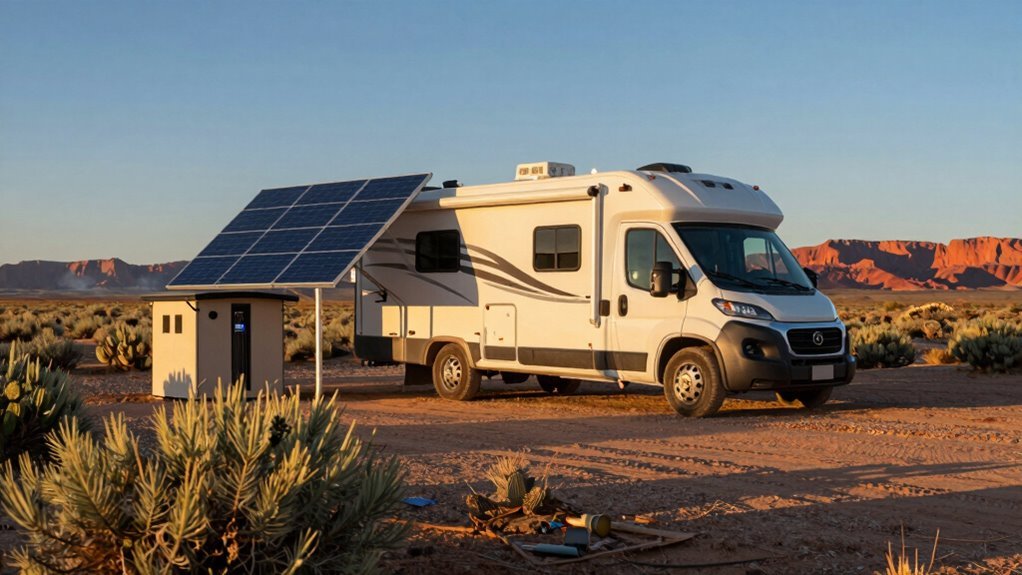
Boondocking means camping in your RV without hookups, deep in nature on public lands like BLM or national forests. You’re off the grid, living free—boondocking lets you explore remote areas where utilities aren’t available.
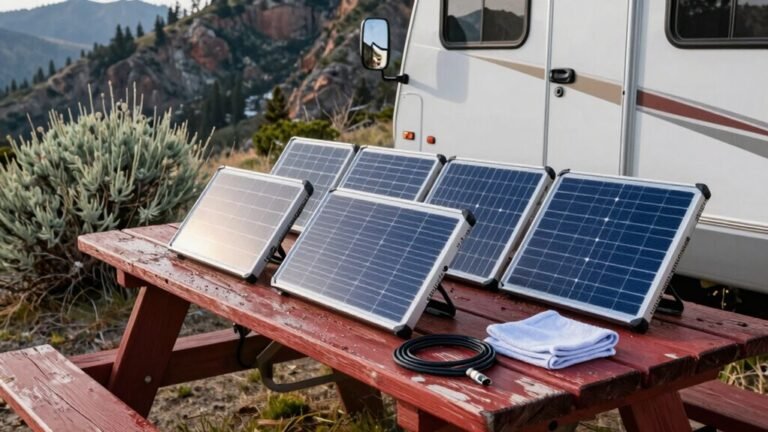
Pack solar panels, extra water, and a trusty battery to keep your power steady and essentials running. Scout spots ahead of time using your phone or map to find safe, legal places to park and stay.
Keep waste disposal smart and eco-friendly by using dump stations when available or portable waste solutions. Make sure food is locked up tight from critters to avoid unwanted nighttime visitors.
Stay safe, stay comfy, and enjoy the solitude—there’s more where that came from.
Understanding Boondocking: What It Is and Why You’ll Love It
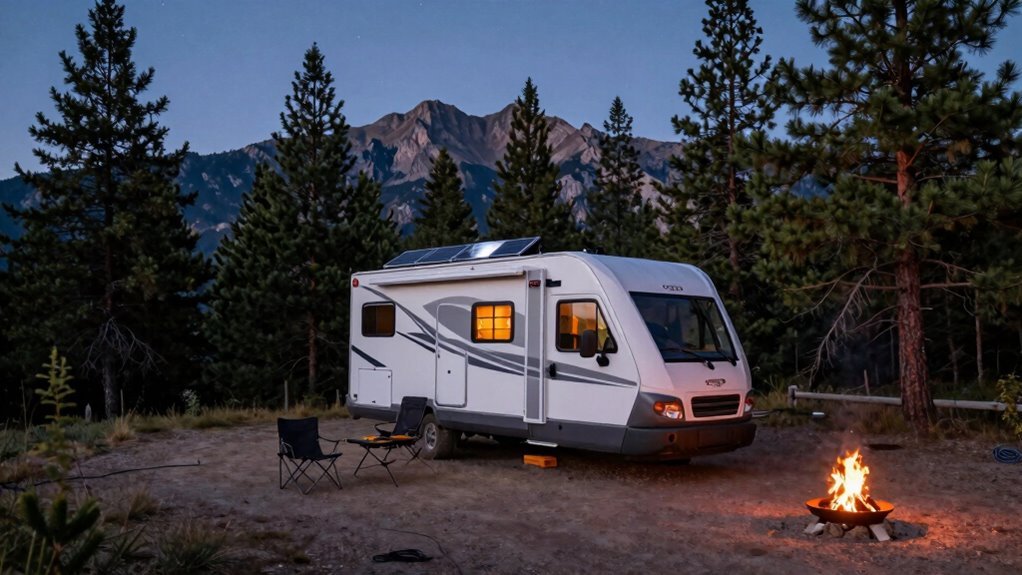
Ever wonder what it’s like to wake up to nothing but the sound of wind in the trees and a sky full of stars—no crowds, no fees, and no power cord? That’s boondocking: camping off-grid where nature’s the only roommate.
You’re totally self-sufficient—no hookups for water, power, or sewer—just you, your RV, and the great outdoors.
It’s also called dry, dispersed, or wild camping, and it usually happens on public lands like BLM or national forests.
No bathrooms, picnic tables, or trash cans? Yep, but who needs ’em when you’ve got sunrise over desert mesas?
You’ll love the freedom, quiet, and star-filled nights.
Plus, it’s free and totally legal for up to 14 days in most places.
Just pack out everything, follow Leave No Trace, and voilà—you’re living the stealthy, simple life.
Stays are typically limited to 14 days in a 28-day period on many public lands to protect the environment and ensure fair access for all.
Who knew roughing it could feel so invigorating?
Essential Gear for Successful Off-Grid Camping
You’ve got the spirit for adventure and the drive to escape the grid—now it’s time to stock up on the gear that keeps your off-grid freedom humming.
Don’t get caught cooking ramen by headlamp—plan smart with these essentials:
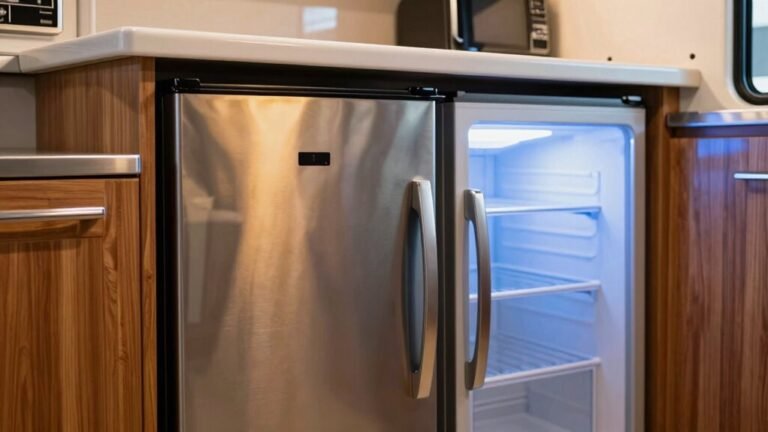
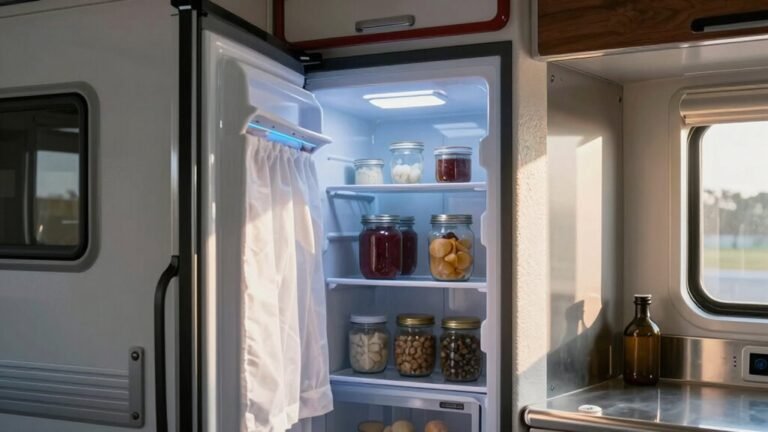
- Power That Lasts: A solid solar array (400–800W) paired with a 200–600 Ah LiFePO4 battery bank means you can run your fridge, lights, and even a few creature comforts without a peep from a generator.
- Water Wisdom: Bring extra jugs, use low-flow fixtures, and keep a drinking-safe hose—you’ll stretch every drop like a desert survival pro (without the drama).
- Stability & Safety: Leveling blocks, wheel chocks, and a trusty tire inflator keep your rig snug and safe, even on lumpy, “character-building” terrain.
Equip your setup with a surge protector to guard your electrical system from unpredictable voltage spikes when using shore power at remote hookups.
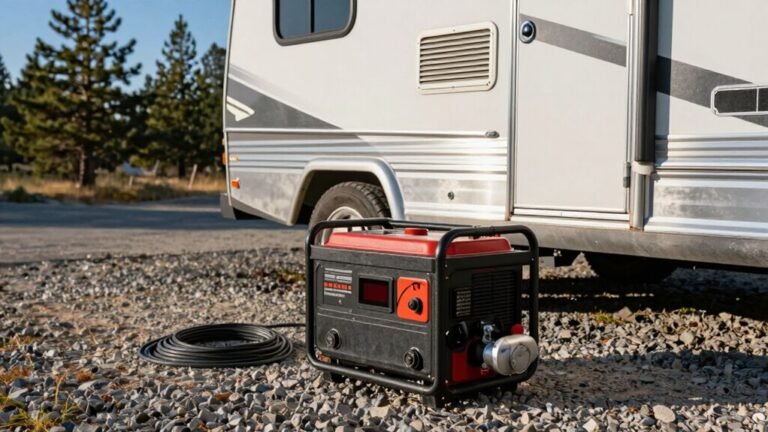
Toss in a CO detector and a portable power station, and you’re not just surviving—you’re thriving, Maverick.
Finding the Perfect Legal Boondocking Spot
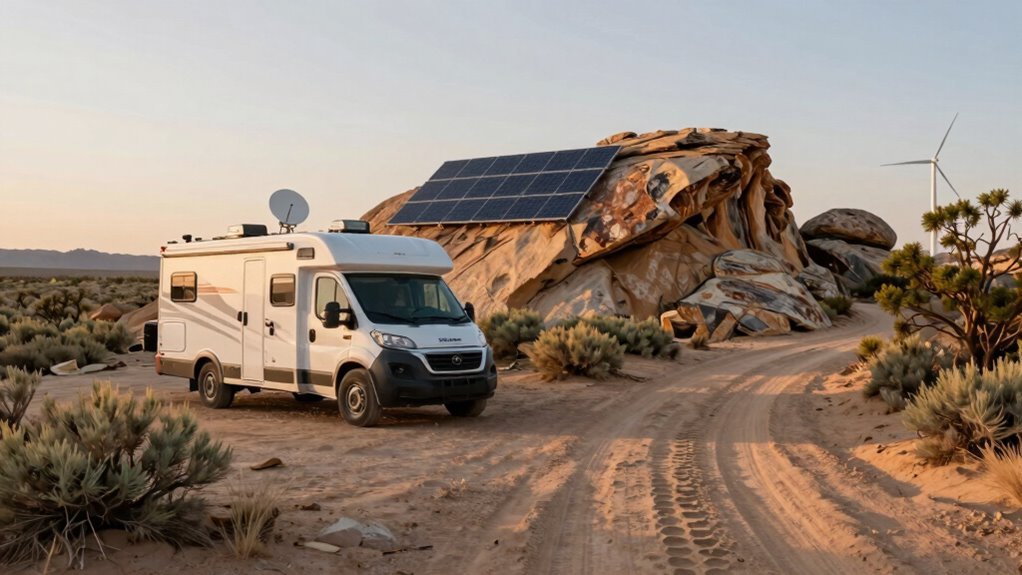
Where can you pitch your rig under a blanket of stars without breaking any rules—or ending up in hot water with a park ranger?
Start with BLM or National Forest land—millions of acres let you camp free, usually up to14 days.
Just check with the local ranger office for exact rules, ’cause they can vary.
State lands? Some need a pass or permit, like Washington’s Discovery Pass, so don’t wing it.
Always verify who owns the land using maps or GIS tools—don’t assume that “empty” spot is public.
Apps like Freecampsites.net help, but cross-check with official sources; crowdsourced info isn’t foolproof.
Private options? Try Boondockers Welcome or Harvest Hosts—nice folks, cool spots, but ask first.
And remember: no camping during fire season bans, and stay clear of water sources.
Do your homework, and you’ll sleep easy—no ranger knock at dawn!
Leave No Trace principles ensure you protect natural spaces and respect wildlife while boondocking.
Managing Power, Water, and Waste Without Hookups
Now that you’ve found a stellar spot to park under the stars—without any fines or surprise visits from the park crew—it’s time to talk about what keeps your rig humming when there’s no power, water, or sewer plug-ins in sight.
- Power smartly: Use solar panels or a battery bank to keep the lights on—save the gas generator for emergencies. A100 amp-hour battery runs basics for days, especially if you swap power hogs for LEDs and propane fridges.
- Conserve water like a desert survivor: Aim for5–10 gallons per person daily, use low-flow gear, and refill portable tanks at safe spots.
- Manage waste wisely: Empty black tanks only at designated dumps, use biodegradable soap, and consider a composting toilet to dodge messy overflows.
With a little prep, you’ll stay off-grid longer, lighter, and with more laughs than leaks.
Staying Safe and Comfortable in Remote Locations
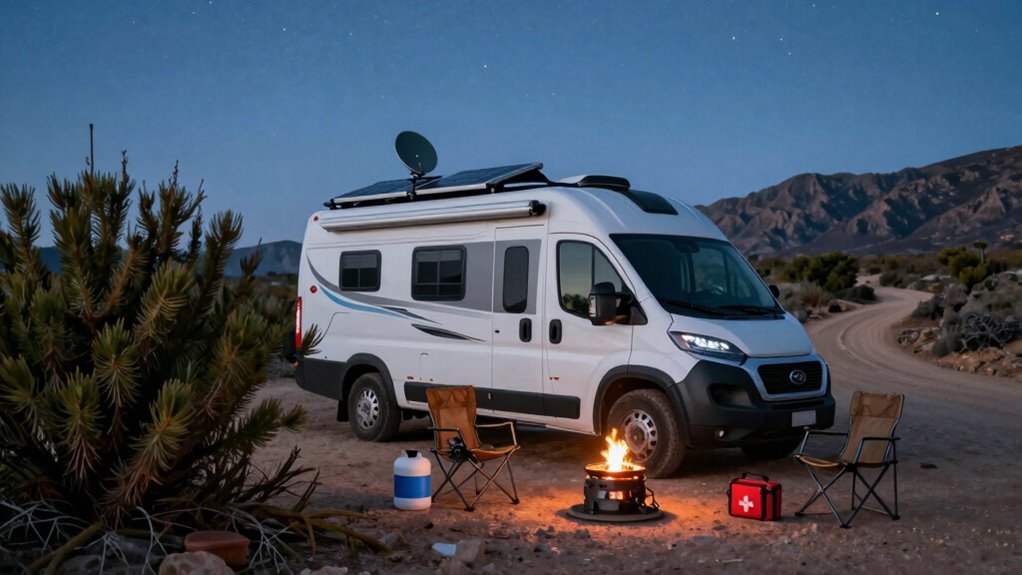
Even if you’ve picked the perfect spot under a sky full of stars, staying safe and comfortable in the backcountry means thinking ahead—because no one wants their peaceful escape ruined by surprises.
Arrive during daylight to check for hazards and level ground, and scout sketchy dirt roads on foot or bike so you don’t get stuck.
Park where you’ve got cell service if you can, and position your rig wisely—hidden or visible, depending on the vibe.
Keep your key fob handy; that panic button is a great alarm.
Fake occupancy with shoes, chairs, or a dog bowl to spook porch pirates.
Lock it up nightly, pepper spray by your pillow, and stay alert.
Store food securely—bears aren’t fans of invitations.
Respect wildlife, especially moms with babies.
Check the weather, know your GPS spot, and stash extra water and supplies.
Trust your gut—if it feels off, bail.
And hey, always have a backup plan (and maybe a backup coffee stash).
Frequently Asked Questions
Can I Boondock in National Parks?
You can’t boondock just anywhere in national parks—most spots say “no way,” Jim!
Dispersed camping’s usually off-limits unless the park gives a rare thumbs-up with a permit.
But hey, don’t sweat it!
You’ve got backup plans galore.
Scoot over to nearby national forests or BLM land—they’re boondocking playgrounds, free and open for adventure.
Just stay savvy, follow the rules, and let the wild times roll!
How Do I Dispose of Gray Water Legally?
You dump gray water like a pro by heading straight to designated dump stations—no wild dumping in the woods, unless you wanna summon angry park rangers on horseback.
Use portable totes if your rig can’t reach the spot, and always follow local rules.
Save Mother Nature from soapy wrath, stay legal, and keep camping fun for everyone.
Simple, smart, and stink-free!
Are Pets Allowed at Boondocking Sites?
Yeah, you can bring pets to most boondocking sites, but you’ve got to play by the rules.
On public land, keep them leashed and under control—rangers aren’t kidding around.
Private spots? Always ask the host first.
Watch for wildlife, pack out poop like a pro, and never leave your pup in a hot RV.
With a little prep, your furry co-pilot’s ready for adventure—just don’t let them chase squirrels into the wilderness.
What Should I Do in an Emergency With No Signal?
You’ve got no signal? Don’t panic—stay calm and act fast.
First, check for injuries and give first aid if needed.
Pull out your PLB or satellite messenger and hit SOS, it’s like yelling for help from space.
Move to safety without going too far.
Conserve battery, use mirrors or smoke to signal,
and remember, even bears aren’t this prepared—so good job packing that go-bag!
Can I Boondock in the Winter?
You can absolutely boondock in winter—don’t let the cold scare you off!
Pack warm layers, insulate your RV with Reflectix and skirting, and use a propane buddy heater to stay cozy.
Fill your tanks to slow freezing, monitor pipes, and toss in antifreeze where needed.
Solar keeps your power up, and cooking indoors heats things up—bonus: your mac and cheese warms the place!
With prep, winter boondocking’s an adventure, not a freeze-out.
Conclusion
You’ve got this! Boondocking’s like camping’s cool granddad—no fancy gadgets, just fresh air and freedom. Pack smart, stash extra water, and keep your phone away from squirrel territory. Sure, you won’t find a charging station in the middle of nowhere, but hey, neither did Alexander Graham Bell, and he managed just fine with one bar. Embrace the quiet, trust your setup, and remember: no hookups, no problem—just pure, unfiltered adventure waiting for you.
References
- https://intrepidcampgear.com/blogs/news/what-is-boondocking
- https://www.boondockerswelcome.com/blog/boondocking-definitions/
- https://www.escapees.com/blog/rv-boondocking-for-beginners
- https://blog.campingworld.com/lifestyle-activities/3-types-boondocking-every-rver-should-know-about/
- https://roadtrippers.com/magazine/what-is-boondocking/
- https://www.thorindustries.com/stories/boondocking-the-escape-everyone-should-know-about
- https://activetraveladventures.com/boondocking-how-to-camp-for-free/
- https://www.youtube.com/watch?v=bogvxWKh2gs
- https://www.carefreeofcolorado.com/blog/rv-essentials-for-beginners/
- https://www.harvesthosts.com/blog/must-have-boondocking-essentials