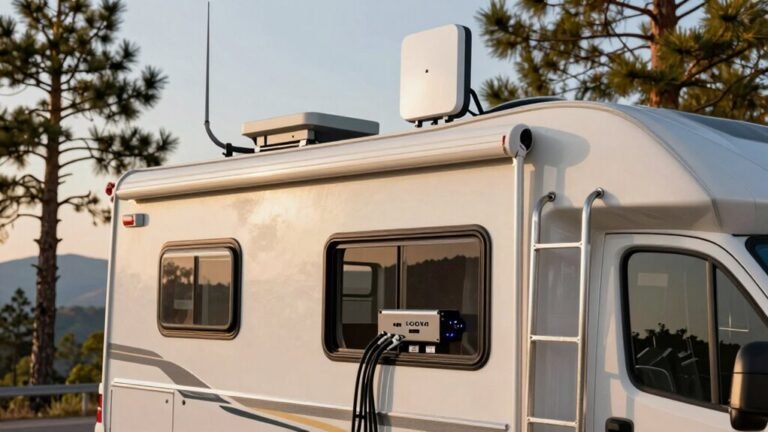
How to Stay Warm in an RV During Winter
Staying warm in an RV during winter starts with effective insulation. Insulate windows using Reflectix or plexiglass to minimize heat loss and seal drafty edges with weatherstripping for a tighter seal.
Add cozy thermal curtains to trap heat inside your living space. Skirting the RV’s underbelly helps block icy air from entering through the bottom.
Use a ceramic heater for quick, efficient warmth. Baking cookies not only warms the interior but also provides a delicious perk—free heat and snacks.
Install a smart thermostat to preheat your RV remotely from your phone. Keep your furnace in top shape with a professional tune-up before cold weather hits.
Insulate Your RV Windows and Doors
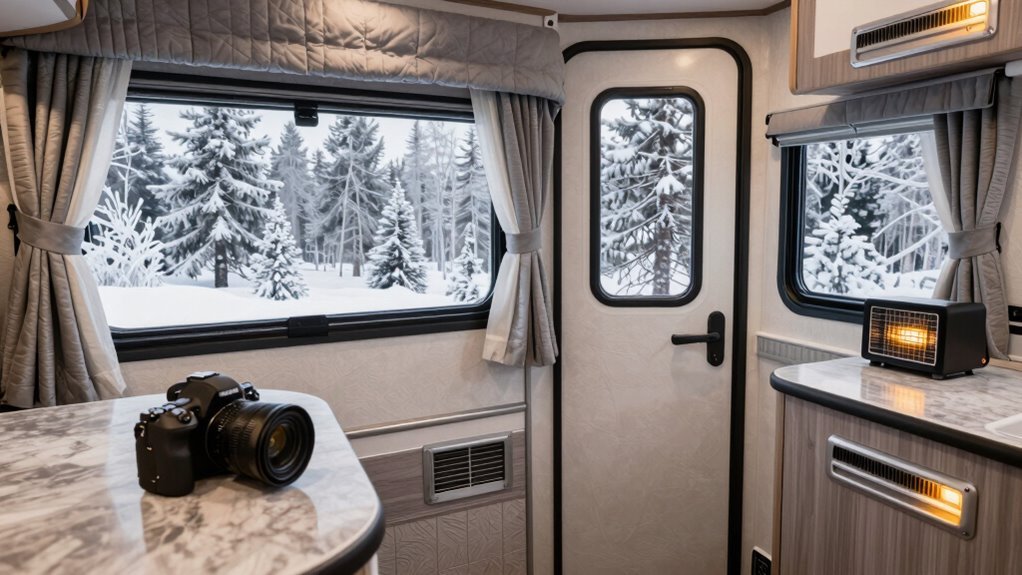
While winter’s chill tries to sneak in through every crack, you can stay one step ahead by insulating your RV windows and doors—because nobody likes waking up to a frosty view from inside their own bunk.
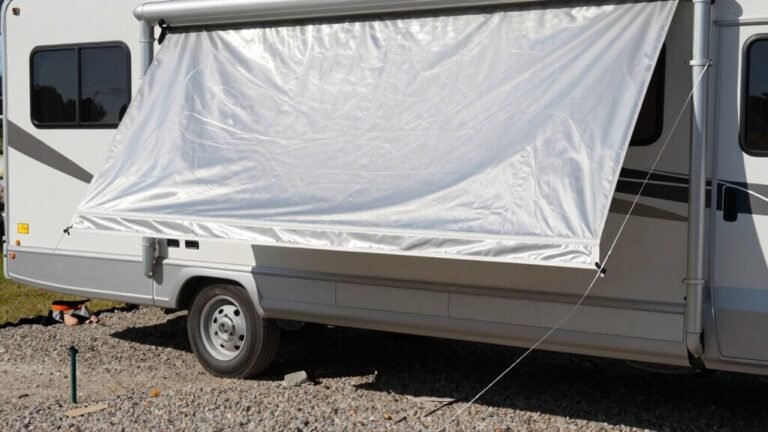
Slip in Reflectix panels, cut slightly larger than your windows and held with Velcro; they’re lightweight, affordable, and boost warmth by 12 degrees.
Prefer seeing the snowy scenery? Use clear plexiglass or vinyl from Lowe’s—attach with removable tape, no mess, no damage, and you still get sunlight. For better durability than plastic film, plexiglass installation offers a clear, long-lasting solution.
Go all-out with rigid foam boards for maximum warmth, though they block light and need storage space.
Shrink film’s quick and transparent, but it’s flimsy and sticky long-term.
Bubble wrap works in a pinch—just dampen and press—or layer thermal curtains for cozy, customizable comfort.
You’ve got options, so pick what fits your adventure.
Winter won’t stand a chance.
Seal All Drafts and Air Leaks
You just locked down your windows and doors with snug insulation, so now it’s time to play detective and hunt down those sneaky drafts that love ruining winter RV trips.
Run your hand around window edges and door frames—feel that chilly whisper? That’s a draft begging to be sealed.
Check the dollar bill test: if it slips out when closed, it’s time for fresh weatherstripping.
Don’t forget roof vents—warm air escapes there like popcorn at a movie, so pop on a cover.
Slide-outs? Those brush seals can be draft tunnels—tape helps, but inspect for wear.
And hey, no bugs want to winter with you, so sealing gaps keeps pests and moisture out.
Clean old seals before storing—dirt and mold hate going on vacation.
A well-sealed RV isn’t just cozy—it’s a winter warrior, keeping cold air out and warm vibes in!
Targeting emergency exit windows helps block the worst drafts while keeping emergency egress clear.
Use Thermal Curtains and Window Covers
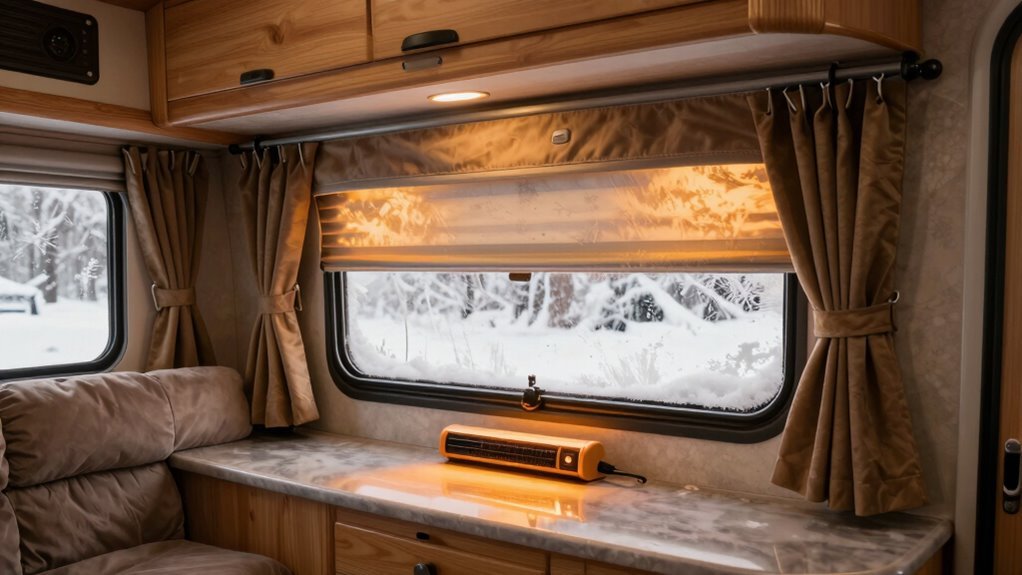
Blocking winter’s icy whispers starts the minute you hang the right curtain—no, not a drama-laden soap opera kind, but the cozy, heat-hugging kind that turns your RV windows into snug fortresses.
You’ve already sealed the drafts, so now trap that hard-won warmth with insulated, multi-layered curtains.
Go for heavy polyester or velvet with foam backing—they’re like a warm hug for your windows.
Blackout thermal curtains don’t just block light, they lock in heat, especially when you stretch them floor-to-ceiling and snug them close to the glass.
Use double-sided tape to seal the edges and stop sneaky cold air.
Add a pelmet up top to trap warm air like a lid on a pot.
These little tweaks slash condensation, too, so you’ll dodge mold and soggy vibes.
Lightweight doesn’t mean weak—dense polyester styles look sharp and work harder.
Your RV stays warm, dry, and way more delightful, even when Jack Frost thinks he’s in charge.
High-density foam in the curtain’s core boosts insulation by minimizing thermal exchange.
Upgrade to Skirted RV Underbelly Insulation
What if your RV’s underbelly could fight back against freezing temps? Well, it can—with the right insulation, you’ll turn that cold, drafty space into a cozy fortress.
Start by sealing gaps with foam sealant—no more icy air sneaking in!
Then layer on rigid foam boards or coroplast panels, cut snugly around tanks and pipes, and secure them with washers so they don’t go flying.
Add a radiant barrier with foil facing inward to bounce heat back where it belongs.
Spray foam’s your MVP for extreme cold—it’s tough, moisture-resistant, and packs the highest R-value around.
Tuck edges tight, use 5/16-inch fireproof insulation under tanks, and don’t forget the skirting to block ground chill.
It’s like giving your RV a warm hug from below—because even RVs get cold feet!
Choose the Right Space Heater for Your Rig
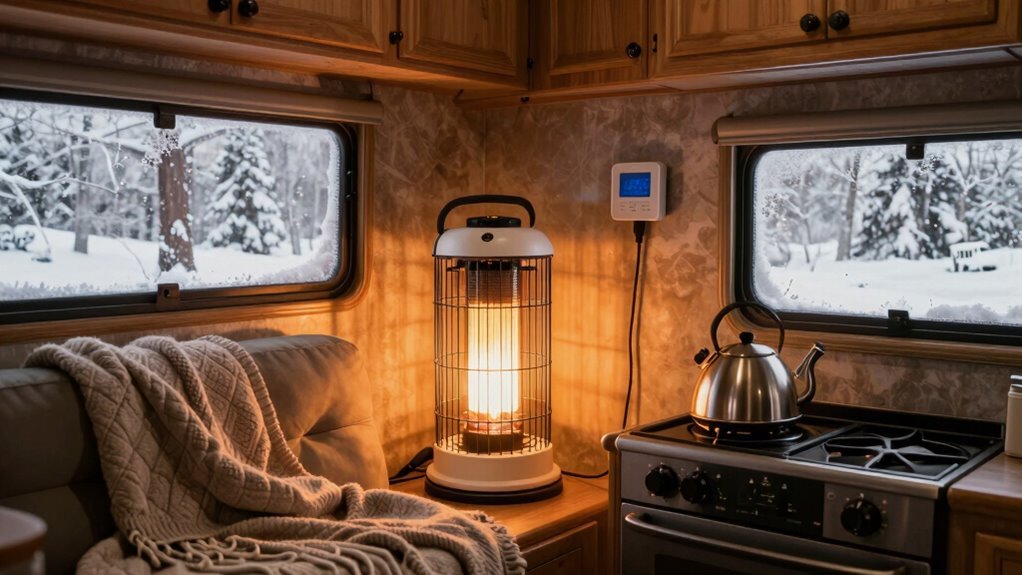
Now that your RV’s underbelly is all bundled up like a thermos in a winter coat, it’s time to tackle the chill inside your living space.
Grab a trusty electric ceramic heater—like the Xtreme Cabin model—and enjoy 750W for cozy maintenance or crank it up to 1500W when Jack Frost really bites.
It draws 6.25A on low and 12.5A on high, fits snugly in tight corners, and shuts off safely if things get too toasty.
Prefer silent heat? Oil-filled radiators run quietly and steadily warm your rig—three can boost temps by 3°F in just ten minutes.
Got no power? Catalytic heaters like the Camco Olympian run flame-free and odorless, perfect for off-grid adventures.
All these picks have overheat protection, stable bases, and UL certifications so you stay safe.
Just plug in, warm up, and laugh at the cold like it’s a bad joke.
Utilize Electric Blankets and Heated Mattress Pads
When the temperature drops and your RV feels more like a walk-in freezer than a cozy cabin, wrapping yourself in an electric blanket is like giving your whole body a warm hug from the inside out.
Just plug it into your 12V outlet or a portable power station, and you’re golden—most draw only 48 watts, so your batteries won’t scream in protest.
Set the timer or leave it on low all night for cozy comfort without draining power.
Heated mattress pads are sneaky heroes, warming you right where you need it—under you—so you can preheat your bed like a warm burrito.
They work with your sleeping bag, add insulation if the power quits, and won’t slip around.
Sure, they lack flannel’s fuzzy charm, but they won’t leave you frozen if the juice fades.
Just don’t ditch your layers—think of them as your backup blankets with benefits.
Layer Your Clothing for Maximum Warmth
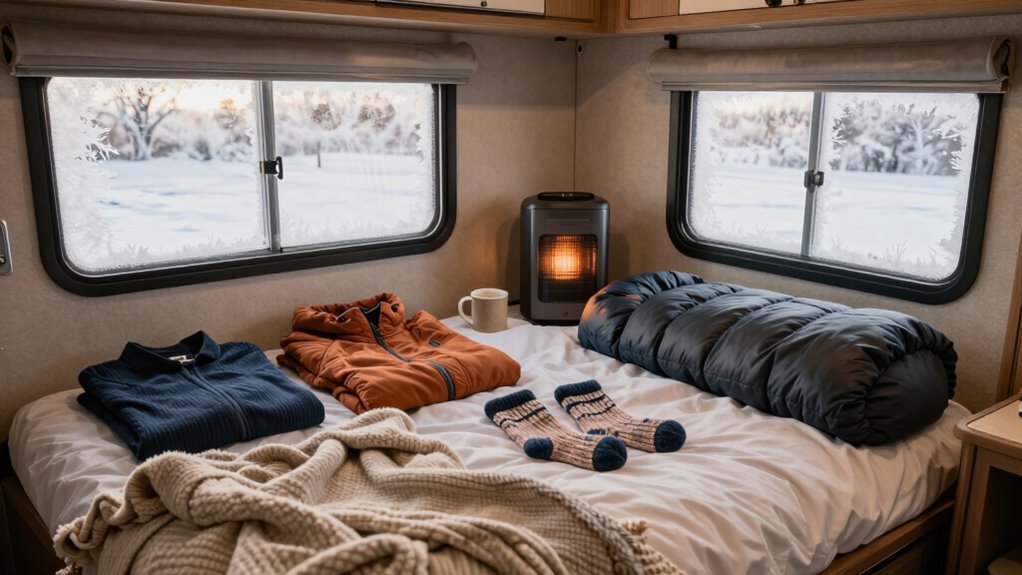
How does it feel to stay toasty warm in your RV while snow falls hard outside? Pretty great, right? You can make that happen by layering your clothes like a pro.
Start with a moisture-wicking base—think thermal tops and long underwear—so sweat doesn’t leave you chilled.
Add a cozy mid-layer, like a fleece or wool sweater, to trap heat in tiny air pockets.
Then, seal it all with a windproof, waterproof outer shell that shrugs off snow and rain.
Don’t forget your extremities: warm socks, gloves, a hat, and insulated pants keep cold at bay.
Adjust layers as you move around—peel one off before you get sweaty, because damp clothes cool you 25 times faster.
Layer smart, stay cozy, and laugh at the winter wonderland outside your cozy rolling home.
Cook and Bake to Generate Interior Heat
You’re already layering up like a pro, so why not let your meals pull double duty and warm up your RV too?
Cooking isn’t just for dinner—it’s a secret heat hack! Turn your kitchen into a cozy furnace with these tips:
- Use a wood stove like the Cubic mini wood stove to cook and heat at once—it’s perfect for snow camping and cuts down on furnace use.
- Try a Dutch oven with coals (5–8 on the bottom, most on top) to slow-cook stews while warming the air with cast iron’s steady heat.
- Invest in insulated cookware or a thermal cooker—bring soups to a boil, then let them keep cooking without fuel, saving energy and trapping warmth.
Bonus: Eat high-calorie foods to warm you from the inside out. Now *that’s* what I call a hot meal deal!
Install a Programmable Thermostat
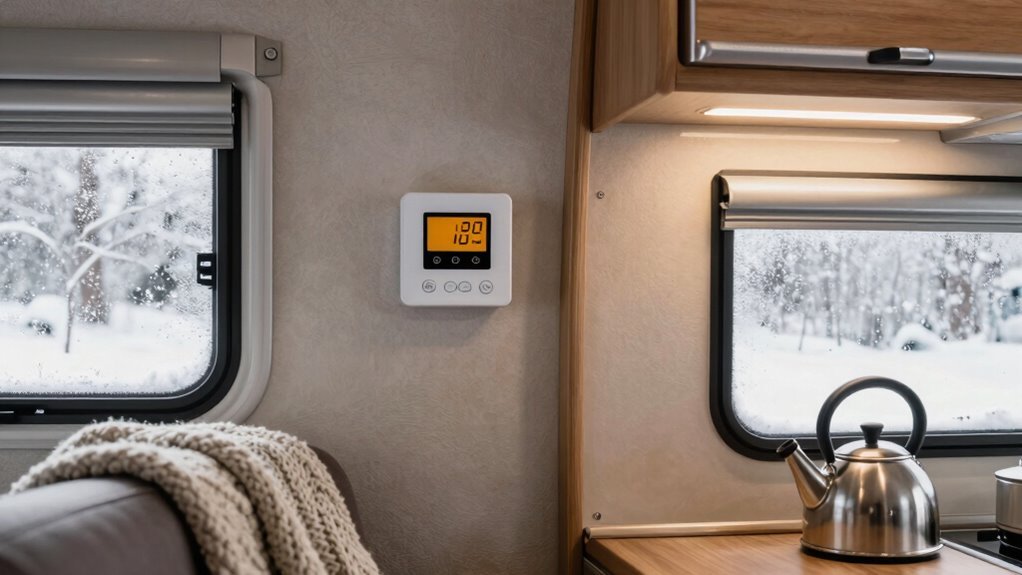
Take control of your RV’s cozy factor without lifting a finger—well, not after setup, anyway.
Installing a programmable thermostat lets you schedule warm temperatures for mornings and evenings, so you’re never greeted by a freezer-like chill.
When you’re out exploring, it dials down the heat automatically, saving energy and cash.
Models like the Micro-Air EasyTouch or Honeywell RTH2300B work great in RVs, and some even let you adjust the temp from your phone—perfect for preheating while you’re still sipping coffee at a diner.
Turn off the power, snap a pic of your old wiring, then swap it in using labeled wires and the included template.
Most take 12V connections, so they play nice with your rig’s system.
Once it’s up, you’ll enjoy steady comfort, fewer furnace battles, and a smarter way to stay toasty—all with just a few setup minutes.
Now that’s smart camping!
Maintain Your Furnace and Heating System
With your smart thermostat already learning your cozy habits, it’s time to make sure the star of winter warmth—the furnace—actually shows up to perform.
Don’t let dust bunnies or sleepy insects sabotage your heat! Give your system some love with these must-dos:
- Inspect and clean vents, ducts, and the blower motor—say goodbye to blockages and hello to smooth airflow.
- Check electrical connections and switches, especially the sneaky sail switch—it’s a common troublemaker.
- Run a full startup test in the fall, so you’re not shivering at 3 a.m. wondering why the furnace ghosted you.
A little prep means your furnace won’t flake out when the mercury drops.
After all, you’re the boss of your cozy kingdom—make that heater work for its place under the RV!
Frequently Asked Questions
Can I Use a Wood Stove in My RV?
Yeah, you can use a wood stove in your RV—if you do it right!
Just make sure it’s a certified model, install it with proper clearances, and follow safety rules like using double-wall pipe and heat shields.
Toss in a carbon monoxide detector, keep a fire extinguisher handy, and never run it while driving.
Campgrounds might side-eye it, so check their rules.
When installed safely, it’s cozy, charming, and heats your rig like a campfire dream—just don’t burn your marshmallows on it… unless you can!
Is It Safe to Run a Generator All Night?
No, you shouldn’t run a generator all night—it’s risky and unnecessary.
Carbon monoxide can sneak in even if you think it’s placed safely, and overheating could turn your trusty machine into a fire hazard.
Plus, the noise might annoy your neighbors or ruin the cozy winter vibe.
Use an inverter generator if you must run one—it’s quieter and smarter.
But seriously, give it breaks, check CO detectors, and stay safe.
Your generator isn’t a superhero—don’t treat it like one!
How Do I Prevent Pipes From Freezing While Traveling?
Think of your RV’s plumbing as a cozy bloodstream—keep it moving and it won’t freeze.
Wrap pipes with heat tape and slap on foam sleeves like winter jackets.
Use a heated hose, keep water trickling slightly, and run the furnace while driving.
Empty low-point drains often, and never let stagnant water chill out overnight—it’s asking for trouble.
Stay ahead of Jack Frost, and your pipes will thank you with zero surprises!
Should I Keep Propane on During Winter Camping?
Yes, you should keep propane on during winter camping—it’s your lifeline for heat and hot meals!
Just make sure your tanks aren’t freezing; cold slows the boil, and no boil means no gas flow.
Wrap them in insulating blankets, stash a spare on the passenger seat to stay warm, and always have a backup plan.
And hey, unless you enjoy icy showers, keep that propane happy—it keeps you happier!
Can I Use a Humidifier in My RV in Winter?
Nope, skip the humidifier—it’s like inviting fog to a sleepover, and nobody wants a damp, musty roommate.
Your RV’s cozy enough without turning it into a rainforest.
Too much moisture leads to mold, frosty windows, and gross sogginess.
Instead, fight back with DampRid or a trusty dehumidifier.
Keep the air fresh, dry, and as crisp as a winter apple—your walls (and sniffles) will thank you!
Conclusion
You’ve sealed the drafts, layered up, and even baked cookies to warm the rig—nice! Did you know that nearly 60% of RVers who winterize properly end up extending their trips by weeks? That’s you now! With smart prep and a trusty heater, cold weather just becomes cozy scenery. Stay warm, stay rolling, and remember: frozen s’mores don’t melt—they *crunch*. Happy trails!
References
- https://www.youtube.com/watch?v=wpxtZxvh-28
- https://www.roamly.com/learning-center/how-to-insulate-rv-windows
- https://theskirtingco.com/insulating-rv-windows/
- https://www.youtube.com/watch?v=uu2HDSZ2u50
- https://www.airskirts.com/rv-window-insulation/
- https://www.mygrandrv.com/threads/insulating-windows-for-winter.50993/
- https://community.goodsam.com/discussions/fulltimerversforum-board/insulating-window-for-winter/2441159
- https://blog.steelerubber.com/2021/10/19/preparing-your-rv-for-winter/
- https://www.youtube.com/watch?v=p0VCHdT3ycI
- https://www.mygrandrv.com/threads/cold-draft-from-the-slide-out.65624/