How to Clean and Flush Your RV Water Lines
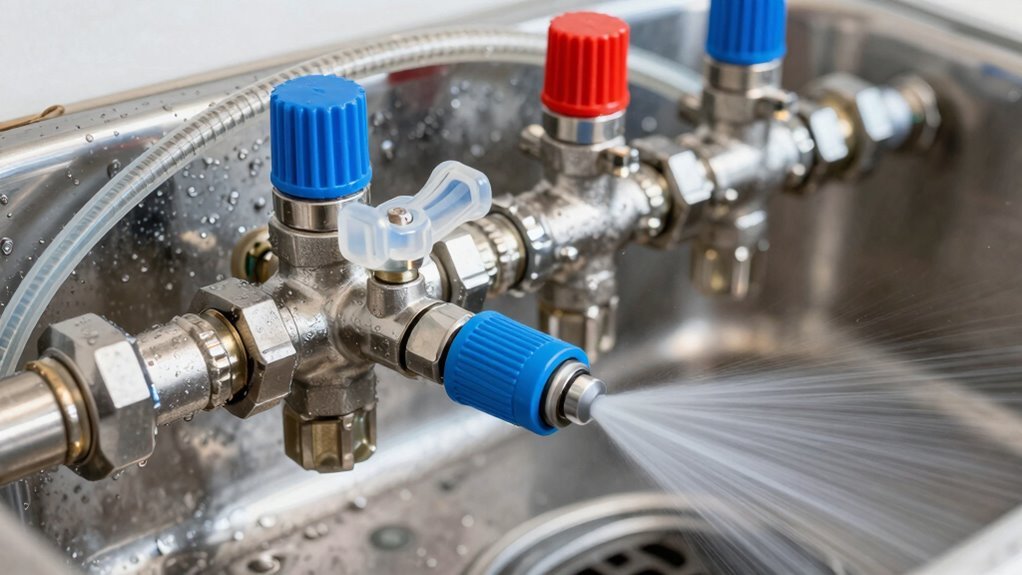
To clean and flush your RV water lines, start by gathering your gloves, tools, and a bucket—safety first. Drain the fresh water tank using the low-point valve to prepare for the cleaning process.
Next, mix 1/4 cup of bleach per 15 gallons of water and pour this solution into the fresh water tank. Turn on the water pump and run the mixture through every faucet and the shower until you smell bleach.
Let the solution sit in the system for a few hours to effectively clean the RV water lines. Afterward, flush the entire system with fresh water until no bleach odor remains, ensuring your water tastes great and is safe to use.
Gather Your Supplies and Prepare the RV
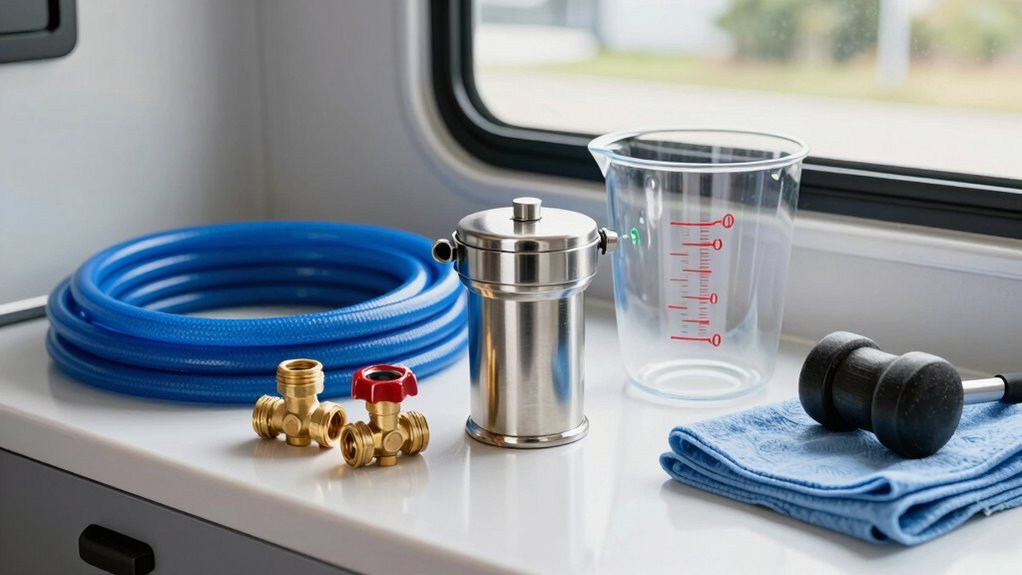
Let’s roll up your sleeves and get ready to tackle those RV water lines—because nobody likes a funky faucet!
First, grab your gear: snag adjustable wrenches, screwdrivers, and pliers to reach those tight spots and loosen clamps or fittings.
Don’t forget a bucket—water *will* spill, and you’ll want to catch it like a pro.
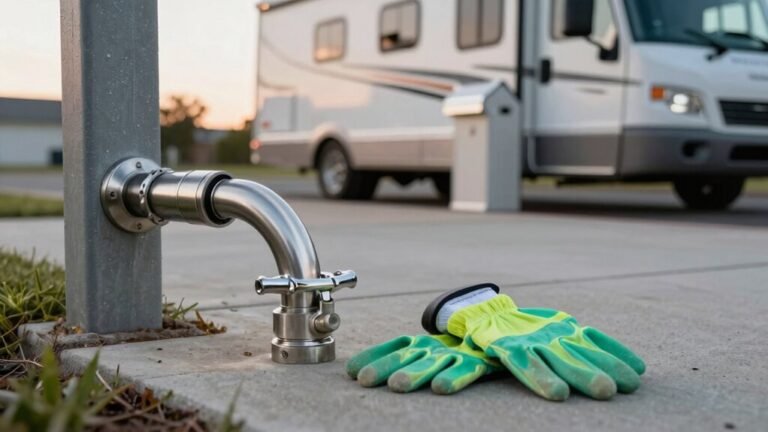
Slide on gloves and safety glasses; nobody’s winning a beauty contest during a cleanout.
Use rubber ones for sewer jobs—keep those hands happy and clean.
Pack rags and paper towels nearby for quick wipe-ups.
For cleaning, have RV-safe sanitizer, unscented bleach, or Camco TastePure ready—no garden hose bleach sneaking in here!
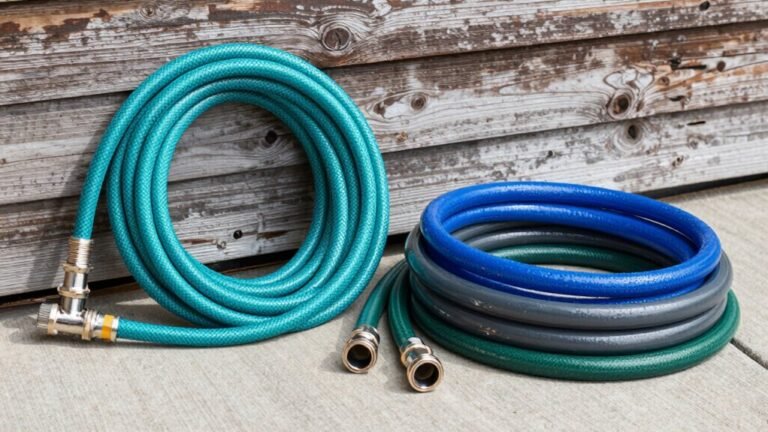
Use a potable water hose—white or blue—and ditch the garden hose; we’re drinking this water, not watering tomatoes.
Remove filters before you start.
Park near a spigot, level out, and open low-point drains.
You’re all set—time to shine!
Be sure to perform this task during a consistent warm stretch to prevent freezing and ensure effective flushing.
Drain the Fresh Water Tank Completely
Grab your toolbox and head to the passenger side—your RV’s fresh water tank is ready to spill its secrets!
Flip open the access panel near the water filter and find that blue pipe with the vertical metal lever.
Pull it down to open the large drain valve—this bad boy empties faster than a coffee pot at a morning meeting.
Let it flow from the low point while you dance around waiting.
While it drains, open all faucets, flush the toilet, and give the water pump a quick buzz to clear the lines.
Your hot water heater needs love too—pop the cover and yank the anode rod (grab that 1 1/16 socket).
Pull the plunger if you’ve got a newer model to let steam escape.
Make sure everything’s bone dry—trust us, soggy tanks are a no-go.
Draining from the 3/4 tank level helps reduce weight and improves fuel efficiency during travel.
- Locate the drain valve behind the passenger-side access panel
- Open all faucets and flush the toilet to release trapped water
- Remove the anode rod to fully drain the hot water heater
- Use the large valve for faster drainage, not just the low points
- Run the water pump briefly to clear residual water from lines
Mix and Add the Sanitizing Solution
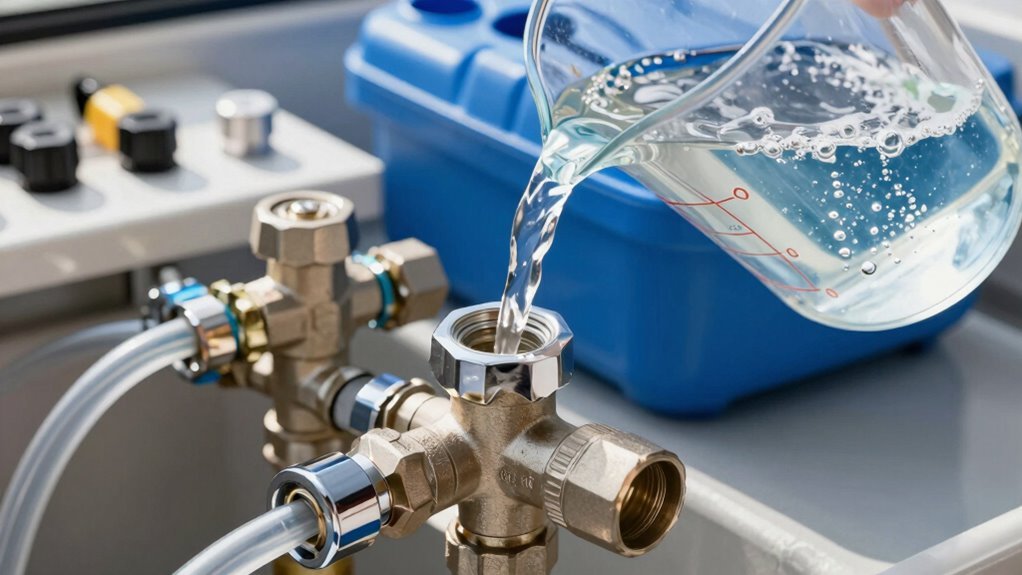
One clean tank deserves another—so it’s time to mix up a sanitizing solution that’ll leave your RV’s water lines sparkling.
Grab some unscented household bleach (5–6%) and mix 1/4 cup per 15 gallons of tank capacity—or go a little stronger with 1/4 cup per 10 gallons if needed.
For a gentler touch, try 3% hydrogen peroxide instead: 2 pints for 40 gallons, no rinse required, and zero aftertaste—your morning coffee will thank you.
Always blend bleach with a gallon of water first (about 1/2 cup bleach) to avoid damaging seals.
Never mix bleach and vinegar—seriously, that’s chemistry drama you don’t want.
Pour your mix in directly or use a hose to sneak it into the tank.
Think of it as a spa treatment, but for pipes.
DIY RV holding tank cleaners can also be made using simple ingredients like Borax and citric acid, similar to how baking soda and citric acid react in homemade tank bombs.
Circulate the Solution Through the System
Fire up the pump and let the cleaning party begin—your RV’s water lines are about to get a full-body rinse!
Turn on the 12V pump and let it push the sanitizing mix through the system at 40–50 PSI.
You’ll hear it click on and off, doing its little plumbing workout to keep pressure steady. Open every faucet, the shower, and the toilet until you smell that clean, bleachy goodness everywhere—yep, even at the farthest tap.
Run both hot and cold to cover all lines, but don’t sweat the water heater; with the bypass valve set, the solution skips it entirely.
The pump pulls from the tank and circulates the solution through every nook, ensuring full coverage.
Give it a few hours and it’ll be cleaner than your kitchen sink after dinner!
Flush and Refill the Water System
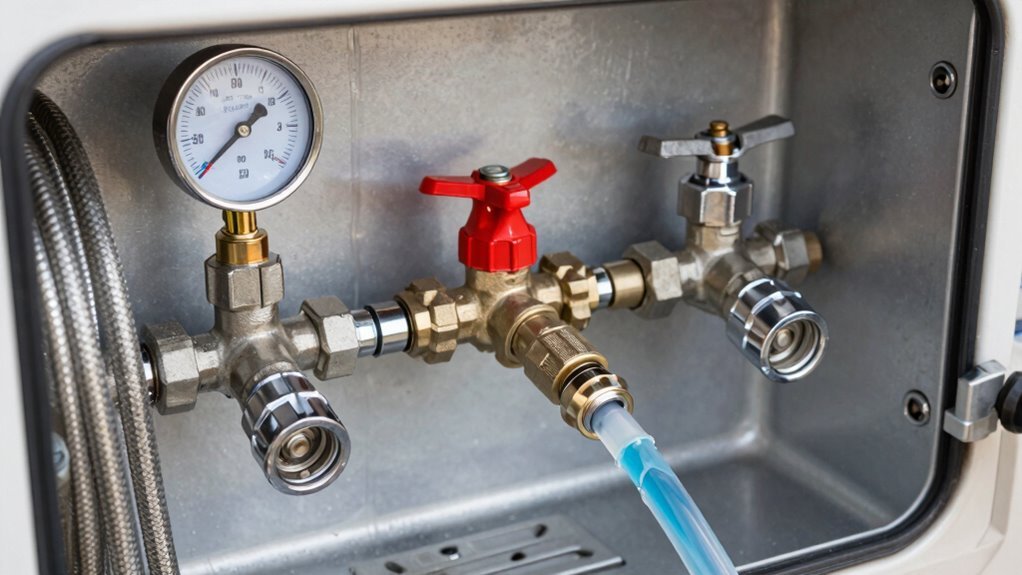
Now it’s time to kick out the old and make room for the fresh—your RV’s water system is ready for a clean slate!
Grab a hose and attach it to the city water inlet, then fire up every faucet, shower, and toilet until the water runs clear—say goodbye to that pink antifreeze for good.
Don’t forget the low-point drains and outside shower; they’re sneaky hideouts for leftover gunk.
Once everything’s drained, switch your fresh water connection to “Fresh Water Tank” mode.
Now, refill the tank with clean, potable water—lots of it.
Turn on all the faucets again and let the water flow until you can’t smell bleach anymore.
It’s like a spa day for your plumbing!
If a hint of chlorine lingers, try a vinegar rinse—it’ll neutralize odors without the stink.
Your RV’s ready to refresh you—literally!
Frequently Asked Questions
How Often Should I Sanitize My RV Water Lines?
You should sanitize your RV water lines at least once a year—spring’s perfect for it!
If you’re a full-timer or boondocking often, aim for every six months.
After winterizing, storage, or filling from sketchy sources, don’t wait—scrub those lines!
Smell funky water or taste something off? Yep, it’s go-time.
Better safe (and fresh!) than sorry, right?
Your taste buds’ll thank you!
Can I Use Bleach Tablets Instead of Liquid Bleach?
You can use bleach tablets, but they’re not ideal—most aren’t designed for RV systems, and they mightn’t dissolve evenly.
You’d still be dealing with chlorine, so you won’t dodge the downsides like rubber damage or lingering aftertaste.
Stick with liquid bleach for better control, or try Purogene for a gentler, no-stink swap.
Your water lines will thank you—no tiny tablet tantrums needed!
Is It Safe to Drink the Water After Sanitizing?
Yes, it’s safe to drink the water after sanitizing—just don’t chug it like a superhero mid-cleanup!
Once you’ve thoroughly flushed the system, all traces of bleach or vinegar are gone, leaving it fresh and clean.
Think of it like rinsing soap off your favorite camp mug: one good wash leaves it perfect for lemonade, not lather.
You’ll sip confidently, knowing your lines are purer than a mountain stream (and way less slimy).
What if I Smell Bleach After Flushing the System?
You still smell bleach? No worries—it happens!
Just keep flushing.
Refill your fresh water tank, blast all taps (hot and cold!), and let that water roar till the stink’s gone.
Toss in some vinegar to neutralize leftovers, or take your rig for a quick spin—bouncing down the road helps shake things loose.
Be patient, stay playful, and remember: clean water’s worth the wait!
Can I Sanitize the Water Heater Separately?
Yep, you can absolutely sanitize the water heater separately—think of it as giving your RV’s hot water a spa day, medieval-style, with a vinegar soak fit for a king’s kettle.
Just bypass the tank, fill it with vinegar or bleach solution, let it marinate for several hours, then flush it clean.
It’s quick, effective, and keeps gunk from throwing a pool party in your plumbing.
Cheers to fresh, clean hot water!
Conclusion
Now you’re all set—fresh, clean water flows like a mountain stream through your RV’s veins. No more funky tastes or mystery gunk lurking in the pipes! You’ve scrubbed, flushed, and conquered the system like a pro. Give yourself a high-five, then fill up that glass. Cheers to crisp, clean sips on your next adventure—your RV’s hydration game’s stronger than ever!
References
- https://www.harvesthosts.com/blog/dewinterizing-and-spring-cleaning-your-rv-a-checklist
- https://www.rvlock.com/blogs/on-the-road/how-to-properly-flush-and-sanitize-your-rv-water-system
- https://rvshare.com/blog/ultimate-guide-rv-water-tanks/
- https://kleentank.com/how-to-sanitize-your-rvs-fresh-water-holding-tank/
- https://www.youtube.com/watch?v=_eDY_0XC_uQ
- http://www.airgear.store/blogs/water-and-water-system/practical-guide-to-sanitizing-your-rv-water-system
- https://www.youtube.com/watch?v=JPoodbU44VU
- https://www.youtube.com/watch?v=6gN4_mkfU_4
- https://www.youtube.com/watch?v=3Epj9YwUl3U
- https://alliancervowners.com/forum/threads/water-drain.1119/