How to Test and Maintain RV Smoke and CO Detectors
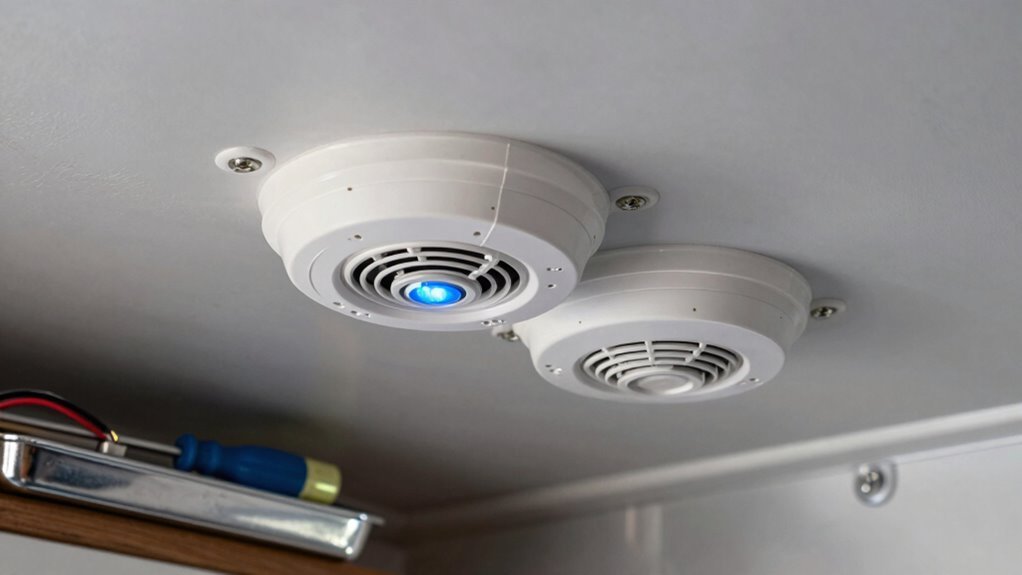
You’ve got this! Test your RV’s smoke and CO detectors monthly by pressing the test button and listening for a loud, attention-grabbing beep within 5–20 seconds. These detectors are essential for safety, so regular checks keep your adventures secure.
Swap the batteries every six months or as soon as you hear chirping. Wipe away dust and debris regularly, giving your detectors a mini spa day to ensure peak performance.
For CO detectors, avoid risky engine tests—stick to safe, proven testing methods. These little guards work hard to protect you, so show them some love with consistent care and maintenance.
Understanding the Importance of RV Smoke and CO Detectors
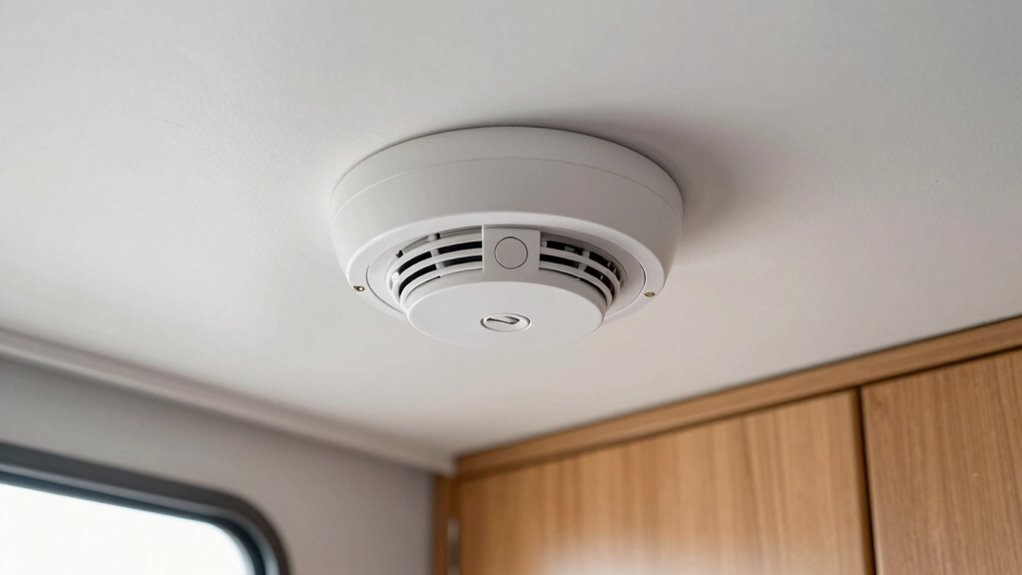
Ever wondered how something you can’t see, smell, or taste could sneak up on you while you’re sleeping?
Carbon monoxide does exactly that, quietly taking over your RV’s air while you dream.
You won’t feel it coming—no warning signs, just dizziness, confusion, maybe a headache… if you’re lucky.
In tight spaces like your camper, CO from stoves, heaters, or generators mixes fast and hits hard.
And because it’s sneaky and silent, your only real defense is a trusty CO detector.
Think of it as your RV’s superhero alarm—louder than your morning coffee, waking you up before danger takes over.
Paired with a smoke detector, you’ve got a safety tag team guarding against unseen threats.
New RV or old, a generator trip or a cozy propane heater night—don’t roll the dice.
Those little detectors? They’re your camping buddies, working 24/7 so you don’t become a cautionary tale.
CO is produced when fuel burns in engines, generators, heaters, or propane devices.
How Often to Test Your RV Detectors
How often are you really checking those little life-savers in your RV?
Don’t wait for a beep to remind you—stay proactive and keep your crew safe on every adventure.
Here’s how often to test your detectors with confidence:
- Test both smoke and CO detectors monthly—it only takes seconds and could save your life.
- Press the test button to confirm the alarm sounds loud and clear within 5–20 seconds.
- Never skip a check, even if you’re “sure it works”—because you really don’t want to be wrong.
- Don’t trust the chirp—by the time batteries whine, you’re already behind the safety curve.
Monthly testing keeps sensors ready, especially since dust and time can dull their senses.
Think of it like brushing your teeth—quick, routine, and way better than dealing with the alternative.
Your detectors work hard; give them a little love!
Regular maintenance is crucial because the risk of dying in a fire is cut in half with working smoke alarms.
Step-by-Step Guide to Testing Smoke Detectors
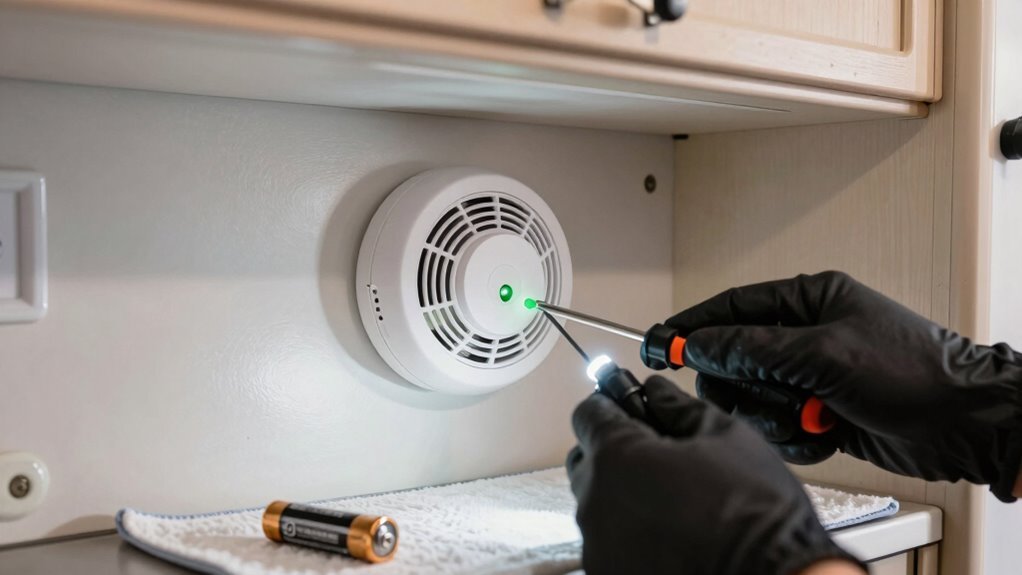
You’ve nailed the habit of monthly checks—now let’s walk through exactly how to test your RV’s smoke detectors like a pro.
First, grab the manual—every model’s a little different—and give a heads-up to anyone nearby; that ear-piercing siren isn’t shy.
Peek under the cover, check the battery for gunk or corrosion, and swap it out if it’s older than six months—even if it still works.
Pop in a fresh one, press and hold the test button, and wait for the chorus of chaos.
If the siren screams loud and clear from every corner, high five!
If it’s weak or silent, clean the vents or check the wiring.
Repeat after any battery change.
No alarm? No worries—just troubleshoot and try again.
And don’t forget to jot down the date.
You’re not just testing—you’re trailering like a safety superstar.
Regular testing ensures early detection in emergencies, so make it a non-negotiable part of your routine (monthly testing).
Step-by-Step Guide to Testing Carbon Monoxide Detectors
While your smoke detector gets all the glory, it’s time to give your carbon monoxide detector the spotlight it deserves—because silent doesn’t mean safe.
Here’s how to keep it sharp and ready:
- Press and hold the test button for 1 second—watch the green light turn red and listen for four loud beeps, like your detector’s doing a happy dance.
- See the red gas LED blink? That means the alarm circuit’s alive and kicking—success!
- Grab propane or butane gas (or smoldering incense) to test the actual sensor—hold it near the detector for 30 seconds and wait; it should alarm in under 15 minutes.
- Skip the engine exhaust stunt—it’s dangerous, messy, and could toast your detector (literally).
Test after storage, before trips, and weekly while on the road—your nose might miss CO, but your detector won’t!
Replacing Batteries in Your RV Safety Devices
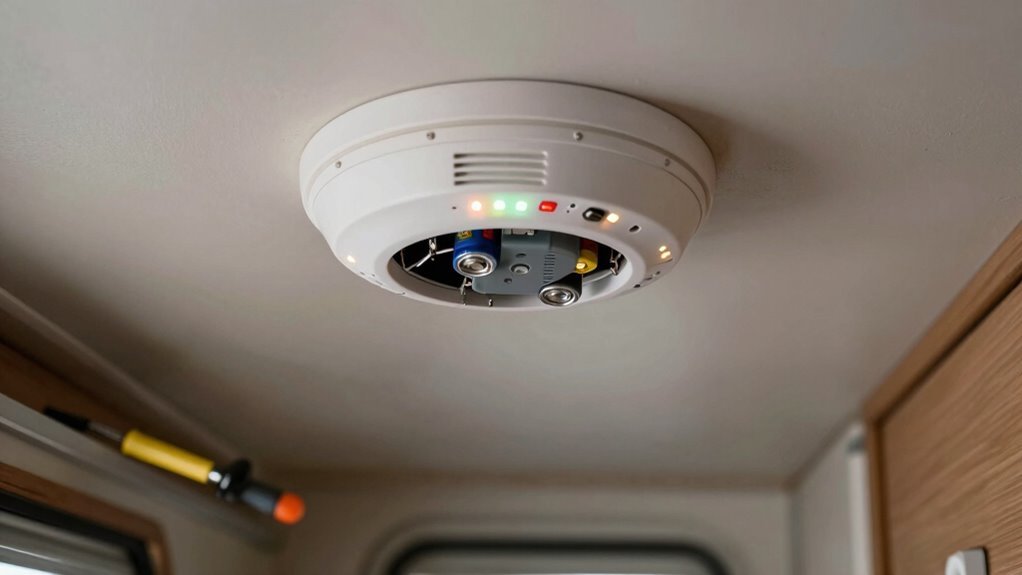
Ever wonder why your RV’s safety alarm starts chirping at 2 a.m.? That’s usually the low battery warning telling you it’s time to swap it out.
Don’t panic—just twist the unit counterclockwise off its bracket and open the hinged cover.
Slide out the battery compartment slightly—no need to yank it free.
Check the diagram inside: pop in a fresh CR-123A, AAA, or Duracell alkaline battery, making sure the positive side matches the dot or spring.
Lithium’s best for long life.
Align it right, snap the cover shut, and twist the alarm back into place.
If it’s wired, double-check the red and black wires are secure to the 12VDC battery with a proper fuse.
Press test to confirm it’s happy.
Mark the date—your alarm will chirp again in about five years.
Sweet dreams!
Knowing When to Replace Your Detectors
That 2 a.m. chirp might mean a dead battery, but what if it keeps going after you’ve swapped it out? It’s probably your detector saying, “I’m done!” Here’s when to say goodbye:
- It’s been 10 years – Smoke and combo units don’t last forever, even if they seem fine.
- Chirps won’t quit – If it *still* beeps every 30 seconds after a fresh battery, it’s waving a white flag.
- Flashing red lights – Two blinks with a chirp? That’s the alarm’s way of texting you: “Replace me!”
- Expiration date’s passed – Flip it over, check the date, and don’t ignore it—yes, even if it “seems okay.”
Your safety’s no joke, but replacing detectors? Easy peasy—just four screws and two wire nuts.
Think of it as a spa day for your RV’s health!
Best Practices for Detector Placement in Your RV
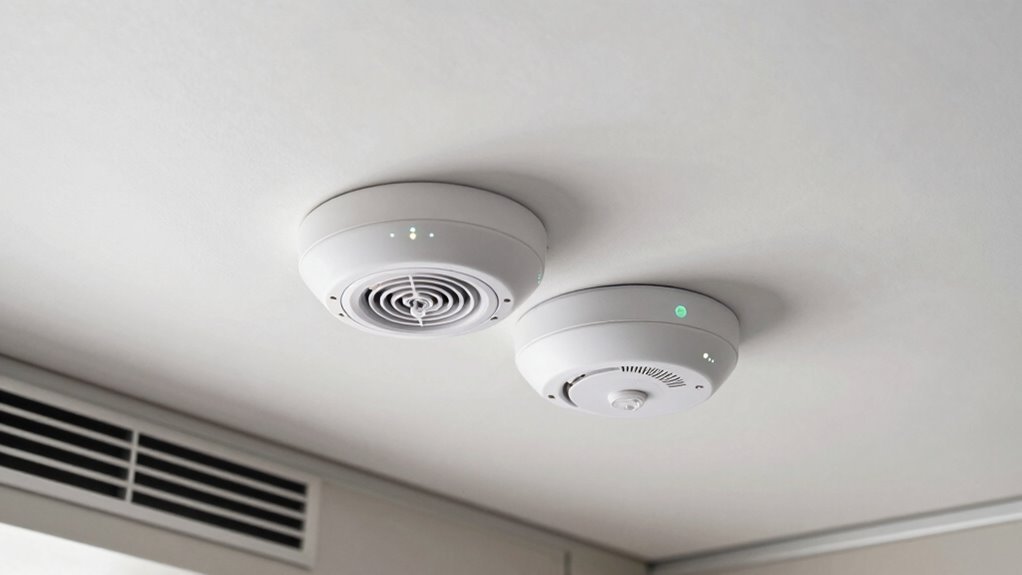
You’ve got your detectors—now let’s get them in the right spots so they can do their job and keep you safe on every adventure.
Mount smoke detectors high on ceilings or walls, at least 5 feet from cooking gear to dodge false alarms from grilled cheese gone sideways.
Place CO detectors within 10 feet of bedroom doors—since most CO scares happen while you’re asleep, you’ll want it nearby but not right above your head.
Keep it 6 inches below the ceiling or at mid-height (around 5 feet) for sleeping lofts.
Combo LP/CO units go low, 4–18 inches off the floor, so they can sniff out heavy propane.
Avoid vents, fans, and kitchens—detectors aren’t fans of drafts or drama.
Separate smoke and LP sensors when possible, and never tuck them behind curtains or furniture.
Smart placement means real peace of mind, so your only midnight wake-up call is nature—not an alarm.
Frequently Asked Questions
Can I Use Residential Smoke Detectors in My RV?
No, you can’t use residential smoke detectors in your RV—they’re not built for it.
Your rig needs RV-specific alarms that won’t freak out every time you burn toast.
Models like the First Alert SMI100RV or BRK FG250RV are made for life on wheels, meet safety standards, and cut down cooking false alarms.
Stick with UL-certified RV detectors, and you’ll stay safe, sane, and smoke-alarm-dance-free.
Are Hardwired Detectors Better Than Battery-Operated Ones for RVS?
Yeah, hardwired detectors are usually better for RVs—they run on your rig’s power, so you skip the dying batteries and midnight chirps.
They’re more reliable, stay loud, and can link together so every alarm screams when one’s triggered.
Sure, they cost more upfront and need a pro to install, but think of it as peace of mind with fewer hassles.
You’ll sleep easier, literally.
Do RV Detectors Work on 12V or 120V Systems?
Yeah, RV detectors can run on both 12V and 120V systems, but they usually don’t mix.
You’ll find smoke detectors mostly on 12V or battery power—simple, reliable, and camper-friendly.
CO and propane alarms often tap into 12V RV systems, sometimes with battery backups.
Plug-in 120V models exist, but they’re less common since campers love flexibility.
Think of it like coffee: 12V keeps you going off-grid, while 120V’s for when you’re plugged into paradise.
Can Extreme Temperatures Affect My RV Detector’s Performance?
Yes, extreme temperatures can mess with your RV detector’s performance.
If it’s too cold, your alarm might chirp like it’s nervous—even if the battery’s fine.
Too hot, and the sensor could act confused, like it forgot its job.
You’re braving the wild, but your detector’s not a snowman or a marshmallow—don’t let it melt or freeze!
Keep it in the 40–100°F sweet spot, and it’ll keep watching your back, no drama.
Are There Dual Sensors That Detect Both Smoke and CO?
Yes, there are dual sensors that detect both smoke and CO—pretty cool, right?
You get two lifesaving tools in one sleek device.
They quietly watch for smoke from cooking mishaps or electrical issues while sniffing out invisible CO gas like little safety superheroes.
Models like X-Sense SC01 and First Alert combo units do the job well, often with long-life batteries.
It’s like having a bodyguard for your RV’s air—smart, reliable, and totally worth it.
Conclusion
You might think testing detectors’s a hassle, but just a quick monthly habit keeps you safe and stress-free. Imagine roasting marshmallows, not fleeing smoke—awesome, right? Check, replace, and place wisely, and you’re golden. These little guardians work hard, so show ‘em some love. Stay cozy, stay sharp, and let your adventures breathe easy—literally! Safety’s no joke, but with this routine? You’ve totally got it down.
References
- https://www.firerescue1.com/fire-products/co-testing/why-you-should-install-co-detectors-in-your-car-camper-and-boat
- https://www.netatmo.com/security-guide/motor-homes-should-you-install-a-carbon-monoxide-detector
- https://www.x-sense.com/blogs/tips/rv-safety-essentials-choosing-the-best-carbon-monoxide-detector
- https://www.peakmtncamps.com/the-vital-role-of-co2-detectors-in-your-rv-why-you-should-never-disconnect-them/
- https://www.rv.com/archive/proper-selection-and-maintenance-of-smoke-and-carbon-monoxide-detectors-are-critical-for-safe-rv-living/
- https://www.boatus.org/study-guide/prep/co2
- https://community.goodsam.com/discussions/motorhomesforum-board/house-lpcosmoke-detector-in-my-rv/1434844
- https://www.worldinsurance.com/blog/check-smoke-and-co-detectors
- https://www.thmalloy.com/posts/how-often-should-you-check-smoke-and-co-detectors
- https://www.onehourheatandair.com/expert-tips/home-life/how-to-reset-a-carbon-monoxide-detector-perform/