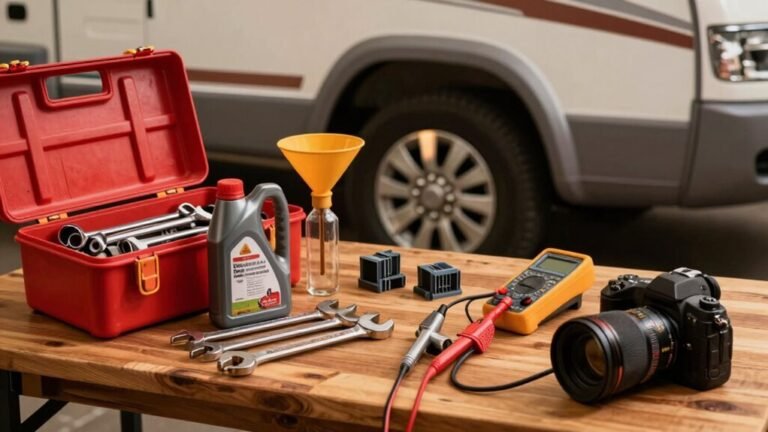
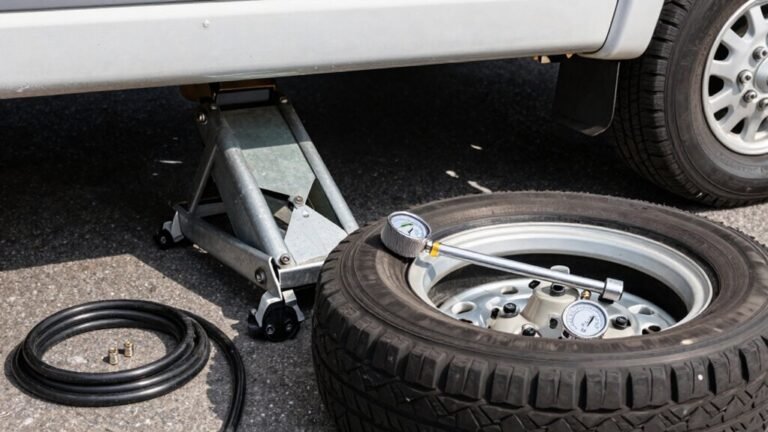
Budgeting for Full-Time RV Life

Budgeting for full-time RV life means replacing rent with campground fees, but don’t overlook insurance, repairs, and the often-missed cost of depreciation. These ongoing expenses are essential to include in your monthly planning.
Fuel, storage, and utilities add up quickly, so expect to spend between $500 and $1,500 per month. Embrace boondocking, install solar power, and handle small repairs yourself to reduce costs.
Stash away an emergency fund and secure flexible health coverage that works on the road. And when your “office” breaks down mid-road-trip, just laugh—it’s all part of the full-time RV life experience.
Understanding the True Cost of RV Ownership

While you’re dreaming of open roads and campfire skies, let’s talk money—because owning an RV isn’t just about the sticker price, it’s about the full picture.
You might snag a travel trailer for $10,000 or splurge on a Class A nearing $300,000, but that’s only the beginning.
That shiny new rig starts losing value the second you drive off the lot—depreciation can cost you thousands yearly.
You’ll also shell out $500–$2,000 a year for insurance, and if you’re not parking it in your backyard, storage could run $400 a month.
Repairs? They’re not optional—expect hundreds a year, maybe more for older models.
But hey, regular tune-ups and a little DIY love can save cash and boost resale value.
Think of it like a fur baby: adorable, expensive, and totally worth it.
Over five years, incremental travel costs like reduced fuel efficiency while towing can add nearly $2,745 to your expenses.
Budget smart, because freedom has a price tag—and you want to keep rolling.
Monthly Fixed Expenses Every RVer Should Track
You’re living the dream with a roof that rolls and a view that never gets old, but let’s not forget the bills that come with it—yes, even vanlife has a tab.
You’ll shell out $200 to $1,000 monthly for campgrounds, though boondocking or membership sites can slash that to $50.
Hookups and prime spots? They add up fast.
Insurance runs about $150 a month, plus health coverage—yep, Medicare doesn’t care if you’re on the road.
Utilities like power, water, and solid internet set you back $200–$300, especially if you’re binge-watching under the stars.
Set aside $100–$125 monthly for repairs—because that fridge won’t fix itself.
And don’t skip memberships like Harvest Hosts; $50 a year for free winery stays? Yes, please.
Track propane, laundry, and pet care too—they’re sneaky but steady drains.
Know these costs, and your freedom stays stress-free.
Many full-timers spend around ~$2,000/year on maintenance, especially as RVs age and repairs become more frequent.
Fuel and Gas Prices: Planning for Long-Term Travel
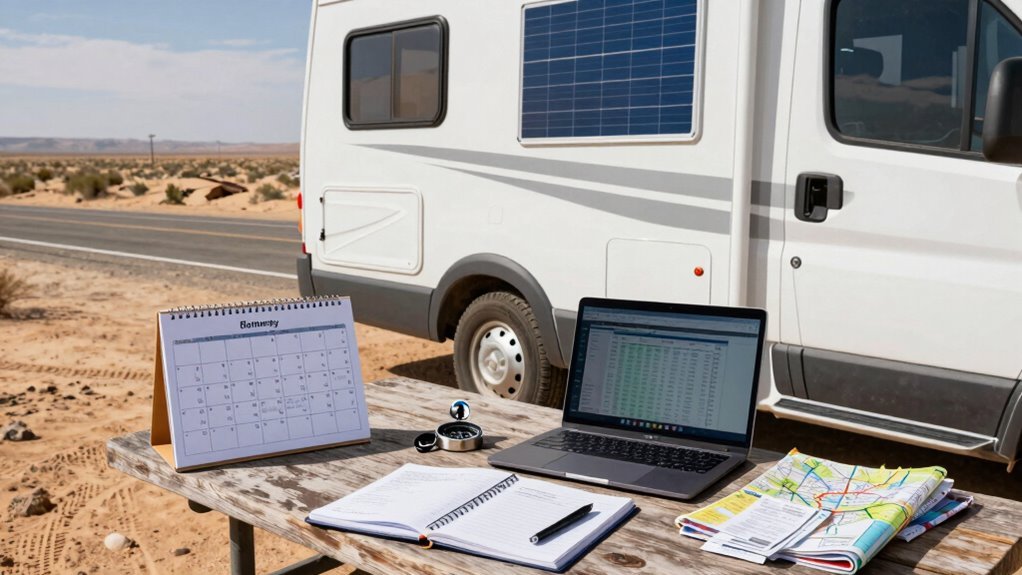
How far can your dollars stretch when the open road calls?
Fuel costs add up fast, but smart planning keeps you rolling without blowing your budget.
Know your rig’s thirst—bigger motorhomes gulp more, while nimble vans sip fuel like tea.
With prices shifting monthly, staying sharp on trends saves serious cash.
- Class B vans get 18–25 mpg, making them gas-sippers perfect for long hauls
- A 3,000-mile trip now costs about $942 on gas—down from last year’s $1,049
- Diesel’s creeping up, hitting $3.74/gallon, so plan fills when prices dip
- Tiny camper vans like the Nissan NV200 or Ram ProMaster City can hit 28 mpg, slashing fuel bills
- Class A motorhomes typically average 8–10 mpg, reflecting their larger size and higher fuel consumption
You’re not just driving—you’re outsmarting the odometer, one clever mile at a time.
Finding Affordable Campgrounds and Overnight Parking
Now that you’ve got your fuel game down and your rig sipping gas like it’s on a budget diet, let’s talk about where you’ll actually park that home-on-wheels without emptying your wallet.
You’re not alone if you’ve ever stressed over finding an open spot—over half of campers did in 2024.
Good news? Public campgrounds, like state and city parks, cost way less than private ones and rose only 22% in price since 2018, not the sky-high 61% private parks jumped.
That’s serious savings.
While private resorts can charge $50 a night or more, public sites keep rates low—perfect for long-term stays.
With only 5% of parks expanding, spots are tight, so plan ahead and lean into public options.
Your future self—and your bank account—will high-five you every time you snag a $20 state park site instead of a $50 splurge.
Managing Utilities: Electricity, Water, and Sewer Costs
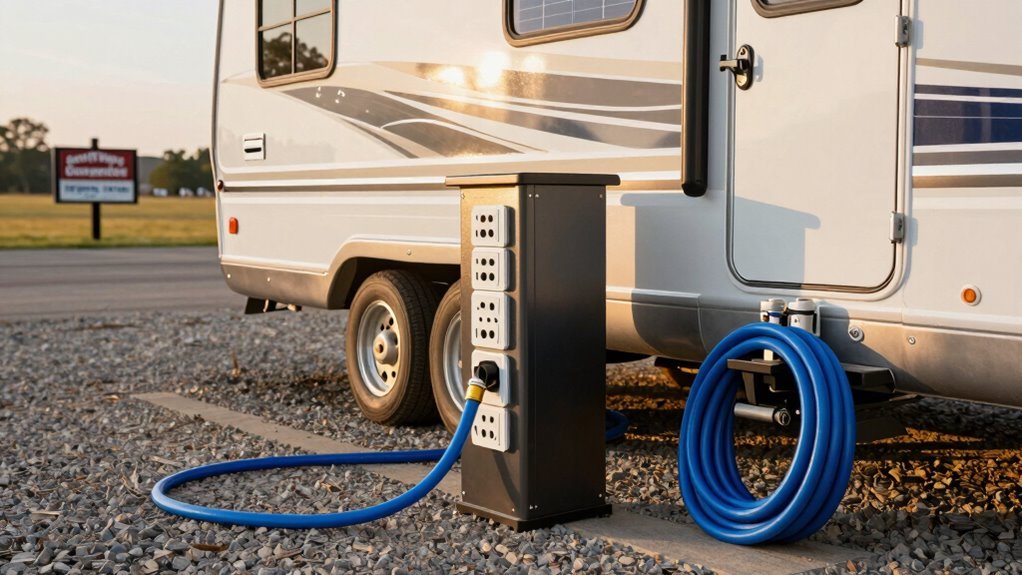
Where does your RV power come from when the sun dips below the horizon and the lights flicker on?
You’ve got options—and smart choices mean big savings.
Managing electricity, water, and sewer costs doesn’t have to be a chore.
In fact, with a little planning, you can cut expenses and still live comfortably.
- Run solar panels to slash or even eliminate electric bills—bye-bye, $6 daily California hookups!
- Monitor your 20 kWh daily use; that electric heater can drain power (and cash) fast.
- Fill your freshwater tank strategically to avoid $50 monthly fees—boondocking saves more than just scenery.
- Skip sewer hookups sometimes; use dump stations and save when you’re not glued to full-service sites.
You’re not just saving money—you’re mastering the freedom of the open road.
Groceries and Dining on a Moving Budget
Ever wonder how you can eat fresh, flavorful meals on the road without draining your wallet? You’ve got this—most full-time RVers spend $300–$600 a month on groceries, but smart moves keep costs lower.
Plan meals ahead, clip coupons, and hit local farmers markets for crisp produce at sweet prices.
Bulk buying helps, but with cozy RV cabinets, you’ll likely shop every week or two—no pantry avalanches allowed!
Cooking at home slashes costs fast, and hey, your tiny kitchen can whip up tacos just as tasty as any diner.
If you eat out once or twice a week, keep it around $25–$50 per meal and roll it into your daily $40 food budget.
Location, diet, and family size tweak your numbers, but with a little creativity (and maybe a dance-off to decide taco night), eating well on the move is totally doable—and delicious!
RV Maintenance and Repair Fundamentals
Keeping your RV in top shape doesn’t have to feel like defusing a bomb blindfolded.
You’ve got this—just stay on top of the basics and treat your rig like a loyal road buddy who needs a little love.
Skip the panic and build a simple routine that keeps surprises rare and repairs minor.
Think of it as preventative TLC with a side of peace of mind.
- Check tire pressure weekly (including the spare!) and watch for cracks or wear on sidewalls
- Test lights, brakes, and slide-outs before hitting the road—don’t forget the blinkers!
- Clean and inspect roof seals monthly to stop leaks before they start a water show
- Flush tanks, service the generator, and keep safety gear ready, especially that fire extinguisher
A little effort now saves big bucks (and headaches) later—just ask your future self, sipping coffee trouble-free at a mountain overlook.
Staying Connected: Internet and Phone Plans on the Road
You’ve got your slides working, your tires pumped, and your roof seals tight—now let’s talk about staying plugged into the world beyond your RV’s windows.
Staying online isn’t a luxury; it’s how you work, stream, and stalk your favorite taco truck on Instagram.
You’ve got options: TravlFi’s pay-as-you-go plans flex from 2 GB to unlimited, while UbiFi and Nomad serve up unlimited 4G LTE across major US networks—perfect for chasing sunsets off-grid.
Love speed? T-Mobile’s AWAY plan delivers 5G for $160/month, no extra gear needed.
Or go full space cowboy with Starlink Roam—$349 for hardware and you’re surfing from Moab’s backcountry.
Expect to spend $50–$150 monthly, more if you bundle hotspots or boosters.
Pro tip: mix cellular plans and campground Wi-Fi like a digital smoothie.
Stay connected, avoid the “no bars” panic, and keep those cat videos flowing.
Health Insurance and Medical Expenses While Traveling
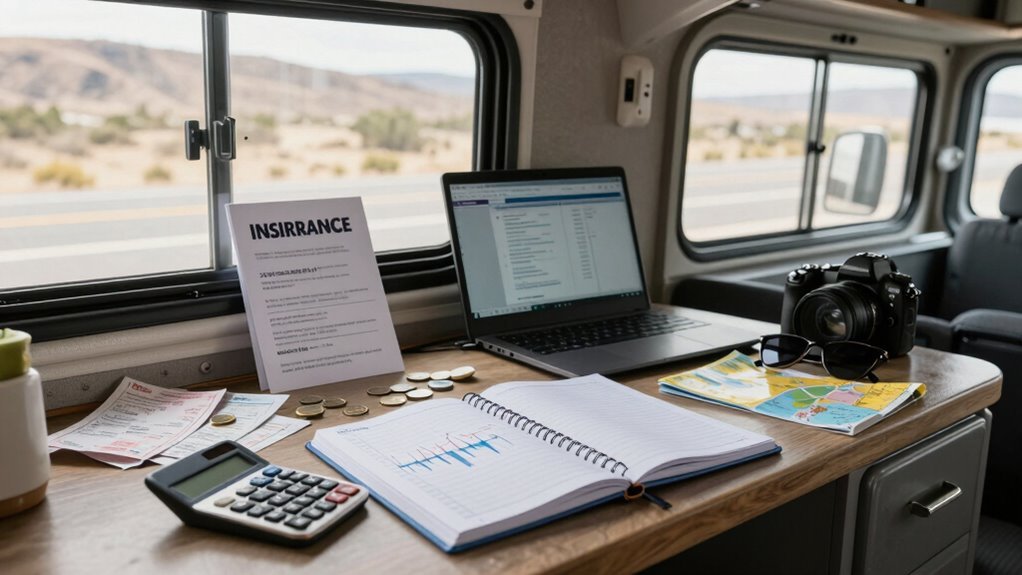
Most RVers quickly realize that staying healthy on the road means more than just eating your veggies and stretching after long drives—it also means having solid health coverage that won’t leave you high and dry when you’re miles from the nearest urgent care.
You’ve got options that fit your nomadic life without blowing your budget:
- Snag a nationwide PPO or Blue Card plan so you’re covered whether you’re in Maine or Montana.
- Consider ACA plans with income-based subsidies—they can save you serious cash, especially if you’re just starting out.
- Look into fixed benefit or health sharing plans for predictable costs and freedom to see any doctor.
- Work with a seasoned broker who knows the ropes and can find plans built for life on wheels.
Stay protected, stay smart, and keep exploring with peace of mind—because no one wants a surprise bill bigger than their RV.
Building an Emergency Fund for Life on Wheels
Life on the road is full of freedom, sunsets in new spots, and the occasional surprise—like when your trusty RV decides it’s had enough of potholes and calls it quits mid-journey.
That’s why you need an emergency fund—stat. Nearly 40% of Americans can’t cover a $1,000 surprise, and for RVers, breakdowns like engine trouble or roof leaks can hit that cost fast.
You’re not just paying bills; you’re living mobile, where repairs cost more and help might be miles away. Aim for three to six months of expenses—more if you’re a solo earner or freelance hustler.
Stash $2,000 at minimum in a separate, liquid account so it’s there when disaster strikes. Automation helps, and keeping it out of sight stops you from blowing it on tacos (delicious as they are).
Trust us—your future self will thank you when the AC dies in July.
Frequently Asked Questions
Can I Live in My RV Year-Round Legally?
Yes, you can live in your RV year-round legally—it’s totally doable!
Just pick an RV-friendly state like Texas or Florida, where rules are chill and space is wide open.
You’ll need to meet local zoning laws, park legally, and set up a valid address for paperwork.
With a little planning and a lot of freedom, you’re not just surviving—you’re adventuring smart.
Who knew adulting could feel this fun?
How Do I Handle Mail and a Permanent Address?
Think of your mail like a trusty sidekick that follows you anywhere, no matter the zip code.
You can’t use an RV park as a permanent address, but you can sign up for a mail forwarding service—they’ll give you a real street address, scan your mail, and forward it wherever you roam.
Just pick a state for residency, update your license, and boom: you’re rolling with both wheels and paperwork in motion.
What Taxes Do I Pay While Living in an RV?
You pay taxes based on your home state, not where you park your RV.
If you ditch high-tax states for Florida or Texas—no income tax—score!
Your RV’s loan interest might be deductible if it’s got a bed, fridge, and bathroom.
Just don’t try writing off your “office” in the Rockies unless you’ve got another home base.
Taxes? They’re inevitable, but hey, at least you’re not stuck in a cubicle.
Can I Register My RV in Any State?
No, you can’t register your RV in just any state—it’s like picking a dance partner; not everyone’s up for the same moves.
States like South Dakota, Montana, and Delaware welcome you without residency, while others slam the door unless you live there.
You’ve gotta check rules on taxes, paperwork, and fees.
Some states don’t even require registration for truck campers—lucky you!
Do your homework, or you’ll end up in hot water.
How Do I Vote if I Don’T Have a Fixed Address?
You can vote even without a fixed address—no magic wand needed!
Use a trusted mailing spot like a P.O. Box or a friend’s place, and register with your last known residence or a described location, like a city or cross-streets.
Request an absentee ballot or vote in person.
Update your info when you move, ’cause flexibility keeps democracy rolling—and so do you!
Conclusion
You’d think escaping the 9-to-5 grind in an RV would mean freedom from bills, but surprise—it comes with its own tab! Yet somehow, trading rent for campsite fees, and couches for state parks, feels richer. Who knew chasing sunsets could be so budget-friendly? With a little planning, your wallet stays full even as your tank runs low. Turns out, the open road doesn’t cost a fortune—it just asks for smart choices and a sense of adventure. And hey, flat tires happen… but so do miracles.
References
- https://johnmarucci.com/2024/09/15/the-real-cost-of-rv-ownership-5-year-analysis/
- https://rvlove.com/planning/the-real-cost-of-rv-ownership-heres-what-we-spent/
- https://www.renogy.com/blogs/off-grid-power/rv-living-cost
- https://www.emergencyassistanceplus.com/resources/rv-statistics/
- https://www.myfinancingusa.com/resources/costs-of-rv-ownership/
- https://www.outdoorsy.com/blog/the-cost-of-rv-living
- https://www.bishs.com/blog/the-true-cost-of-owning-an-rv-its-not-what-you-think/
- https://www.rvia.org/news-insights/study-shows-families-save-money-vacationing-rvs
- https://www.consumeraffairs.com/automotive/rv-ownership-statistics.html
- https://heathandalyssa.com/cost-to-live-in-an-rv/