How to Conserve Power When Boondocking
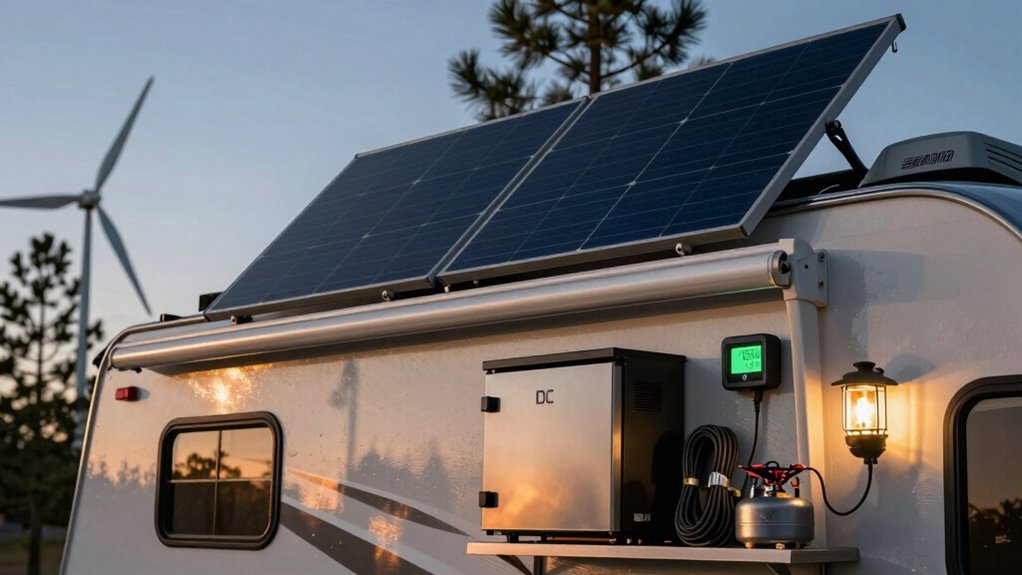
Swap out those power-hungry incandescent bulbs for LEDs and cut lighting energy use by up to 90%. This simple switch helps conserve power when boondocking, keeping your rig bright without draining your battery faster than a kid emptying a juice box.
Run energy-efficient appliances and use smart battery monitors to track your power usage in real time. These tools help you stay in control and extend your off-grid runtime significantly.
Let your solar panels soak up every available sunbeam to maximize charging potential. Every bit of sunlight converted means less reliance on stored battery power.
When possible, ditch the air conditioner, unplug unused gadgets, and cook with propane instead of electric appliances. These habits help conserve power when boondocking and keep your energy demands low.
Use LED Lighting Instead of Incandescent Bulbs
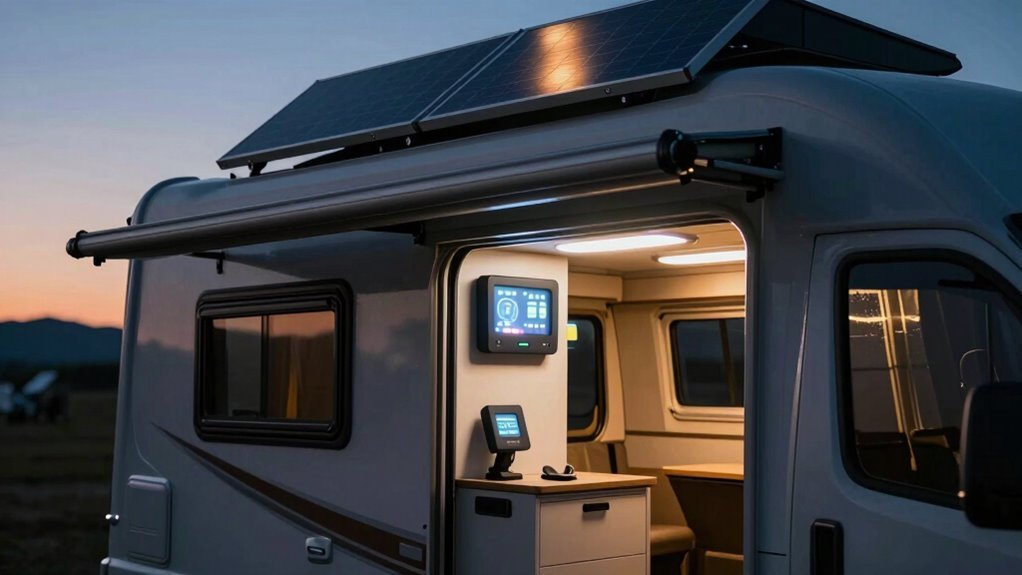
While you’re out enjoying the quiet of nature during your boondocking adventures, the little things—like lighting—can make a big difference in how long your power lasts.
Swap out those power-hungry incandescent bulbs for LEDs, and you’ll stretch your battery life like a stretchy campfire marshmallow.
LEDs use up to 90% less energy and turn almost all that power into light, not wasted heat.
They last 25 times longer, so you won’t be replacing them every other week—nice, right?
At just about two bucks each now, they’re cheap, super efficient, and way smarter than old bulbs that basically double as mini heaters.
With LEDs, you get bright, focused light exactly where you need it, without draining your juice.
You’ll laugh at how little electricity they sip compared to the old energy guzzlers.
up to 90% less energy than incandescent.
Brighten your rig, not your electric bill—your battery will thank you through the night.
Invest in Energy-Efficient Appliances
You’ve already slashed your lighting load with LEDs, so why stop there—let’s supercharge your whole setup with appliances that sip power instead of guzzling it.
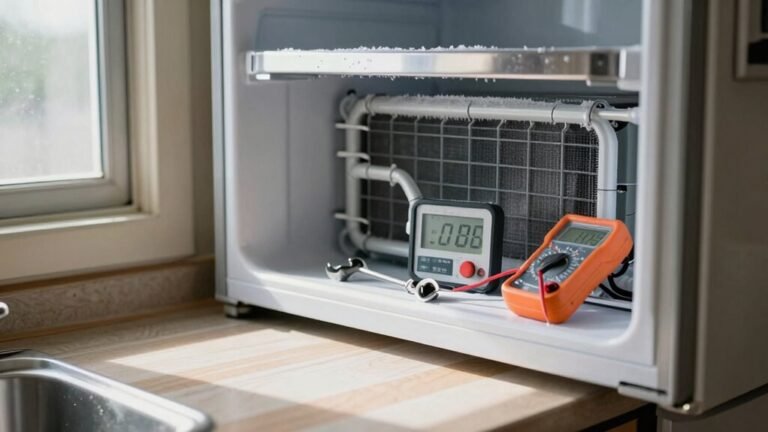
Swap your clunky RV fridge for a residential model, and you’ll save serious juice—some use less than 20 watt-hours a day.
Plus, no more worrying about altitude messing with cooling!
Pair it with a lithium battery, and you’ve got a lightweight powerhouse that lasts way longer than old-school lead-acid.
You can drain it completely without harm—talk about freedom!
Solar arrays love these efficient combos, recharging batteries fast under desert sun or even cloudy skies.
Even your furnace and pump run smoother when your system isn’t strained.
Think of it like upgrading from a gas-guzzler to an electric sports car—same ride, way smarter.
You’ll boondock longer, sleep easier, and maybe even impress a neighbor or two—quietly.
Upgrading to lithium batteries significantly extends your off-grid capability and pairs perfectly with energy-efficient appliances.
Monitor Battery Levels Regularly
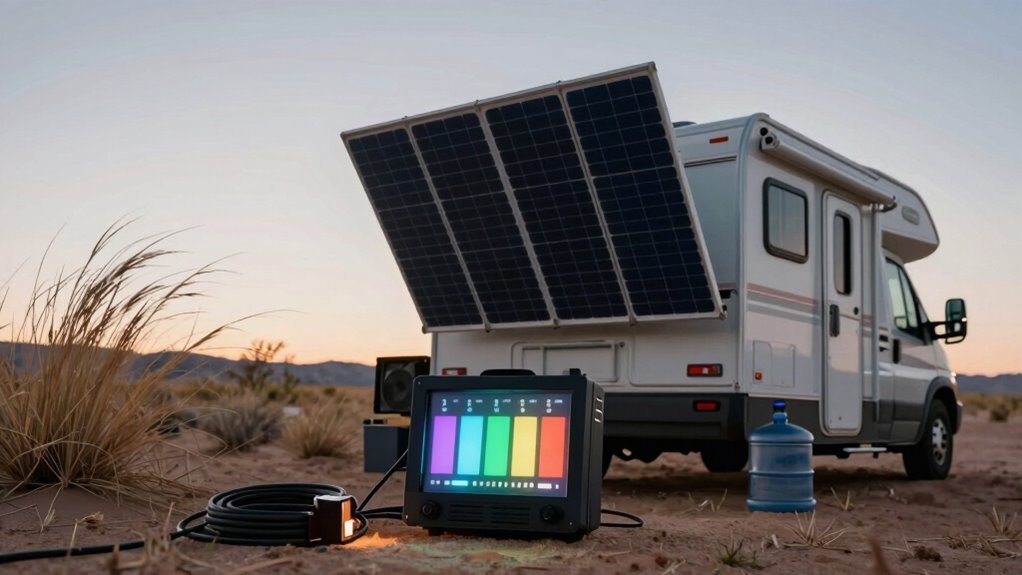
Keeping an eye on your battery is like checking your phone’s battery in the middle of a crucial game—suddenly, everything depends on that little percentage! You’ve got to know what’s happening down in your battery bank, or you’ll risk a full blackout mid-coffee-brew.
With a good monitor, you’ll track voltage, amps, and state of charge easily—knowing exactly how much juice you’ve got left.
Devices like the Victron BMV-712 or Expion360 give real-time updates, so you can laugh, not panic, when the fridge kicks on.
Most monitors install quickly with a shunt and a few wires, and some even send alerts to your phone.
You’ll love seeing trends, setting low-voltage alarms, and stopping deep discharges before they wreck your battery.
Plus, watching your daily usage helps you plan longer stays off-grid.
Many models, like the Victron BMV-712, offer Bluetooth connectivity via VictronConnect, making it easy to monitor from your smartphone.
Stay powered, stay smart, and never get caught in the dark again!
Maximize Solar Panel Efficiency
How’s your sun game looking? If you’re relying on solar while boondocking, it’s time to level up.
Start with monocrystalline panels—they’re sleek, efficient, and pack a 22-23% punch.
Want more juice? Try bifacial panels that grab sunlight from both sides, especially over shiny surfaces.
Keep panels free from shade-causing trees or vents, and thank half-cut cells for holding strong with 50% output, even in the shade.
Point them south, tilt around 30 degrees, or adjust seasonally for best results.
Use apps to nail your ideal angle, and consider adjustable mounts—or go full geek with solar trackers for up to 45% more power.
Clean panels monthly with a soft cloth—yes, dust bunnies are efficiency killers.
Pair MPPT controllers and smart monitoring to squeeze out every drop.
You’ve got this—sunshine’s basically free fuel, after all!
Limit Air Conditioner and Heater Usage
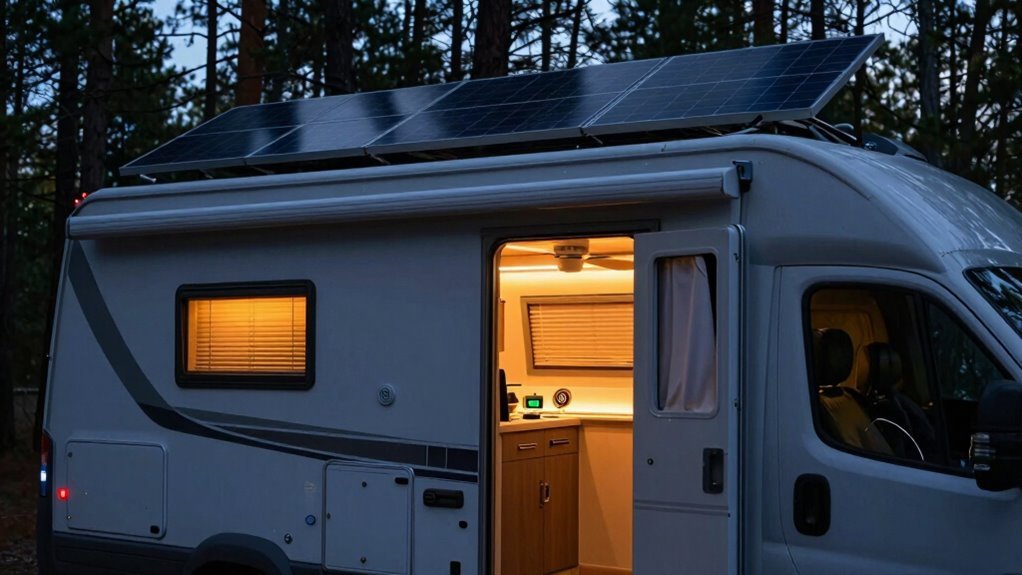
Sunshine might be your power partner, but when it comes to keeping your RV cozy or cool, your air conditioner and heater can gobble up that hard-earned solar juice faster than you can say “heatwave.”
Let’s face it—your AC is the energy hog of the RV world, especially when that 15,000 BTU unit kicks on with a startup surge that makes your inverter blink in panic.
Running it for eight hours can guzzle 12,000 watt-hours, yikes!
Even smaller units pack a punch, so size matters—literally. A 10,000 BTU model sips power compared to its beefy cousins.
Keep filters clean, seal leaks, and shade your rig to cut down runtime.
Try a mini-split—it’s like AC on a diet.
And hey, crack a window, grab a fan, or wear a sweater.
Your battery bank will thank you when the sun dips low and your power stays strong.
Unplug Devices When Not in Use
Draining your battery without even trying? Yep, that’s vampire power sneaking in. Your chargers, WiFi router, and leftover gadgets suck juice even when off—up to 0.56 kWh/day for a router!
Together, these phantom loads add up fast, like leaving 28 LEDs on all night. And with just a 100 amp-hour battery, every watt counts.
But here’s the easy fix: unplug devices when not in use. Seriously, just yank the cord or flip the switch. It’s the simplest way to stretch power and extend your boondocking from 2 to 7 days.
Skip standby mode, turn off the inverter for small electronics, and do a quick energy audit.
You’ll spot sneaky drains and keep fans, pumps, and lights running longer.
With solar? You’ll gain 20% more usable power.
Cook With Portable or Propane Stoves

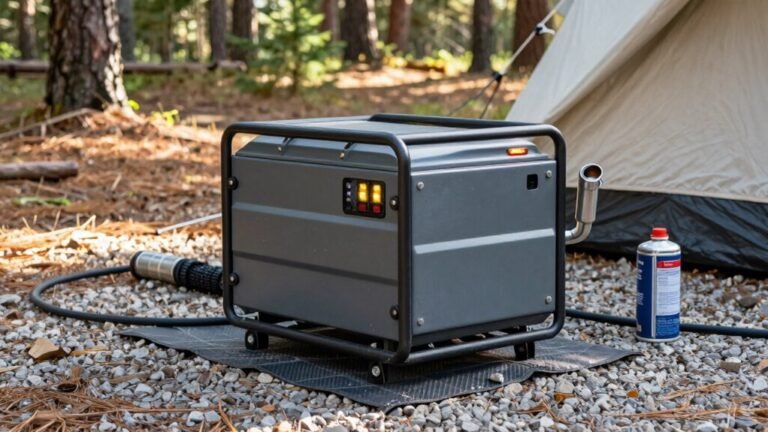
Fire up your next meal the smart way—skip the power drain and reach for a portable or propane stove.
You’ll save precious battery life while still whipping up a great meal.
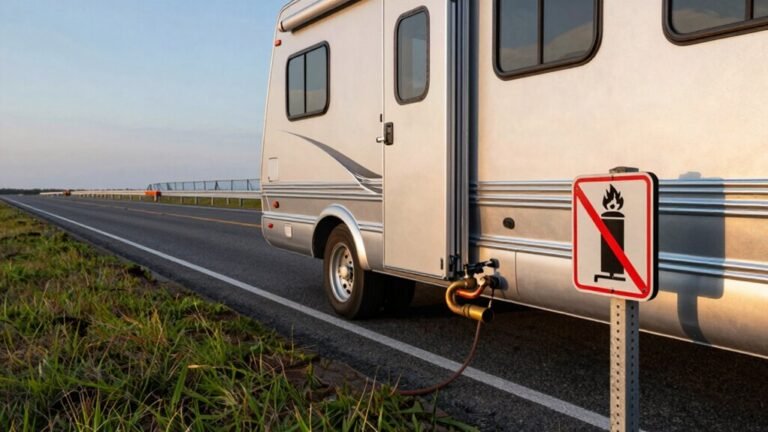
Unlike induction stoves that gulp 1,500 watts, propane runs without touching your electrical system—perfect when sun’s low or clouds roll in.
Toss smoky chili outdoors or simmer stew inside with a well-vented setup.
Those little green bottles? Super portable, and hey, no cords or solar panels needed.
Sure, induction’s efficient and boils water fast, but it demands serious power and sunny skies.
Propane laughs at wind, cold, or elevation.
Need a quick refill? Top off your cylinder from a big tank—no hassle.
Plus, you avoid cooking in a sauna thanks to no extra indoor heat.
Light it, cook, enjoy—just keep flames clear and airflow fresh.
Your batteries will thank you, and so will dinner!
Charge Electronics Strategically
How’s your phone holding up when the grid’s miles behind you?
Charge it in the morning to grab that fresh solar boost from overnight battery storage.
You’ll stretch every watt by syncing charges with peak sun—around midday, when panels are soaking up serious power.
Don’t dump all your juice at once—stagger charging so your devices aren’t all sucking power at sunset.
Grab a beefy power bank or portable station (bonus: it doubles as a jump starter).
Foldable solar panels? Perfect for charging on the move or tossing in a backpack.
Plug into your 12V car outlet while driving—free power while you cruise!
Dial down brightness, flip on airplane mode, and skip the 4K videos.
Every bit counts, and soon, you’ll be the boondocking battery wizard your friends envy—the one who still has juice to spare.
Frequently Asked Questions
How Long Can I Boondock on a Single Battery Charge?
You can boondock 1–3 days on a single battery charge, depending on your habits and the sun.
With a 12V deep cycle battery and a 200W solar panel, you’re golden from sunrise to bedtime—especially if you’re outside a lot and keep power use light.
Think lights, phone charging, maybe a fan.
Push it too hard, though, and your battery might tap out early—like a phone at 1%!
Can I Run a Microwave Off-Grid Without Solar?
Yeah, you can totally run a microwave off-grid without solar—you’ve got options!
Just hook it up to a beefy battery bank or fire up a generator.
A compact 700W model sips power, so you won’t drain your setup fast.
Just keep snacks short and sweet, unless you’re okay with your battery napping before you do!
Is It Safe to Boondock With a Lithium Battery in Cold Weather?
Yes, you can sleep soundly knowing your lithium battery won’t bail on you like a scared squirrel in a snowstorm.
It’s built tough, handles the cold like a champ, and keeps humming even when Jack Frost shows up.
The smart BMS’s got your back, preventing over-drain, while the iron-phosphate core stays stable and safe—no fireworks, just warmth and power when you need it most.
What’s the Best Way to Store Batteries When Not in Use?
You’ve got this—just store your batteries fully charged and nice and clean.
Pop them in a dry, cozy spot above freezing, like a basement, and slap on some dielectric grease to keep corrosion away.
Use a smart charger to maintain charge without overdoing it, and if it’s chilly out, wrap them in a battery blanket—think of it as a cozy sleeping bag for your power pack!
Are Power Converters Necessary for Boondocking With Solar Panels?
You bet they’re necessary—call them the unsung heroes of your solar setup!
Without a converter, your solar power’s just lounging around, useless.
You’ve got panels pumping out DC power, but your fridge and phone? They speak AC.
So yeah, grab a good inverter charger—it’s like the translator at your electric party, making sure everyone gets along.
No converter, no chill.
And honestly, no power.
Conclusion
You’ve got this! Every LED bulb, every unplugged charger, every sunny boost to your panels—it all adds up like high-fives from Mother Nature. Think of your rig as a power-saving superhero: small changes, big impact. Skip the A/C tug-of-war, cook on propane, and charge your phone like it’s a precious battery-powered pet. You’re not just saving juice—you’re mastering the wild, fun art of boondocking magic. Pow!
References
- https://www.modern.place/led-trends-amp-stats-for-2025-and-beyond/
- https://solartechonline.com/blog/how-much-electricity-led-light-bulb-use/
- https://www.ledlightingsupply.com/blog/led-lighting-statistics-to-know-in-2022
- https://docs.nrel.gov/docs/fy24osti/86100.pdf
- https://www.led.com/inspiration/8-advantages-of-led-lighting
- https://www.energy.gov/energysaver/led-lighting
- https://info.usled.com/benefits-of-led-lighting
- https://www.energystar.gov/sites/default/files/asset/document/LBR_2017-LED-Takeover.pdf
- https://www.eia.gov/todayinenergy/detail.php?id=51858
- https://www.microair.net/blogs/news/rv-boondocking-best-ways-to-power-your-rv