Choosing a Domicile State for Full-Time RVers
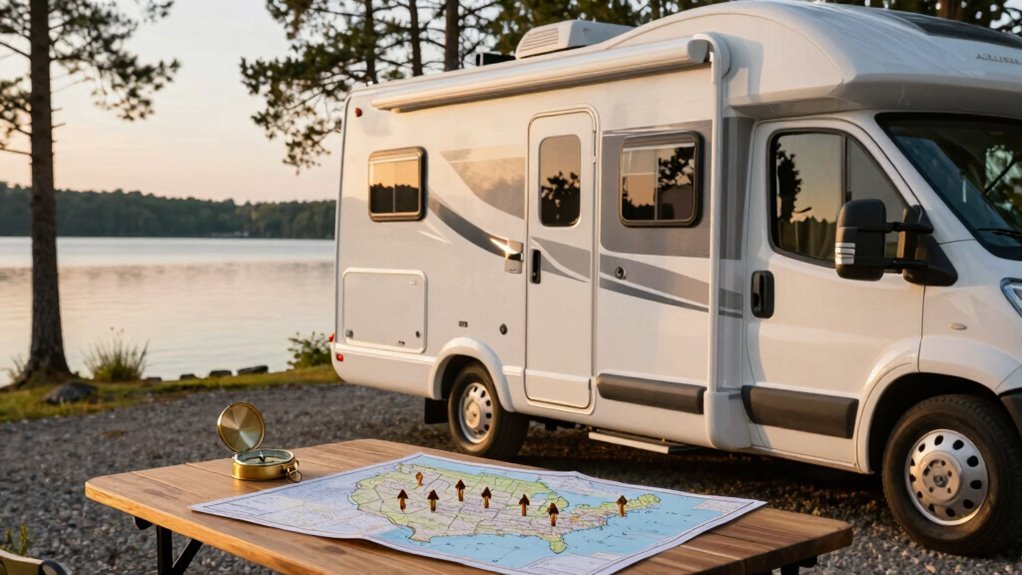
You’re free to roam, but you still need a home base—and picking your domicile state is a smart move that saves cash and hassle. Choosing a domicile state as a full-time RVer allows you to establish legal residency for taxes, vehicle registration, and voting.
Choose a no-income-tax state like Florida, Texas, or South Dakota, where you can claim residency even while traveling. These states are popular among full-time RVers for their favorable tax policies and flexible residency requirements.
Just get a mailing address, update your license, and file your taxes there. It’s easier than herding cats, and way more rewarding. Stick around—there’s a whole roadmap to making it work seamlessly.
Understanding Domicile vs. Physical Location

Ever wonder how you can be living out of a suitcase in twelve states a year and still have a legal home?
That’s where domicile comes in—it’s not where you’re parked this week, but where your roots legally grow.
Unlike a simple residence, which is just a place you sleep tonight, domicile means you’ve picked a home base and plan to stick with it.
You can bounce from Florida to Oregon to Maine, but as long as your heart (and paperwork) points to one state, that’s your spot.
Think driver’s license, voter registration, tax returns—those little clues tell the world, “Hey, I live here… kind of!”
Physical presence matters, sure, but intent matters more.
Domicile combines residence and intent to remain.
Key Factors in Choosing a Domicile State
How do you pick the perfect home base when your actual home has wheels and you’re rarely in one place long enough to unpack?
You’ll need a legit physical address—no P.O. boxes allowed—but mail-forwarding services can help.
Get a local driver’s license, register your RV, and insure it there, since these steps create legal ties.
Pick a state where you can actually meet residency rules, even if you’re just visiting now and then.
Open a bank account, register to vote, or keep doctor appointments there to build real connections.
Some places even let you use campground receipts as proof you’ve been around.
File a residency affidavit if needed and hang onto records of your trips.
It’s part paper trail, part game of convincing the system you’re serious—think of it as adult RV life hackery with very important paperwork.
One smart move is signing up for a mail forwarding service to maintain a consistent address for official purposes.
States With No Income Tax for RVERS

You’ve got your wheels, your address, and your paper trail in order—now let’s talk about one of the sweetest perks of picking the right home base: keeping more of your hard-earned cash.
Zero state income tax? Yes, please!
- Florida, Texas, and South Dakota are RVer favorites—no income tax and low fees mean more money for adventures (or tacos—no judgment).
- Alaska, Nevada, Wyoming, and Washington also skip income tax, though local sales taxes might surprise you like a flat tire on Day 1.
- Tennessee and New Hampshire only tax dividends and interest, so if your job isn’t passive income, you’re likely off the hook.
- South Dakota rolls out the red carpet with just one night needed to claim residency—easier than assembling IKEA furniture.
- Texas gives you no income, estate, or inheritance tax—basically a financial hug for nomads.
Choose smart, keep more cash, and let your wallet breathe.
Establishing domicile requires deliberate intent, and simply spending time in a state can support your claim—South Dakota, for instance, recognizes one night’s presence as sufficient for initial residency under certain conditions.
Residency Requirements and How to Establish Domicile
Setting down roots without planting a flag in the ground—that’s the RV life magic.
You can claim a legal home even while roaming, as long as you show intent and follow the rules.
Pick one state as your domicile—it’s your anchor for taxes, voting, and your license.
You’ll need to prove you’ve been there, like scoring a receipt from a South Dakota overnighter or getting two pieces of mail in Florida.
Texas? Hang out 30 days.
Nail down a mail-forwarding address, then swap your license and register to vote.
File a notarized affidavit where required—it shouts, “I mean it!”
Sure, jury duty might come knocking, but you’re free to roam.
A little paperwork and a short stay unleash big freedoms.
Boom—you’re officially rooted, minus the roots.
Impact on Vehicle Registration and Titling

Where do you hang your license plate when home doesn’t have a street address?
As a full-time RVer, your domicile state shapes how you register and title your rig—so choose wisely.
- Florida and South Dakota let you renew online, skip annual inspections, and avoid DMV headaches
- Texas wants an inspection, but it’s a one-and-done deal for registration
- South Dakota adds a 4% excise tax on first registration, but yearly renewals are cheap
- California? Be ready for extra forms like the REG 256A and more paperwork at every turn
- You’ll need proof of ownership, ID, and your rig’s exact dimensions—yes, down to the inch!
Pick a state that keeps it simple, saves you cash, and lets you hit the road without red tape weighing you down.
Insurance Considerations by State
How’s this for a twist? Your choice of domicile doesn’t just affect your address—it swings your insurance costs big time.
South Dakota often means cheaper RV and auto insurance, while Florida? Sky-high premiums, even with its perks.
Texas lands nicely in the middle.
But don’t pack your bags yet—always get quotes from all three before deciding.
Health insurance varies too: Florida offers more options, especially for under-65 buyers, while South Dakota’s choices are slim.
Need Blue Cross? Benefits differ by state.
And get this—registering your vehicle in Florida means trips back home, but South Dakota lets you do it by mail.
Nevada’s great for asset protection, but does it fit your full-time life?
Bottom line: compare every coverage, everywhere.
Your wallet will thank you later—promise!
Voting and Legal Rights on the Road
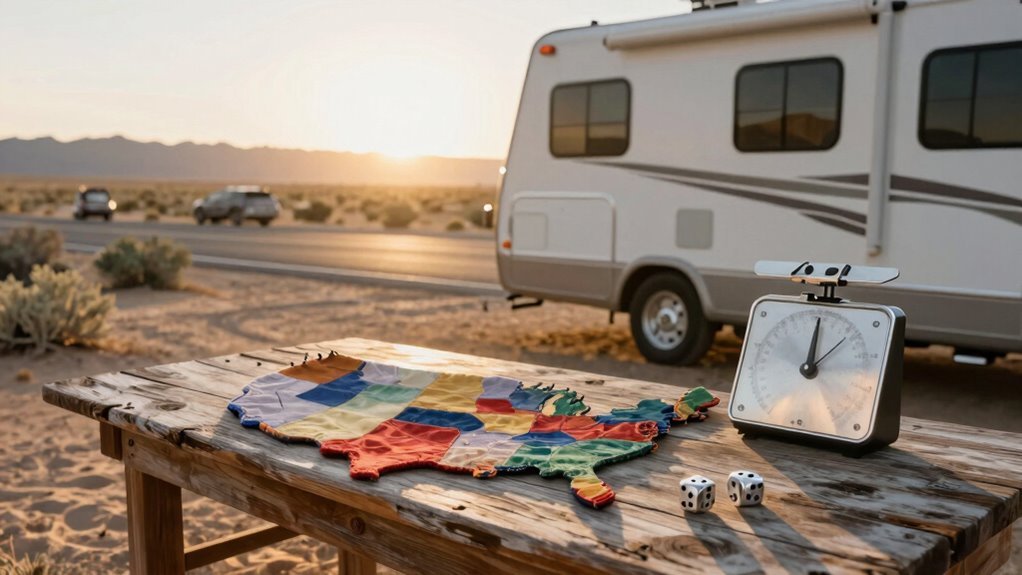
You’ve sorted your insurance, picked your perfect domicile state, and hit the open road—now let’s make sure you can still have a say in who’s running things back home.
- Pick one domicile state—you can’t vote in two places, even if you wish you could teleport!
- Use a real address (yes, a friend’s house counts) for mail, licenses, and registration to lock in your voting home.
- Sign up for absentee voting; most states let you do it online with just a few clicks.
- Some states mail ballots to everyonelucky you if you’re in Oregon or Colorado!
- Watch out for tricky laws—some places want extra proof just to make life interesting.
Stay registered, stay informed, and keep your ballot as packed as your RV—your vote still matters, even when you’re miles from “home.”
Maintaining Domicile While Traveling Full-Time
Even if your home has wheels and you’ve chased the sun across state lines, you can still plant legal roots without putting down permanent ones.
You’ve picked your state—now keep it solid.
Just renew licenses and registrations on time, even by mail or online.
Use a mail-forwarding service as your official address; it counts!
States like South Dakota and Florida don’t demand long stays—just proof of intent.
One night in Texas? That’s enough to start.
Keep insurance, voter registration, and bank accounts in your domicile state.
Update them regularly to show consistency.
A simple affidavit can shout, “This is my legal home!” even if you’re in Montana this week and Arizona next.
No inspections, no hassle.
And hey, no income tax in some states? Yes, please.
You’re free to roam, legally anchored and financially smart—like a nomad with a very clever GPS.
Frequently Asked Questions
Can I Have a PO Box in My Domicile State?
Yeah, you can totally have a PO box in your domicile state—it’s great for snagging USPS mail, even when you’re miles down the road!
Just don’t count on it for everything.
UPS and FedEx usually skip PO boxes unless you pay extra, and most states won’t let you use one for your license or car registration.
Think of it like a trusty mailbox, not your official address.
Do I Need a Job to Establish State Residency?
No, you don’t need a job to establish state residency—your dream of hitting the open road isn’t chained to a paycheck.
Think of your RV as a wandering bird; it nests where it chooses, not where it earns crumbs.
States like South Dakota or Texas care about your intent, not your income.
Just pick a home base, register your wheels, and let freedom be your full-time gig.
Who knew paper trails could feel this fun?
Can I Change Domicile States Mid-Year?
Yes, you can change domicile states mid-year—no time machine needed!
Pack up, head to your new state, and start making ties fast.
Spend over 183 days there, grab a license, register to vote, and open a local bank account.
Ditch old ties like stale snacks.
Show real intent, keep records, and boom: new home base, even before year-end.
Voilà—fresh start, no waiting!
Will My Domicile Affect My Cell Phone Plan?
Whoa — chill, you’re good!
Your domicile won’t touch your cell phone plan.
Seriously, carriers like Verizon, T-Mobile, and AT&T don’t care where you’re “officially” parked.
You’ll snag the same data, hotspot perks, and coverage no matter what state claims your mailbox.
Pick Texas, Florida, or South Dakota? Fine!
Just compare signals, grab a solid plan, and keep scrolling, streaming, and roaming — your phone’s got your back, not your paperwork.
Can I Use a Friend’s Address for Domicile?
Yeah, you can totally use a friend’s address for your domicile—no need to buy property or rent!
Just make sure it’s a real street address, not a PO box, and that your friend’s cool with handling your mail.
You’ll likely update licenses and registrations there, so pick someone reliable.
It’s like having a home base without roots. Just don’t ghost them—stay in touch, and maybe bring snacks. Win-win!
Conclusion
You’ve got this! Picking your domicile state is like choosing your favorite campsite—it’s all about what fits *you*. Zero income tax? Easy rules? Great insurance rates? Score! Just stay consistent, keep your paperwork tidy, and don’t let red tape rain on your parade. Hit the road with confidence, because you’re not just passing through—you’re living large, one state at a time. Sweet ride!
References
- https://domicile.uslegal.com/distinctions-between-domicile-and-residence/
- https://legal-resources.uslegalforms.com/d/domicile
- https://www.pcslawnyc.com/blog/2025/july/domicile-vs-residence-in-estate-planning/
- https://www.globalcitizensolutions.com/domicile-vs-residence/
- https://www.law.cornell.edu/wex/domicile
- https://agentsync.io/blog/insurance-101/domicile-vs-resident-vs-home-state-definitions
- https://www.newedgewealth.com/home-is-where-the-domicile-is/
- https://ceritypartners.com/insights/domicile-vs-tax-residency-what-is-domicile-and-how-do-you-change-it/
- https://barneswalker.com/legal-glossary/d/domicile/
- https://rvshare.com/blog/state-residency/