Preventing Ants and Pests During Summer RV Trips
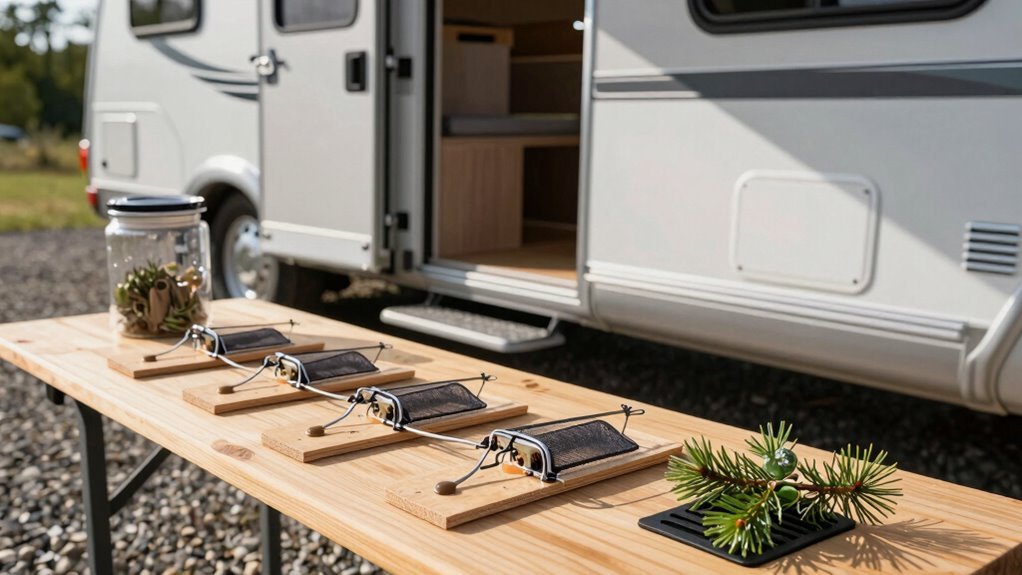
Seal cracks with foam or caulk, and check slides and undercarriage for sneaky gaps—ants love a free ride. Cleaning every crumb and storing food in hard containers helps prevent ants and pests during summer RV trips.
Toss trash in sealed bins away from your sleeping spot to avoid attracting unwanted guests. Trim bushes around your RV; pests hate open spaces more than bad Wi-Fi.
Keep wheels clean and skip the firewood haul—those logs hide uninvited guests. You’d be surprised what else stops bugs in their tracks.
Inspect and Seal Entry Points

Taking charge of your RV’s defenses starts with a good detective game—because those sneaky pests aren’t breaking in, they’re sneaking in.
Grab a flashlight and play RV sleuth: check corners where walls meet, inspect gaps around plumbing or wiring, and peek under cabinets.
Those cute little storage drawers? Open ‘em—sunlight shining through a crack means pests can too.
Slide-outs often have worn seals, so give ‘em a close look.
Use expanding spray foam for big gaps, silicone caulk for tiny cracks, and copper scrub pads near wires—rodents hate chewing those.
Steel wool works wonders in pipe spaces, and thin metal or wood sheets fix floor gaps.
Don’t forget the underbelly—seal plumbing voids and check landing gear.
Trim foam after it dries, swap out old sealant, and block rodent trails with screen or copper.
Mice can enter through openings as small as a dime-sized hole, so even the tiniest gap needs attention.
A few minutes now saves you from uninvited roommates later.
Stay one step ahead, and your RV stays pest-free!
Clean Thoroughly Before Hitting the Road
Now that you’ve sealed up every sneaky entry point and blocked the backdoors pests love to exploit, it’s time to turn your RV into a five-star fortress they wouldn’t dream of crashing.
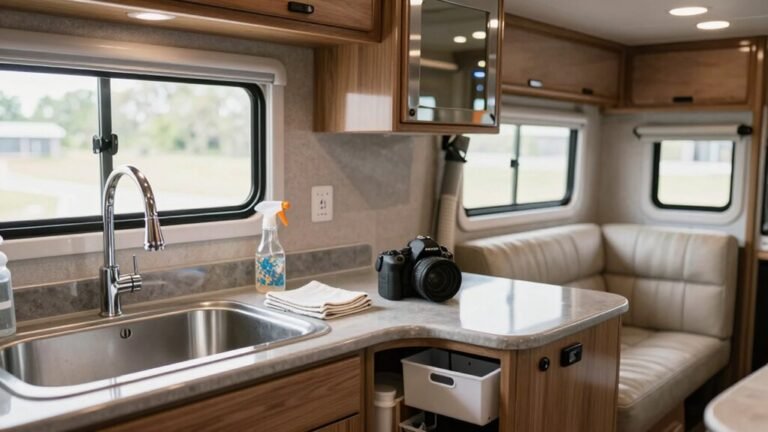
Toss out trash and leftovers—those sneaky crumbs in the pantry or greasy stovetop are an open invitation.
Empty pet bowls, rinse trash cans, and wipe every sticky spot.
Vacuum floors, cushions, and corners where snacks love to hide, then dust shelves, vents, and dashboards like you’re prepping for a spa day.
Don’t forget ceiling vents—those dusty cobwebs aren’t decor.
Strip linens, wash curtains, and shake out rugs—even the fluffiest throw can carry tasty morsels.
Wipe down kitchens and bathrooms with disinfectant, especially damp spots pests adore.
Open windows, let fresh air blast through, and change those filters.
A clean RV isn’t just cozy—it’s war paint against uninvited guests.
Regularly clean air filters & vents to prevent dust buildup that can attract pests and reduce indoor air quality.
Store Food in Airtight Containers
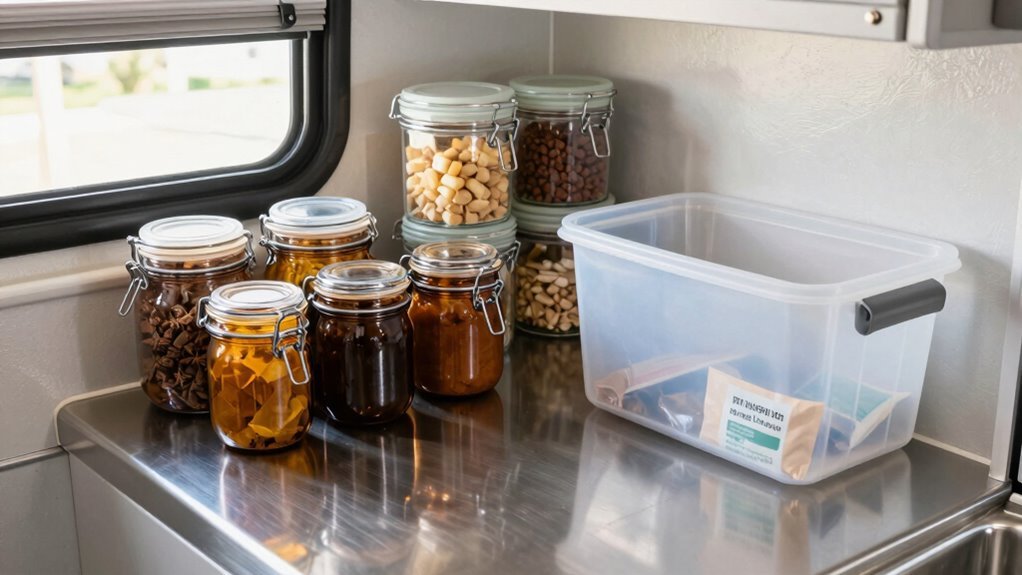
Sealing your snacks like a pro isn’t just for keeping chips crispy—it’s your secret weapon against six-legged squatters.
Use hard plastic or glass containers with tight lids to keep food safe and rodents out; soft plastic bags won’t cut it—they’re chew toys for mice!
Once you open a package, dump it into a sealed container—yes, even that half-used bag of dog food.
Those teeny crumbs? A five-star buffet for ants and mice.
Go for heavy-duty, stackable bins with screw-on lids—they save space and lock out pests.
Clear containers let you spot your snacks fast, no guessing games.
And while glass keeps food fresher longer, it’s heavy and breaks easily, so most RVers stick with tough plastic.
Airtight storage isn’t just smart—it’s your pest-proof promise.
Do it right, and you’ll dodge bugs, spoilage, and a whole lot of hassle on your summer getaway.
Store in high cabinets with well-fitting doors to prevent easy access from floor-level entry points.
Keep Your Exterior Trash Contained
Tame the trash tornado before it takes over your campsite—keeping your exterior waste contained isn’t just tidy, it’s a full-on defense strategy against curious critters and uninvited bug brigades.
Pop your trash in sealed, covered bins to lock in odors they’d love to follow.
Use collapsible cans with lids or rugged bear boxes in the wild—they’re like Fort Knox for food scraps.
Position bins near high-traffic spots so you’re not trekking across the site, but keep them away from sleeping areas.
Opt for dual-compartment bins to split recyclables and general waste—it’s easy and eco-friendly.
Look for models with retention rings and waterproof walls to stop leaks and rips.
Bonus points if it folds flat when empty!
Regular disposal runs mean less rot, fewer smells, and way fewer party-crashing ants.
Keep it smart, keep it sealed, and let the bugs stay lost.
Trim Vegetation Around Your RV Site

You’ve nailed the trash situation—sealed bins, smart placement, no smelly invitations for bugs—so now let’s turn your attention to the green stuff creeping in around your campsite.
Dense bushes and low-hanging branches aren’t just nature’s decor—they’re pest highways!
Ants, spiders, and even rodents use them as cozy hideouts and free entry passes to your RV.
Grab your pruning shears and clear a 10–20 foot buffer—you’ll block sneaky invasions and cut off aerial bridges branches make.
Keep vegetation 3–5 feet from your RV, trim weekly, and toss the leaf litter.
It’s like decluttering, but for the wild.
You’ll reduce humidity, boost airflow, and make pests think, “Nope, not today!”
It’s easy, effective, and keeps your summer trip critter-free—because nobody wants uninvited guests crawling into their morning coffee.
Use Natural Repellents and Deterrents
Ever wonder how to keep ants from throwing a pool party in your RV’s snack cabinet? Skip the harsh chemicals and go natural!
Sprinkle food-safe diatomaceous earth around windows and entry points—it’s harmless to you but deadly to ants.
Mix equal parts vinegar and water in a spray bottle to wipe down trails; ants hate the smell and will scram.
Dab peppermint or tea tree oil on cotton balls and stash them in corners—ants can’t stand the scent.
Try a lemon and baking soda mix for extra punch.
Set borax and sugar baits nearby (just keep them away from pets!).
Ants take it home and share—sayonara, colony!
Rub Vaseline on cords or use citronella candles unlit when stored.
Seal gaps, stay clean, and guard your ride like a pro.
Your RV stays fresh, safe, and bug-free—no uninvited roommates allowed!
Check Wheels and Undercarriage Regularly
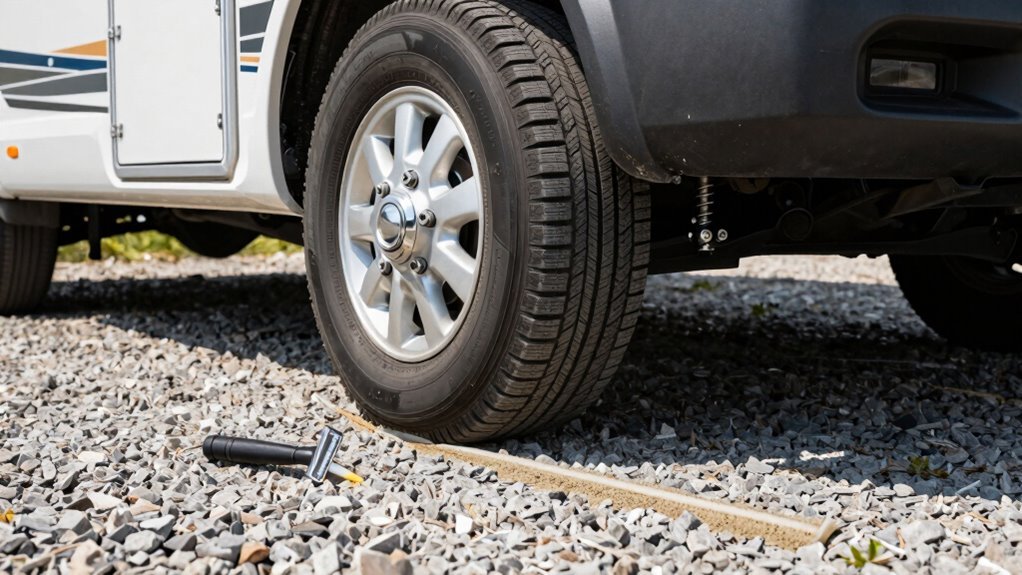
Okay, nearly every campout starts with smooth sailing—until you lift your RV’s skirt and find uninvited guests have already moved in.
Don’t panic—just roll up your sleeves and get down there every two weeks.
Check wheel wells, axles, and places where wires or pipes enter the chassis; rodents love sneaking through those spots.
See a gap? Plug it with steel wool or foam, then seal it with caulk or silicone.
Toss out leaves, dirt, or twigs scratching around the undercarriage—nobody’s inviting squirrels to nest under your kitchen.
Strap on wheel guards or skirting to block sneak attacks, and slap on mesh screens over vents.
Spray rodent repellent on tires, step feet, and hoses—they’ll hate the smell and stay away.
Mark your calendar with each inspection so you stay ahead of the trespassers.
A little elbow grease now saves a whole lot of “Ew, was that a nest?!” later.
Avoid Bringing Firewood Inside
Just because you gave the undercarriage a once-over doesn’t mean your RV is safe from stowaways—some hitchhikers don’t crawl in from below, they ride right in with you.
Bringing firewood inside your RV might seem cozy, but it’s basically rolling out a red carpet for bugs, rodents, and even tree-killing monsters you can’t see.
Skip the stress and keep your adventures pest-free with these smart moves:
- Buy firewood locally—within 10 miles of your campsite.
- Look for certified heat-treated wood with official seals.
- Gather downed wood on-site if the park allows it.
- Never take leftover wood home—it could be crawling with trouble.
You’re not just protecting your RV; you’re helping save forests too.
Think of it as being a camping hero—cape optional, but highly recommended.
Frequently Asked Questions
What Should I Do if I See Ants Inside My RV?
You spot ants in your RV? Don’t panic—you’ve got this!
First, wipe down counters and floors with Pine Sol to erase their hidden scent trails.
Then, seal all food in tight containers and clean up crumbs fast—ant spies hate empty kitchens.
Next, track where they’re sneaking in and squish those entry points with borax bait or a trusty insect spray.
Stay one step ahead, and they’ll pack up and leave!
Can Ants Damage My Rv’s Electrical System?
Yeah, ants can definitely wreck your RV’s electrical system—don’t let those tiny troublemakers fool you!
They sneak into tight spots, chew wires, and pack gunk into junction boxes, which can fry your power supply.
Imagine losing all 110V power because of a mini ant colony throwing a pool party in your inverter!
They’re not just annoying, they’re legit hazards, turning your cozy rig into a blackout zone overnight.
Are There Pet-Safe Pest Control Options for RVS?
You bet there are pet-safe pest control options for your RV!
Try peppermint or citronella oil—they repel bugs and smell great.
Toss in some cedar chips or bay leaves for extra protection.
Use diatomaceous earth around entry points; it’s safe for pets but tough on pests.
Seal gaps with non-toxic foam, and set humane traps out of paw’s reach.
Your furry copilot’ll stay happy, healthy, and itch-free—we’re keeping bugs on the outs, not your best bud!
How Often Should I Check for Pest Activity?
You should check for pest activity every three months, but hey, don’t just set it and forget it like a slow cooker chili.
Pair that schedule with surprise spot checks—especially before and after trips.
Peek in corners, sniff around sweet spills, and poke at suspicious crumbs.
Think of it as detective work, minus the trench coat.
Catching critters early keeps your RV happy, healthy, and way less creepy-crawly.
Do RV Pest Sprays Work on All Insect Types?
No, RV pest sprays don’t work on all bugs—sorry, they’re not magic!
They crush mosquitoes, flies, and ticks thanks to picaridin or DEET.
But ants? You’ll need bait traps.
Spiders? Try contact sprays.
Bed bugs laugh at most sprays, and termites want professional help.
Think of sprays as your first line of defense, not the whole army.
Mix in diatomaceous earth, pouches, and good cleanup for a pest-free win!
Conclusion
You’ve sealed the cracks, cleaned every crumb, and tucked food snug as a bug in a rug—now your RV’s a fortress, not a fast food joint for ants. Think of each tip as a shield, turning your summer adventure into a pest-free paradise. Nature’s calling, but the bugs can leave their calling cards at home. Roll on, fearless explorer, with snacks safe and peace of mind in tow!
References
- https://www.victorpest.com/articles/how-to-keep-mice-out-of-your-rv
- https://www.youtube.com/watch?v=ZyuIYfkZarU
- https://www.youtube.com/watch?v=BVkP-BonUQA
- https://www.mygrandrv.com/threads/newbie-pest-control-question.111703/
- https://camphappyacres.com/blogs/news/protecting-your-rv-from-rodent-damage-essential-tips-for-prevention-and-winterization
- https://rvforums.com/threads/help-need-to-close-access-points-to-mice.20758/
- https://reservety.com/20-step-checklist-to-sanitize-your-rvs-between-rentals/
- https://www.rvtravel.com/deep-clean-rv-storing-1730-2241/
- https://blog.campingworld.com/learn-to-rv/ask-an-expert-cleaning-and-disinfecting-your-rv-after-a-trip/
- https://www.beckleysrvs.com/blog/spring-rv-cleaning-prep-checklist-time-to-kick-the-dust-off/