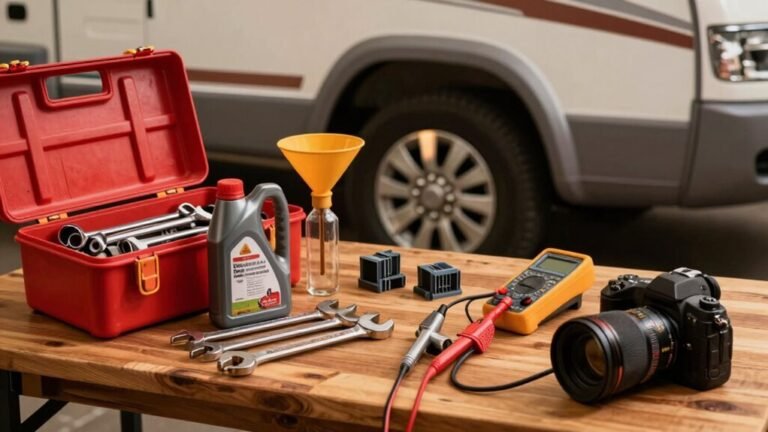
How to Lubricate Your RV’s Moving Parts
To lubricate your RV’s moving parts properly, start by wiping away dirt and debris so the lubricant can adhere cleanly. Applying the right type of lube keeps things running smoothly and prevents premature wear.
Use dry silicone spray on hinges, as it resists dust buildup and ensures quiet operation. For slide-out rails, apply white lithium grease to handle heavier loads and protect against moisture.
When you lubricate your RV’s moving parts, don’t overlook the axles—use 80W-90 gear lube for optimal performance. Latches work best with dry Teflon spray, which prevents gunk from sticking and makes them easy to operate.
Always clean each part before applying lubricant, then work it back and forth to distribute the product evenly. This routine keeps components functioning smoothly and eliminates annoying squeaks.
Identify Key RV Components That Need Lubrication
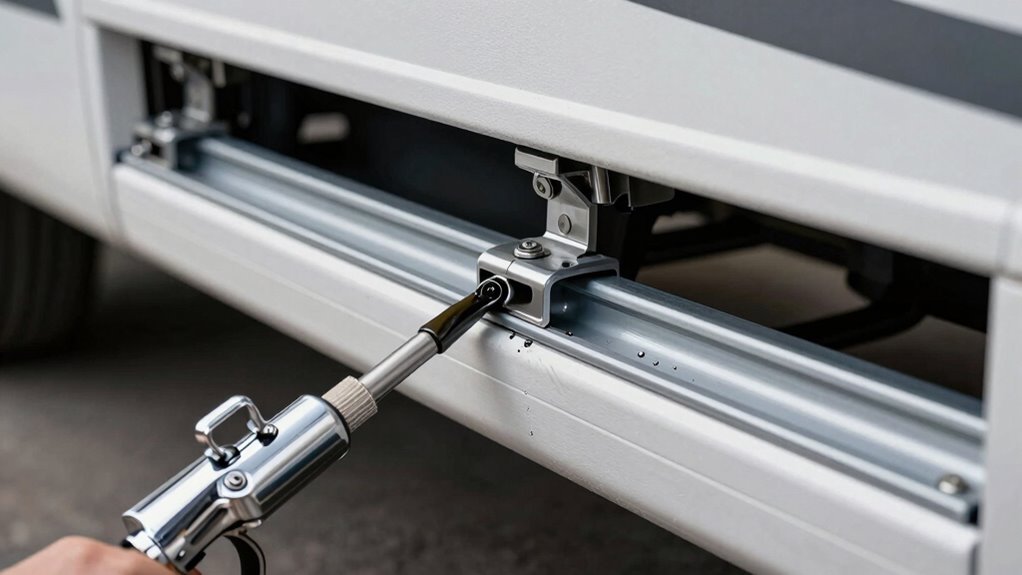
Keep your RV running smoothly by giving its moving parts the attention they deserve—lubrication is key, and knowing where to apply it makes all the difference.
You’ve got slide-outs that glide, hinges that sing, and jacks that lift—treat ’em right and they’ll sing back (without the squeaks!).
Focus on slide tracks—clean ’em first, then spray those rack-and-pinion spots.
Cable systems? Just hit the outside cables.
Don’t forget your hitch—grease the ball, latch, and those wiggly lynch pins.
Fifth wheel rails love a slick wipe of white lithium.
Jacks and stabilizers need love on screws, gears, and feet—extend ’em fully so nothing’s missed.
Door hinges, steps, and window tracks? A quick spritz keeps ’em smooth.
Awning arms and locks run better with a little lube too.
Think of it as spa day for your RV—every moving part gets pampered! Regularly removing dirt and grime helps form a protective barrier against rust and corrosion.
Choose the Right Lubricant for Each Application
Now that you know which parts of your RV are begging for a little TLC, it’s time to pick the perfect lube for the job—because not all goop is created equal.
For heavy-duty spots like axles and wheel bearings, grab an 80W-90 gear lube, or go synthetic like 75W-140 if you’re tackling extreme heat.
Most moving parts love NLGI 2 lithium grease—it sticks, shrugs off water, and handles heat like a champ.
Add moly for extra toughness.
If dirt’s a problem, spray on a dry lube like Roadmaster silicone—it won’t attract grime.
Hitting the coast? Marine grease keeps saltwater from ruining your trailer’s parts.
Need wide temps? Synthetic greases and 10W-30 oil keep things smooth in freezing cold or blazing heat.
And don’t forget high-temp grease for those sweltering desert runs.
Choose right, and your RV will thank you with fewer squeaks and way more smiles.
Regular maintenance includes checking and replenishing lubricants because lubricants do not last forever.
Prepare Your RV for Safe and Effective Lubrication
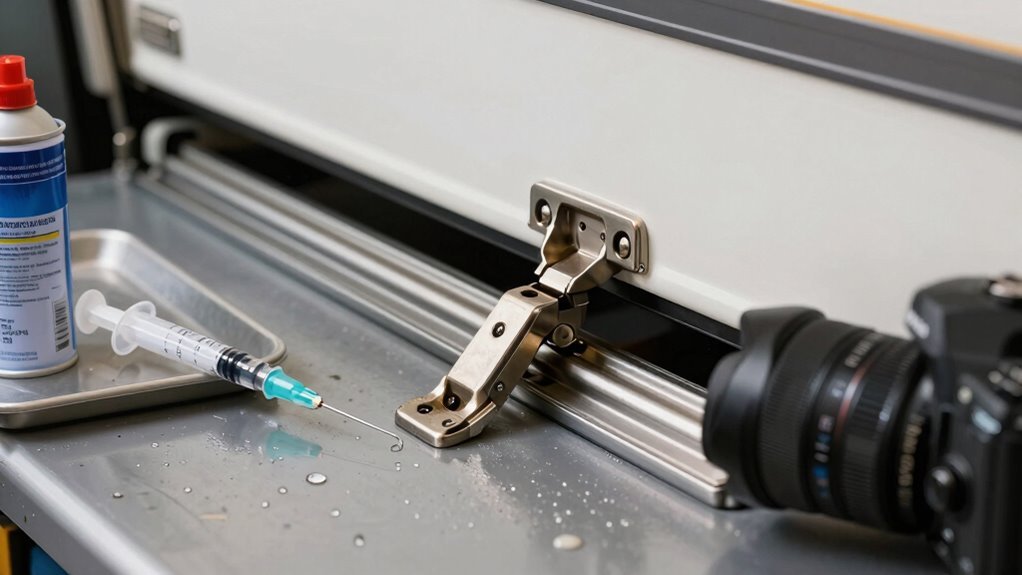
Before you start slathering grease anywhere, make sure your RV’s in the right shape for some hands-on pampering—safety and prep come first, because nobody wants a surprise leak or loose wire turning lube time into panic time.
Let’s get things shipshape with these quick must-dos:
- Double-check safety gear—test smoke detectors, CO sensors, extinguishers, and propane lines so you’re not fixing a fire with more fire.
- Inspect tires and undercarriage—look for cracks, leaks, or anything dragging that shouldn’t be.
- Top off fluids and battery juice—check oil, coolant, and battery water (if needed), then torque those lugs like a pro.
- Clean and protect—scrub the exterior, wax on, wax off (yes, really), and wipe grime from wheels and seals.
A little prep now means smoother rides—and fewer “uh-ohs”—later, especially since tire pressure issues are the most common cause of road breakdowns.
Apply Lubrication to Hinges, Latches, and Slide-Out Mechanisms
Once you’ve got your RV prepped and ready, it’s time to silence those squeaky hinges and stuck latches like a pro—with just the right slick, slippery touch.
Check your hinge type first—butt, piano, or spring-loaded—then hit the pivot points with a dry silicone or white lithium spray, depending on the material.
Wipe dirt away, apply a quick burst, and work it back and forth—boom, buttery smooth!
For latches and locks, skip the goopy oil; use dry Teflon or graphite so gunk doesn’t stick.
Slide-outs? Clean the rails first, then zap them with dry PTFE spray—no oily mess to attract trail grime.
Give the slide a few full in-and-out cycles so everything glides like it’s on ice.
And hey, if it still creaks, you’re not oiling a pan of lasagna—less is more!
Maintain a Routine Schedule for Long-Term Performance
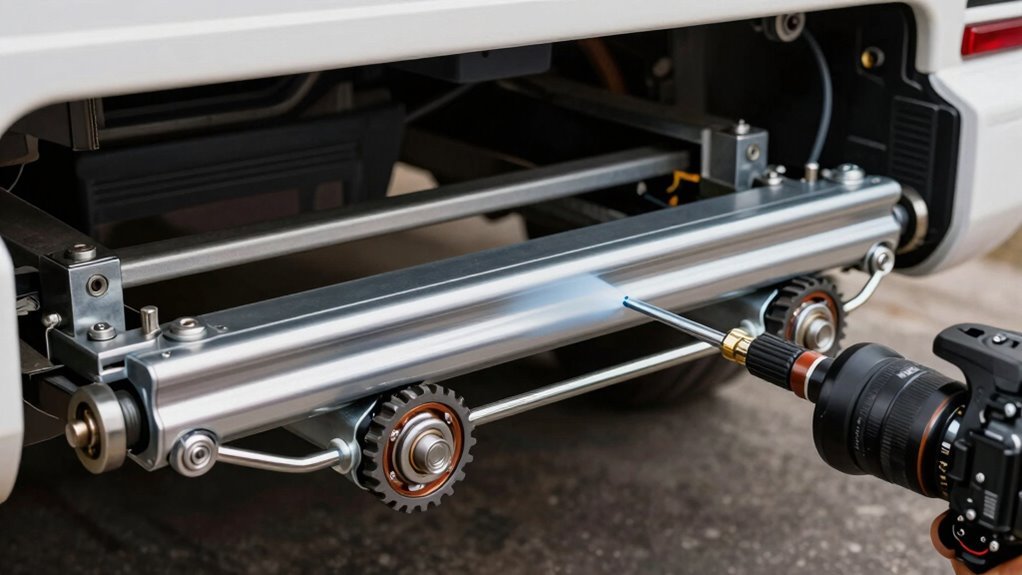
You just made those hinges whisper sweet nothings and got your slide-outs gliding like figure skaters—nice work! Now, let’s keep that momentum going with a solid routine. Staying on top of lubrication isn’t just smart—it’s your RV’s best friend for long-term happiness.
Think of it like a tune-up for your road-bound palace.
- Monthly: Check chassis points, tire pressure, battery, and AC vents—quick wins every 30 days.
- Seasonal: Spring prep and fall storage mean slide-outs, stabilizers, and generator love.
- Annual: Hit 12,000 miles or a year with pro checks on brakes, HVAC, and full chassis TLC.
- Pre-trip & Storage: Every outing or hibernation starts with lube checks—don’t skip it!
Stay consistent, avoid headaches, and let your RV roll smoother than your last karaoke cover.
Frequently Asked Questions
Can I Use WD-40 as a Long-Term Lubricant for My RV?
No, you can’t use WD-40 as a long-term lubricant for your RV—it dries out seals, attracts gunk, and wears off fast.
You’ll end up with sticky hinges, cracked rubber, and grime-clogged gears.
Think of it like using soda to fix a car engine—sounds sketchy, right?
Instead, grab a silicone-based lube or sprinkle talcum on seals.
Your RV will stay smooth, protected, and ready for adventure without the ick.
How Do I Lubricate RV Tires or Tire Components?
You don’t lubricate RV tires—they’re rubber, not hinges!
But you *do* keep ’em clean and protected.
Scrub them gently with soapy water, rinse, then dry thoroughly.
Now, here’s the fun part: shine them up with a UV-blocking dressing that’s free of harsh stuff like silicone or alcohol.
It’s like sunscreen for your tires—keeps ’em happy, crack-free, and looking fresh for the road ahead.
Is It Safe to Lubricate Electrical Connections in Slide-Outs?
No, you shouldn’t lubricate electrical connections in slide-outs—promise, it’s not a shortcut to genius status.
Grease can mess up conductivity and invite corrosion.
Plus, petroleum-based stuff? It’ll chew through insulation faster than a squirrel on espresso.
Stick to inspecting for frays or loose wires instead.
Use a voltmeter to check voltage, keep connections clean and dry, and save the lube for rails and mechanical bits.
Your RV will thank you—no sparks included!
Should I Lubricate the Rv’s Suspension System Myself?
You’ve got this—tackling your RV’s suspension lube job yourself is totally doable, like changing a tire with a little elbow grease and smarts.
Just clean those grease fittings first, pump slowly till fresh grease oozes out, and don’t skip the unlisted Zerk points.
Use the right grease for each part, go easy on the pressure, and you’ll keep your ride smoother than a jazz saxophone.
Can I Use the Same Lubricant on Rubber and Metal Parts?
No, you can’t use just any lubricant on both rubber and metal—doing that’s like putting ketchup on ice cream, well, some might try!
Stick to silicone-based lubes like 3-IN-ONE RVcare spray; they play nice with both.
Water-based emulsions work great too, protecting seals and metal tracks without gunking up.
Always check compatibility first—your RV will thank you with smoother rides and fewer ouch-moments down the road!
Conclusion
You’ve lubed the hinges, coddled the latches, and pampered the slide-outs—your RV’s moving parts are happier than a dial-up user on a fiber-optic connection. Sticking to a routine keeps everything running smoother than a disco ball at a Saturday night dance-off. Don’t wait for squeaks or groans; treat your rig like a classic car with a pulse. A little love goes a long way, trust me.
References
- https://koa.com/blog/lubricating-rv-slide-outs/
- https://www.youtube.com/watch?v=PEEl1Q8OGDU
- https://www.loveyourrv.com/lubing-my-fifth-wheel-trailer/
- https://www.youtube.com/watch?v=idxf3wM7ScA
- https://www.youtube.com/watch?v=DHYZcicb2eQ
- https://fmcadventure.com/2022/04/01/lubricate-key-moving-parts-in-your-rv/
- https://www.rvtechmag.com/tech/46_lubricants.php?pg=all
- https://familyrvingmag.com/2022/05/02/motorhome-lubricants-2/
- https://gosenergy.com/reliable-lubricants-for-recreational-vehicles/
- https://www.nirvc.com/blog/lubricants-for-your-motorhome/