Campfire Safety Tips for RV Campers
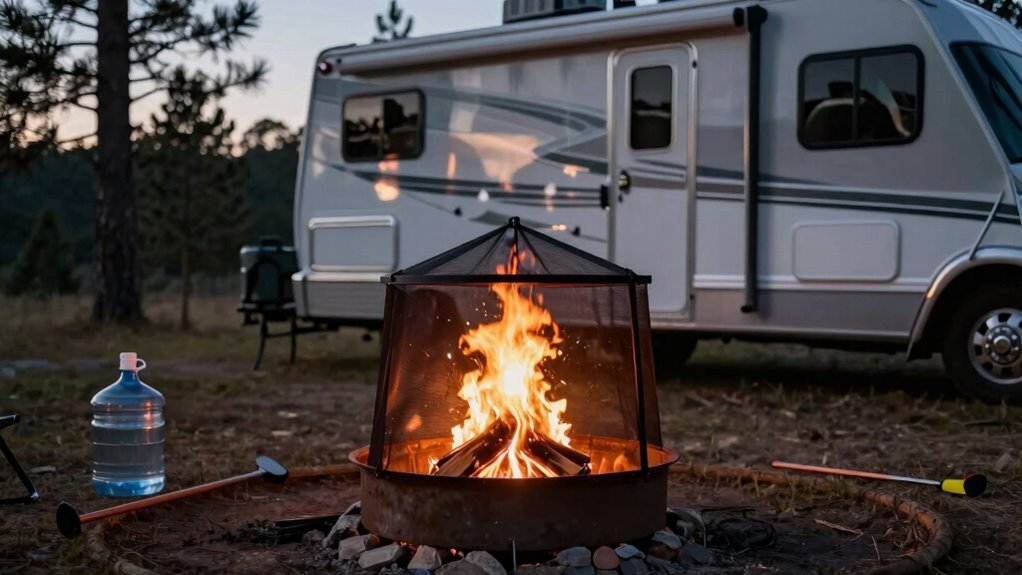
Campfire safety tips for RV campers are essential to ensure a fun and hazard-free outdoor experience. Always pick a flat, open spot at least 25 feet from your RV and use a designated fire ring to contain the flames.
Clear a 10-foot zone around the fire ring and store firewood at least 30 feet away to prevent accidental spread. Check local regulations before lighting up—permits may be required, or fires might be banned due to dry conditions.
Never leave a campfire unattended, and keep a bucket of water or a shovel nearby for quick control. Fully douse the flames, stir the ashes, and douse again until everything is cool to the touch before going to sleep.
Retract awnings and store propane tanks well away from the fire area to reduce risk. Following these campfire safety tips for RV campers means more s’mores, less drama—and peace of mind when you rest.
Choose the Right Location for Your Fire
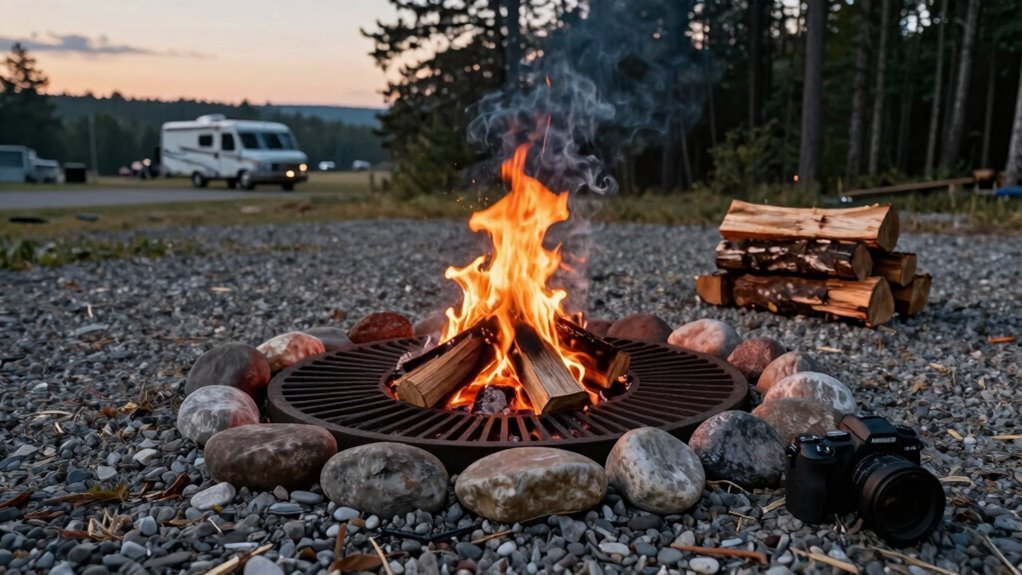
Right in a designated fire ring—no guesswork needed!
These ready-made pits keep flames where they belong and protect the land you love.
Always clear a 10-foot zone around it, removing leaves, grass, and sneaky twigs that might catch fire.
Think of it as giving your campfire a safety moat!
Keep the spot flat and far from overhanging branches—nobody wants a flaming pinecone rain.
Place your fire at least 25 feet from your RV (propane tanks aren’t fans of campfires).
Store firewood 30 feet away, so sparks don’t throw a surprise party.
And if it’s windy? Skip it—sparks fly farther than your last throw at frisbee golf.
never use accelerants to start a campfire—safety starts with a match or lighter, not gasoline.
Stay smart, stay safe, and let the good times sizzle!
Check Local Fire Regulations and Permits
You’ve picked the perfect spot for your campfire, ring built, woodpile ready—now hold up!
Before you strike that match, check local fire rules—because no one wants a surprise fine or, worse, starts a wildfire.
Different places mean different rules: cities, states, national parks, and even private landowners all have their own permit needs.
Some require permits, others ban fires outright—always check ahead.
Fire restrictions change daily, too, based on weather and dryness, so don’t assume yesterday’s “okay” means today’s safe.
A quick website or hotline check can save your trip.
Permits might cost a few bucks or need online sign-up, and they often come with specific rules—like supervision, burn times, or extinguishing tools on hand.
Bottom line? Play by the rules, stay flexible, and keep that fire small and legal.
Unpermitted fires can lead to devastating wildfires if not properly managed, so always ensure you have the correct authorization before lighting up.
Safety never burns out!
Prepare a Proper Fire Ring or Pit
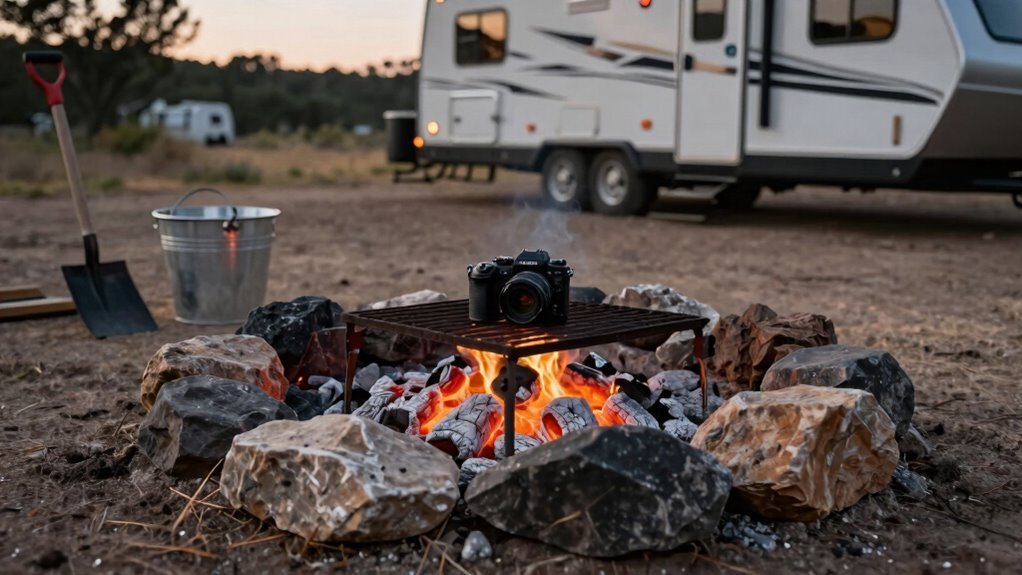
Grab that shovel and let’s build a fire spot that’s safe, smart, and ready for s’mores!
Whether you’re at a campsite with shiny metal rings or deep in the backcountry, setting up the right fire pit keeps everyone safe and the adventure fun.
Use what’s already there when you can—nature appreciates the effort, and park rangers do too!
- Use designated fire rings in developed sites—they’re built to contain flames and protect the surroundings.
- Dig a small pit (about six inches deep) encircled with rocks if no ring exists, and pick gravel or sand bases to avoid harming healthy soil.
- Clear a 10-foot zone around your pit—sweep away leaves, grass, and branches so sparks don’t start an uninvited campfire.
- Pick flat, open ground at least 10 feet from trees, tents, and your RV—because nobody wants a flaming marshmallow *in* the tent.
Always ensure your fire pit is at least ten feet from trees.
Keep Flammable Objects at a Safe Distance
Now that your fire ring is set up just right, it’s time to play fire marshal and make sure everything flammable is well out of harm’s way—because the only thing that should be on fire is the one you’re roasting marshmallows over.
Keep your RV at least 10 feet back, and when it’s windy or dry, push that to 15 feet for safety.
Retract those awnings—they’re not fireproof, and sparks don’t knock before entering!
Store propane tanks, fuel, and aerosols 10–15 feet away, and never stash kindling right next to the flames.
Keep chairs, paper, and cooking oil out of the danger zone, and stash cold ashes in a metal bucket well away from the RV.
Wind can toss embers farther than you think, so play it smart—stay upwind, keep vents clear, and treat your campsite like a no-fly zone for flames.
Safety never burns out!
Never Leave Your Fire Unattended

Almost always, a split-second decision to step away turns a cozy campfire into a runaway hazard—so never, ever leave your fire unattended, not even for a “quick” bathroom break or to grab more firewood.
You’re the boss of that blaze, and it’s counting on you to stay put.
A tiny breeze can turn innocent sparks into an out-of-control situation fast—especially near other RVs.
Stay alert, stay close, and keep that fire in check like a pro.
- Douse the fire completely before stepping away, even for a minute
- Watch for flying embers, especially on windy nights
- Keep kids and pets at a safe distance, just in case
- Act fast and call for help if flames spread unexpectedly
You’ve got this—stay safe, have fun, and let the fire (not the drama) be the highlight of your night!
Use the Right Kind of Firewood
When you’re picking firewood, think of it like choosing the right fuel for a road trip—go with what keeps the heat steady and the drama low.
Grab seasoned hardwoods like oak, hickory, or maple—they burn long and hot, perfect for cozy nights or cooking up campfire pancakes.
If you’re grilling, toss in some apple or cherry wood; your veggies (and neighbors) will thank you for the sweet, smoky aroma.
Skip the pine and spruce unless you want a popping, smoky mess—creosote buildup isn’t part of anyone’s safety checklist.
Always use dry, seasoned wood—cracked ends, light weight, and a hollow “tap” mean it’s ready.
Buy local to avoid hitchhiking bugs, and store it off the ground.
Split logs? Yes—smaller pieces catch faster and burn cleaner.
Size matters too: match wood to your fire’s job, and keep your pile neat and distant from your RV.
You’ve got this—now go roast that marshmallow like a pro!
Have Water, Dirt, or a Fire Extinguisher Ready
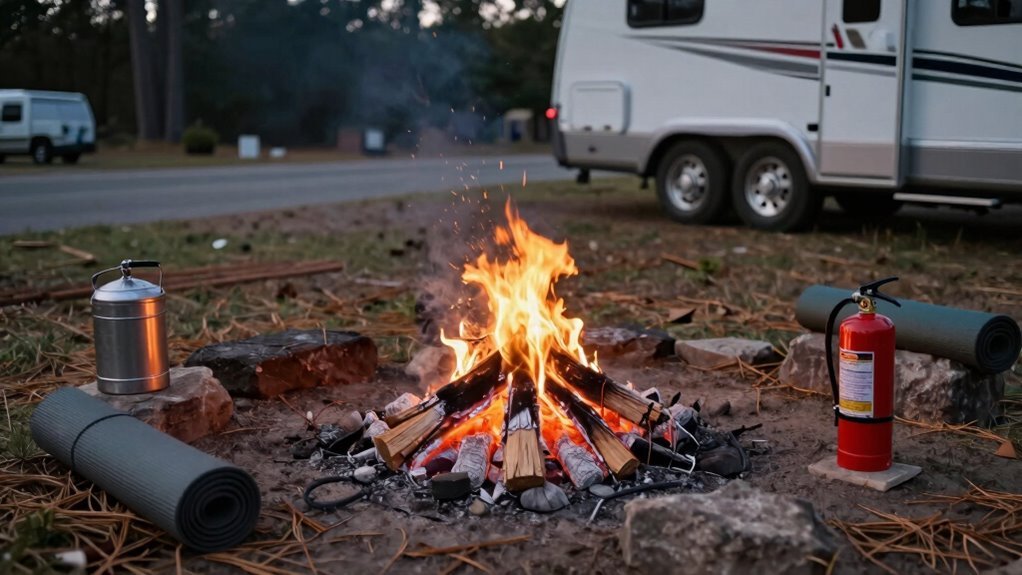
You’ve picked the perfect logs, built your fire just right, and now it’s crackling like a forest soundtrack—awesome!
But don’t get too cozy just yet.
Stay safe by keeping your emergency squad ready: water, dirt, or a fire extinguisher.
Think of them as your fire’s off-switch superheroes, always on standby.
Fully Extinguish the Fire Before Leaving
Always remember, putting out your campfire isn’t just a quick splash of water and done—think of it like shutting down a computer the right way, not just yanking the plug.
Let the flames die down to coals first—don’t drown roaring fire, or you’ll get a steam explosion that’ll surprise everyone (and make a mess).
Once it’s calmed, douse it well with water, not a sprinkle like coffee grounds—soak those embers!
Stir the ashes with a shovel, spread ‘em out, and break up any hidden hot spots.
Repeat until everything’s cool.
No water? Smother it with dirt or sand, mix it in, and add a top layer—just don’t bury it and trap heat underground.
Finally, hold the back of your hand near the ashes—no warmth? You’re good!
Check around the pit for stray sparks, because sneaky embers love playing hide-and-seek.
Frequently Asked Questions
Can I Use My Rv’s Stove Instead of a Campfire?
Yes, you can absolutely use your RV’s stove instead of a campfire—it’s smarter and safer!
You’re skipping the messy fire-building and cutting fire risks dramatically.
Plus, you’re saving time, fuel, and trees.
Just keep it outside if it’s not an indoor-rated stove, avoid windy flare-ups near your rig, and always follow campground rules.
Cooking this way? You’re basically a campfire ninja—stealthy, efficient, and way less likely to singe your marshmallows into charcoal.
Are Fire Pits Allowed on RV Rental Properties?
Yeah, you can usually have fire pits at RV rental spots, but you’ve gotta play by their rules—some only allow propane or gas models, while wood-burning ones are a no-go.
Always check what’s allowed, ’cause each place sets its own vibe. Think of it like a campfire date: bring the right kind, keep it safe, and everyone’ll enjoy the cozy glow without any drama.
What Should I Do if My Fire Smoke Bothers Others?
You see smoke drifting toward neighbors?
Act fast—you’ve got this!
Apologize quick with a smile, then shrink the fire or move seating upwind.
Swap in dry hardwood to cut the puff, and tweak your windbreak to steer smoke away.
If it’s still a hassle, just douse it and switch to a cozy propane pit.
Stay chill, stay kind, and everyone’ll laugh it off by sunrise!
Can I Roast Marshmallows With a Propane Fire Pit?
You can totally roast marshmallows over a propane fire pit—go ahead and indulge!
The clean-burning flame won’t give your treat a gas taste, so your gooey, golden ‘mallow stays delicious.
Just set the flame to medium-low, keep it about an inch above the fire, and rotate slowly.
Watch for flare-ups from drips, use a long skewer, and never leave it unattended.
It’s safe, tasty, and perfect for your next s’mores session—no wood necessary!
Is It Safe to Cook Over a Campfire in High Winds?
No, it’s not safe to cook over a campfire in high winds—you’re basically inviting trouble.
Just ask Dave, who tried grilling sausages at sunset while gusts hit 20 mph; next thing he knew, embers were chasing his tent like tiny fiery gremlins.
Wind makes flames unpredictable, spreads sparks fast, and turns small fires into big problems.
Skip the campfire, use your wind-rated stove instead, and stay safe—your marshmallows will forgive you.
Conclusion
You’ve got s’mores dreams, not smoke alarms, right? So stack smart, stay close, and let fun—not flames—run wild. A roaring fire’s cozy, but a cold one’s safer. Water bucket ready? Good. When it’s time to roll out, drown, stir, and dunk it till it’s dead. Because nothing ruins an epic RV night faster than a “oops, forgot the fire” morning. Stay safe, laugh loud, and keep the sparks skybound—where they belong!
References
- https://blog.campingworld.com/learn-to-rv/fire-safety-for-rv-travelers/
- https://www.askewslandingrv.com/rv-camping-blog/how-to-build-a-campfire
- https://rvshare.com/blog/campfire-safety/
- https://crrhospitality.com/blog/implementing-fire-safety-measures-in-campground-management/
- https://www.tdi.texas.gov/tips/rv-fire-safety.html
- https://www.usfa.fema.gov/downloads/pdf/publications/rv-fire-safety-handout.pdf
- https://www.nfpa.org/news-blogs-and-articles/nfpa-journal/2021/04/12/rv-safety
- https://readyforwildfire.org/permits/
- https://dnr.wisconsin.gov/topic/forestfire/permits
- https://www.southmilwaukee.gov/322/Fire-Prevention-Protection-Control-Code