Choosing the Right Tow Vehicle for Your Trailer
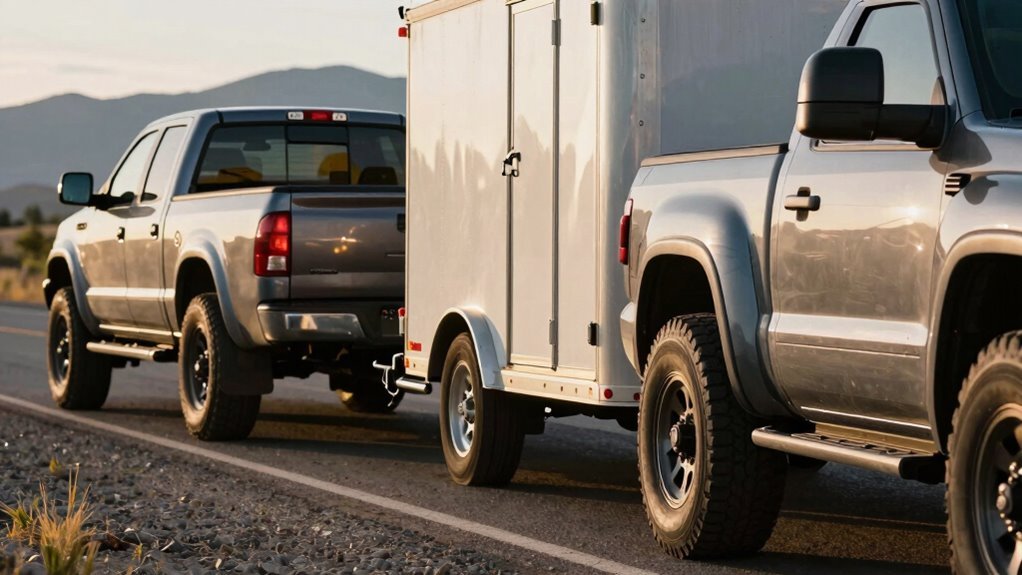
Choosing the right tow vehicle for your trailer means matching your adventure to a rig that can handle the load. Don’t just rely on brochure claims—verify your vehicle’s real towing capacity before hitting the road.
Check the hitch class and ensure it aligns with your trailer’s weight. Proper tongue weight distribution is crucial for stability and control during towing.
Don’t overlook trailer brakes and transmission cooling, especially for heavy loads or hilly terrain. These features protect your vehicle and improve safety on long hauls.
While 4WD offers traction in tough conditions, remember that 2WD delivers better fuel efficiency. Choosing the right tow vehicle for your trailer means balancing capability with everyday performance.
Understanding Towing Capacity and Payload Limits
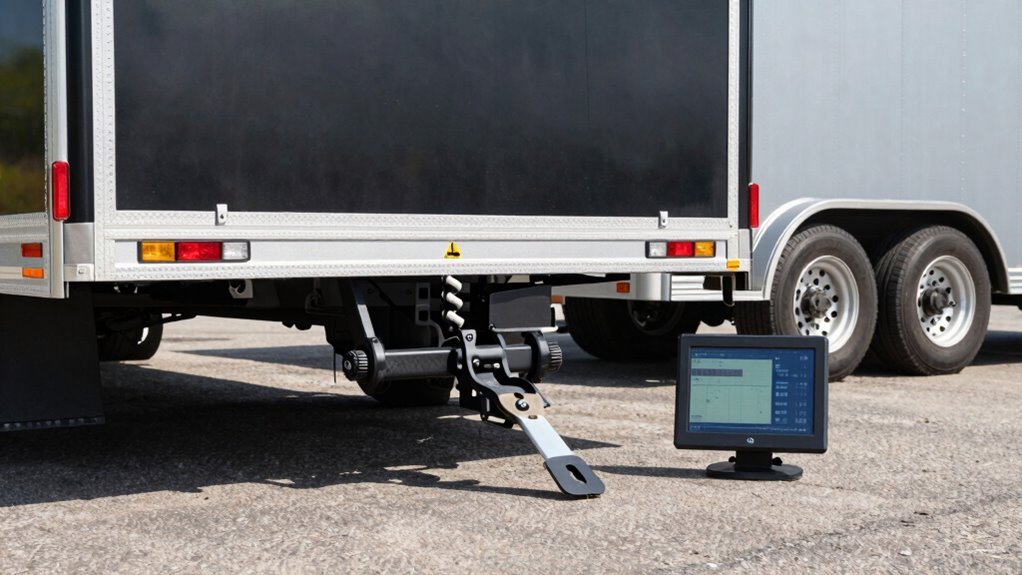
Knowing your limits isn’t just good life advice—it’s essential when towing.
You’ve got to respect your rig’s numbers, or you’ll risk turning a fun trip into a roadside nightmare.
GVWR, GCVWR, payload, tongue weight—yeah, the terms sound like alphabet soup, but they’re your new best friends.
Your payload? That’s everything you carry, including you, your dog, and that killer cooler (which isn’t so cool when it’s overloading your rear axle).
Tongue weight sneaks in too—10–15% of your trailer’s heft presses down on your hitch and counts against your payload.
Towing capacity isn’t just a guess; it’s built from engine strength, brakes, and frame toughness.
Skip the math at your peril.
Overloading means longer stops, shakier handling, and possibly a blowout that ruins more than just your Friday.
Exceeding payload capacity can also void your warranty and lead to costly repairs.
So weigh things, read the placard, and keep it real.
Your truck’s not a superhero—treat it right, and it’ll haul your life in style.
Matching Trailer Weight to Vehicle Strength
Ever wonder why some rigs glide down the highway like they’re made for each other, while others wobble like a shopping cart with a bent wheel?
That’s all about matching your trailer’s weight to your vehicle’s strength.
Don’t just guess—weigh your loaded trailer or check its GVWR, because what matters is real weight, not the brochure number.
You’ve got to respect your vehicle’s tow rating, GVWR, and GCWR: they’re your limits, not suggestions.
A 7,000-lb GVWR trailer needs a truck rated for it—no shortcuts.
Tongue weight? Aim for 10–15% to keep things steady, and remember, that counts against your payload.
And don’t forget your hitch—it’s only as strong as its weakest link.
Get it right, and your rig will ride smooth, safe, and ready to roam.
External factors like high elevation or steep terrain can reduce your vehicle’s effective towing capacity, even if specs seem sufficient on paper.
Engine Power and Transmission Considerations
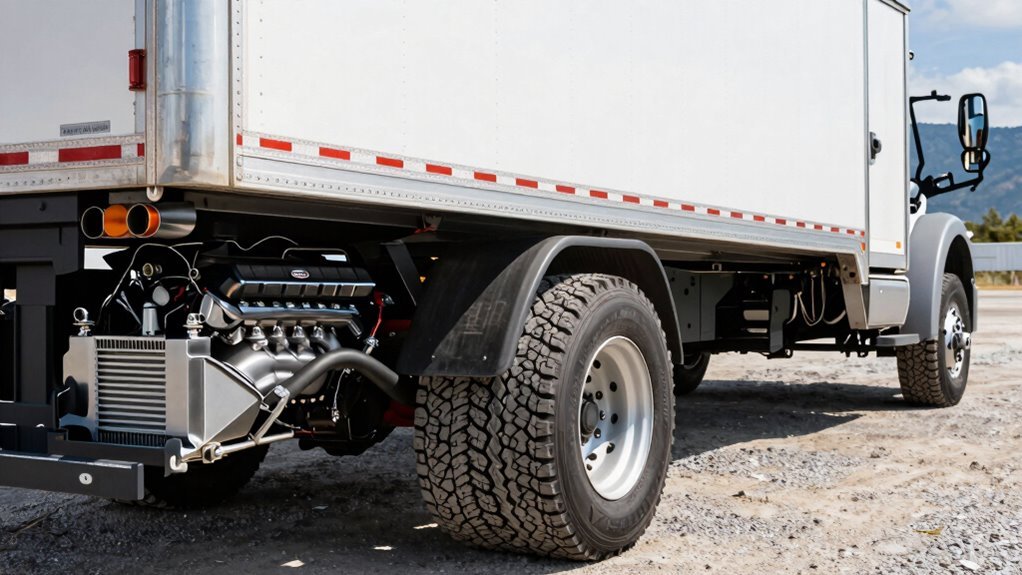
What’s the heartbeat of a powerhouse towing rig? You guessed it—engine power and transmission smarts! Picking the right combo keeps your trailer happy, not haggard. Here’s how to nail it:
- Chase torque, not just horsepower—it’s the muscle that gets you moving from a stop, especially with a heavy load.
- Go diesel if you can—those engines pack serious torque for steady, strong towing without breaking a sweat.
- Always pick an automatic with tow/haul mode—it keeps gears where they should be and cools things down when the heat’s on.
- Don’t forget extra cooling—upgraded radiators and oil coolers keep your engine and transmission from throwing a tantrum.
Balancing power means ensuring your vehicle stays within its GCWR limits, avoiding strain on both engine and transmission. Balance power, stay under max capacity, and you’ll be towing like a pro—with the confidence of a truck that’s truly up to the job!
The Role of Trailer Hitch Classes
So, you’re ready to haul more than just a weekend’s worth of gear? Time to get up close and personal with trailer hitch classes—they’re the unsung heroes of safe towing.
Class I and II hitches are perfect for small SUVs and light loads, like campers or bike racks, maxing out at 3,500 lbs.
Need more muscle? Class III and IV, with their beefy 2” receivers, handle 6,000 to 10,000 lbs—great for hefty boats or horse trailers.
Go big with Class V for commercial trailers; we’re talking 20,000+ lbs with massive 3” receivers.
But here’s the kicker: always match the hitch class to your vehicle’s limits—no cheating physics!
Use the right ball size, slap on safety chains, and check that tongue weight.
Pick right, and you’ll tow like a pro—no white-knuckle drama, just smooth, confident cruising.
Importance of Brake Systems and Cooling Features
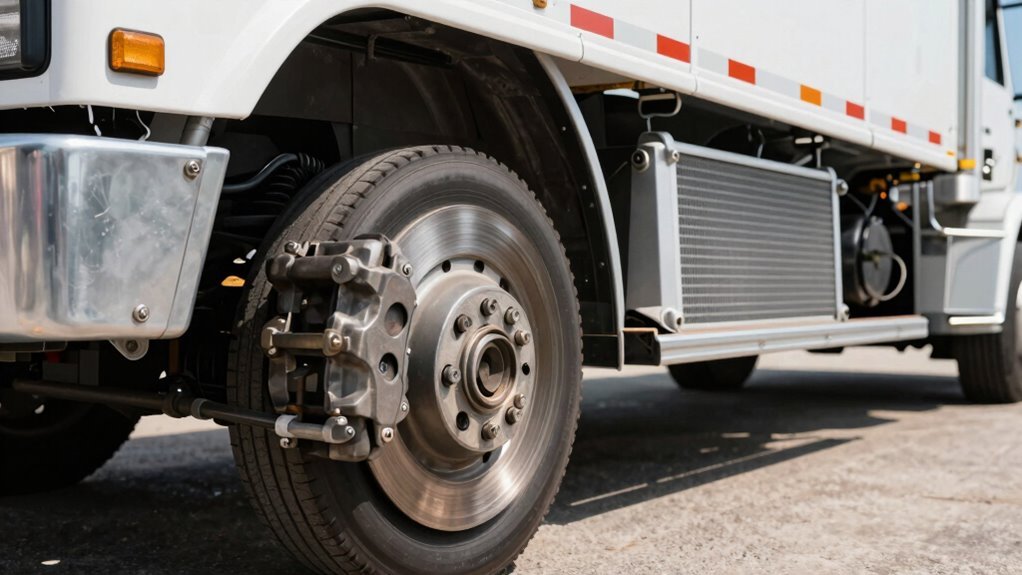
How does your rig stop when the road turns steep or traffic brakes hard?
Your trailer’s brakes aren’t just helpful—they’re essential for safety and control.
Don’t let your adventure turn into a slow-mo panic!
Make sure your setup includes the right braking power:
- Electric brakes need a controller in your vehicle to match braking force—smooth and reliable when set up right.
- Surge brakes work on push-back force—no controller needed, but you can’t control them manually.
- Air brakes handle big trailers over 10,000 lbs—common in commercial rigs with serious stopping power.
- Breakaway systems kick in if your trailer detaches—yes, it’s dramatic, but they keep things safe.
Pair these with proper cooling features, and you’ll tow with confidence, not worry!
Evaluating Four-Wheel Drive vs. Two-Wheel Drive
Choosing the right drive system can make all the difference when you’re hauling your trailer through slick launch ramps or winding mountain roads—so don’t just wing it like a fish trying to climb a hill.
If you frequently tow in mud, snow, or sand, 4WD grips with all four wheels, giving you confidence when launching boats or climbing damp ramps.
But on dry pavement, 2WD often tows just as well—especially with modern stability tech.
You’ll usually get better fuel economy and higher towing capacity with 2WD since it’s lighter and has fewer parts to maintain.
Sure, 4WD adds peace of mind off-road, but it costs more upfront and at the pump.
If you’re mostly highway towing, 2WD saves you cash without sacrificing much.
But if you’re crawling over rocks or sloshing through mud, 4WD’s extra traction is worth its weight.
Pick based on where you drive—not just what looks tough.
Key Safety Features for Confident Towing
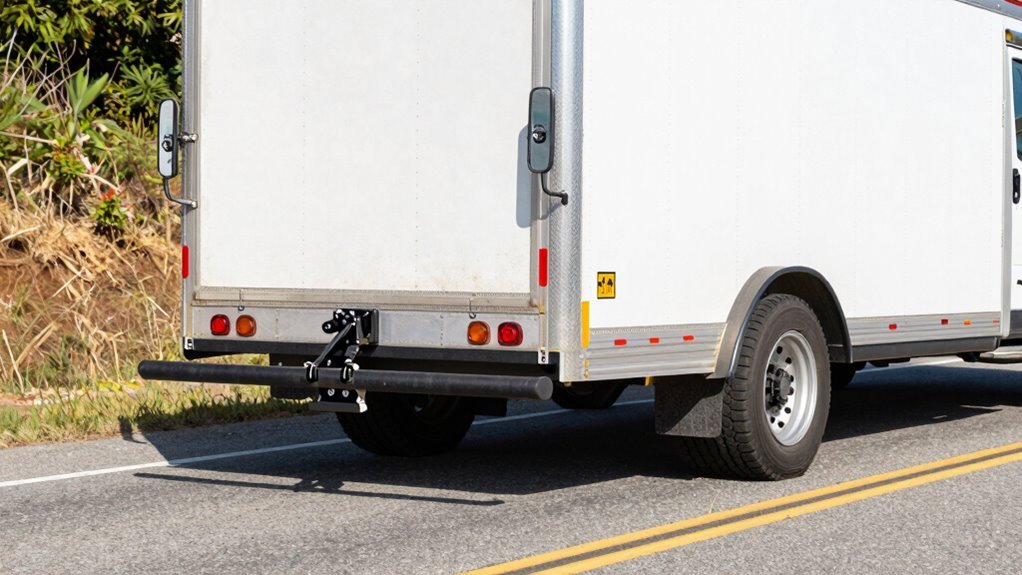
You’ve picked your drive system—whether you’re rolling with the efficiency of 2WD or the rugged grip of 4WD—now let’s make sure your ride stays safe and steady once that trailer’s hooked up.
Towing confidently isn’t just about power—it’s about playing it safe with the right gear and habits.
Here’s how to stay secure on the road:
- Double-check hitch & chains – Make sure your hitch, ball, and safety chains match your trailer and are snug as a bug.
- Test lights & wiring – Flash your signals, brake lights, and turn indicators so everyone knows your moves before you make ‘em.
- Balance your load – Keep 60% of the cargo up front, distribute weight evenly, and avoid the dreaded trailer sway.
- Drive like a pro – Ease into stops, leave extra space, and skip risky moves—your trailer’s not a sports car!
Frequently Asked Questions
Can I Tow With a Leased Vehicle?
Yeah, you *can* tow with a leased vehicle—but hold up before hitting the road.
You’ll need to check your lease first, ‘cause some companies flat-out ban towing or slap limits on weight and hitch types.
Sneaking in a trailer without approval?
That’s a fast track to fees or worse.
Get permission in writing, confirm your insurance covers towing, and make sure your rig stays within limits.
Do it right, and adventure’s all yours!
Do I Need a Special License to Tow?
You might need a special license to tow, depending on size and state rules—don’t sweat it, though!
If your rig’s under 26,000 lbs GCWR and the trailer’s under 10,000 lbs, you’re usually good with a regular driver’s license.
But some states, like Nevada or California, might ask for extra endorsements or tests.
Always check your state’s DMV, because surprises aren’t fun—especially on the road!
How Does Altitude Affect Towing Performance?
Altitude zaps your engine’s power fast—up to 3% per 1,000 feet—so your truck’s hauling harder with less oomph.
At 8,000 feet, you could lose over 30% power, making hills feel like mud.
Thin air cools less, runs engines hotter, and saps fuel efficiency too.
Even if tow ratings stay put, you’ll feel sluggish climbs and slower passes, so take it easy, give it time, and keep that cooler running strong—your rig will thank you!
Will Towing Void My Vehicle’s Warranty?
Nope, towing won’t void your warranty—87% of owners worry about this unnecessarily!
As long as you tow within your vehicle’s limits and use the right gear, you’re golden.
Slap on that aftermarket hitch, but get it installed right.
The Magnuson-Moss Act’s got your back, so dealers can’t just shrug off repairs.
Just don’t overload or drag stumps like a superhero—common sense keeps coverage intact.
Are Rental Trucks Suitable for Long-Distance Towing?
Yeah, rental trucks can handle long-distance towing—if you pick the right one and follow the rules.
You’ve gotta match the truck’s towing limits to your trailer, grab the proper hitch, and never skip the pre-trip check.
Towing burns more fuel and eats up electric range fast, so plan pit stops wisely.
Stay under their speed limit (no lead-footing!), load it right, and add sway control.
Do it right, and you’re golden.
Cut corners? That’s how you end up sideways on I-40.
Conclusion
You’ve got this—picture your truck gliding down the open road, trailer in tow like a duck leading ducklings. Pick the right match, and towing feels smooth, safe, and even fun. Don’t let physics rain on your parade; power, hitch class, and brakes’ve got your back. Now, go turn heads with confidence, not caution tape. Adventure’s waiting, and your perfect rig’s ready to roll.
References
- https://trackobit.com/blog/payload-capacity-vs-towing-capacity
- https://www.firestonecompleteautocare.com/blog/driving/truck-payload-vs-towing-capacity-what-to-know/
- https://www.jdpower.com/cars/shopping-guides/difference-between-payload-and-towing-capacity
- https://www.weigh-safe.com/towing-safety/how-much-can-my-vehicle-tow-towing-and-payload-capacity/
- https://bigjoeauto.com/blog/the-ultimate-guide-to-truck-payload-and-towing-capacity
- https://www.youtube.com/watch?v=AwBre1ReN9g
- https://www.thetrailerguys.com/the-trailer-guys-ultimate-guide-to-trailer-towing-capacity/
- https://www.kenfeagintruckandtrailer.com/find-the-perfect-trailer-for-your-vehicle/
- https://www.blueox.com/towing-guide/chapter-5-towing-capacity/
- https://www.readingtruck.com/payload-and-towing-capacity-unveiled-what-you-need-to-know/