5 Best RV Solar Panel Kits for Off-Grid Adventures (2024)
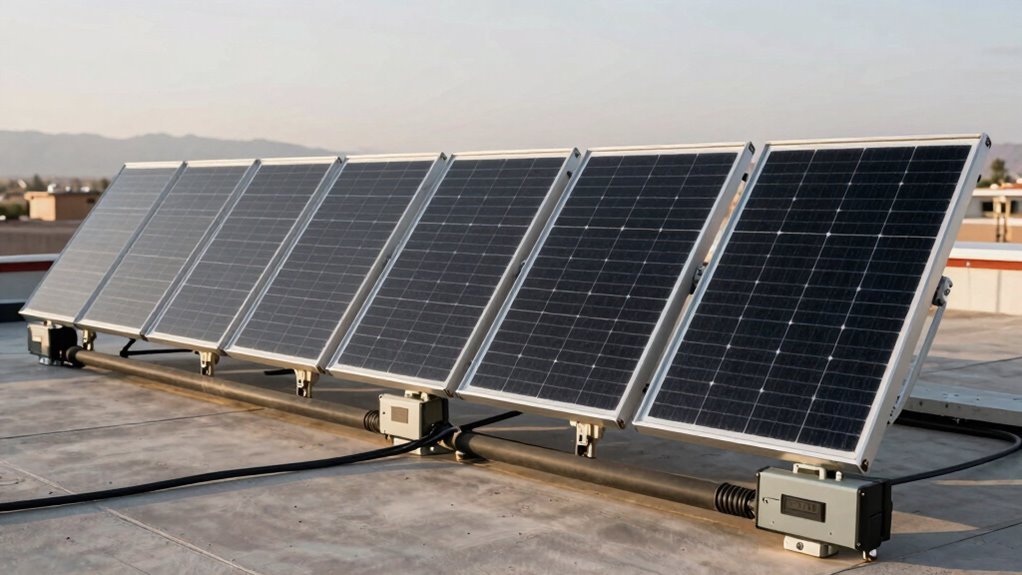
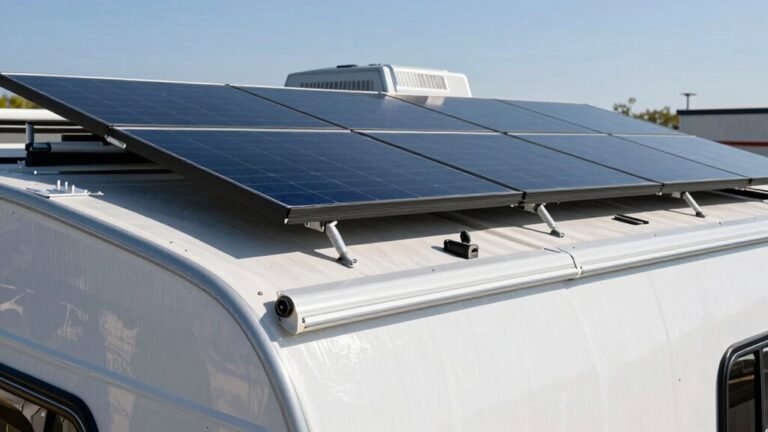
Sunlight glints off sleek black RV solar panel kits as you roll deep into the backcountry—no hookups, no noise, just quiet power waiting to be harnessed.
You’re off-grid, maybe miles from the nearest town, and your RV’s electrical fate rests on solar.
Which RV solar panel kit actually delivers steady juice when skies turn patchy or batteries run low?
The answer isn’t just about wattage—efficiency, durability, and smarts matter just as much.
| OTHC100W Portable Solar Panel Charger | Portable Power Pick | Power Output: 100W | Solar Cell Type: Monocrystalline | Daily Output: Not specified | VIEW LATEST PRICE | Read Our Analysis | |
| Renogy 200W Monocrystalline Solar Panel Kit | Durable Performance Pro | Power Output: 200W | Solar Cell Type: Monocrystalline | Daily Output: 800Wh | VIEW LATEST PRICE | Read Our Analysis | |
| ECO-WORTHY 200W Solar Panel Kit | Budget-Friendly Setup | Power Output: 200W | Solar Cell Type: Monocrystalline | Daily Output: 800Wh | VIEW LATEST PRICE | Read Our Analysis | |
| Renogy 400W RV Solar Panel Kit | High-Output Standard | Power Output: 400W | Solar Cell Type: Monocrystalline | Daily Output: 1600Wh | VIEW LATEST PRICE | Read Our Analysis | |
| Renogy 400W 12V Solar Power System | Best Overall Kit | Power Output: 400W | Solar Cell Type: Monocrystalline | Daily Output: 2–2.5 kWh | VIEW LATEST PRICE | Read Our Analysis |
More Details on Our Top Picks
OTHC100W Portable Solar Panel Charger
If you’re the kind of RVer who wants reliable, no-fuss solar charging without lugging around a bulky rig, the OTHC100W Portable Solar Panel Charger might just be your best bet—especially if you value efficiency and portability in equal measure.
You’ll get 100W of monocrystalline power with 20V output, which means faster charging for your power stations—like the Jackery Explorer or Bluetti AC series—without waiting all day. It’s got USB, Type-C, and DC ports, so you’re not stuck with just one device at a time, which, let’s be honest, how many of us are really that minimalist?
Built with military-grade fiber lamination, it’s lighter than most, durable, and IP67-rated—so yes, it’ll survive rain, dust, and that one time you forgot to zip the storage bag. Folding down to backpack size, it’s ideal for camping, RV adventures, or emergency prep when the grid quits (and really, who isn’t a little tired of surprise blackouts?).
It’s not the cheapest, and direct sunlight is non-negotiable—but then again, what solar isn’t?
- Power Output:100W
- Solar Cell Type:Monocrystalline
- Daily Output:Not specified
- Charge Controller:Not included
- Weather Resistance:IP67
- Warranty:Not specified
- Additional Feature:IP67 weatherproof design
- Additional Feature:Military fiber lamination
- Additional Feature:Foldable, ultra-portable build
Renogy 200W Monocrystalline Solar Panel Kit
You’ll want the Renogy200W Monocrystalline Solar Panel Kit if space is tight but power demands aren’t. This one squeezes an 800Wh daily output from just four hours of sunlight, making it a smart fit for RVs, campers, or even boats where every inch counts.
With 22% cell efficiency and a corrosion-resistant aluminum frame, it’s built to last. Rated for2400Pa wind and5400Pa snow loads, it holds up well when mounted flush on your vehicle’s wall.
You’ll plug into the 30A Adventurer-Li PWM controller, which offers overcharge, short-circuit, and reverse polarity protection. It supports both lithium and lead-acid batteries and allows expansion via three Y-branch connectors.
Pre-drilled holes and Plug&Play cables make setup straightforward. A5-year warranty and24/7 support add peace of mind—so while it’s not the ultimate fix, for compact, reliable power, you could do far worse.
- Power Output:200W
- Solar Cell Type:Monocrystalline
- Daily Output:800Wh
- Charge Controller:Adventurer-Li 30A PWM
- Weather Resistance:2400Pa wind, 5400Pa snow
- Warranty:5 year
- Additional Feature:Flush wall mounting
- Additional Feature:3 pairs Y-connectors
- Additional Feature:5-year warranty coverage
ECO-WORTHY 200W Solar Panel Kit
Looking for a solar setup that pulls its weight whether you’re powering a weekend getaway in your RV or keeping essential gear charged on a remote cabin job site? The ECO-WORTHY 200W Kit’s two 100W monocrystalline panels deliver up to 800Wh daily under 4 hours of sun—thanks to 21.5% efficiency gains in ideal light.
These panels are built tough, with a corrosion-resistant aluminum frame, 2400 Pa wind tolerance, and an IP65-protected junction box for decades of service. They’re designed to withstand harsh conditions while maintaining reliable performance over time.
You’ll get mounting brackets, a 30A controller, and enough 10 AWG cable (16.4ft) for flexible, plug-and-play 12V or 24V wiring. This makes installation straightforward for most off-grid applications.
Keep in mind that connections need to be secured carefully, as the 1-year warranty’s support relies heavily on responsive customer care. Long-term reliability will depend on proper setup and maintenance.
- Power Output:200W
- Solar Cell Type:Monocrystalline
- Daily Output:800Wh
- Charge Controller:30A Solar Controller
- Weather Resistance:2400Pa wind, 5400Pa snow, IP65
- Warranty:1 year
- Additional Feature:Dual 100W panel set
- Additional Feature:2-in-1 connectors included
- Additional Feature:1-year warranty support
Renogy 400W RV Solar Panel Kit
The Renogy 400W RV Solar Panel Kit stands out as a top-tier choice for travelers who demand reliable, space-efficient power without sacrificing performance—especially if you’re working with limited roof real estate on an RV, camper, or even a boat. You’ll get around 1600Wh daily with just 4 hours of sunlight, thanks to 22% efficient solar cells that maximize energy harvest in compact setups.
Its corrosion-resistant aluminum frame handles 2400Pa wind and 5400Pa snow loads—so it won’t quit when weather gets dicey. The kit includes a 30A PWM charge controller with overcharge, overvoltage, and short-circuit protection, supports 12V/24V systems, and works with lithium, lead-acid, or gel batteries.
Pre-drilled holes, Y-connectors, Bluetooth monitoring, and flush-mount options make setup a breeze—though you might still ponder why solar tech isn’t quite wireless yet. With a 10-year warranty and 24/7 support, it’s built to last, not just survive.
- Power Output:400W
- Solar Cell Type:Monocrystalline
- Daily Output:1600Wh
- Charge Controller:Adventurer 30A PWM
- Weather Resistance:2400Pa wind, 5400Pa snow
- Warranty:10 year
- Additional Feature:Bluetooth module BT1
- Additional Feature:2 pairs Y-connectors
- Additional Feature:Decades-long panel longevity
Renogy 400W 12V Solar Power System
Crave a solar setup that handles real-world hiccups without turning you into a weekend electrician? The Renogy 400W 12V Solar Power System stakes its claim, especially if you’re hauling an RV or van and want a plug-and-play kit that doesn’t skimp on specs.
You’re getting four 100W panels with 22.5% efficiency—thanks to EL-tested Grade A+ cells—delivering 2–2.5 kWh daily. Built to endure, the panels feature 3.2 mm low-iron glass and a 35 mm aluminum frame, tested to withstand 2400 Pa wind and 5400 Pa snow loads.
At the heart, the Renogy MPPT controller achieves 99% tracking and 98% conversion efficiency—30% better than PWM—and includes temperature compensation to protect your battery. Safety and convenience are covered with included fuses, thick cabling, and Bluetooth monitoring that works up to 82 feet away.
Backed by a 10-year warranty on the panels, this system ensures long-term reliability. You’re not left hoping—it’s built to perform.
- Power Output:400W
- Solar Cell Type:Monocrystalline
- Daily Output:2–2.5 kWh
- Charge Controller:Renogy MPPT
- Weather Resistance:2400Pa wind, 5400Pa snow
- Warranty:10 year (panels), 3 year (controller)
- Additional Feature:MPPT with 99% tracking
- Additional Feature:Built-in temp sensing
- Additional Feature:ANL fuse protection included
Factors to Consider When Choosing RV Solar Panel Kits

You’ll want to match your solar kit’s power output to your actual energy use—like running a 120Ah battery with 300–400 watts of solar—so you’re not left scrambling on cloudy days. Think about panel efficiency too; monocrystalline panels (around 22% efficient) save space on your roof, but they cost more and won’t magically charge faster in the shade. Are you really ready to wrestle with tricky installations, or would you rather pick a plug-and-play kit that plays nice with your existing charge controller and inverter setup?
Power Output Needs
Figuring out how much power you actually need isn’t just guesswork—it’s math with consequences if you get it wrong. You’ll want to calculate your daily energy use in watt-hours (Wh), then match it to a kit that reliably delivers under real-world sun.
A 200W panel setup generates about 800Wh per day with roughly 4 hours of peak sun. Bump that to 400W, and you’re looking at 2–2.5 kWh daily under the same conditions.
Plan for averages, not perfect days, since weather and seasonal shifts cut into output. Need to run bigger loads? Think about series or parallel panel configurations to hit your system’s sweet spot for voltage and current.
Don’t forget your charge controller—MPPT types snag 98–99% efficiency, squeezing out more usable power than the panels alone suggest. So, ask yourself: are you sizing for comfort or just surviving?
Panel Efficiency
Ever wonder why two solar panels the same size don’t produce the same power? It’s all about panel efficiency—the percentage of sunlight your panels convert into usable electricity.
Most top RV kits use monocrystalline panels, hitting 21.5% to 22.5% efficiency in ideal conditions, which means you get more watts per square meter—a big win when roof space is tight. Higher efficiency doesn’t just look good on paper; it translates to real gains in daily Wh production, especially under strong, direct sunlight.
But keep in mind—those numbers are based on lab tests. In the real world, the sun’s angle, shading, and heat all chip away at performance.
Durability Requirements
When your RV hits the open road, your solar panels better stay tough—no one wants a rooftop failure hundreds of miles from home. You’re dealing with blazing sun, sudden storms, and freezing mountain passes, so durability is non-negotiable.
Pick panels with corrosion-resistant aluminum frames that laugh off decades of UV and moisture. These frames are essential for withstanding the relentless exposure common in extended travel.
Go for modules tested to handle 2400 Pa of wind pressure and 5400 Pa of snow load—yes, that’s like a small car sitting on your roof, but weather waits for no one. These ratings ensure your system stays intact in extreme conditions.
Make sure junction boxes boast IP65 ratings at minimum; better yet, aim for IP67, which keeps dust out and survives temporary immersion. Because who plans for puddle-jumping, really?
Durable lamination and tight sealing aren’t just extras—they’re what keep cells humming through rocky backroads and desert dawns. Cut corners here, and you’re gambling with every mile.
Installation Complexity
While you’re sizing up solar kits for your rig, remember this—how fast and smooth the install goes depends heavily on the design of the components, not just your DIY confidence.
You’ll save serious time if your kit includes pre-drilled panels, flush mounting brackets (like Z-brackets), and plug-and-play MC4 cables—some setups take under three hours, compared to six or more with custom wiring.
Flush mounts cut wind uplift risks and look cleaner, but you’ll still need to carefully seal each penetration. Pairing panels in series (for 24V) simplifies wire runs, while parallel (12V) demands bus bars or Y-branch connectors—extra parts mean extra steps.
Sure, Bluetooth monitoring apps help later, but they won’t ease the crawl across the roof or the dance of routing cables through tight chassis holes.
Are you really saving time if the manual feels like quantum physics? Plan around your roof space, included hardware, and wiring layout—because no one wants to jury-rig at 10,000 feet.
System Compatibility
You’ve mapped out the roof, sealed the penetrations, and wired the runs—now make sure the system actually speaks the same electrical language as your rig. Does your RV run on12V or24V? Match your kit accordingly, or you’ll fight voltage drops and poor charging from day one.
Grab a controller—MPPT if you can—since it’s20–30% more efficient than PWM, especially when clouds roll in or temps swing. Your battery type (lithium, lead-acid, gel) matters too; not all charge controllers handle their unique profiles.
Skipping overcharge or reverse polarity protection risks a smoky surprise. Can you wire panels in series for higher voltage or parallel for more amps? Flexibility helps hit your sweet spot.
And hey, why wrestle custom cables if the kit offers plug-and-play connectors and Bluetooth monitoring that actually syncs with your existing setup? It’s not magic—it’s just smart design.
Frequently Asked Questions
Can I Install a Solar Kit Myself With No Experience?
Yeah, you can install a solar kit yourself even with no experience. Most kits come with clear instructions, and you’ll just need basic tools. Just take your time, follow the steps, and double-check your connections—you’ve got this!
How Long Do RV Solar Panels Last on Average?
They last about 25 years on average. You’ll see gradual efficiency drops, but they keep working. You’ll likely replace yours due to wear or upgrades, not sudden failure. Quality matters, so you’ll want a solid brand to get the most life.
Do Solar Panels Work in Cloudy or Rainy Weather?
Yes, solar panels still work in cloudy or rainy weather, but they’re less efficient. You’ll get reduced power output since clouds block some sunlight, so you’ll need to plan for extra battery capacity or backup charging to keep your RV systems running smoothly during extended overcast conditions.
Will Solar Panels Charge My RV Battery While Driving?
Yes, your solar panels charge the RV battery while driving—sunlight still hits them, right? You’re moving, but the panels keep working, topping off power as you roll. Not magic, just smart tech making your trip easier and your battery happier.
Are Portable Solar Panels as Efficient as Fixed Ones?
No, portable solar panels aren’t as efficient as fixed ones—you can’t tilt them perfectly or leave them installed full-time, so you lose peak sun exposure and consistency, but they’re great for flexibility and backup charging when you’re on the go.
Conclusion
You’ve weighed the watts, studied the efficiency—22% max here—and parsed PWM versus MPPT nuances; now, isn’t it satisfying how these kits turn relentless sun into steady volts? Whether scaling with Renogy’s 400W rig or staying nimble with OTHC’s 100W pack, you’re not just charging batteries—you’re fueling freedom. Sure, shadows ding output, and setup takes elbow grease, but who knew volts could feel this crucial?