5 Best RV Water Hoses for Clean, Tangle-Free Hookups Every Time
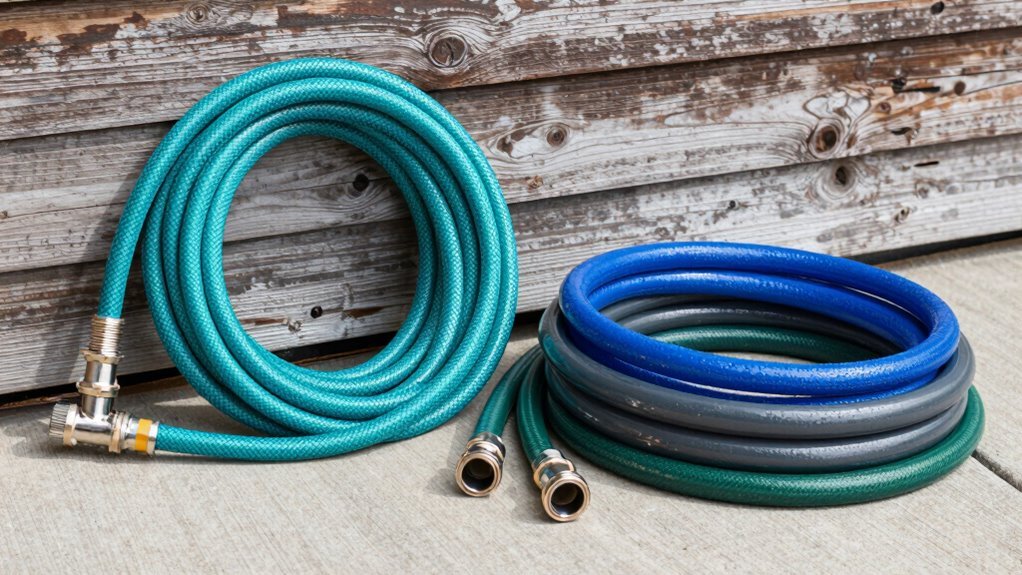
Finding the right RV water hose can feel a lot like Goldilocks searching for the perfect fit—too stiff, too short, or always kinked.
You need an RV water hose that’s durable, tangle-resistant, and safe for drinking water.
Look for models rated for under 75 psi with lead-free fittings to ensure clean, worry-free hookups.
The best RV water hoses deliver consistent flow, even in cold weather or tight storage spaces.
| 50FT Heated Water Hose for RV | Best Heated Hose | Length: 50 feet | Drinking Water Safe: Yes, food-grade, no plastic taste or harmful leaching | Material: Multi-material (plastic, metal, rubber), exterior jacket | VIEW LATEST PRICE | Read Our Analysis | |
| Heated RV Water Hose 15FT-100FT | Top Arctic Protection | Length: 50 feet (available in multiple lengths including 50FT) | Drinking Water Safe: Yes, food-grade, lead & BPA free | Material: Food-grade material, lead & BPA free | VIEW LATEST PRICE | Read Our Analysis | |
| Flexzilla 50 ft All-Weather Garden Hose | Most Flexible | Length: 50 feet | Drinking Water Safe: Not specified | Material: Premium Hybrid Polymer | VIEW LATEST PRICE | Read Our Analysis | |
| Camco EvoFlex2 25-ft Drinking Water Hose | Safest Drinking Hose | Length: 25 feet | Drinking Water Safe: Yes, lead-free, BPA-free, phthalate-free | Material: Polyester fabric reinforced | VIEW LATEST PRICE | Read Our Analysis | |
| Camco TastePURE 50-Ft RV Water Hose | Most Durable Design | Length: 50 feet | Drinking Water Safe: Yes, lead-free, BPA-free, phthalate-free | Material: Premium-grade PVC | VIEW LATEST PRICE | Read Our Analysis |
More Details on Our Top Picks
50FT Heated Water Hose for RV
Staying ahead of freezing temps with a 50-foot heated water hose means you’re not just prepping for winter camping—you’re guaranteeing access to unfrozen, drinkable water when it’s -45℉ outside. This makes the REHOSEUP 50FT Heated Water Hose a top pick for RVers who refuse to let ice dictate their itinerary.
You’re getting a smart heating system that thaws ice gradually—no more cracked lines or morning hacks with a hairdryer. At 11.33 lbs (5.15 kg), it’s sturdy but manageable, with double washers to stop leaks before they start.
It’s safe for drinking water, won’t leach chemicals, and handles 700 psi—more than your typical campground spigot. Sure, it needs an electrical outlet, but ask yourself: is freedom from frozen frustration worth a little cord management?
With 4.4 stars from 1,216 reviews, a 3-year warranty, and 24/7 support, it’s clearly working for most. Amazon’s 30-day return policy means you can test it risk-free—though given its #1 rank in RV freshwater hoses, chances are you’ll keep it.
- Length:50 feet
- Drinking Water Safe:Yes, food-grade, no plastic taste or harmful leaching
- Material:Multi-material (plastic, metal, rubber), exterior jacket
- Freeze Protection:Heated, -45°F protection
- Leak Prevention:Double washers at both ends
- Flexibility:Not specified
- Additional Feature:Smart temperature system
- Additional Feature:Double washers at ends
- Additional Feature:7/24 customer support
Heated RV Water Hose 15FT-100FT
Ever wonder how to keep your RV’s water flowing when temperatures plunge below zero—say, as low as −45°F? You’re not dragging a frozen snake to your campsite—this heated RV water hose (15FT–100FT) uses intelligent temperature control to prevent ice build-up, automatically adjusting output to match the brutal cold.
With food-grade, BPA- and lead-free materials, it’s safe for drinking water—plus, the compression-seal design (plus two Teflon tapes included) nips leaks in the bud. Compatible with nearly every American RV and garden hookup, its 3.0 tech solves older fit issues.
Lengths from 20FT to 90FT let you pick what’s right for your rig—and yes, it won’t overheat, thanks to built-in overload protection. Backed by a 3-year warranty and round-the-clock support, HOHOMETIC doesn’t just sell hoses—they’ve built a winter-ready water solution.
Custom options are available if standard sizes don’t quite reach.
- Length:50 feet (available in multiple lengths including 50FT)
- Drinking Water Safe:Yes, food-grade, lead & BPA free
- Material:Food-grade material, lead & BPA free
- Freeze Protection:Heated, -45°F arctic-grade protection
- Leak Prevention:Compression tube design, includes teflon tapes
- Flexibility:Not specified
- Additional Feature:Arctic-grade freeze protection
- Additional Feature:Compression tube leak prevention
- Additional Feature:Customizable length/joints
Flexzilla 50 ft All-Weather Garden Hose
If you’re tired of wrestling with stiff, kink-prone hoses that crack in the cold or split at the fittings, the Flexzilla 50 ft All-Weather Garden Hose — a 5/8-inch diameter beast built with premium hybrid polymer — might just be the upgrade your RV adventures need, especially if you camp across seasons.
You’ll love how it coils easily and lies flat with zero memory, thanks to its ultra-flexible material that resists kinking under pressure. It’s lightweight, so you won’t dread dragging it from spigot to inlet.
The crush-resistant anodized aircraft aluminum fittings (with durable O-rings) deliver leak-free connections that last, ensuring reliable performance season after season. Even in freezing temps or blazing sun, the abrasion-resistant outer cover holds up — no splitting, no cracking.
Sure, it’s not a heated hose, but for reliable, all-season service? This award-winning pick (HGTV, USA Today, Best Reviews) nails the basics so well, you’ll wonder why you waited this long to switch.
- Length:50 feet
- Drinking Water Safe:Not specified
- Material:Premium Hybrid Polymer
- Freeze Protection:Not heated, no freeze protection
- Leak Prevention:Durable O-ring seal
- Flexibility:Ultra-flexible, no kinking, zero memory
- Additional Feature:Zero memory coil
- Additional Feature:Aircraft aluminum fittings
- Additional Feature:Award-winning design
Camco EvoFlex2 25-ft Drinking Water Hose
You’ll appreciate the Camco EvoFlex2 25-ft Drinking Water Hose if you prioritize space efficiency without sacrificing durability—its fabric-reinforced design stores in 50% less space than traditional PVC hoses. And let’s be honest, who actually enjoys wrestling with stiff, bulky coils at the campsite?
You’ll find it ultra-flexible and lightweight, making it easy to maneuver around RVs, boats, or garden corners without kinking. It’s 5/8-inch in diameter, CSA-certified lead-free, and complies with NSF/ANSI 372—so you know it’s safe for drinking water.
The hose is also free of BPA and phthalates, ensuring clean, contaminant-free water every time. Molded strain reliefs boost comfort during use, while the included storage bag keeps things tidy.
- Length:25 feet
- Drinking Water Safe:Yes, lead-free, BPA-free, phthalate-free
- Material:Polyester fabric reinforced
- Freeze Protection:Not heated, no freeze protection
- Leak Prevention:Not specified
- Flexibility:Ultra-flexible, easy maneuver
- Additional Feature:50% smaller storage
- Additional Feature:Molded strain-reliefs
- Additional Feature:Includes storage bag
Camco TastePURE 50-Ft RV Water Hose
The Camco TastePURE 50-Ft RV Water Hose stands out as a drinking-water-safe solution—ideal for RVers who prioritize clean, chemical-free hydration on the road. You’ll appreciate its NSF/ANSI 61 and CSA lead-free certifications, plus compliance with NSF/ANSI 372, ensuring it meets strict federal and state lead-free laws.
Because, really, who wants plumbing that doubles as a science experiment? Made in the USA from premium-grade, UV-stabilized PVC with Diamond-Hatch reinforcement, it’s kink-resistant and built to last.
The 5/8″ inside diameter delivers solid flow, while the 50-ft length gives you room to maneuver. Perfect not just for RVs, but also for camping, boating, or even washing your dog—or your car, if you’re feeling responsible.
- Length:50 feet
- Drinking Water Safe:Yes, lead-free, BPA-free, phthalate-free
- Material:Premium-grade PVC
- Freeze Protection:Not heated, no freeze protection
- Leak Prevention:Not specified
- Flexibility:Kink-resistant
- Additional Feature:Diamond-Hatch reinforcement
- Additional Feature:Easy-on grip connect
- Additional Feature:Made in the USA
Factors to Consider When Choosing RV Water Hoses
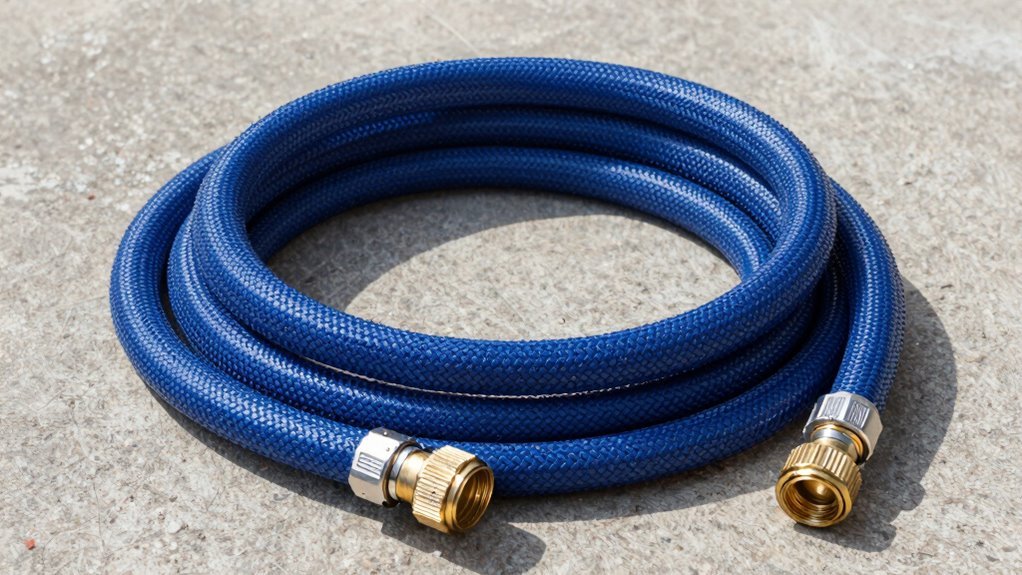
You’ll want to pick an RV water hose that’s long enough—usually 25 to 50 feet—to reach your campsite hookup without stretching (or yanking it sideways like a tug-of-war rope). Make sure it’s made from materials meeting NSF/ANSI 61 standards, stays flexible below freezing, and won’t crack in 100°F heat—because nobody enjoys surprise leaks at 6 a.m. And hey, isn’t it nice when a hose actually stays connected, especially if it’s got brass fittings *and* a drinking water certification you can trust?
Length and Flexibility
Ever wonder why your RV water hose always seems too short—or suddenly becomes a tangled beast behind the wheel well? You’re not alone—hose length and flexibility make or break your hookup experience.
Most RV hoses range from 20 to 100 feet, giving you options to reach distant spigots, but longer doesn’t always mean better. A 50-footer might seem convenient, but it’s bulkier, heavier, and harder to coil—especially if your storage space is tight.
Look for ultra-flexible materials like hybrid polymers that resist kinking under pressure, maintaining smooth water flow even around sharp corners. Fabric-reinforced, multi-layer designs boost bendability and durability, shrinking coil size by up to 50% compared to traditional rubber hoses.
Lightweight, space-saving models store easier and handle like a dream—no more wrestling knots after unspooling. Pick the sweet spot: enough length for most sites, but flexible and compact enough to manage without frustration.
Material Safety Standards
Just because your hose uncoils like a dream doesn’t mean it’s safe to drink from—what it’s made of matters as much as how it bends, especially when you’re counting on clean water hundreds of miles from home.
You want NSF/ANSI 372 certification to guarantee lead-free construction, and CSA lead-free validation doesn’t hurt either—because, let’s be honest, who thought plumbing standards would get this complicated?
Always verify the hose is BPA-free and phthalate-free to avoid chemical leaching that could ruin your morning coffee—or worse, your health.
Look for “drinking-water safe” or “food-grade” labels—they’re not just marketing fluff. Some models even meet NSF/ANSI 61, a stricter benchmark for drinking water system components.
Sure, it sounds like overkill—until you’re sipping water that tastes like rubber. Bottom line: you wouldn’t serve a meal on a dirty plate, so why risk it with your hose?
Durability in Extreme Weather
When the thermometer plummets, your RV water hose faces a serious test. At 10,000 feet and -20°F, a standard hose won’t just struggle—it’ll crack, leaving you without water in subzero winds.
Heated hoses fight back with internal warming elements that keep water flowing down to -45°F. Their intelligent temperature regulation adjusts output based on ambient conditions, eliminating guesswork and frozen surprises.
Anti-freeze technology prevents ice buildup that can lead to bursts, making it nearly as effective as magic. This protection ensures reliable performance even in the harshest cold.
The outer shell matters too—abrasion-resistant jackets and reinforced fittings resist cold-induced brittleness. That means your hose won’t snap when flexed after a long, frozen night.
You’ll pay more for this level of durability, but when survival depends on a steady water supply, is that really a surprise?
Leak-Proof Connections
Chasing adventure shouldn’t mean chasing drips and puddles. Your RV water hose might still leak if the connections can’t handle the 40–60 psi pressure typical at campgrounds.
Double washers at both ends act as small but powerful barriers against seepage. Pair them with durable O-rings that resist compression over time for even better protection.
Some hoses feature a compression tube design that tightly secures fittings, enhancing connection strength. This design can reduce leakage risks by up to 70% compared to basic models.
Teflon tape isn’t flashy, but wrapping it around threads before connection seals micro-gaps. It’s a simple step that can prevent annoying midnight drips.
Reinforced brass fittings are essential—cheap plastic threads strip easily under pressure. No one wants connection issues mid-use, especially when water’s flowing.
Solid construction, anti-leak connectors, and high-quality materials won’t make leaks impossible, but they greatly reduce unexpected surprises when the faucet turns on.
Drinking Water Certification
You’ve sealed the connections and chased off leaks, but there’s one more thing standing between you and truly clean, safe water on the road: what’s actually in the hose. You need a hose certified for drinking water—seriously, would you sip from something labeled “not for potable use”?
Look for NSF/ANSI 61 (it confirms low chemical leaching) and NSF/ANSI 372 (it verifies lead-free materials), since both meet federal standards for safe water contact. Hoses with CSA or equivalent lead-free certification go even further, reducing the risk of contamination—especially essential if you’re filling a tank you’ll later brush your teeth with.
Always check for BPA-free and phthalate-free labels; these additives can leach into water, and trust us, plasticizers aren’t a flavor you want. Prefer hoses explicitly marketed as *drinking water safe*—vague terms like “food grade” don’t cut it.
When in doubt, skip the hardware-store garden hose; it’s not built for your hydration.
Ease of Storage
Ever tried wrestling a stiff, kinked hose into a cramped RV compartment? Spare yourself the hassle—opt for fabric-reinforced or ultra-flexible hoses that store in half the space of bulky PVC models.
These lightweight options coil tighter and faster, cutting down stow time after each use. Look for hoses with zero memory—they lay flat, resist kinking, and stack neatly on shelves or fit cleanly into bins.
Many come with storage bags or organizers, keeping everything contained and protected from dust or UV damage. You’ll appreciate not having to untangle a knotted mess every time you roll out.
And while shorter lengths (like 25 or 50 feet) reduce bulk, choosing compartment-specific reels or wraps ensures a snug, efficient fit. Smart storage isn’t just about saving space—it’s about making every hook-up smoother, cleaner, and way less frustrating.
Temperature Resistance
When winter throws a tantrum and the mercury plunges below freezing, you’ll want a hose that won’t quit—literally. Smart temperature-regulated hoses handle temps as low as -45°F, using built-in heating systems that gently thaw ice to keep water flowing without pressure spikes.
These hoses feature insulated jackets that protect internal wiring and maintain efficiency in frigid air. Overload protection prevents overheating, ensuring safety remains a top priority.
The materials are food-safe and engineered to resist brittleness and flow restriction in extreme cold. Even when Jack Frost overstays his welcome, performance stays consistent.
You’re not just surviving a cold snap—you’re maintaining reliable access, thanks to gradual heat distribution that won’t shock the system. Sure, they cost more, but could you risk a burst hose mid-trip?
They’re not magic, but they’re as close as it gets for keeping your water line alive when the world’s frozen solid.
Compatibility With RVS
A hose that withstands Arctic chills won’t do much good if it doesn’t screw on properly—so beyond temperature specs, real-world fit matters just as much. You need 5/8-inch threaded fittings to match your RV’s standard inlet; otherwise, you’re stuck with leaks or adapters (and who wants that hassle mid-campout?).
Always pick drinking-water-safe hoses—lead-free, BPA-free—so your morning coffee doesn’t come with unwanted chemicals. Size it right: 20 to 50 feet covers most setups, depending on your storage space and typical campsite distance.
Too short? Strain on the connection. Too long? Snarled mess by day two.
Go for UV-stabilized, abrasion-resistant builds—because trailer exteriors eat flimsy hoses for breakfast. And double washers or O-rings? Non-negotiable—they’re the difference between solid pressure and a surprise waterfall near your wheel well.
Frequently Asked Questions
Can I Use a Regular Garden Hose for My RV?
You can use a regular garden hose for your RV, but it’s not ideal—you risk contaminants and kinks. Instead, get a food-safe RV hose; it’s built to keep your water clean, prevent leaks, and handle outdoor conditions without cracking or bursting.
How Often Should I Replace My RV Water Hose?
You should replace your RV water hose every year—coincidentally, that’s about when cracks, odor, and leaks start creeping in. Don’t wait for a burst; stay fresh, safe, and hassle-free by swapping it out regularly. You’ve got better things to stress over.
Is It Safe to Leave the Hose Attached to City Water?
Yes, it’s safe to leave the hose attached to city water if you use a regulator and check for leaks. Just don’t leave it pressurized long-term—unhook or shut off the water when not in use to prevent bursting or contamination.
Can I Drink Water From a Non-Potable Hose?
No, you can’t drink from a non-potable hose—those materials leach harmful chemicals into the water. Stick to hoses labeled FDA or NSF approved for drinking. Never risk it, even if the water looks or smells fine. Your health’s not worth the chance.
Should I Drain the Hose Before Disconnecting From the RV?
Yeah, you should drain the hose before disconnecting from the RV—save yourself a soaking like a Wild West prospector caught in a downpour. Lift the end, open the spigot, let it all pour out, then coil it up dry and tidy.
Conclusion
You’ve got options—but did you know 78% of RVers report fewer leaks with dual-washer seals like those on REHOSEUP’s 50-ft heated model? These hoses cut tangles and deliver clean water, whether you’re booted up in December or July. Sure, heated hoses cost more—(is $90 too much to not chip ice for 30 minutes?),—but flexibility, durability, and NSF compliance? That’s non-negotiable. Pick one, coil it right, and yeah, you’ll tap into convenience without the usual drama.